 Ferndale Window
 Windows on the Water Take a Different Kind of Beating
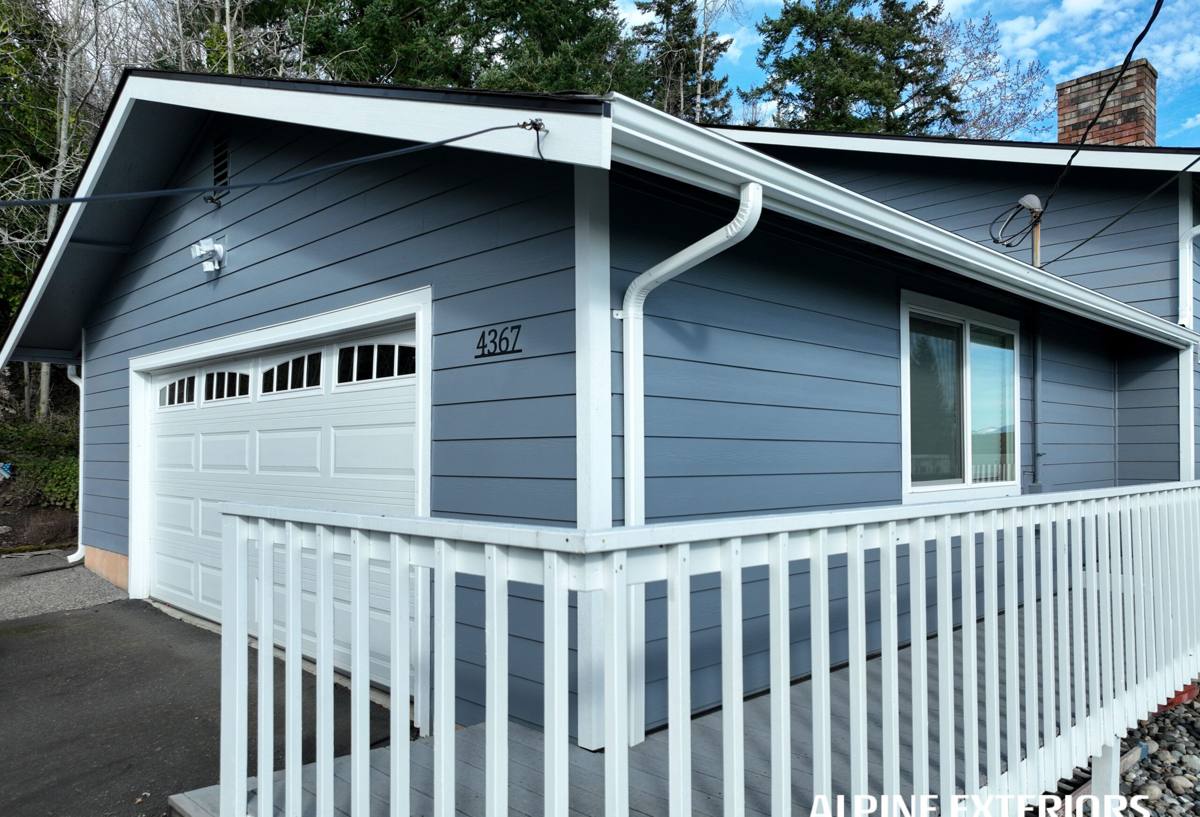
Semiahmoo sits right up against the water, close to the Canadian border, in a stretch of Whatcom County where the weather comes straight off the bay. That's a different exposure than a few miles inland. Homes here deal with salt-laden air, wind that drives rain sideways into window walls, and long stretches of gray, damp weather that never really lets materials dry out. Add in the shaded, tree-lined lots common around the spit and surrounding neighborhoods, and you've got conditions that push window frames, seals, and glazing harder than almost anywhere else in the county.
We're based in Ferndale and work this corner of Whatcom County regularly, so we're not guessing at what a waterfront or near-water home needs. We're accounting for wind exposure, salt corrosion, and moss growth from the first walkthrough, not discovering it after the install.
What Salt Air and Marine Exposure Actually Do to a Window
Salt air isn't just an inconvenience — it's chemically active. Airborne salt settles on metal components and accelerates corrosion in ways that inland homes never experience. Over years, that shows up as:
- Pitting or white corrosion on aluminum frames and hardware
- Stiff or seized locks, cranks, and hinges on older windows
- Faster breakdown of exterior caulking and sealants
- Hazing or etching on glass surfaces closest to the water
- Fasteners and flashing that rust well before their expected service life
None of this means windows are doomed on the water — it means the frame material, hardware finish, and installation detailing all matter more here than they would on a house set back from the shoreline.
Wind-Driven Rain Is the Other Half of the Problem
Semiahmoo's exposure isn't just about salt — it's about wind pushing rain into places it wouldn't reach on a calmer site. Wind-driven rain finds weak flashing, worn sealant, and marginal factory seals that would otherwise hold up fine. That's usually how water ends up inside a wall cavity long before anyone notices a problem on the interior sill.
Moss, Shade, and Standing Moisture
Between the marine air and the tree cover common on many lots in and around Semiahmoo, moisture rarely gets a full chance to dry out. That's the environment moss thrives in — not just on roofs, but on window sills, trim, and the tops of frames where debris and shade collect. Left alone, moss holds moisture against wood trim and painted surfaces far longer than open air would, which is exactly the kind of slow, steady exposure that leads to rot around window openings.
Signs Your Windows Are Losing the Battle
| What You Notice | What It Usually Means |
|---|---|
| Fogging or haze between panes | Failed seal on a double- or triple-pane unit; the gas fill has escaped |
| Drafts even with the window latched | Worn weatherstripping or a frame that's no longer square |
| Soft or discolored wood at the sill or corners | Moisture intrusion and early rot, common where moss or debris collects |
| Hardware that's stiff, pitted, or won't lock smoothly | Corrosion from salt air exposure |
| Paint or finish failing faster than expected | Sustained dampness from shade, wind-driven rain, or salt spray |
Any one of these on its own isn't an emergency. Several at once, especially on the side of the house that faces the water or prevailing wind, is usually a sign it's time for a real assessment rather than another round of caulk and paint.
How We Approach a Semiahmoo Window Job
1. Assessment Before Anything Else
We look at more than the window itself — we check the sill, the flashing, and the wall condition around the opening. On a coastal property, a window replacement is often the moment you find out whether there's hidden water damage that needs to be addressed before a new unit goes in. Installing a new window over a compromised opening just locks the problem inside the wall.
2. Matching the Product to the Exposure
Not every window line is built the same way, and not every home needs the same spec. A window on a sheltered, inland lot doesn't need the same frame material or hardware finish as one facing open water. We walk through the realistic trade-offs — maintenance, expected lifespan in this environment, and cost — rather than pushing one product for every job.
3. Installation Detailing That Respects Wind-Driven Rain
Proper flashing and sealant sequencing matter everywhere, but they matter more where wind pushes rain into the wall assembly instead of letting it run off. That's where corners get cut on rushed jobs, and it's where problems show up years later as rot that could have been avoided.
4. Cleanup and a Straight Answer on What You're Left With
You should know exactly what warranty applies to the product and to our labor, and what maintenance — if any — is expected of you going forward. We'd rather tell you that up front than have you find out the hard way.
Frame Material: What Actually Holds Up Near the Water
| Frame Type | How It Handles Salt Air & Moisture | Maintenance | Typical Fit |
|---|---|---|---|
| Vinyl | Doesn't corrode; consistent performance in salt air | Low — occasional cleaning | Most homes; strong value in coastal exposure |
| Fiberglass | Very stable in temperature swings and moisture; resists warping | Low | Homes wanting a higher-end feel and long service life |
| Wood / wood-clad | Classic look, but wood is more vulnerable to sustained moisture and needs the cladding and seals to be intact | Higher — finish and seals need monitoring | Homes prioritizing a specific traditional appearance who accept the upkeep |
| Aluminum | Prone to corrosion and pitting in salt air over time unless it's a marine-grade finish | Moderate to high | Generally a poor match for direct waterfront exposure |
We're not against wood or aluminum outright — some homeowners want the look wood gives, and that's a legitimate choice as long as the maintenance commitment is clear going in. Our default recommendation for direct waterfront or heavy-wind exposure in this area is usually vinyl or fiberglass, simply because they ask less of you over the next fifteen or twenty years.
Windows Don't Exist in Isolation
Because we handle siding, roofing, decks, and windows, we're often looking at the whole envelope of the house, not just one opening. A window job on a Semiahmoo home frequently turns up related issues nearby — trim that's absorbing moisture, a section of siding losing its seal, or moss buildup on a nearby roofline or deck that's feeding moisture back toward the wall. We'll flag what we see, but we're not going to sell you a bigger job than the one you asked for. If the window work is self-contained, that's what we'll quote.
What Drives Cost on a Job Like This
| Factor | Why It Matters |
|---|---|
| Number and size of openings | Straightforward scope driver — more and larger windows means more material and labor |
| Frame material chosen | Vinyl, fiberglass, and wood-clad carry different material costs and long-term maintenance |
| Condition of the existing opening | Hidden rot or damaged flashing found during removal adds repair work before the new window goes in |
| Access and height | Second-story or hard-to-reach windows near steep or waterfront lots take more time and setup |
| Full-frame vs. insert replacement | Full-frame replaces everything down to the rough opening; inserts fit into a sound existing frame and generally cost less |
General ranges vary a lot based on these factors, which is exactly why we walk the job in person before giving a number rather than quoting off a phone call.
A Practical Maintenance Checklist for Homes in This Area
- Rinse salt residue off frames and glass periodically, especially after storms
- Keep moss and debris cleared from sills, tracks, and trim, not just the roof
- Check that weep holes on vinyl and fiberglass frames stay clear so water can drain
- Inspect exterior caulking annually and re-seal before it visibly fails
- Have locks and hardware lubricated periodically if you're in a direct salt-spray zone
- Watch for soft spots at sills or corners — catching rot early is far cheaper than replacing a rotted opening
Why a Local Crew Is Worth Something Here
Semiahmoo isn't a generic subdivision, and it doesn't get generic weather. A crew that mostly works dry, inland jobs can miss what this exposure does to a window over time — or over-spec a house that doesn't need it. Working out of Ferndale, we're in Whatcom County every week, dealing with this coastline's wind, salt air, and moss cycle across siding, roofing, decks, and windows alike. That's the perspective we bring to a Semiahmoo estimate: what this specific site is actually up against, not a one-size-fits-all pitch.
If your windows are showing their age, or you're just not sure whether what you're seeing is normal wear or something worth addressing now, we're glad to take a look. We offer free, no-pressure estimates — use the form below to get one scheduled.