 Ferndale Window
 Roofing on the Water Is a Different Job Than Roofing Inland
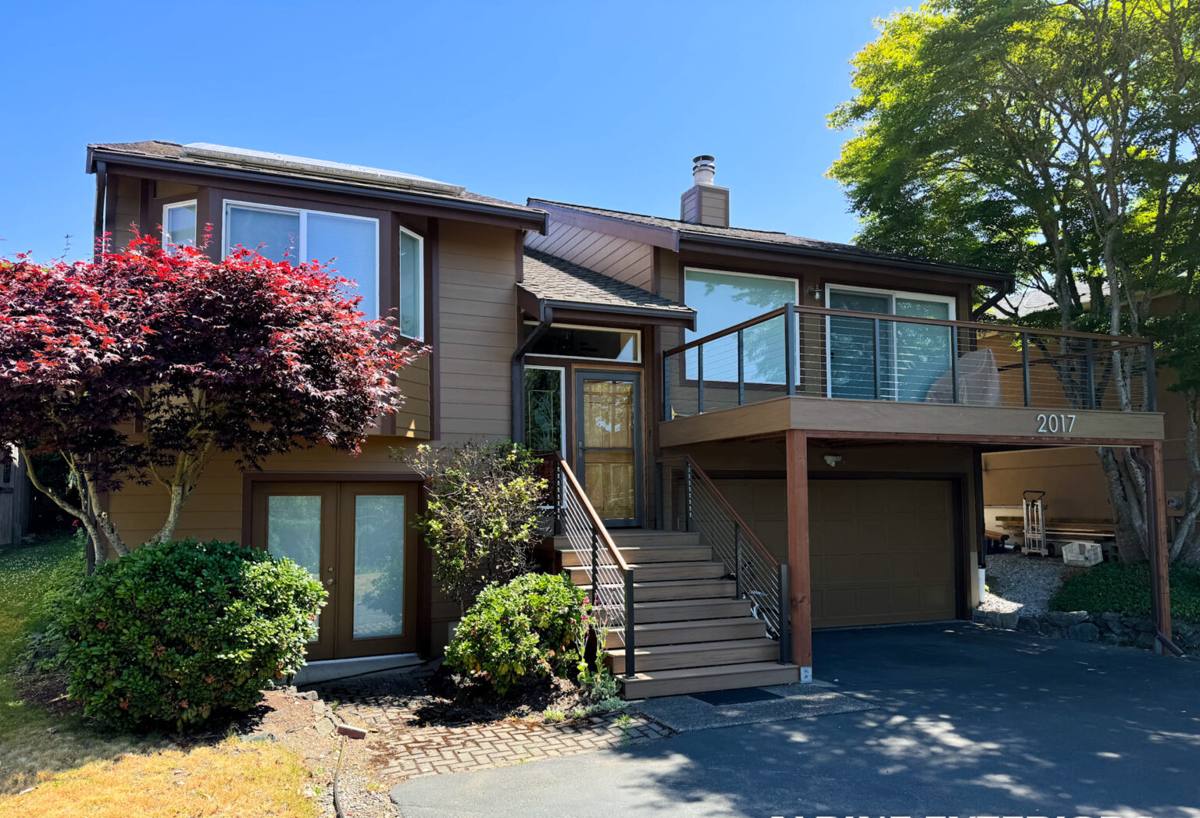
Semiahmoo sits right up against the water, and that changes what a roof has to deal with year-round. Homes just a few miles inland in Ferndale get a version of Whatcom County's wet winters and mossy shade problems, but a roof out on the water takes it further: salt-laden air moving off the bay, wind-driven rain that hits shingles at an angle instead of just falling straight down, and a moss and algae season that runs longer because the air rarely fully dries out. None of that means asphalt shingle roofing is the wrong choice for a Semiahmoo home. It means the installation has to account for conditions a standard inland job doesn't see as often, and the shingle, underlayment, and flashing choices need to reflect that from the start.
We've installed and repaired enough shingle roofs along this stretch of Whatcom County to know where the shortcuts show up first. This page covers what a Semiahmoo roof actually needs, what a correct installation looks like, and how we approach the job when salt air and driving rain are part of the equation.
What Salt Air and Coastal Moisture Do to a Shingle Roof
Granule Wear and UV Exposure
Asphalt shingles rely on their mineral granule coating to block UV light and shed water. Salt air doesn't dissolve the granules, but the constant moisture cycle — wet, dry, wet again — accelerates the natural aging of the asphalt mat underneath. Combined with reflected sun off open water, shingles on waterfront-facing slopes tend to show granule loss and surface wear a bit earlier than the same product would on a fully inland, tree-shaded roof.
Moss, Algae, and the Long Wet Season
Whatcom County already has a reputation for moss, and a coastal location like Semiahmoo doesn't get a break from it. Persistent humidity off the water keeps roof surfaces damp longer after rain, which is exactly what moss and algae need to establish. Left unchecked, moss doesn't just look bad — it lifts shingle edges, holds water against the roof deck, and shortens the life of the whole system.
Fastener and Flashing Corrosion
Salt air is hardest on metal. Nails, flashing, vent boots, and fasteners that would last decades inland can corrode noticeably faster in a direct coastal exposure. Once a fastener or flashing seam starts to fail, water finds its way in at exactly the spots where shingle roofs are already most vulnerable — valleys, chimneys, and roof-to-wall transitions.
What a Correctly Installed Roof Needs in This Climate
Underlayment That Actually Handles Wind-Driven Rain
Standard felt underlayment is built for water running off a roof — not water being pushed sideways and upward under shingle tabs by wind gusting off the water. In an exposure like this, a synthetic or self-adhering underlayment at eaves, valleys, and other vulnerable areas gives the roof a real second line of defense instead of a formality.
Flashing Details, Not Just Flashing
Every roof has flashing. Not every roof has flashing installed with the right laps, sealant, and material choice for a salt environment. Chimney flashing, wall step flashing, and vent boots are where the majority of shingle roof leaks actually start, and they're also the details most likely to get rushed on a job that's priced to move fast.
Ventilation That Matches the Moisture Load
A shingle roof that can't breathe traps moisture in the attic, which speeds up deck rot and shingle failure from underneath — a problem that's easy to miss until it's expensive. Balanced intake and exhaust ventilation matters everywhere, but it matters more in a climate that's already pushing extra moisture at the roof from outside.
Fastening for Wind Exposure
Open water means fewer windbreaks and more direct exposure to gusts. Proper nail placement and count, plus manufacturer-specified fastening patterns for higher wind zones, keep shingles from lifting at the tab — which is usually where wind damage starts.
Choosing the Right Shingle for a Waterfront Whatcom County Home
Not every asphalt shingle product is built the same way, and the differences matter more on a coastal roof than an inland one. Here's how the common options generally compare for a home in this kind of exposure:
| Shingle Type | Typical Lifespan | Coastal Considerations |
|---|---|---|
| 3-tab asphalt | 15-20 years | Lower wind rating and thinner profile; tends to show granule and edge wear sooner in salt air exposure |
| Architectural (laminate) asphalt | 25-30 years | Heavier, better wind resistance, our standard recommendation for most Semiahmoo homes |
| Algae-resistant (AR) architectural | 25-30 years | Copper-infused granules resist moss and algae staining longer in a persistently damp climate |
| Impact-rated / high-wind architectural | 30 years+ | Worth discussing for fully exposed, unobstructed water-facing roof slopes |
For most homes in this area, we recommend an architectural shingle with algae-resistant granules as the baseline, not an upgrade. In a climate where moss and algae growth is close to guaranteed over time, that feature pays for itself in fewer cleanings and a longer-looking roof, not just a longer-lasting one.
Our Process for a Semiahmoo Roofing Job
Inspection and Honest Assessment
We start by getting on the roof, not just looking at it from the ground. That means checking the deck condition, existing flashing, ventilation, and how much of the current wear is normal aging versus a sign of an underlying leak. We'll tell you plainly if a roof needs full replacement, targeted repair, or can reasonably wait.
Scope and Material Walkthrough
Before any work starts, we walk through shingle options, underlayment choice, and flashing scope so you know exactly what's being installed and why — especially where coastal exposure changes our recommendation from what we'd suggest on a comparable inland roof.
Tear-Off and Deck Check
Old roofing comes off down to the deck so we can actually see what's underneath. Coastal moisture sometimes hides soft spots or fastener corrosion that isn't visible from a surface inspection, and those get addressed before new roofing goes down — not covered over.
Installation to Manufacturer and Local-Condition Specs
Underlayment, flashing, ventilation, and shingle fastening are installed to manufacturer specification, adjusted for the wind and moisture exposure specific to a waterfront site. This is where the difference between a roof built for average conditions and one built for this location actually shows up.
Final Walkthrough
We go over the finished roof with you, including what routine maintenance looks like for a salt-air property, so there are no surprises about upkeep down the road.
Repair or Full Replacement?
Not every issue on a Semiahmoo roof means starting over. The honest answer depends on the roof's age, how widespread the wear is, and whether the deck and flashing underneath are still sound.
- Repair usually makes sense when: damage is localized (one valley, one flashing point, storm damage to a section), the roof is under roughly 15 years old, and the deck underneath is confirmed dry and solid.
- Replacement usually makes sense when: granule loss and shingle curling are widespread, moss has been established long enough to have lifted shingles in multiple areas, flashing is corroded throughout rather than at one spot, or the roof is approaching the end of its rated life.
- Get an inspection either way if: you're seeing interior staining, daylight through the attic, or shingles in the yard after a windstorm — those are signs worth checking regardless of the roof's age.
Maintenance That Actually Matters in a Salt-Air Climate
A well-installed shingle roof still needs upkeep in this environment, and a little attention goes a long way toward getting the full lifespan out of it.
- Clear debris and needles from valleys and gutters at least twice a year — trapped debris holds moisture against shingles longer
- Have moss treated before it establishes a foothold, not after it's visibly lifting shingle edges
- Keep gutters and downspouts flowing freely so water isn't backing up under the eave line during heavy, wind-driven rain
- Have flashing points checked periodically, since corrosion in a coastal environment can progress faster than it would inland
- After any significant windstorm off the water, do a visual check (or have one done) for lifted or missing shingles
Why It Matters to Hire a Crew That Already Works This Area
A roofing crew that mostly works inland jobs isn't necessarily going to default to algae-resistant shingles, upgraded underlayment at the eaves, or corrosion-resistant fasteners — because most of their work doesn't require it. On a Semiahmoo home, those aren't upgrades; they're the baseline for a roof that's actually going to hold up. Working regularly in this area also means we're familiar with what waterfront and near-shore properties in Whatcom County typically require in terms of permitting and, where applicable, any community or association guidelines on materials and appearance — details worth confirming early rather than after work has started.
There's also a practical side to local familiarity: we know how exposure and orientation tend to vary even within a small coastal area, which slopes take the worst of the wind and rain, and what tends to fail first on roofs we've already worked on nearby. That's the kind of judgment that only comes from doing the work here repeatedly, not from a general roofing checklist.
Get a Straightforward Look at Your Roof
If you're not sure whether your Semiahmoo roof needs repair, replacement, or just a maintenance visit, we're glad to take a look and give you a straight answer. Use the form below to request a free, no-pressure estimate, and we'll walk you through what we find and what it would take to get your roof properly set up for the conditions out here.