 Ferndale Window
 Serving Lynden Homeowners
Lynden sits in the Nooksack Valley, a few miles inland from Ferndale but still very much inside the weather system that defines this corner of Whatcom County. It's a farming community first, with a strong sense of place and homes that range from older farmhouses to newer developments near the city center. Whether your house has been in the family for two generations or you bought it last year, the windows on it are dealing with the same regional conditions: long wet winters, marine-influenced air pushing in from the Strait of Georgia and Puget Sound, and short, humid summers that don't dry things out as much as people expect.
We're based in Ferndale and have been doing exterior work — windows, siding, roofing, and decks — throughout this part of the county for years. Lynden is a regular stop for us, not a place we drive to occasionally. That matters when it comes to windows specifically, because window problems here are rarely about the glass itself. They're about moisture, air sealing, and how well the installation was done in the first place.
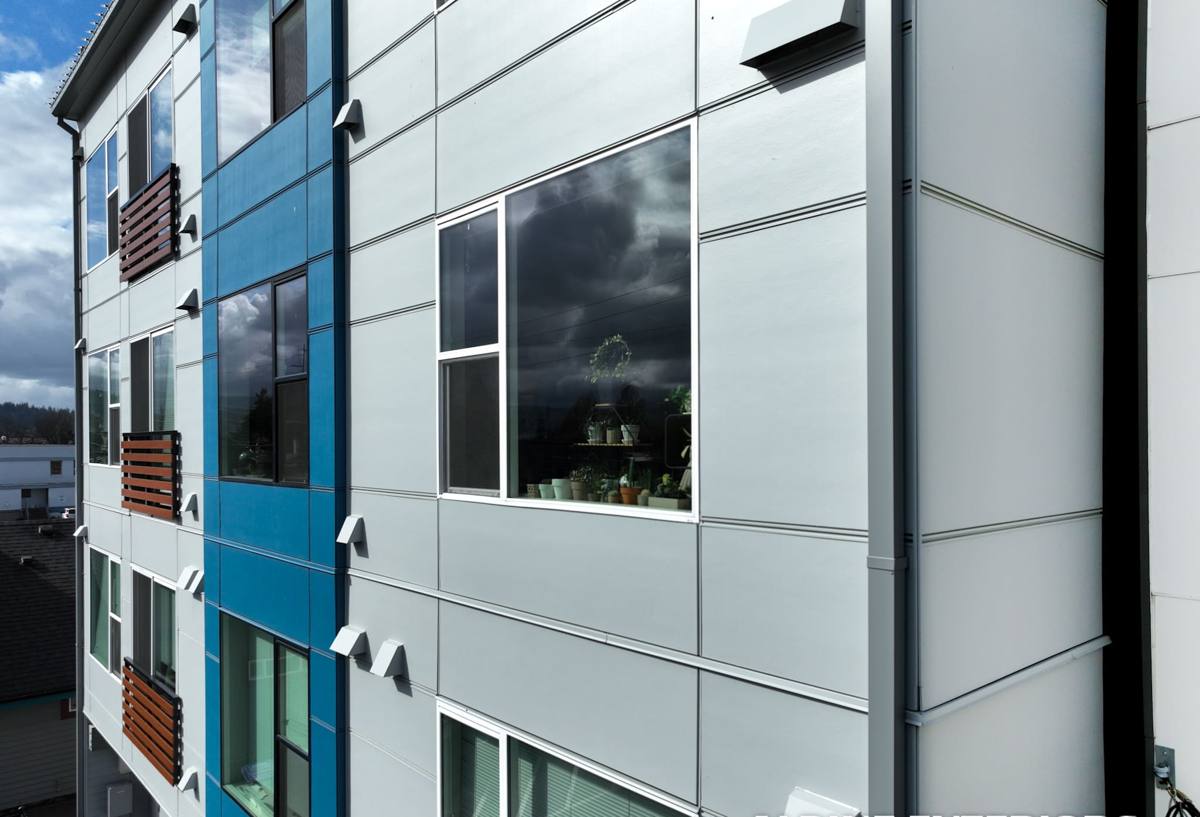
What Whatcom County Weather Does to Windows
Three things wear on windows in this area more than in drier climates, and they compound each other over time.
Salt Air and Moisture-Laden Air
Being close to the coast means the air carries more moisture and salt content than an inland climate would. That air finds its way into every gap in a window frame's seal. Over years, it accelerates corrosion on hardware, breaks down poorly sealed caulk lines, and speeds up wood rot in frames that weren't properly primed or flashed during installation.
Driving Rain
This isn't a light-drizzle climate. Wind-driven rain hits window frames at an angle, which means water gets pushed into places a vertical rain would never reach — under trim, behind J-channel, into any gap where flashing was skipped or done wrong. A window that would perform fine in a calmer climate can leak here simply because the installation didn't account for wind-driven moisture.
The Long Moss Season
Moss and algae growth isn't just a roof problem. On north-facing walls and around window trim that stays shaded and damp for months at a time, organic growth holds moisture against wood and vinyl surfaces far longer than they're designed to tolerate. That constant dampness is what actually causes rot and seal failure — the moss is just the visible sign of it.
None of this means Lynden homes are doomed to window problems. It means the installation and materials have to be matched to these conditions, not to a generic national standard.
Signs Your Windows Are Failing
Most window failure is gradual, which is why homeowners often live with a problem for a year or two before calling anyone. Here's what we'd want you to watch for:
- Fog or moisture building up between panes of double- or triple-glazed glass — this means the seal has failed and the insulating gas is gone
- Drafts you can feel near the frame even when the window is fully latched
- Soft or discolored wood on the interior sill or exterior trim
- Windows that are difficult to open, close, or lock, especially after painting or seasonal humidity swings
- Visible daylight or gaps between the sash and frame
- Condensation forming on the interior glass regularly, even in normal indoor humidity
- A noticeable jump in heating costs without any other explanation
- Peeling paint or bubbling finish concentrated around window openings specifically
One or two of these on a single window might just mean that window needs attention. If you're seeing this pattern across multiple windows on the same wall, it's often a sign of a broader moisture or flashing issue that's worth having looked at before it spreads.
Our Window Replacement Process
We don't sell windows off a showroom floor and move on. The process looks like this:
Assessment
We look at the actual condition of each window opening, not just the window itself — the sheathing, the flashing, any signs of past water intrusion. A new window installed over a rotten or improperly flashed opening will fail again regardless of how good the window is.
Product Selection
We walk through material and performance options based on your home's exposure — south and west-facing walls that catch driving rain need different attention than a sheltered north wall.
Installation
Correct flashing sequencing and sealing is the part that actually determines whether a window lasts. We treat this as the most important step in the job, not a formality.
Finish and Walkthrough
We check operation, seals, and trim work before we consider the job done, and we'll answer questions about care and maintenance specific to this climate.
Window Materials and Options
There's no single "best" window material — the right choice depends on your home's style, budget, and how exposed the wall is to weather. Here's an honest comparison of what's commonly used in this region:
| Material | Moisture Performance | Maintenance | Typical Fit |
|---|---|---|---|
| Vinyl | Good — won't rot, handles moisture well | Low | Most cost-conscious replacements |
| Fiberglass | Excellent — very stable in wet, temperature-swinging climates | Low | Higher-end replacements, larger openings |
| Wood (clad exterior) | Good if properly maintained and clad | Higher — requires attention to exterior finish | Older or historic-style homes |
| Aluminum | Fair — prone to condensation without thermal breaks | Moderate | Less common in new residential installs here |
We tend to steer homeowners away from unclad wood exteriors in this climate — not because wood windows are a bad product, but because maintaining bare exterior wood against this area's rain and moss exposure is a real ongoing commitment, and we'd rather be upfront about that maintenance burden than let someone find out the hard way.
Beyond Windows: Full Exterior Protection
Windows don't exist in isolation — they're one part of the building envelope, and problems often show up at the seams between systems. That's part of why we handle siding, roofing, and decks as well, not just windows.
Siding
The trim and flashing details around a window are only as good as the siding they tie into. If siding is failing or was installed without proper water management around openings, window problems often follow even with a brand-new window.
Roofing
Roof drainage and gutter performance directly affect how much water runs down a wall and pools near upper-floor windows. A roofing issue can masquerade as a window leak.
Decks
Decks attached near ground-floor windows or sliding doors change how water and moss behave against that section of the wall, which is worth factoring in if you're planning work on both.
Being able to look at the whole exterior — not just the window opening in front of us — is often how we catch the actual source of a moisture problem instead of just replacing a symptom.
Why a Local Crew Matters
Window products are largely national — the same manufacturers sell into markets all over the country. What differs is the installation, and installation quality is a local, human factor. A crew that works in Whatcom County regularly understands how far to push flashing details, which orientations on a given lot take the worst weather, and what a home in this specific climate needs versus a generic install spec written for a drier region.
We also aren't a call center dispatching a subcontractor pulled from a national network. When you call us about a window in Lynden, you're reaching people who know the area, who can be back out for a warranty check without a multi-week scheduling delay, and who have a reputation in this community to stand behind.
Cost Factors to Understand
Window project costs vary a lot based on scope, and it's worth understanding what actually drives the number before you get quotes:
| Factor | Why It Matters |
|---|---|
| Number of openings | Larger projects typically bring a lower per-window cost |
| Material choice | Vinyl, fiberglass, and clad wood carry different price points |
| Condition of the opening | Rot or flashing repair adds labor beyond a simple swap |
| Window size and configuration | Large picture windows or complex operable units cost more than standard sizes |
| Trim and finish work | Matching existing exterior or interior trim adds time and material |
We'd rather walk your specific windows with you and give a real number than quote a broad range that doesn't mean much until we've seen the openings.
Getting Started
If your windows in Lynden are drafty, fogged, hard to operate, or you're just starting to plan ahead of the next wet season, we're happy to come take a look. There's no pressure and no sales script — just an honest read on what your windows actually need, whether that's a repair, a partial replacement, or a full project. Reach out below for a free estimate.