 Ferndale Window
 Roofing in Lynden Isn't the Same Job as Roofing Somewhere Dry
Lynden sits inland from the Strait of Georgia and Bellingham Bay, close enough that salt-laden air still reaches roof surfaces, and far enough into Whatcom County's low, wet valley that moisture just sits longer than it does on a breezier coastal bluff. Add in a rainy season that can stretch from October through May and a roof here isn't just shedding water for a few storms a year — it's under near-constant damp pressure for more than half the calendar. That combination is why a roof replacement done right in Lynden looks a little different than the same job done in a drier climate.
We work this area regularly, which means we're not guessing at what fails first. We're replacing roofs that failed for predictable, repeatable reasons: moss holding moisture against shingles, flashing that was never quite sealed correctly, and ventilation that couldn't keep up with the humidity load. A correct replacement addresses all three, not just the shingles on top.
The Moss Problem Is a Moisture Problem
Moss on a Whatcom County roof isn't just an appearance issue. Moss holds water against the roofing surface long after the rain has stopped, which keeps shingles damp, accelerates granule loss, and can work its way under tabs and around fasteners over time. On north-facing slopes and shaded sections — common on lots with mature trees, which much of Lynden has — moss can take hold within just a few years of a new roof going down if the roof wasn't set up to resist it from the start.
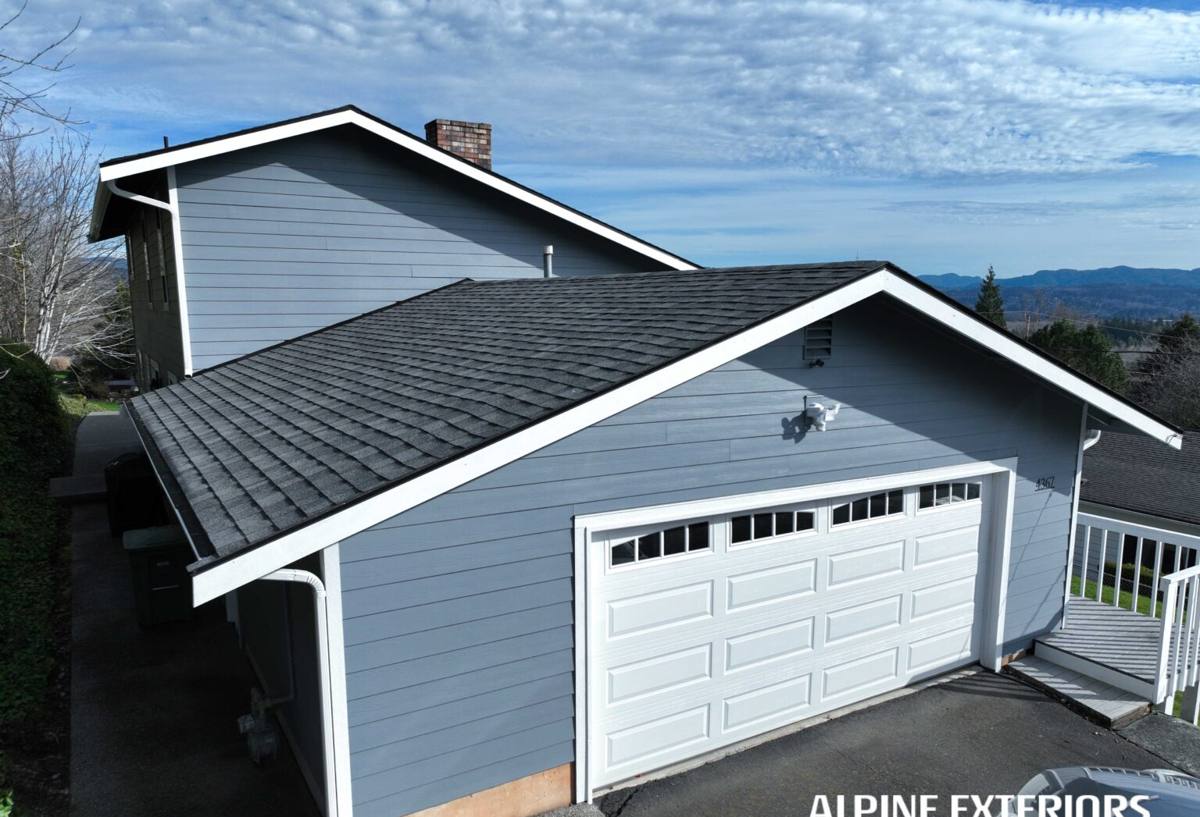
What a Correct Roof Replacement Actually Involves
A roof replacement is more than pulling off old shingles and nailing down new ones. In a climate like this, the parts you don't see matter as much as the parts you do.
Full Tear-Off, Not an Overlay
We don't install new shingles over old ones. An overlay traps moisture that may already be sitting in the old roofing system, hides deck damage that needs to be caught now, and shortens the life of the new roof. A full tear-off lets us actually see the deck, the flashing, and the ventilation path before anything new goes down.
Deck Inspection
Once the old roofing is off, we inspect the sheathing for soft spots, delamination, or rot — most often found around old flashing points, valleys, and anywhere moss or debris has been sitting against the roof for years. Any damaged decking gets replaced before underlayment goes down, not patched around.
Underlayment Built for a Wet Climate
We use synthetic or self-adhered underlayment suited to extended wet exposure, with extra protection at eaves, valleys, and low-slope transitions where water moves slowest and sits longest. In a marine climate, underlayment isn't a formality — it's the roof's actual backup layer for the weeks each winter when wind-driven rain gets under the surface layer.
Flashing at Every Transition
Chimneys, skylights, sidewalls, and valleys are where roofs actually fail — rarely the open field of shingles. We flash these correctly the first time: step flashing at walls, proper valley metal, and counter-flashing that sheds water rather than relying on caulk or sealant to do a metal detail's job.
Ventilation That Matches the Climate
A roof deck that can't breathe holds moisture from both directions — rain trying to get in, and warm interior air trying to get out. We check intake and exhaust balance during every replacement and correct it when the existing setup is undersized, which is common on homes that have had insulation or attic work done since the roof was last replaced.
Choosing Materials for Whatcom County Weather
There's no single "best" roofing material — there's a best fit for how a specific home is exposed to sun, shade, and moisture. Here's how the common options actually compare for a Lynden-area roof.
| Material | Typical Lifespan Here | Moss Resistance | Maintenance |
|---|---|---|---|
| Architectural asphalt shingle | 25–30 years | Moderate (improves with zinc/copper strips) | Periodic moss treatment on shaded slopes |
| Standing seam metal | 40–50+ years | High — moss struggles to anchor on smooth metal | Low; occasional fastener/seam check |
| Synthetic composite/slate look | 35–50 years | Good, varies by product | Low to moderate |
| 3-tab asphalt shingle | 15–20 years | Lower — thinner profile holds less algae/moss resistance | More frequent moss/algae treatment |
We'll talk through this table honestly during an estimate rather than pushing whatever has the best margin. A shaded, tree-covered lot changes the math toward metal or a higher-grade architectural shingle with algae-resistant granules. A more open, sun-exposed roof has more flexibility.
Our Roof Replacement Process
- On-site assessment — we walk the roof, check the attic from inside when accessible, and look at drainage, shading, and existing ventilation before recommending anything.
- Written scope and material selection — you get a clear breakdown of what's being replaced, what materials are being used, and why, before any work starts.
- Scheduling around the weather — we plan tear-off for a dry window whenever the forecast allows, and we protect the deck if weather moves in mid-project.
- Tear-off and deck inspection — old roofing comes off, decking gets inspected and repaired as needed, with no surprises hidden from you.
- Underlayment, flashing, and ventilation correction — the parts that determine whether the roof survives its first real winter.
- New roofing installation — installed to manufacturer specification, not shortcuts, so the warranty is actually valid if you ever need it.
- Site cleanup and final walkthrough — magnetic sweep for nails, debris hauled off, and a walkthrough so you know exactly what was done.
What We Commonly Find on Lynden-Area Roofs
Before we ever price a replacement, we look for the specific failure patterns this climate produces:
- Moss buildup on north-facing or tree-shaded slopes, holding moisture against the shingle surface
- Undersized or blocked ridge and soffit ventilation, especially on homes with older insulation upgrades
- Flashing that was caulked instead of properly stepped or counter-flashed at walls and chimneys
- Granule loss and premature aging on shingles that were never rated for extended damp exposure
- Soft or delaminated decking around valleys and low-slope sections where water sits longest
- Gutters and downspouts that can't keep up with sustained driving rain, backing water up under the roof edge
Ventilation and Moisture Control Matter More Here
In a marine climate, a roof is managing moisture from two directions at once — rain and wind from outside, and warm, humid interior air trying to escape through the attic. If intake and exhaust ventilation aren't balanced, moisture condenses inside the attic space, which can rot decking and framing from underneath even while the roof surface looks fine. This is one of the most common issues we correct during a replacement, and it's also one of the least visible from the ground, which is why a proper inspection — not just a shingle count — matters before a bid is written.
Timeline and Scheduling Around Whatcom County Weather
A straightforward residential roof replacement in this area typically takes one to three days of active work once materials are on site, weather permitting. Because driving rain and extended wet stretches are part of the reality here, we build schedule flexibility into every project rather than pushing through a tear-off during an unfavorable forecast window. Protecting an open deck from an unplanned storm is part of doing this job responsibly in this climate, and it's built into how we plan, not treated as an emergency when it happens.
Why a Crew That Already Works in Lynden Matters
Roofing done right depends on judgment calls — how much ventilation a specific attic actually needs, whether a shaded slope justifies a higher-grade material, how a valley should be detailed given the home's drainage pattern. A crew that regularly works this specific area has already made those calls dozens of times on homes with similar exposure, similar tree cover, and similar age. That's different from a crew learning the region's quirks on your roof for the first time.
It also matters for the practical side of the job: knowing where to haul debris locally, understanding permitting expectations in Whatcom County, and being close enough to respond quickly if a question comes up after the job is done — not weeks away on another job across the region.
What to Ask Before You Hire
- Will the job include a full tear-off, or is an overlay being proposed?
- Will they inspect and correct attic ventilation, or just replace the surface layer?
- What underlayment and flashing details are included, specifically at valleys and walls?
- Are they licensed and insured to work in Washington, and can they provide proof?
- Do they have experience with this specific area's moss, shade, and moisture conditions?
If your roof is showing moss, granule loss, or you just haven't had it looked at in a while, we're happy to come take an honest look. The estimate is free, there's no pressure, and you'll get a clear explanation of what your roof actually needs — use the form below to get started.