 Ferndale Window
 Why Windows Wear Out Faster Here Than the Manual Says
Every window has a manufacturer's expected lifespan printed somewhere in the fine print — usually 15 to 30 years depending on the material. Those numbers assume a fairly forgiving climate. Ferndale doesn't offer one. Between the salt air drifting in off Bellingham Bay and the Strait, the driving rain that comes sideways during a fall storm, and a moss season that can stretch from October through May in shaded yards, Whatcom County puts extra strain on window frames, seals, and hardware. Wood rots faster when it's wet more often than it's dry. Vinyl frames flex more with the region's temperature swings between damp winters and warm, dry summers. Metal hardware corrodes faster with salt in the air.
None of that means your windows are doomed on a fixed schedule. It means the visual and functional cues matter more here than a birthday on the calendar. This page walks through the actual signs worth paying attention to, what causes them, and how to tell a cosmetic issue from one that means it's time to replace.
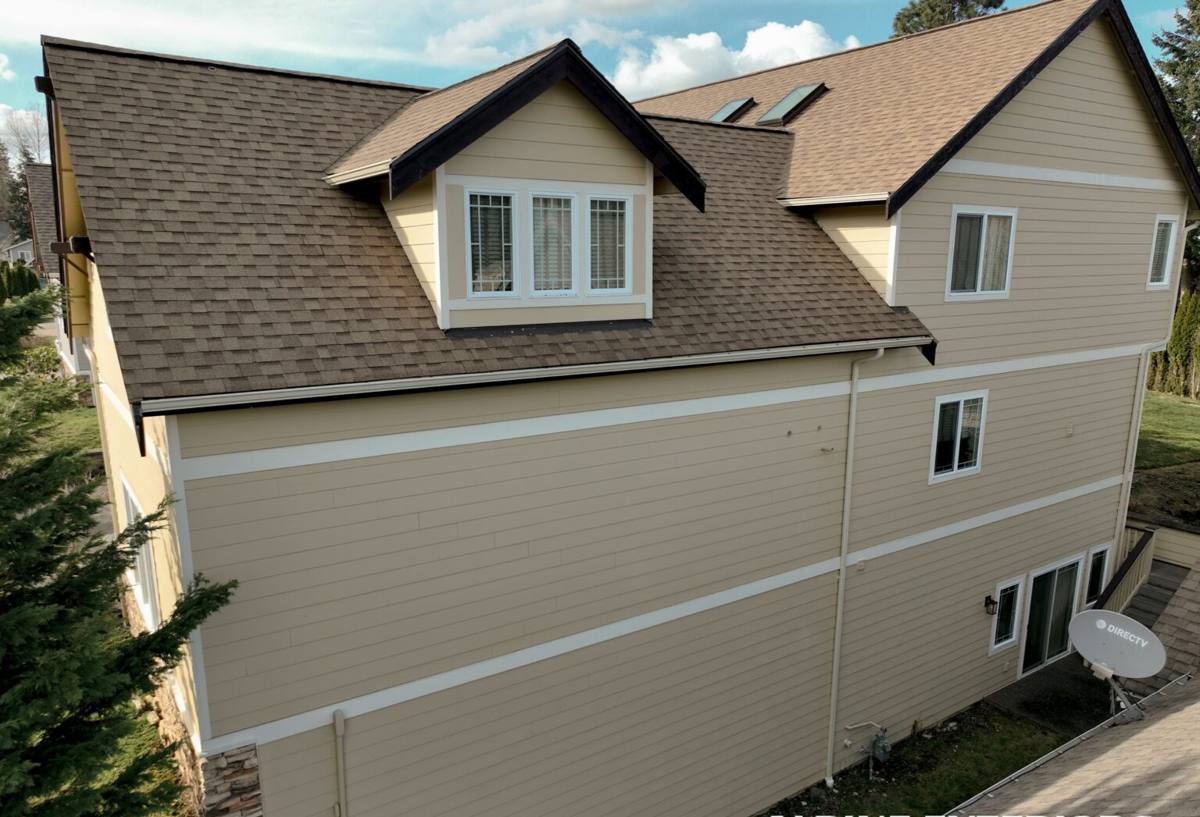
Drafts You Can Feel
The most common complaint we hear isn't about how a window looks — it's a cold stripe of air near the sash on a windy day, or a room that never quite holds heat the way the rest of the house does. A few things cause this:
- Weatherstripping that has hardened, cracked, or compressed permanently over the years
- A frame that has warped slightly out of square, so the sash no longer seats tight
- Old single-pane glass with no thermal break at all
- Gaps around the frame itself where original installation caulking has failed
Weatherstripping can sometimes be replaced on its own, and that's worth trying first if the frame and glass are otherwise sound. But if the draft is coming from a warped frame or gaps at the perimeter, that's usually a sign of a bigger moisture or settling issue underneath, and stripping alone won't fix it.
Rising Energy Bills
Drafts and heat loss don't just feel uncomfortable — they show up on the utility bill. If your heating costs have crept up over a few winters without a rate increase to explain it, and you haven't changed your thermostat habits, tired windows are one of the more common culprits, especially in older Ferndale homes that still have their original single-pane or early dual-pane units.
Condensation and Fogged Glass
Condensation on the inside of a window on a cold morning is usually just humidity in the house meeting cold glass — normal, and not a sign of failure. Fog or haze trapped between the panes of a double-pane window is a different story. That means the seal holding the gas fill (usually argon) between the panes has failed, moisture has worked its way in, and the insulating value of that unit is gone for good. There's no cleaning that fixes it.
In a marine climate like this one, with humidity swinging widely between our wet winters and drier summers, failed seals tend to show up sooner than they would in a drier inland climate. Once one pane in a house starts fogging, it's common to see others follow within a year or two, since they were usually installed at the same time and are aging together.
Wood Rot, Staining, and Moss Growth
This is where Whatcom County's climate does the most visible damage. A long moss season means anything shaded or north-facing stays damp for months at a stretch, and moss holds moisture directly against wood trim and sills. Add in the salt content in coastal air, which accelerates corrosion of exposed hardware and fasteners, and older wood-framed windows in Ferndale often show wear well before the glass itself fails.
Signs worth checking for, especially on the exterior:
- Soft or spongy wood at the sill or lower corners of the frame — press with a screwdriver handle, don't just look
- Dark staining or streaking below the window, which usually means water is getting past the sill flashing
- Moss or algae buildup directly on painted wood trim, not just on the roof or siding nearby
- Paint that's bubbling or peeling in a way that's isolated to the window rather than the whole wall
- Visible gaps between the window frame and the siding or trim around it
Small rot at a sill corner can sometimes be dug out, treated, and patched by a capable contractor. Rot that's spread into the structural frame of the window, or that's showing up on more than one window on the same wall, usually means the water intrusion has been ongoing for a while and full replacement is the more honest recommendation — patching it just buys a few more wet seasons before the same repair is needed again.
Windows That Are Hard to Operate
A window that used to open and close smoothly and now needs a shoulder into it, or won't stay up without a prop, is telling you something about the frame, not just the hardware. Common causes:
- Paint buildup — fixable, and worth ruling out before assuming the worst
- Swollen wood from moisture absorption — often seasonal, worse in winter, a sign the wood is taking on water it shouldn't be
- Frame that's racked out of square from house settling or rot in the surrounding structure
- Corroded balance hardware — springs or channels that have rusted, common in older aluminum or steel-hardware windows near the coast
Locks that won't fully engage are worth taking seriously beyond convenience — a window that can't lock properly is also a window that isn't sealing properly, which means it's leaking air and likely water too.
Single-Pane vs. Aging Double-Pane: What You're Actually Losing
| Symptom | Likely Cause | Typical Fix |
|---|---|---|
| Cold draft near sash | Worn weatherstripping or warped frame | Reseal or replace, depending on frame condition |
| Fog between panes | Failed seal, gas fill lost | Replace the sash or full unit |
| Soft wood at sill | Long-term moisture intrusion | Repair if localized, replace if widespread |
| Won't stay open or lock | Corroded hardware or racked frame | Hardware repair or full replacement |
| Outside noise noticeably loud | Single-pane glass, thin or no gas fill | Upgrade to insulated double- or triple-pane |
| Room won't hold temperature | Poor thermal performance overall | Full window replacement |
How Long Should Windows Actually Last?
There's no single number, but here's a realistic range for what we typically see in this climate, assuming reasonably good original installation:
| Window Type | Typical Lifespan Here | What Shortens It |
|---|---|---|
| Original wood, single-pane | 40+ years for the frame, but poor efficiency the whole time | Lack of repainting, moss and moisture exposure |
| Older aluminum-frame | 20-30 years | Salt air corrosion, minimal insulation to begin with |
| Vinyl double-pane (1990s-2000s era) | 15-25 years | Seal failure, UV breakdown of vinyl over time |
| Modern vinyl or fiberglass double-pane | 20-30+ years | Installation quality matters more than the product itself |
Installation quality is worth underlining. A well-installed window in a harsh spot will often outlast a poorly flashed window in a sheltered one. Where the water actually goes — around the frame, not just through the glass — determines most of what happens over the following decade.
Repair vs. Replace: A Practical Checklist
Not every issue means a full replacement. Here's a rough way to sort it out before calling anyone:
- Only one window shows a problem, and it's cosmetic (peeling paint, minor draft) → likely a repair
- Multiple windows on the same wall or side of the house show similar issues → often points to a shared cause worth a full inspection
- Fogging is limited to one or two panes → those units can sometimes be replaced individually without replacing the whole window
- Wood rot is confined to a small area and the surrounding frame is solid → repairable
- Rot has reached the point where a screwdriver sinks in easily, or it's spread across more than one window → replacement is the more honest long-term answer
- Energy bills have risen steadily and drafts are noticeable house-wide → replacement usually pays for itself faster than repeated repairs
- Windows are original to a home built before the 1990s and have never been replaced → worth a professional look even with no obvious symptoms yet
What Actually Happens During a Replacement
For homeowners who haven't been through it, window replacement is usually less disruptive than expected. Most residential jobs are done from the exterior where possible, one window at a time, so the house isn't opened up for long. A typical job includes removing the old unit down to the rough opening, checking the sill and surrounding framing for hidden moisture damage (common to find here, especially on older homes), correcting any rot found before the new window goes in, then installing and flashing the new unit so water is directed out and away from the wall assembly — not just sealed with caulk and hoped for.
That flashing detail matters more in Ferndale than it would somewhere drier. A window that's caulked shut but not properly flashed will often look fine for a couple of years before the same rot problem starts again behind the trim.
What to Watch For Between Now and Replacement
If you're not ready to replace yet, a few habits slow the damage:
- Clear moss and debris off sills and nearby trim before it holds moisture through the wet months
- Repaint or reseal exposed wood trim before the coating fully breaks down, not after
- Keep gutters and downspouts clear so runoff isn't sheeting down over window heads
- Check caulking at the frame perimeter each spring and touch up any gaps
None of this stops the clock permanently, but it buys time and can mean the difference between a small repair and a full replacement down the road.
If you're noticing any of these signs — or just want an honest read on where your windows stand — we're happy to come take a look. The estimate is free, there's no pressure attached, and you'll get a straight answer about what's worth fixing now, what can wait, and what full replacement would look like for your home.