 Ferndale Window
 Windows Built for Blaine's Coastal Exposure
Blaine sits right at the edge of the Salish Sea, tucked against Semiahmoo Bay and Drayton Harbor with the Peace Arch border crossing just up the road. That waterfront location is a big part of what makes Blaine a great place to live — and it's also exactly why windows here age differently than they do a few miles inland in Ferndale or Bellingham. Salt-laden air, near-constant onshore wind, and wind-driven rain off the water put more stress on window frames, seals, and hardware than most manufacturers' standard warranties assume.
We're based right up the road in Ferndale, and we've replaced windows in enough waterfront and near-waterfront homes around Whatcom County to know that a window sold as "coastal rated" and a window that's actually holding up on a bluff above Semiahmoo Bay after five winters are not always the same thing. This page covers what Blaine homeowners specifically run into, and how we approach window replacement here differently than we would on a more sheltered lot.
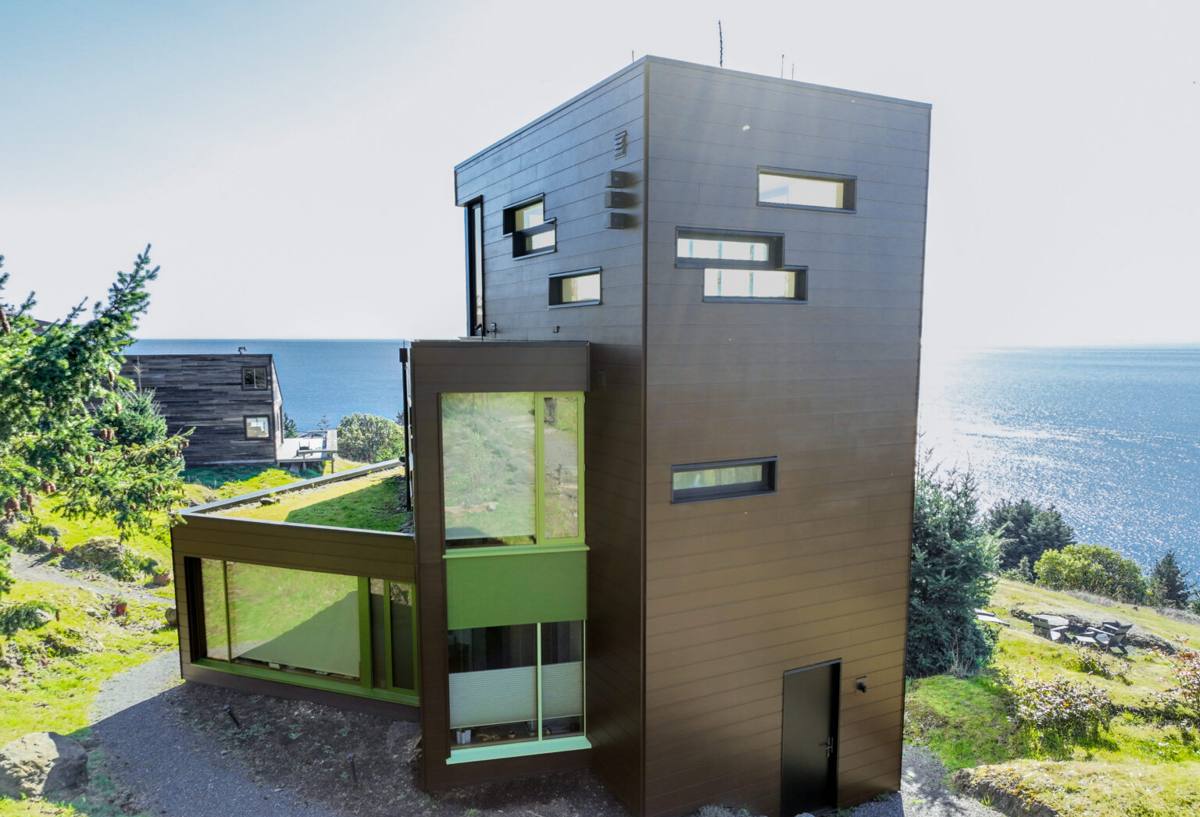
What Salt Air Actually Does to a Window
Corrosion of Hardware and Fasteners
Salt in the air accelerates corrosion on anything metal — window locks, hinges, balance mechanisms, and even the fasteners holding the frame together. On a standard residential window that wasn't specified for coastal exposure, this often shows up first as a lock or crank handle that starts sticking or feels gritty within a few years, well before the glass or seals show any trouble.
Aluminum and Vinyl Degradation
Cheaper aluminum window frames are especially vulnerable to salt corrosion — pitting and white oxidation can appear on frames that would otherwise last decades in a drier, inland location. Vinyl holds up better against salt itself, but lower-grade vinyl can still become brittle faster under the combination of UV exposure and constant moisture that's typical this close to the water.
Seal and Gasket Wear
The rubber and vinyl gaskets that seal a window against air and water infiltration break down faster with repeated wet-dry cycling and salt exposure. Once a seal starts to fail, you get drafts, condensation between panes on double- or triple-glazed units, and eventually water intrusion into the wall cavity — which is a much bigger and more expensive problem than the window itself.
Driving Rain and Wind Load
Blaine's exposure to wind coming off the water means rain rarely falls straight down — it's driven sideways into siding and window openings, especially on the west- and northwest-facing walls of a home. That changes what actually matters in a window installation:
- Flashing detail around the rough opening matters more here than on a sheltered inland lot — a window can be a good product and still leak if the flashing and weather barrier integration around it are done poorly.
- Sill pans that properly direct any water that does get past the window back outside, rather than into the wall framing, are worth the extra step on any home taking direct wind and rain.
- Higher wind-load and water-penetration ratings on the window unit itself are worth paying attention to on homes with unobstructed exposure toward the bay or the Strait.
- Caulking and sealant choices need to hold up to repeated wet cycles without cracking or losing adhesion — not all exterior sealants are rated the same for that kind of duty.
None of this is exotic — it's standard building science — but it's the kind of detail that gets skipped when a crew is used to installing on sheltered, inland lots and treats every job the same way.
Moss, Algae, and the Long Wet Season
Whatcom County's long stretch of gray, wet weather from fall through spring means moisture sits on exterior surfaces for extended periods, and moss and algae growth on siding, trim, and window sills is a fact of life. On windows specifically, that sustained moisture contact around the sill and lower frame is where rot and seal failure tend to start on older wood or poorly maintained frames. Regular cleaning helps, but the bigger factor is choosing materials and installation details that don't trap moisture against wood or allow water to pool on horizontal surfaces in the first place.
Choosing the Right Window Material for a Coastal Whatcom County Home
| Material | Coastal Performance | Trade-Offs |
|---|---|---|
| Vinyl (quality-grade) | Good resistance to salt corrosion; no metal frame to pit or oxidize | Lower-grade vinyl can become brittle under UV and moisture cycling faster than premium lines |
| Fiberglass | Strong dimensional stability and corrosion resistance; handles temperature swings well | Higher upfront cost than vinyl |
| Aluminum (standard) | Prone to pitting and oxidation in salt air unless specifically coastal-rated and coated | We're cautious recommending standard aluminum this close to the water — it's a maintenance and longevity trade-off, not a defect claim against any brand |
| Wood (uncladded) | Attractive but highest maintenance burden in a wet, salty climate | Needs vigilant sealing and repainting to avoid rot at the sill and joints |
| Wood with aluminum or fiberglass cladding | Combines interior wood look with exterior weather protection | Cladding seams and corners need careful installation to stay sealed long-term |
We don't push one material as the universal answer — the right choice depends on your home's exact exposure, your budget, and how much maintenance you want to take on. What we do push back on is installing a lower-grade product on a wide-open, wind-exposed elevation just because it's the cheaper line — that's a decision that tends to cost more in the long run through early callbacks and seal failures.
Glass and Glazing Considerations
Double-pane windows with a good low-E coating are the practical baseline for this climate — they help with both the summer sun off the water and the long heating season. Triple-pane is worth considering on the most exposed, wind-facing walls or for homeowners prioritizing sound reduction, since waterfront properties often deal with more ambient noise from wind and marine traffic than inland lots.
How We Approach a Blaine Window Replacement
Every job starts with actually looking at the home's specific exposure — which walls take the brunt of the wind and rain, what condition the existing flashing and sheathing are in once we open things up, and whether there's any sign of hidden moisture damage from prior window failures. On coastal and near-coastal homes we pay particular attention to:
- Inspecting the rough opening and surrounding sheathing for hidden rot or moisture staining before installing anything new
- Installing proper sill pan flashing and integrating it correctly with the home's existing weather-resistive barrier
- Selecting hardware and fasteners rated for corrosion resistance, not just standard-grade parts
- Sealing with products chosen for long-term flexibility and adhesion under repeated wet cycling, not the cheapest tube on the shelf
- Matching window performance ratings to the actual wind and water exposure of each elevation, rather than using one spec sheet for the whole house
Windows Are Rarely a Standalone Problem
Because we also handle siding, roofing, and decks, we're often the ones who catch a window problem that's actually a bigger exterior envelope issue — water tracking down from a roof flashing detail, or siding that's trapping moisture against a window frame. If your window trouble is showing up alongside peeling paint, staining on interior walls near a window, or soft spots in exterior trim, it's worth having someone look at the whole picture rather than just swapping the window and hoping the underlying moisture path is fixed too.
Signs Your Blaine Home's Windows Need Attention
- Visible corrosion, pitting, or chalky white residue on metal frames or hardware
- Locks, cranks, or balances that stick or feel gritty when operated
- Condensation forming between panes on a double- or triple-glazed unit — a sign the seal has failed
- Drafts or noticeable temperature difference near the window on windy days
- Soft or discolored wood at the sill, especially on wood or wood-clad frames
- Visible gaps in caulking or sealant around the frame's exterior perimeter
- Moss or persistent green staining building up on the sill or lower frame
Working With a Local Crew Versus a Traveling Sales Operation
Blaine gets a fair amount of attention from window sales companies that cover a wide territory and move on to the next region once the install is done. There's nothing wrong with that model on its own, but it does mean less accountability if a coastal-specific detail like sill flashing or hardware selection was skipped to hit a lower bid. We're a Whatcom County company working out of Ferndale, and we're around for the maintenance visits, warranty questions, and follow-up work — not just the install day.
What a Blaine Window Project Typically Involves
Every home is different, but a coastal replacement project in Blaine generally follows the same sequence: an on-site assessment of existing window condition and any hidden moisture issues, a review of material and glazing options suited to your home's specific exposure, removal of old units with inspection of the rough opening as we go, proper flashing and sealing integration, and installation of the new windows with attention to the hardware and fastener grade appropriate for salt air. We walk homeowners through each of those decisions rather than presenting a single pre-packaged option.
If you're noticing any of the wear signs above, or you're just planning ahead for a home on or near the water in Blaine, we're happy to come take a look. We offer free, no-pressure estimates — use the form below to get one scheduled.