 Ferndale Window
 Building New in Blaine Means Getting the Window Install Right the First Time
New construction gives you one real chance to get window installation right. Unlike a replacement job, where the existing frame and flashing already exist and the work is largely about fitting a new unit into an old opening, new construction means building the water management system from scratch: the rough opening, the sill pan, the weather-resistive barrier (WRB), the flashing tape, and the window itself all have to be sequenced correctly and in the right order. Get that sequence wrong and the mistake gets buried behind siding and trim, where it won't show up until years later as a stain on drywall or soft framing around a window.
For homes going up in Blaine, that first-time-right standard matters more than in a lot of inland locations. This stretch of Whatcom County sits right on the water, and the building envelope has to handle conditions that a house twenty miles inland doesn't see nearly as often.
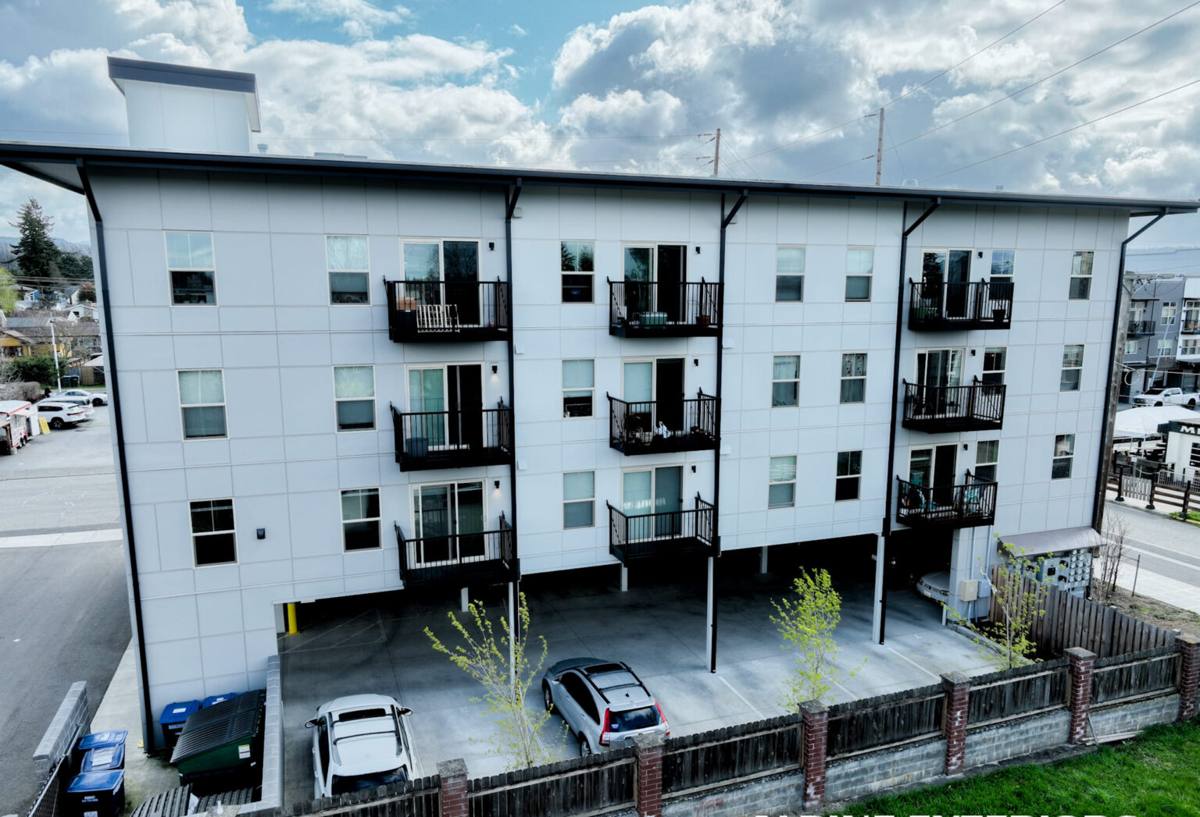
What Whatcom County's Coastal Climate Demands From New Windows
Blaine's exposure to open water brings three things that directly affect how we spec and install new-construction windows: salt air, driving rain, and a long moss season that keeps everything on the exterior damp for months at a time.
Salt Air
Airborne salt accelerates corrosion on hardware, fasteners, and lower-grade metal components. On new construction we're choosing corrosion-resistant hardware and fasteners from the start, since it's far cheaper to spec the right parts once than to replace failed hinges or locking hardware a few years after move-in.
Driving Rain
Wind-driven rain off the water doesn't just hit a window head-on — it gets pushed sideways and upward under trim and siding. New-construction flashing has to be built to shed that water outward at every layer, not just at the face of the window. This is where sequencing (what goes on before what) becomes the whole ballgame.
Moss Season
Whatcom County's long wet season keeps north- and shade-facing exterior surfaces damp for extended stretches, which is exactly the environment moss and mildew need to take hold. On new builds, that means giving real thought to sill design, drainage paths, and finish materials that won't hold moisture against the frame.
What a Correct New-Construction Window Install Actually Involves
A properly installed new-construction window is really a small drainage system built into the wall. Every layer has a job, and every layer has to lap over the one below it — never the other way around — so water is always directed outward and down.
Rough Opening and Sill Pan
Before a window ever goes in, the rough opening gets prepped and a sloped sill pan is built or installed so that any water that gets past the window has somewhere to go besides straight into the framing. This step gets skipped more often than homeowners realize, because it doesn't show and it doesn't affect the "did the window get installed" checklist — until years later.
Nail Fin Integration With the WRB
New-construction windows use a nail fin (a flange around the perimeter of the frame) that gets fastened directly to the sheathing and integrated with the weather-resistive barrier. The WRB and flashing tape have to be layered in the correct shingle-style order — bottom, sides, top — so the whole assembly sheds water the way roofing shingles do.
Head Flashing and Drip Caps
Above the window, head flashing (often paired with a drip cap) directs water running down the wall out and away from the top of the frame instead of letting it pool and work its way behind the trim. On a site with regular driving rain, this detail is not optional trim work — it's functional water management.
Choosing Frame Materials for a Salt-Air, High-Moisture Site
Frame material choice matters more in Blaine's environment than it does further inland. Here's how the common options stack up for new construction in this kind of exposure:
| Frame Material | Salt Air / Moisture Behavior | Maintenance | Typical Fit |
|---|---|---|---|
| Vinyl | Won't corrode; UV and temperature swings can affect long-term seal performance | Low — occasional cleaning | Budget-conscious new builds, rentals |
| Fiberglass | Very stable in wet, salt-exposed conditions; expands/contracts close to glass | Low | Coastal exposures, higher-end new construction |
| Wood-clad | Good performance if cladding and flashing are correct, but any breach exposes wood to rot risk | Higher — finish and seal checks over time | Design-driven projects where interior wood look is a priority |
| Aluminum | Prone to corrosion and condensation in coastal, wet climates without thermal breaks | Moderate to high | Limited use; mainly commercial or specific architectural needs |
We don't push one material on every job. The right call depends on the home's exposure (how directly it faces the water and prevailing weather), the builder's design intent, and budget. What we do insist on is corrosion-resistant hardware and correct flashing details regardless of which frame material a homeowner or builder chooses.
Our New-Construction Process Working With Blaine-Area Builders
New-construction window work is a coordination job as much as an installation job. We're typically one piece of a larger building schedule, and timing matters — windows generally go in after the WRB is up and before siding starts, which means we have to be ready to move when the framing and wrap are ready for us, not weeks later.
- Review rough opening dimensions and window schedule against the actual framing before delivery
- Confirm WRB is installed and ready to integrate with sill pan and flashing tape
- Install sill pan flashing and dry-fit the window to check level, plumb, and square
- Fasten the nail fin and integrate flashing tape at sides and head in correct shingle-lap order
- Insulate and air-seal the interior perimeter per code
- Walk the finished openings with the builder or homeowner before siding closes everything in
That last step matters. Once siding goes up, the flashing work is hidden — so we treat the pre-siding walkthrough as the last real chance to catch anything before it's buried for the life of the house.
Common New-Construction Problems We Get Called to Fix Later
Most of the window-related callbacks we see on newer homes trace back to the same handful of sequencing issues, not the window units themselves:
- Flashing tape applied in the wrong order, so water gets directed behind the WRB instead of over it
- No sill pan, or a flat sill pan with nowhere for incidental water to drain
- Nail fin fastened before the WRB was properly lapped, leaving a gap for wind-driven rain
- Missing or undersized head flashing above the window
- Hardware and fasteners not rated for salt-air exposure, corroding within a few years
None of these are unusual or exotic mistakes — they're the ordinary result of rushing a sequence that has to happen in a specific order on a specific schedule. Our process is built around not letting the building timeline compress the flashing sequence.
Why a Crew That Already Works Blaine Matters
Window installation standards don't change much from town to town, but exposure does. A crew that regularly works this stretch of Whatcom County already has a feel for how much wind-driven rain a given lot orientation is likely to see, which sides of a house need the most conservative flashing detail, and how long moss season actually runs here versus a text-book climate zone number. That local pattern recognition doesn't replace following manufacturer install instructions and code — it's what tells us where to be extra careful on a given site before problems show up.
It also means fewer surprises for builders and homeowners on scheduling, permitting expectations, and how local wind exposure factors into window ratings for a given elevation.
Cost Factors for New-Construction Windows
New-construction window costs vary by unit count, size, frame material, and glass package. Rather than quote a flat price, here's what actually moves the number on a Blaine-area build:
| Factor | Why It Affects Cost |
|---|---|
| Frame material | Fiberglass and wood-clad run higher than vinyl; material choice is often the single biggest cost driver |
| Glass package | Low-E coatings, gas fills, and impact or sound-rated glass add cost but improve performance |
| Window size and count | Larger openings and higher window counts mean more material, labor, and flashing detail |
| Wind and exposure rating | Higher-exposure elevations facing open water may call for windows rated for greater wind load |
| Site access and schedule | Tight building schedules or difficult site access can add labor time |
We give builders and homeowners a written estimate broken out by these factors rather than a single lump number, so it's clear what's driving the cost.
Getting Your New Windows Right From the Start
A checklist worth walking through with any contractor before your new-construction windows go in:
- Ask how sill pans and flashing will be sequenced with your WRB
- Confirm hardware and fasteners are corrosion-resistant, not just the frame material
- Ask for a pre-siding walkthrough so flashing details are visible before they're covered
- Check that window wind and exposure ratings match your lot's actual exposure, not just the regional code minimum
- Get scope and cost factors in writing, broken out rather than lumped together
If you're building in Blaine and want a straightforward look at what your project needs, we're happy to walk the plans or the site with you and put together a free, no-pressure estimate — no obligation, just a clear picture of what correct new-construction window installation looks like for your home.