 Ferndale Window
 Marietta's Climate Is Rough on Siding
Marietta sits close to the water, and that proximity changes what siding has to deal with compared to homes further inland. Salt-laden air moves through constantly, driving rain comes in sideways during winter storms, and the shaded, damp stretches of the year give moss and algae months to take hold on north-facing walls, under eaves, and anywhere sun doesn't reach. None of this is unique to one house — it's the baseline condition for siding in this part of Whatcom County, and it's why repairs here tend to show up in predictable places and predictable ways.
Siding that isn't built or installed for this environment breaks down faster than homeowners expect. Wood-based products swell, cup, and rot at the edges. Caulk and paint films that seal in moisture instead of letting a wall dry create hidden damage that isn't visible until it's advanced. Salt air accelerates corrosion on fasteners and trim. Understanding these mechanisms is the difference between a repair that lasts and one that fails again in a year or two.
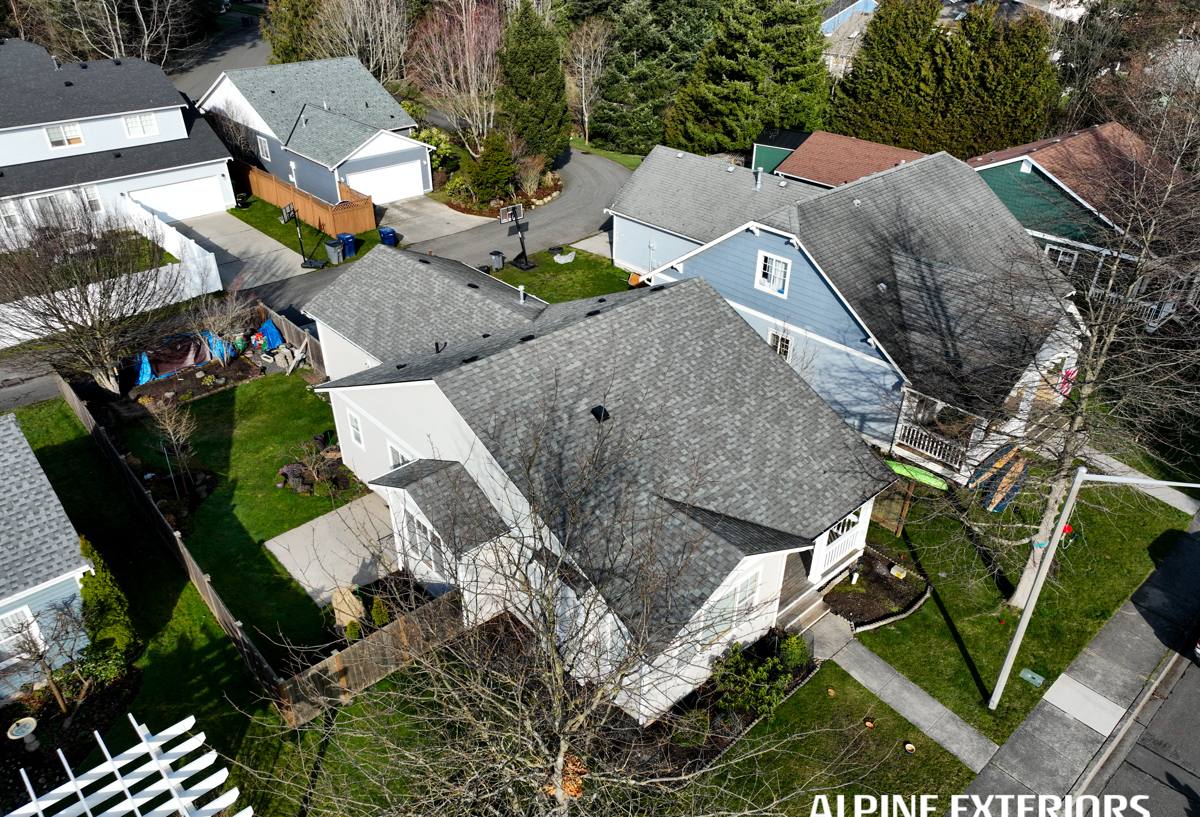
Signs a Marietta Home Needs Siding Repair
Moisture and Rot Indicators
Soft spots, dark staining, or a spongy feel when you press on siding — especially near the bottom courses, around window trim, and at butt joints — usually mean water has been getting behind the material for a while. By the time staining is visible on the surface, the damage underneath is often more extensive than it looks.
Moss, Algae, and Organic Growth
A thin green or black film on siding isn't just cosmetic. Moss holds moisture against the surface long after rain stops, which is exactly the condition that lets rot start underneath paint or coatings. On shaded walls and roof-adjacent siding, a moss problem that's ignored for a season or two often turns into a repair job instead of a cleaning job.
Wind-Driven Rain and Impact Damage
Cracked, split, or dislodged panels — particularly on the sides of a house that catch weather off the water — let wind-driven rain get behind the cladding, which is one of the fastest ways a small problem becomes a sheathing or framing problem.
What a Correct Repair Actually Involves
A lot of "siding repair" in this region is really just cosmetic patching — matching the visible surface without addressing why the damage happened. That approach doesn't hold up in a climate this wet. A repair done right starts with figuring out the cause, not just replacing the damaged piece.
Diagnose Before You Patch
We pull back damaged siding to check the water-resistive barrier, flashing, and sheathing underneath before deciding on a repair plan. If the underlying moisture barrier or flashing failed, replacing the visible siding without fixing that will just repeat the same failure.
Match the Material and the Method
Repairs need to tie into the existing siding correctly — same reveal, same fastening pattern, same joint treatment — so the patched section performs the same as the rest of the wall, not just looks similar from the ground.
Flashing and Water Management Come First
Any competent repair re-establishes proper flashing and drainage at that section: window and door heads, butt joints, and any penetration get correct flashing and a drainage path, not just a bead of caulk over the gap.
Why We Repair With James Hardie Fiber Cement
We install and repair exclusively with James Hardie fiber cement siding. That's a deliberate standard, not a limitation on options. Fiber cement doesn't absorb water the way wood-based products do, it won't support the kind of organic growth that softens and rots wood siding, and it holds its dimensions in wet-dry cycles instead of swelling and cupping. In a climate with this much sustained moisture and salt air, those properties matter more over ten or twenty years than they do in the first year after installation.
When we repair a wall that has other siding on it, we'll explain honestly what a like-for-like patch versus a Hardie rebuild of that section involves — including appearance differences — so the homeowner is making an informed call, not just getting whatever's fastest.
| Repair Consideration | Wood / Composite Siding | James Hardie Fiber Cement |
|---|---|---|
| Moisture absorption | Absorbs water; swells and softens over time | Engineered to resist moisture intrusion |
| Moss and algae resistance | Organic surface supports growth | Non-organic surface resists sustained growth |
| Behavior after storm damage | Cracks, splinters, or delaminates | Holds shape; damaged sections cut cleanly for replacement |
| Finish longevity on repaired section | Repainting needed to blend and protect | ColorPlus finish available for a durable, matched repair |
| Fire exposure | Combustible | Non-combustible fiber cement |
Our Siding Repair Process
- Inspection: We look at the damaged area and the surrounding wall assembly, not just the spot you noticed, since moisture problems usually extend past the visible symptom.
- Diagnosis: We identify whether the cause is flashing failure, caulk failure, a missed drainage plane, impact damage, or long-term moisture from moss and shade.
- Repair plan: We give you a clear picture of what's involved — patch, section replacement, or a larger rebuild if damage has spread — before any work starts.
- Execution: Damaged material and any compromised sheathing or barrier is removed, water management is corrected, and new material is installed to match reveal and fastening.
- Finish and cleanup: Repaired sections are finished to blend with the surrounding siding, and the site is cleaned up before we call the job done.
Repair vs. Replacement: Making the Right Call
Not every damaged wall needs full replacement, and not every repair is worth doing instead of replacing. The right call depends on how much of the wall is affected, what's causing the damage, and how old the existing siding already is.
| Factor | Repair Usually Makes Sense | Replacement Usually Makes Sense |
|---|---|---|
| Extent of damage | Isolated to one or two sections | Spread across multiple walls or elevations |
| Age of existing siding | Relatively recent, otherwise sound | Near or past its expected service life |
| Underlying cause | One-time impact or a single flashing failure | Systemic moisture issue behind the whole wall |
| Material match | Compatible siding still available | Discontinued profile or mismatched material |
We'll tell you plainly if a repair is the right move or if you'd be better served putting that money toward replacing a full wall or elevation instead. A homeowner who's about to spend money deserves that straight answer.
What to Check Before Calling for a Repair Quote
- Note which side of the house the damage is on — weather exposure differs by elevation
- Check for soft spots by pressing gently along the bottom courses and around windows
- Look for moss or algae buildup on shaded or north-facing walls
- Check whether damage lines up with a downspout, roofline, or other water path
- Note how long the issue has been visible — longer exposure usually means more hidden damage
Preventing Repeat Damage in This Climate
A good repair should outlast a single season. In a climate with this much sustained moisture and a long moss season, ongoing maintenance matters as much as the repair itself.
- Keep gutters and downspouts clear so water isn't sheeting down siding it wasn't meant to drain across
- Trim back vegetation that shades siding and keeps it damp longer than it should be
- Have moss and algae cleaned off gently before it spreads, rather than after it's established
- Recheck caulking at trim, window, and door joints periodically, since it degrades faster in constant damp conditions
- Address small cracks or gaps early, before wind-driven rain has a season to work behind them
Why Hire a Crew That Already Works in Marietta
A repair crew that regularly works this part of Whatcom County already knows which elevations take the worst weather, where moss tends to build up fastest, and how salt air and driving rain typically show up in a wall assembly here. That's not something you can fully substitute with general siding experience from a drier or more inland market. It shows up in faster, more accurate diagnosis and in a repair that's built for the conditions the wall will actually face, not just for how it looks the day the crew leaves.
It also means a contractor who isn't guessing about products. We stand behind fiber cement because we've watched how it performs against wood and composite alternatives in exactly this kind of weather, over years, not just on paper.
If you're dealing with damaged, cracked, or moss-covered siding on a Marietta home, we're happy to take a look and give you an honest read on what it needs. Reach out for a free, no-pressure estimate — we'll tell you straight whether you're looking at a repair or something bigger.