 Ferndale Window
 Cordata's Exterior Climate Challenge
Cordata sits in that stretch of Whatcom County where marine air off Bellingham Bay meets the rain patterns rolling in off the Pacific. It's not a harsh climate in the way a hot, dry region is harsh — there's no scorching sun to fade paint in a season, no hard freeze-thaw cycle cracking concrete every winter. Instead it's a slower, steadier kind of wear: damp air that never fully dries out, wind-driven rain that finds every gap in flashing or caulk, and a moss season that can run from October clear through May in a wet year.
Homes here don't fail dramatically. They fail quietly, over years, in the places nobody checks — behind trim boards, under window sills, in north-facing roof valleys that never see direct sun. That's the pattern we plan around when we work in Cordata: build for the long, low-grade exposure, not just the occasional storm.
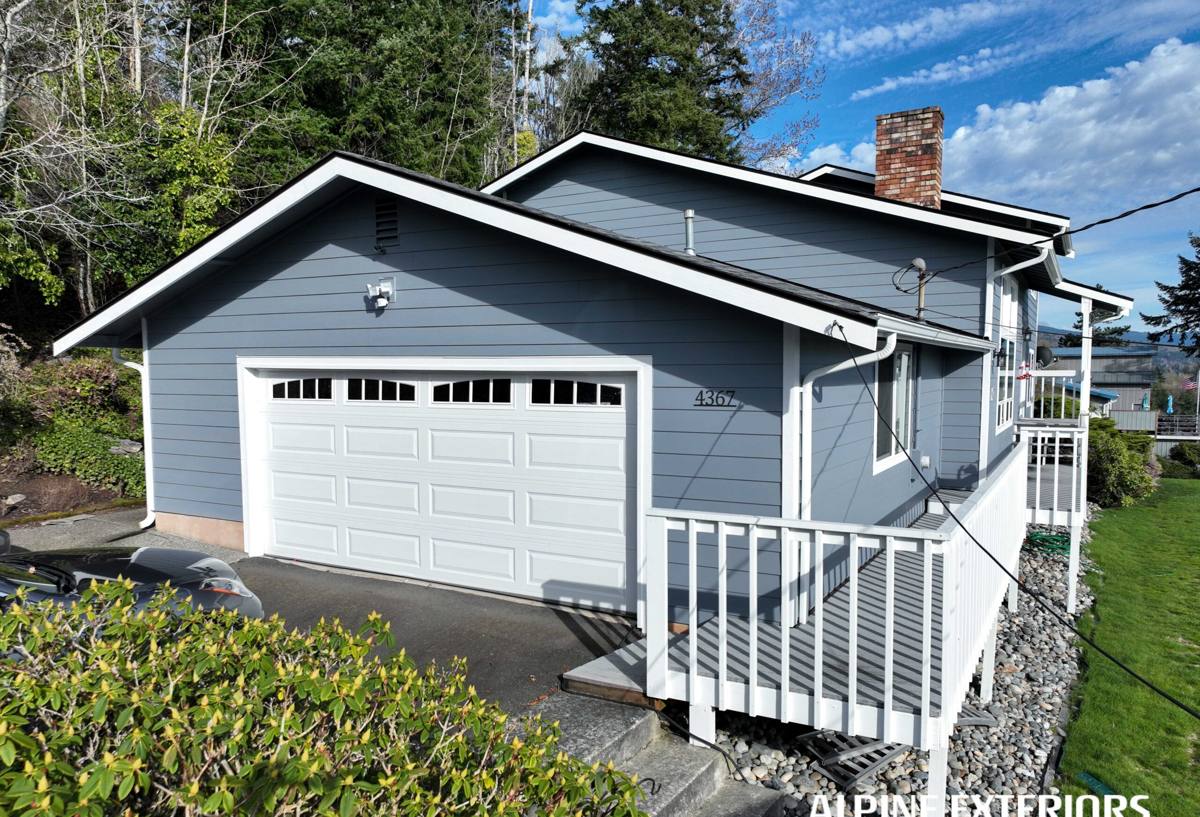
How Marine Air and Rain Wear Down Windows, Siding, and Roofs
Salt-laden air moving inland from the Sound accelerates corrosion on anything metal — window hardware, nails, flashing, gutter fasteners. Combine that with near-constant humidity and you get a slow breakdown of seals and finishes that homeowners in drier parts of the state simply don't deal with.
Driving rain is the other half of the equation. When wind pushes rain sideways instead of straight down, water gets tested against every seam in a building envelope — window perimeters, siding laps, roof-to-wall transitions, deck ledger boards. A house that would stay bone-dry in a calm rain can leak in the same storm if the wind is blowing hard enough to drive water uphill under a lap or through a poorly sealed window flange.
And then there's moss. Constant moisture plus mild temperatures is exactly what moss wants. Left unchecked it holds water against roofing material, works into siding laps, and grows in shaded deck boards — turning a cosmetic nuisance into a moisture problem if it sits long enough.
What This Means in Practice
- Window and door flashing details matter more here than in drier climates — a shortcut that's invisible for years elsewhere shows up fast in Whatcom County.
- Metal components (hinges, latches, fasteners) should be corrosion-resistant, not just standard-grade.
- North- and shade-facing surfaces need extra attention since they dry out slower and hold moss longer.
- Ventilation — attic, crawlspace, and wall cavity — is as important as the exterior material itself.
Windows Built for Whatcom County Conditions
When we replace windows in Cordata, the conversation starts with the building envelope, not the glass. A window is only as good as its installation — proper flashing, correct pan detailing at the sill, and sealants rated for sustained moisture exposure. We've seen good windows fail early because of a rushed install, and we've seen modest windows perform well for decades because the water management around them was done right.
On the glass side, most homeowners here do well with dual-pane, low-E glazing. It helps with heat retention through our gray winters and cuts down on condensation on the interior side of the glass during cold snaps — a common complaint in older single-pane homes in this area. Frame material is a real decision point, and it's one we walk through honestly rather than pushing a single answer.
Frame Materials, Honestly
Vinyl remains the most common choice for straightforward replacements — low maintenance, good thermal performance, and it doesn't corrode. Fiberglass costs more but holds up well to temperature swings and takes paint if a homeowner wants to change color down the road. Wood-clad windows look great and many homeowners want that look, but they carry a real maintenance obligation in a climate this damp — exposed wood trim needs upkeep, and we're upfront about that trade-off rather than letting it be a surprise five years in.
Siding That Holds Up to Driving Rain and Salt Air
Siding in Cordata has one job above all others: shed water and keep it moving down and away from the wall assembly. Fiber cement and quality vinyl both perform well here when installed with correct lap sequencing, proper flashing at windows and penetrations, and adequate clearance from grade and roof lines. Wood siding can look excellent, but in a climate with this much sustained moisture, it demands a maintenance schedule — repainting, caulking, and moss treatment — that not every homeowner wants to sign up for. We say that plainly rather than oversell a look that comes with upkeep costs later.
We also pay close attention to the small details that matter more here than in drier regions: rain screen gaps that let siding breathe and dry, kick-out flashing at roof-to-wall intersections so water doesn't run behind the siding, and proper caulking at trim joints that will actually hold up under repeated wet-dry cycling.
Roofing and the Long Moss Season
A roof in Whatcom County spends most of the year damp. That reality drives our approach — proper underlayment, ventilation that lets the roof deck dry out between rain events, and attention to valleys and low-slope sections where water and debris collect. Moss is the visible symptom of a roof that stays wet too long; treating moss without addressing ventilation and drainage is a temporary fix at best.
Composition shingle remains the most common and cost-effective choice for this area, and today's algae-resistant shingle products help slow moss and moss-adjacent growth compared to older shingle formulations. Metal roofing is a strong option too — it sheds water and moss more readily than shingle, though it comes at a higher upfront cost. We'll walk through both honestly based on the home's roof pitch, shading, and budget rather than steering toward whichever is easier to install.
Decks: Wood, Composite, and Moisture Management
Decks in this climate face the same enemy as everything else: sustained moisture. Ledger board attachment and flashing at the house connection is the single most important structural detail on any deck we build or repair — it's also the spot most prone to hidden rot if it was done wrong originally. Below the surface, joist spacing, proper drainage, and gaps between boards to let water and debris pass through all matter more here than in a dry climate.
Pressure-treated wood decking is the most economical option and performs fine with regular maintenance — cleaning, sealing, and periodic moss removal. Composite decking costs more upfront but needs far less maintenance and resists moss and rot better, which is a real consideration for a shaded lot or a homeowner who doesn't want an annual maintenance task. Cedar decking looks great but, like cedar siding, asks for a real maintenance commitment in this rainfall pattern.
Why a Local Crew Makes a Difference in Cordata
We're based in Ferndale, working this same stretch of Whatcom County day in and day out. That matters in a few concrete ways. We know which details actually hold up against our specific weather pattern versus what looks fine on paper from a manufacturer spec sheet written for a different climate. We're not driving in from out of the area for a bid and disappearing after the invoice — if something needs a warranty callback or a follow-up check after the first hard winter storm, we're already local.
We also know the practical side: permitting expectations in Whatcom County, typical inspection timelines, and how weather windows affect scheduling for roofing and siding work in particular — you don't want a roof torn open the week a Pacific storm system is forecast to move through, and a local crew plans around that rather than learning it the hard way.
Comparing Options: What Fits Cordata Homes
| Project | Lower-Maintenance Option | Higher-Character Option | Key Trade-Off |
|---|---|---|---|
| Windows | Vinyl, dual-pane low-E | Wood-clad, fiberglass | Vinyl is lowest upkeep; wood needs ongoing maintenance in wet climate |
| Siding | Fiber cement or vinyl | Cedar or wood siding | Wood looks great but needs regular repainting and moisture upkeep |
| Roofing | Algae-resistant composition shingle | Standing seam metal | Metal sheds moss better but costs more upfront |
| Decking | Composite | Cedar or pressure-treated wood | Composite resists moss/rot; wood costs less but needs annual care |
Maintenance Checklist for Cordata Homeowners
Whether you're planning a replacement project or just trying to get more years out of what you have, these are the checks that matter most in our climate:
- Check window sills and corners each fall for soft spots, discoloration, or condensation between panes.
- Look for moss buildup on north-facing roof slopes and shaded siding sections at least once a year.
- Inspect deck ledger boards and the house connection point for staining or soft wood, especially after winter.
- Clear gutters and downspouts before the fall rains start — clogged gutters push water back toward siding and fascia.
- Watch for peeling paint or caulk separation at trim joints, a common early sign of moisture getting behind the surface.
- If you notice a musty smell near any exterior wall, treat it as a priority — it usually means moisture has already gotten past the surface.
If any of this sounds familiar — a drafty window, moss creeping across the roofline, a deck board that's gone soft — we're glad to come take a look. We offer free, no-pressure estimates for homeowners in Cordata and the surrounding Ferndale area, with an honest read on what's actually needed and what can wait.