 Ferndale Window
 Cordata Roofs Take a Specific Kind of Beating
Cordata sits close enough to the water and far enough into the Pacific Northwest weather pattern that its roofs age differently than roofs a hundred miles inland. Homes here deal with a long wet season, wind-driven rain that gets pushed sideways under loose flashing, and a near-constant supply of moisture that keeps moss and moisture-loving growth active for most of the year. None of that means Cordata roofs fail faster than they should — it means they need repair work that actually accounts for how they're aging, not a generic patch job pulled from a warmer, drier climate.
We work on roofs throughout Ferndale and greater Whatcom County, and Cordata's mix of housing stock — older single-family homes alongside newer builds — gives us a good cross-section of what actually goes wrong here versus what homeowners assume is going wrong. That distinction matters, because a roof repair that treats the wrong problem doesn't just waste money, it lets the real issue keep working on the structure underneath.
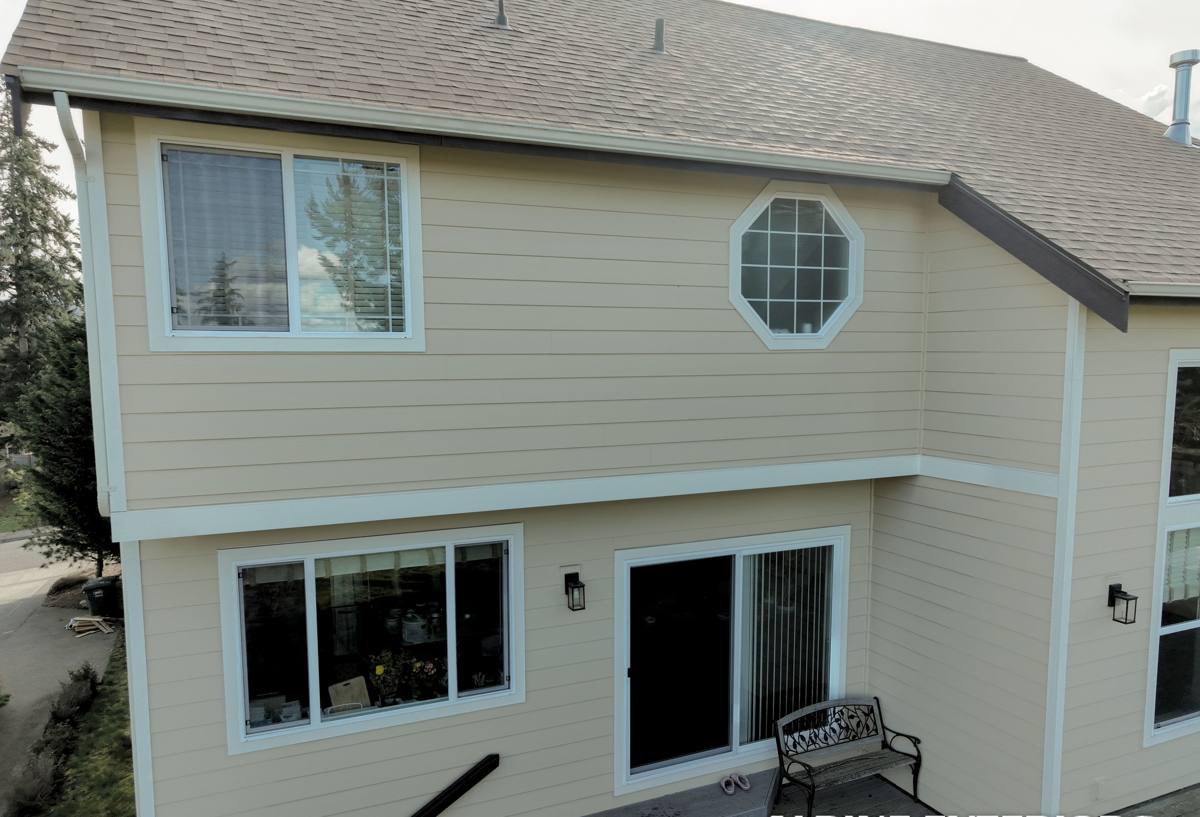
What the Regional Climate Does to a Roof Over Time
Three things drive most of the repair calls we get from this part of the county: salt-influenced air moving in off the water, driving rain, and a moss season that runs far longer than most homeowners expect.
Salt Air and Metal Components
Flashing, fasteners, gutters, and any exposed metal on a roof are the first things affected by salt-laden air. Lower-grade fasteners and thin flashing corrode faster near the coast than they would inland, and once a fastener starts to corrode, it loses its grip on the roofing material around it — which is exactly where leaks start.
Driving Rain
Rain that falls straight down is rarely the problem. Rain that gets pushed sideways by wind finds every gap in flashing, every lifted shingle tab, and every seam that isn't sealed the way it should be. Roofs in this area need flashing and underlayment details that assume water will hit them from an angle, not just from above.
Extended Moss Season
Moss doesn't just sit on a roof looking bad — it holds moisture against the roofing material, works its way under shingle edges, and lifts tabs as it grows. In Whatcom County, the combination of shade, humidity, and mild temperatures means moss can establish itself in almost any season, not just the wettest months. A roof that goes a couple of years without attention to moss growth is a roof that's aging faster than it needs to.
Signs a Cordata Roof Needs Repair Now
- Dark streaking or visible moss growth along shaded slopes or north-facing sections
- Granules collecting in gutters or at downspout outlets
- Shingle tabs that look lifted, curled, or cupped, especially near ridges and edges
- Soft spots, sagging, or discoloration on interior ceilings after a heavy rain
- Flashing around chimneys, skylights, or roof-wall intersections that looks rusted, gapped, or loose
- Gutters overflowing during normal rain, which often points to a roof shedding debris faster than it's being cleared
- Daylight visible through the attic decking, or damp insulation near the roofline
Any one of these on its own might be minor. Two or three together usually means water has already found a way past the roofing surface, even if there's no visible leak inside yet.
What a Correct Roof Repair Actually Involves
A repair that's done right starts with figuring out the actual path water is taking, not just patching the spot where it showed up inside the house. Water often travels along the underlayment or decking before it ever drips through a ceiling, so the entry point can be several feet away from the visible damage.
Diagnosis Before Repair
We look at the roofing material condition, the flashing details, the underlayment where it's exposed, and the attic side of the deck when it's accessible. This tells us whether we're dealing with a failed seal, a corroded fastener, a flashing detail that was never right to begin with, or wear that's spread wide enough that a patch won't hold.
Matching Materials Properly
A repair should blend into the existing roof in material type, weight, and where possible, color and age. Mismatched materials don't just look wrong — different products can expand, contract, and shed water differently, which creates new stress points right at the repair.
Flashing Gets the Same Attention as the Field
Most leaks we trace back to their source turn out to be flashing failures, not failures in the field of the roof itself. Any proper repair includes inspecting and, where needed, replacing flashing around penetrations, valleys, and wall intersections — not just resealing over the top of failing metal.
Our Roof Repair Process
- On-site assessment — We inspect the roof surface, flashing, gutters, and, when accessible, the attic deck to find the actual source of the problem.
- Honest scope and estimate — We tell you what needs to be repaired, what's worth watching, and what doesn't need touching yet. If a full replacement is genuinely the better value, we'll say so instead of stacking repairs on a roof near the end of its life.
- Repair work — Matching materials, correct flashing detail, proper fastening for the exposure this roof actually sees, and attention to how water will move across the repaired area going forward.
- Cleanup and check — Debris and old materials removed, work area cleared, and a final look to confirm the repair is sound before we consider the job done.
Repair vs. Replacement: Making the Right Call
Not every roof problem in Cordata needs a full replacement, and not every roof problem should be treated as a minor patch. The table below covers the factors we actually weigh when advising a homeowner one way or the other.
| Factor | Leans Toward Repair | Leans Toward Replacement |
|---|---|---|
| Age of roofing material | Well within its expected service life | At or past the age where the material typically starts failing broadly |
| Extent of damage | Localized — one flashing detail, one section, one penetration | Spread across multiple slopes or recurring in different spots |
| Underlayment and decking condition | Sound, no widespread rot or moisture damage | Soft decking, moisture staining across a wide area, or repeated past leaks |
| Granule loss / material wear | Minor, isolated | Heavy, uniform loss across most of the roof |
| Moss and organic growth | Surface growth, roof structure unaffected | Growth has lifted shingles or held moisture long enough to cause deck damage |
| History of repairs | First or infrequent repair | Repeated repairs to the same or nearby areas |
When a roof lands in the middle of this table, we lay out both options plainly, including rough cost ranges, so the decision is yours to make with real information rather than a sales pitch.
Moss, Debris, and Preventive Maintenance
Given how long moss season runs in this part of Whatcom County, prevention is genuinely cheaper than repair. Roofs with mature trees nearby or shaded north-facing slopes are the most at risk, and Cordata has plenty of both.
What Helps
- Keeping gutters and valleys clear of needles and leaf debris, which trap moisture against the roof surface
- Removing moss growth before it establishes a root structure under shingle edges
- Trimming back branches that keep sections of the roof shaded and slow to dry
- Periodic inspection of flashing points, since these fail quietly and often show no visible sign until water is already inside
None of this replaces a proper repair when damage has already occurred, but it does mean fewer emergency calls and a longer stretch between necessary repairs.
Why a Crew That Already Works Cordata Matters
A roofing crew that works this specific part of Whatcom County regularly knows which failure patterns show up on which roof types, ages, and exposures without having to guess from scratch on every job. That familiarity shows up in practical ways: knowing which flashing details tend to fail first on homes exposed to driving rain off certain directions, recognizing early-stage moss damage before it's obvious from the ground, and understanding how a roof in this climate behaves differently than one in a drier region.
It also means we're not learning the area on your roof. We show up already understanding what Ferndale and Cordata weather does to roofing materials over time, which means less guesswork, a more accurate first assessment, and repair work that's built to actually hold up through the next wet season — not just look fine until the next storm finds the same weak point.
Before You Hire, Ask These Questions
- Will you inspect the flashing and attic deck, not just the visible surface damage?
- What's your assessment of the roof's remaining service life, and how did you arrive at it?
- Will the repair materials match the existing roof in type and weight?
- Is the estimate itemized, so I can see what's being repaired and why?
- Do you regularly work in this area, and does that show up in how you're diagnosing the problem?
A contractor who can answer these clearly, without hedging or vague reassurance, is one worth trusting with the job.
If you're seeing moss, staining, granule loss, or a leak that's been slow to show itself, we're happy to take a look and give you a straight answer about what's actually going on. Reach out for a free, no-pressure estimate using the form below.