 Ferndale Window
 Windows Built for Fairhaven's Coastal Conditions
Fairhaven sits close enough to Bellingham Bay that salt air is a daily fact of life, not an occasional nuisance. Combine that with the driving, sideways rain that blows in off the water during fall and winter storms, and you've got a climate that is genuinely hard on window frames, seals, and finishes. Add in the long moss season that stretches from late fall through spring, and it's easy to see why windows in this part of Whatcom County age differently than windows fifty miles inland.
We work on homes throughout the Ferndale Window Co service area, and Fairhaven's mix of older character homes and newer construction gives us a good cross-section of what marine-climate exposure actually does to a window over ten, twenty, or forty years. The short version: it's rarely just one thing that fails. It's usually a combination of moisture intrusion, UV and salt breakdown on exterior finishes, and seals that were never quite built for this kind of sustained exposure.
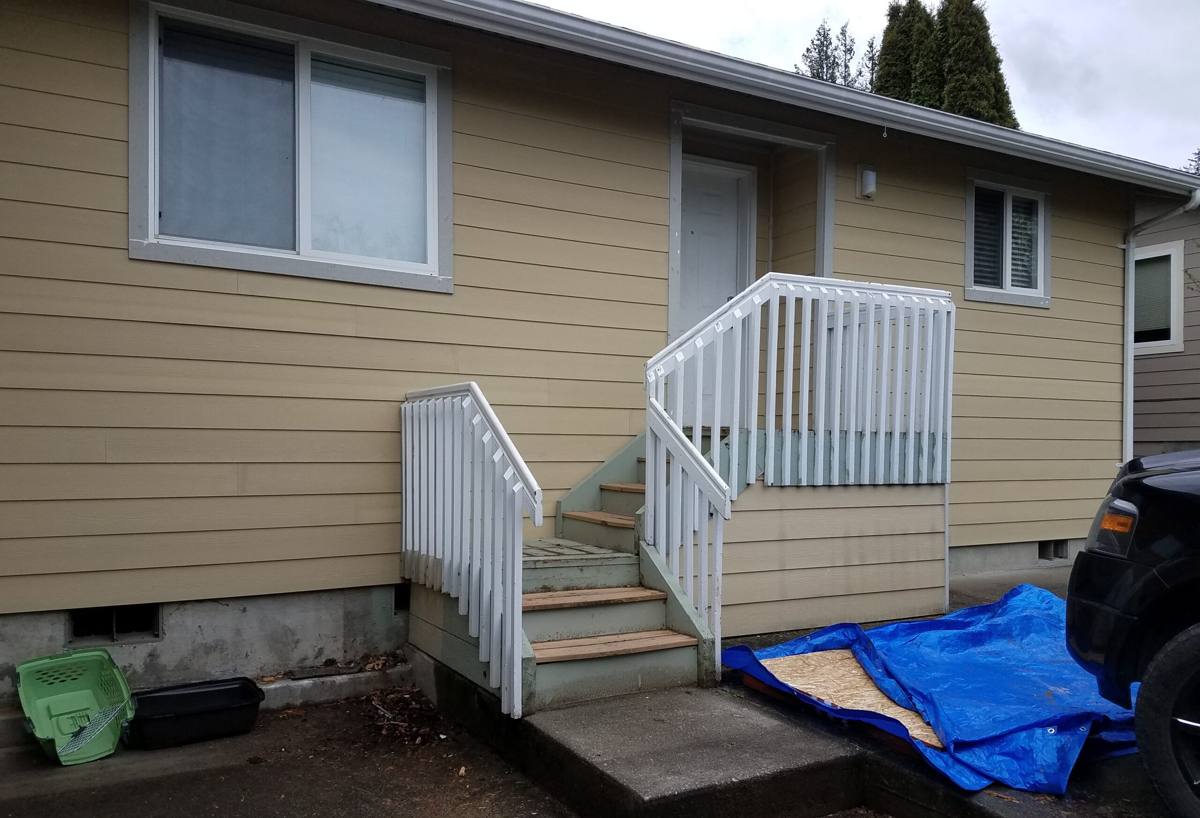
What Salt Air, Rain, and Moss Actually Do to a Window
Salt Air
Airborne salt is corrosive to metal window hardware — hinges, locks, balances, and especially aluminum-clad frames that weren't finished with a marine-grade coating. Over time you'll see pitting, stiff or seized hardware, and a chalky or dull finish on exterior surfaces that never fully wipes clean.
Driving Rain
Wind-driven rain doesn't just hit a window head-on — it gets pushed sideways and upward into gaps that a calm-weather rain would never reach. This is why flashing details and proper sill pitch matter more here than in a drier climate. A window that's watertight in a light shower can still leak during a real Whatcom County storm if the flashing wasn't done right.
Moss and Sustained Moisture
Moss doesn't just grow on roofs. It takes hold in window trim, sills, and any spot where wood stays damp for extended periods — which, given our moss season, can mean months at a time. Once moss and the moisture it holds get into a wood sill or trim board, rot follows. By the time you can see soft or discolored wood, the damage is usually already inside the wall cavity.
Common Warning Signs We See on Fairhaven Homes
- Fogging or condensation between panes on double-pane windows — a sign the seal has failed
- Soft, spongy, or discolored wood at the sill or bottom corners of the frame
- Windows that are noticeably harder to open, close, or lock than they used to be
- Visible moss or dark streaking on exterior trim and sills
- Cold drafts near the window even when it's fully closed and latched
- Paint or finish that's peeling, bubbling, or chalking on the exterior side only
- Noticeably higher heating bills in winter with no other explanation
Choosing Window Materials for a Marine Climate
Not every window product performs the same way under sustained salt exposure and moisture. We steer homeowners toward materials and finishes that hold up honestly over time rather than ones that look good on day one but require more upkeep than most people expect. Every option below has real trade-offs — there's no single "right" answer for every home or budget.
| Material | How It Handles Salt Air & Moisture | Maintenance | General Cost Position |
|---|---|---|---|
| Vinyl | Good — won't corrode or rot, seams are the main watch point | Low — occasional cleaning | Most affordable |
| Fiberglass | Very good — dimensionally stable, resists moisture and salt well | Low | Mid to upper range |
| Wood (fully clad exterior) | Good on the exterior face if cladding is intact; vulnerable wherever cladding is compromised | Higher — interior wood still needs periodic attention | Upper range |
| Bare or minimally protected wood | Poor in this climate without diligent, ongoing maintenance | High — repainting/sealing on a regular cycle | Varies |
| Aluminum (uncoated or lower-grade) | Prone to pitting and corrosion near the coast without marine-grade finish | Moderate to high | Varies |
Our general standard for coastal Whatcom County properties is to favor vinyl or fiberglass for most replacement projects, and to be selective about wood — reserving it for homes where the look is important to the owner and they understand the upkeep involved. We're happy to walk through the honest pros and cons for your specific home rather than push one product line.
How We Approach Window Installation Here
Installation quality matters more than brand name when it comes to actual performance in this climate. A mid-range window installed correctly with proper flashing will usually outperform a premium window installed with shortcuts. Our process on Fairhaven jobs focuses on a few things that matter most for wind-driven rain and long-term moisture control:
- Proper flashing and a correctly pitched sill pan so water sheds outward, not into the wall
- Sealing and insulating the rough opening fully, not just caulking the visible trim
- Matching hardware finishes that are rated for coastal or marine exposure where budget allows
- Checking existing sheathing and framing for hidden rot before the new window ever goes in
- Verifying the finished install with a water test where conditions warrant it
That last step — checking what's behind the old window before installing the new one — is one we won't skip, even though it can occasionally uncover an issue the homeowner didn't know about. Catching hidden rot at the time of window replacement is far less disruptive and less costly than discovering it later as a bigger repair.
What Affects the Cost of a Window Project
Every home is different, so we don't quote sight-unseen, but these are the main factors that move a window project's price up or down:
| Factor | Why It Matters |
|---|---|
| Number and size of windows | Straightforward — more openings and larger glass mean more material and labor |
| Material chosen | Vinyl, fiberglass, and wood carry different unit costs, as shown above |
| Condition of the existing opening | Hidden rot or framing damage adds repair scope beyond a simple swap |
| Access and home height | Second-story or hard-to-reach windows take more setup time |
| Full-frame vs. insert replacement | Full-frame replaces flashing and trim; inserts reuse the existing frame and cost less but only make sense when that frame is sound |
| Trim and finish work | Matching existing exterior trim or siding profiles adds labor |
We always recommend full-frame replacement when there's any sign of moisture damage around the opening — an insert installed over a compromised frame just seals the problem in rather than fixing it.
Windows Are Part of a Bigger Exterior Picture
Because we also handle siding, roofing, and decks, we tend to look at window projects as part of the whole building envelope rather than in isolation. A window replacement is a natural time to check the condition of adjacent siding, flashing at the roofline above a window, or a deck ledger board nearby — all areas where the same salt air and moisture exposure show up. If we notice something during a window job that's likely to become a bigger issue, we'll point it out honestly, without pressuring you to add scope you don't need.
Why a Local Crew Matters in Fairhaven
Contractors who don't work regularly in coastal Whatcom County conditions sometimes install windows and trim details that are technically correct for a drier or more sheltered climate but underperform here. Knowing how far wind-driven rain travels up a wall, how quickly moss establishes on damp wood, and how salt air ages hardware and finishes isn't something you get from a spec sheet — it comes from doing the work in this specific environment, season after season. That local experience shapes the material recommendations, flashing details, and maintenance advice we give.
Maintenance That Extends Window Life in This Climate
Whatever material you choose, a little regular attention goes a long way here. A simple seasonal routine can meaningfully extend the life of your windows:
- Rinse salt residue off exterior frames and glass a few times a year, especially after storms
- Keep gutters and downspouts clear so water isn't sheeting down across window heads
- Brush or wash away moss buildup on sills and trim before it takes hold
- Check and lightly lubricate hardware annually so locks and balances don't seize
- Repaint or reseal exposed wood trim on the manufacturer's recommended cycle, not just when it looks bad
- Watch for early condensation between panes — it's cheaper to address a failing seal than a failed window
Getting Started
If you're noticing drafts, fogged glass, sticking hardware, or visible wear on your windows, it's worth having them looked at before another wet Whatcom County winter sets in. We offer free, no-pressure estimates for Fairhaven homeowners — we'll assess what's actually going on, explain the options honestly, and give you a straightforward quote with no obligation. Use the form below to get started.