 Ferndale Window
 Roof Repair for Homes Near Fairhaven, Ferndale
If you own a home in or near the Fairhaven area close to Ferndale, you already know the roof over your head works harder than most. This corner of Whatcom County sits where marine air, near-constant winter rain, and a moss season that can stretch nine months a year all combine on the same roof, sometimes in the same week. A roof repair here isn't just about patching a leak. It's about understanding why that leak happened in the first place and making sure the fix holds up against conditions that don't let up.
We repair roofs on homes throughout the Ferndale area, including Fairhaven and the surrounding neighborhoods, and we've built our process around the specific ways local weather attacks a roof system. This page walks through what that looks like in practice: what tends to go wrong, what a correct repair actually involves, and how we approach the job from first call to final walkthrough.
Why Local Weather Is Hard on Roofs
Every roofing material is rated to handle some amount of wind, rain, and UV exposure. The problem in this part of Washington is that several stressors show up together, year after year, and they compound each other's damage.
Salt Air and Metal Fatigue
Proximity to Puget Sound and the Strait of Georgia means homes in the Fairhaven and Ferndale area are exposed to salt-laden air more than roofs further inland. Salt accelerates corrosion on exposed metal components: flashing, roof vents, nail heads, gutter hardware, and fasteners. A fastener or flashing seam that would last decades in a dry inland climate can start failing years earlier here, and a corroded flashing joint is one of the most common places we find an active leak starting.
Driving Rain and Wind-Driven Moisture
Whatcom County storms frequently bring rain sideways, not just straight down. Wind-driven rain finds its way under shingles, around poorly sealed valleys, and through gaps that a calm, vertical rain would never reach. This is why some leaks only show up during a specific type of storm and stay dry the rest of the year. It's also why a repair that only addresses the visible surface, without checking underlayment and flashing detail, often fails to solve the actual problem.
Moss, Lichen, and a Long Growing Season
The combination of shade, moisture, and mild temperatures in this region gives moss and lichen a long season to establish on roofing. Moss isn't just a cosmetic issue. Its root structure lifts shingle edges, holds moisture against the roofing surface long after the rest of the roof has dried, and creates channels for water to travel sideways under shingles instead of running off. A roof that looks fine from the ground can have moss-related damage that's been developing for a season or more.
Common Repair Issues We See in the Fairhaven Area
Not every roof problem calls for the same fix. Here's what shows up most often on repair calls in this part of Ferndale:
- Lifted or cracked shingles along ridgelines and southwest-facing slopes exposed to prevailing storms
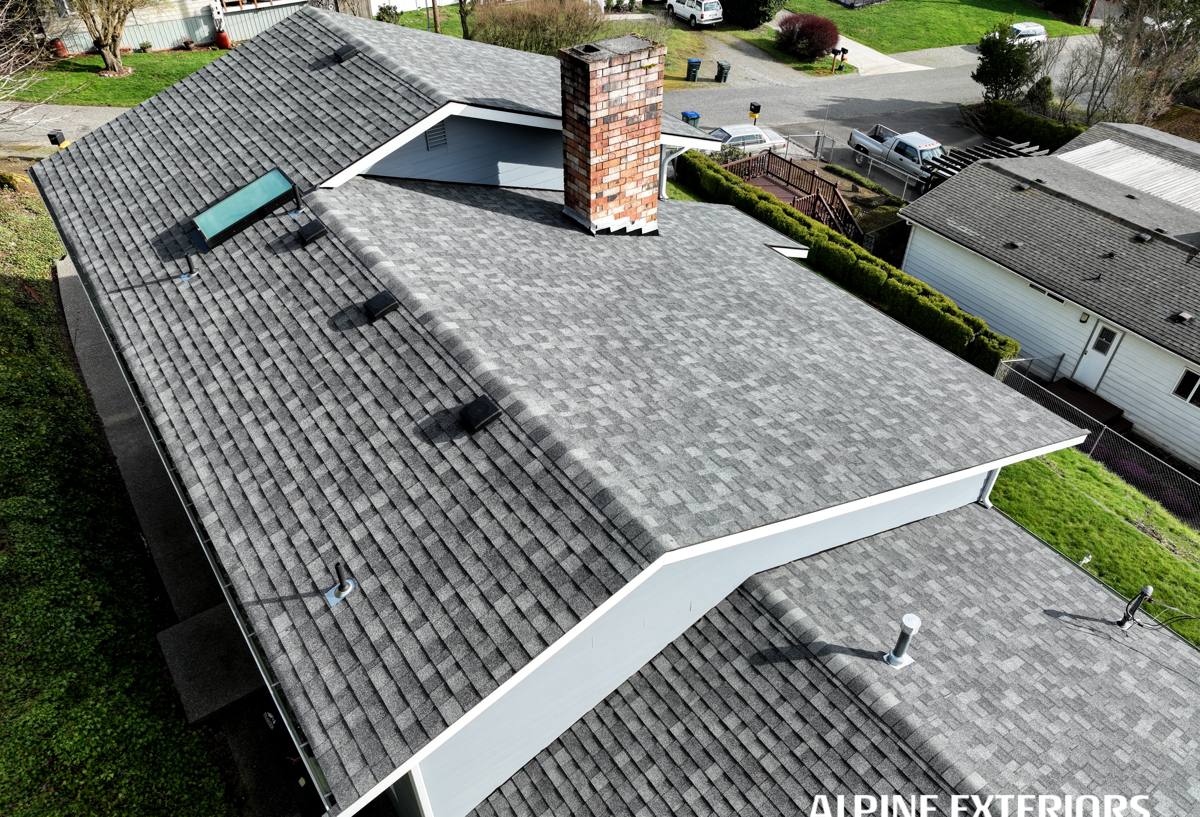
- Flashing failure around chimneys, skylights, and roof-wall intersections, often where corrosion has weakened the seal
- Moss and lichen colonies that have lifted shingle tabs and trapped moisture underneath
- Clogged or sagging gutters contributing to water backing up under the roof edge
- Soft or discolored decking discovered once shingles are pulled back, indicating a slow leak that predates the visible damage
- Nail pops and fastener corrosion loosening shingles in wind events
- Valley leaks where two roof planes meet and water volume concentrates
Some of these are quick, contained repairs. Others are a signal that a larger section of the roof needs attention. Part of our job on the first visit is telling you honestly which one you're dealing with.
What a Correct Roof Repair Actually Involves
A roof repair done right isn't just replacing what's visibly broken. It follows a sequence that protects the rest of the roof and gives you a fix that lasts.
Finding the Real Source, Not Just the Symptom
Water travels. A stain on your ceiling might be directly below the leak, or it might be several feet away from where water is actually entering the roof. We trace leaks back to their source rather than patching the first thing we see, because patching the wrong spot means the leak comes back, often somewhere new.
Matching Materials, Not Just Covering the Gap
When we replace shingles or flashing, we match the existing material as closely as possible in profile, weight, and color so the repair blends in and performs the same as the surrounding roof. Mismatched materials can create their own water-diversion problems, especially at seams and transitions.
Checking What's Underneath
Any time shingles come off for a repair, we check the underlayment and decking beneath. Soft, delaminated, or water-stained decking needs to be addressed before new shingles go back down, otherwise you're covering a problem instead of fixing it. This is a step that's easy to skip and hard to catch later, which is why we build it into every repair rather than treating it as an upsell.
Flashing and Sealant Done Right
Flashing should be mechanically fastened and lapped correctly with the surrounding roofing, not relied on solely for sealant to hold it in place. Sealant has a role, but it degrades faster than metal or shingle material, especially with the salt exposure common in this area. A repair that leans too heavily on caulking instead of proper flashing technique tends to need a repeat visit within a few years.
Ventilation Isn't Optional
Poor attic ventilation traps moisture, which speeds up decking rot and can encourage moss growth from the inside out through condensation. When a repair area shows signs of trapped moisture, we look at whether ventilation is contributing to the problem, not just the roofing surface itself.
Repair or Replace? How We Help You Decide
Not every roof problem needs a full replacement, and not every leak can be permanently solved with a patch. We walk you through the honest tradeoffs rather than defaulting to the bigger job.
| Factor | Favors Repair | Favors Replacement |
|---|---|---|
| Age of roof | Under 10-15 years, or well-maintained | Nearing or past expected lifespan for the material |
| Extent of damage | Localized to one section or feature | Widespread across multiple slopes |
| Decking condition | Solid, no rot found on inspection | Soft, delaminated, or rotted in multiple areas |
| Moss/lichen coverage | Light, recent, easily treated | Heavy, long-established, embedded under shingles broadly |
| Number of past repairs | First or second repair on this roof | Repeated repairs to the same or nearby areas |
If a repair is the right call, we'll say so and explain why. If the damage points to something bigger, we'll show you what we found before recommending a larger scope of work.
Our Roof Repair Process
- Initial inspection. We look at the roof surface, flashing, valleys, and, when accessible, the attic side of the deck to understand the full picture, not just the reported leak location.
- Honest diagnosis. We explain what's causing the problem in plain terms, show you what we found, and outline the repair options.
- Written estimate. You get a clear scope of work and price before anything is repaired, with no surprise add-ons sprung on you mid-job.
- The repair itself. We remove damaged material, address any decking or underlayment issues found underneath, and install matched materials with correct flashing and fastening technique.
- Cleanup and debris check. Old shingles, nails, and moss debris are cleared from the roof and gutters before we leave, since leftover debris can cause its own problems later.
- Final walkthrough. We review the completed work with you and flag anything else worth keeping an eye on, even if it's not part of the current repair.
Materials and Workmanship Standards We Hold To
We choose repair materials based on how they actually perform in this climate, not just upfront cost. That means favoring flashing and fasteners with better corrosion resistance given the salt air exposure common near Ferndale and the Sound, and avoiding shortcuts like over-reliance on sealant in place of proper mechanical flashing. When a product or technique has a known maintenance burden or moisture-management weakness in wet, mossy climates, we'll tell you that upfront rather than let you find out after the fact. Our goal is a repair that holds up through several wet seasons, not one that looks fine until the next big storm.
Why Local Experience in the Fairhaven and Ferndale Area Matters
A roofer who works primarily in drier inland climates may not think twice about moss growth, salt exposure, or the specific way wind-driven rain behaves along this stretch of Whatcom County. Those are things you learn from working roofs in this area repeatedly, not from a general roofing background alone. Local experience means we recognize the early signs of moss-related lifting before it becomes a full leak, we know which flashing details tend to fail first under salt exposure, and we can usually tell from the pattern of damage whether a roof has been affected by wind-driven rain versus a slow, gravity-fed leak. That translates into a more accurate diagnosis on the first visit and fewer surprises once work begins.
Maintenance Tips Between Repairs
A repair lasts longer when it's supported by basic seasonal upkeep. A few things worth doing on your own, or asking us about during a visit:
- Keep gutters clear, especially heading into the fall rains, so water isn't backing up under the roof edge
- Have moss and lichen treated before it spreads across a full slope, not after
- Trim back overhanging branches that keep sections of the roof shaded and slow to dry
- After major windstorms, do a visual check from the ground for lifted or missing shingles
- Address small leaks promptly rather than waiting, since decking damage grows the longer moisture sits
None of these replace a professional inspection, but they reduce how often you need one for an emergency rather than routine maintenance.
Get a Free, No-Pressure Estimate
If you're dealing with a leak, storm damage, or a section of roof that just doesn't look right anymore, we're happy to take a look and give you an honest read on what it needs. There's no obligation and no pressure to go bigger than the problem calls for. Use the form below to request a free estimate for roof repair in the Fairhaven and Ferndale area, and we'll get back to you to schedule a time that works.