 Ferndale Window
 Fiber Cement Siding Built for Sandy Point's Waterfront Exposure
Sandy Point sits right up against the water in Whatcom County, and that location puts a different kind of load on a house than homes just a few miles inland deal with. Salt-laden marine air moves across these properties constantly, driving rain comes in sideways off the water instead of falling straight down, and the long, mild, damp stretch of the year that Western Washington calls a moss season runs even longer here on shaded and north-facing walls. Siding on a Sandy Point home isn't just cosmetic — it's the first line of defense against all three of those things happening at once, year after year.
We install James Hardie fiber cement siding exclusively for homes in and around Sandy Point, and we build every detail of the job — fastener choice, flashing, drainage behind the panels — around what this specific stretch of coastline actually does to a wall over ten, twenty, and thirty years, not around what looks acceptable on the day the crew packs up.
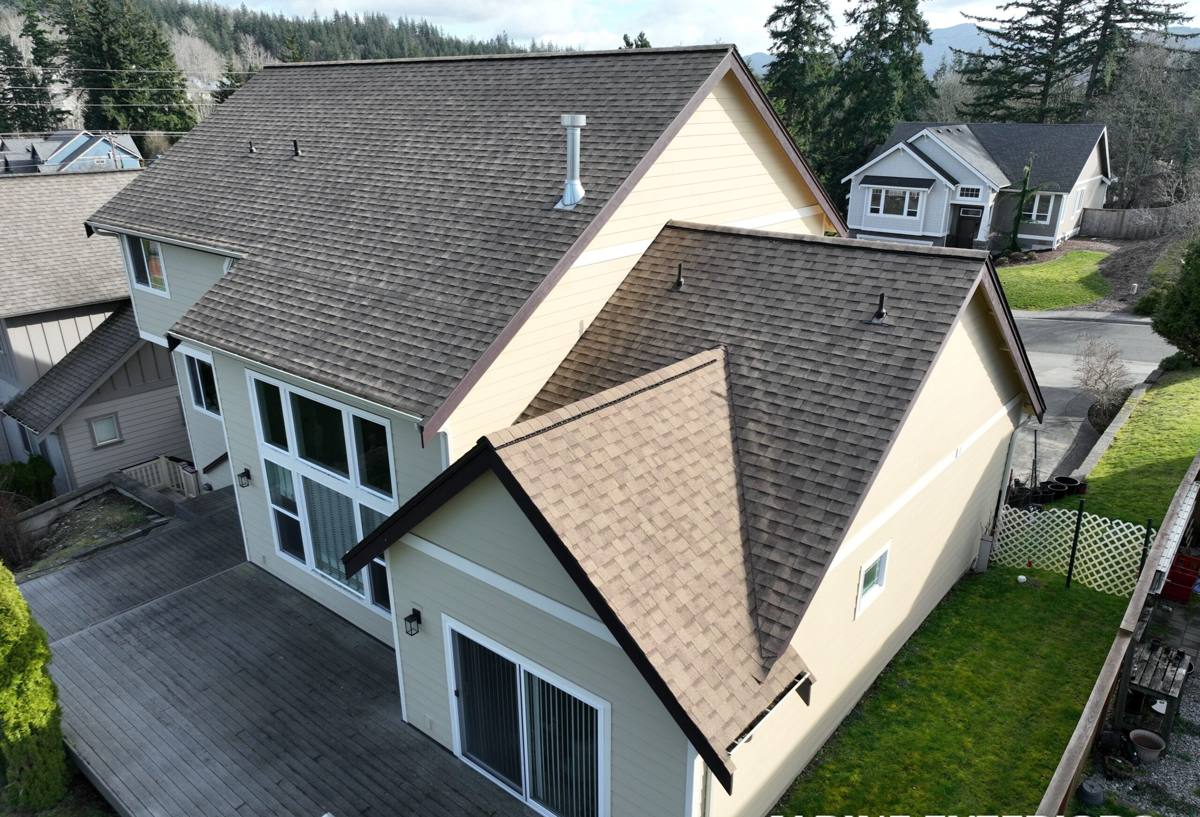
What This Climate Actually Does to a Sandy Point Wall
Salt Air and Corrosion
Being this close to the water means a steady dose of salt in the air, and salt is hard on anything metal. Fasteners, flashing, and trim hardware corrode faster here than they do a few miles inland, and a corroded fastener behind siding isn't something you notice until the siding it's holding starts to fail. Every piece of hardware on a Sandy Point exterior needs to be chosen with that corrosion risk built in from the start, not picked because it was the cheapest option in the truck.
Driving Rain, Not Just Rainfall
Waterfront exposure also means more wind, and wind-driven rain behaves differently than a straightforward downpour. It gets pushed sideways into seams, laps, and trim transitions that would stay dry in a calmer setting. A siding installation that would hold up fine in a sheltered, tree-covered lot inland can still leak on a property like this, not because the material failed, but because the water was never falling straight down to begin with.
A Moss Season That Doesn't Really End
Mild temperatures, near-constant humidity, and shaded exposure add up to a long moss and algae season on this part of the coast. Any siding surface that stays damp for extended stretches — especially north-facing walls or anything shaded by trees — becomes a growth surface if the material or the installation gives moss anything to hold onto. Over time, moss and algae growth trap moisture directly against the wall, which is a slow, steady path toward finish breakdown and, eventually, substrate damage underneath.
Why We Install Only James Hardie Siding in Sandy Point
We don't offer LP SmartSide, vinyl siding, Cemplank, Allura, primed spruce, or cedar. That's a professional standard, not a marketing line, and it came from years of installing, inspecting, and repairing exterior siding in exactly this kind of salt-exposed, high-moisture environment.
- Non-combustible core: Fiber cement doesn't feed a fire the way wood-based or wood-fiber siding products can.
- Factory-applied ColorPlus finish: The color is baked on under controlled factory conditions, which holds up far longer against fading, chalking, and moisture intrusion than paint applied on site.
- Climate-engineered HZ formulation: Hardie's HZ5 product line is built specifically for regions with heavy moisture exposure and freeze-thaw cycling, which is a fair description of a Whatcom County shoreline property.
- Dimensional stability: Fiber cement doesn't swell, cup, or warp the way engineered wood or solid wood siding can after repeated wetting and drying.
- A strong, transferable warranty: backed by one manufacturer's spec, which keeps the coverage straightforward as long as installation follows that spec.
Products like LP SmartSide and cedar have a legitimate place in the market, and plenty of contractors install them well. But on a property with this much direct salt and wind exposure, we've made a professional call that we'd rather install one system we fully stand behind than offer an alternative that shifts more long-term maintenance risk onto the homeowner.
What Correct Installation Involves Here
Fiber cement only performs the way it's engineered to when it goes on correctly. On a coastal property like Sandy Point, a few details matter more than they would on a sheltered inland lot.
A Real Drainage Plane Behind the Siding
A weather-resistive barrier alone isn't enough on a wall taking this much wind-driven rain. A drainage gap or rainscreen behind the panels gives any moisture that does get past the siding face a path to drain and dry out instead of sitting against the sheathing. Skipping this step is one of the more common shortcuts that doesn't show up as a problem until a few wet seasons in.
Fastener Grade and Spacing
Corrosion-resistant fasteners, placed at Hardie's specified spacing rather than "enough to hold the board up," matter more here than almost anywhere else in the county. A fastener that starts corroding loses its grip on the board over time, and that failure is invisible from the outside until siding starts to loosen or shift.
Sealing Every Cut Edge
Hardie's factory finish covers the face and factory edges of every board, but field cuts expose raw fiber cement that needs to be primed and sealed before it goes on the wall. On a job with a lot of trim, corners, and window openings, that's a lot of cut edges — and every one left unsealed is a spot where moisture can start working into the board from the inside out.
Flashing at Every Transition
Windows, doors, roof-to-wall intersections, and the base of the wall are where most siding failures actually start, not out in the middle of a flat wall section. Properly lapped, corrosion-resistant flashing at every one of those transitions is what keeps wind-driven rain from finding its way behind the siding in the first place.
Comparing Siding Materials for a Sandy Point Property
| Material | Behavior in Salt Air & Driving Rain | Maintenance Through Moss Season | Realistic Lifespan Here |
|---|---|---|---|
| James Hardie fiber cement (HZ5) | Dimensionally stable; doesn't swell or warp with repeated wetting | Low; factory finish resists moss and algae growth | 30+ years with correct installation |
| Vinyl siding | Can distort with temperature swings; wind-driven rain works into seams | Low upfront cost, but hidden moisture issues are hard to catch behind panels | Variable; often shorter in high-wind coastal exposure |
| LP SmartSide (engineered wood) | Wood-fiber core is moisture-sensitive at cut edges and fastener holes | Moderate; edge sealing and caulk upkeep matter a lot in this climate | Depends heavily on installation quality and upkeep |
| Cedar / primed wood | Absorbs and releases moisture readily; salt air accelerates finish breakdown | High; regular refinishing needed to keep moss and rot at bay | Shorter without consistent, ongoing maintenance |
Our Process for a Sandy Point Siding Project
- On-site assessment: We walk the property and look specifically at how the existing siding and wall assembly have handled salt exposure and moisture over time, not just how they look from the curb.
- Tear-off and sheathing inspection: Once the old siding is off, we check the sheathing and framing underneath for hidden moisture damage before anything new goes up. Covering a problem with new siding just buries it.
- Weather-resistive barrier and drainage plane: House wrap is lapped and taped correctly, with a drainage gap installed so the wall can shed and dry out moisture that gets past the siding face.
- Flashing at every opening: Windows, doors, and roof-to-wall transitions get flashed and lapped specifically to handle wind-driven rain coming off the water, not a generic inland rain pattern.
- Installation to HZ5 spec: Boards go on with corrosion-resistant fasteners at manufacturer-specified spacing, and every field-cut edge is primed and sealed before installation.
- Final walkthrough: We cover what maintenance actually looks like for this material in this climate, and make sure you know what a properly installed wall looks like if you ever want to check it yourself.
What to Look For If You're Vetting a Contractor for This Work
- Ask what siding material they install and why, and whether they'll put the warranty in writing
- Confirm current Washington contractor licensing and active liability insurance
- Ask specifically how they detail flashing at windows, doors, and roof-to-wall transitions for wind-driven rain
- Ask about fastener grade and corrosion resistance, not just brand of siding
- Ask whether they install a drainage plane or rainscreen behind the siding as standard practice
- Get a clear, written scope of work before signing anything
Living With Fiber Cement Siding in a Moss-Prone, Salt-Air Climate
One of the real advantages of James Hardie siding on a property like this is how little ongoing maintenance it actually needs compared to wood-based or vinyl alternatives. That said, "low maintenance" doesn't mean "no maintenance," especially with salt air and moss season both working against the wall year-round.
- Rinse salt residue and organic buildup off the siding with a garden hose a couple of times a year, especially on walls facing the water
- Keep gutters clear so water isn't sheeting down the wall face during heavy rain
- Trim back vegetation and tree branches near the house to keep airflow moving across shaded walls
- Check caulking at trim, windows, and penetrations annually, since caulk is the one part of the system that does wear out over time
- Avoid pointing a pressure washer directly at seams and joints — a garden hose and soft brush are enough for routine cleaning
Why Hire a Crew That Already Works Sandy Point
A contractor who works this specific stretch of coastline regularly already knows how salt air, wind exposure, and sustained moisture behave differently here than they do even a short distance inland. That shows up in the details — which elevations need extra flashing attention based on prevailing wind and rain direction, how much drainage clearance actually earns its keep in this climate versus what a generic installation guide calls for, and where a job needs more attention because of shade and tree cover. Those are judgment calls that come from repeated exposure to this exact environment, not from a spec sheet, and they're often the difference between a wall that still looks and performs the same in twenty years and one that's showing seam staining and finish failure in five.
Getting an Honest Read on Your Home
Every Sandy Point property is a little different depending on how close it sits to the water, how much shade and tree cover it has, and which direction its walls face the wind. Rather than quote a job off square footage alone, we walk the property in person and give you a straightforward read on what your specific home needs. If you're weighing a siding replacement or want a second opinion on an existing installation, we're happy to take a look. There's a free, no-pressure estimate form below — reach out and we'll set up a time to walk the property with you.