 Ferndale Window
 Fairhaven's Climate Is Harder on Siding Than It Looks
Homes in and around Fairhaven sit close enough to the water that salt-laden air is a constant, low-grade presence on every exterior surface. Combine that with Whatcom County's long, wet winters and the shoulder-season drizzle that can linger for days, and you have a climate that never really lets siding dry out completely. Add tree cover and shaded north- and west-facing walls, and you get a moss season that can run from late fall through spring. None of this is dramatic on its own — no hurricanes, no hailstorms — but it is relentless, and relentless is exactly what wears down the wrong siding material faster than homeowners expect.
The practical effect is that siding here needs to do three things well at once: shed driving rain before it reaches the wall assembly, resist the surface effects of salt air without chalking or corroding fasteners, and tolerate near-constant dampness without swelling, softening, or feeding moss and algae growth. A lot of siding products handle one of those conditions reasonably well. Very few handle all three without extra maintenance from the homeowner.
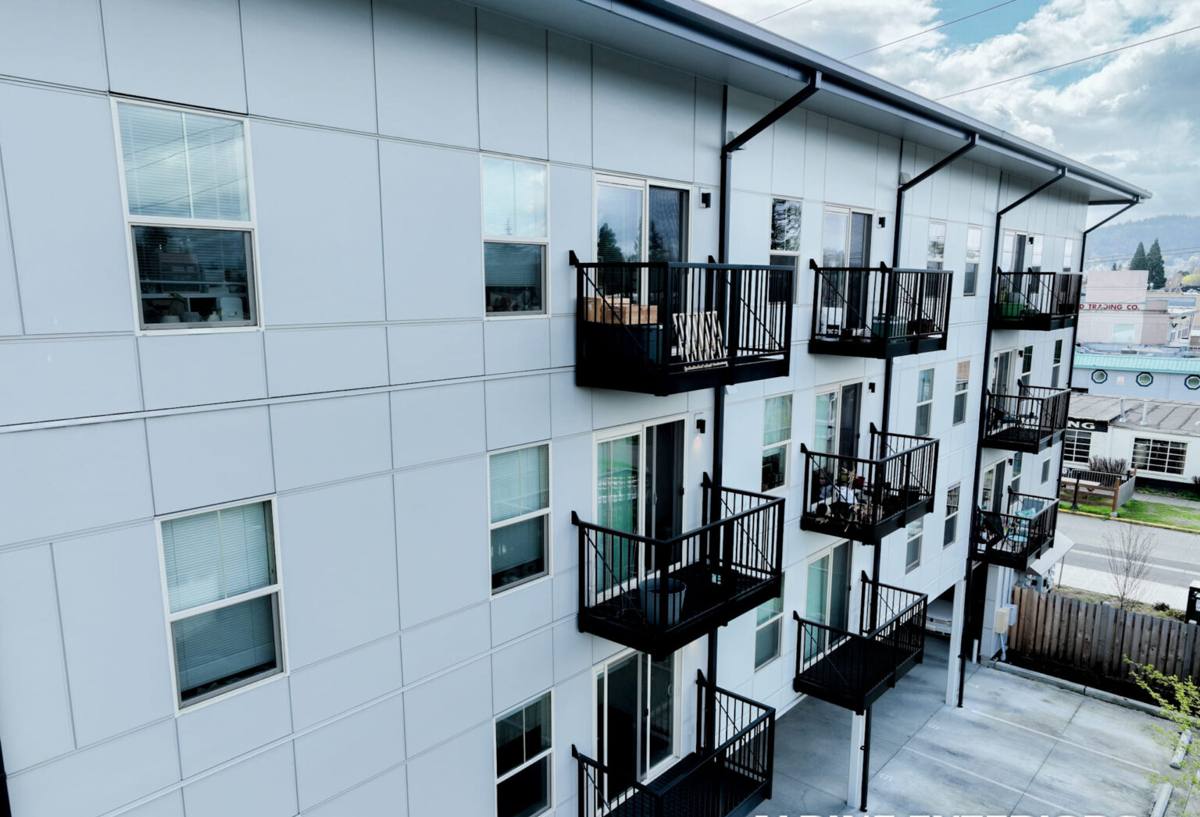
Why We Only Install James Hardie Fiber Cement
We standardized on James Hardie fiber cement siding for every job we take on, including installations in the Fairhaven area, because it's engineered around exactly the failure modes that coastal Pacific Northwest homes run into. Fiber cement is inert — it's made from cellulose fibers, sand, and Portland cement, not wood pulp or wood strand, so it doesn't have the same moisture-absorption pathway that leads to swelling, delamination, or rot at cut edges. It's also non-combustible, which matters increasingly for insurance conversations even in a region that isn't primarily known for wildfire risk.
ColorPlus Factory Finish
Most Hardie products we install come pre-finished with ColorPlus Technology, a factory-applied, baked-on finish that's more UV- and weather-resistant than field-applied paint. In a climate where a wall might not get direct sun to dry it for a week at a time, having a finish that was cured under controlled conditions — rather than painted on-site and left to dry in variable humidity — measurably reduces early finish failure.
HZ5 Climate Engineering
James Hardie makes region-specific product formulations, and homes in this part of Washington fall into the HZ5 zone, engineered for wetter, cooler climates. That's a meaningful distinction from siding formulated for the Southeast or Southwest — the moisture-resistance additives and the product's tolerance for freeze-thaw cycling are matched to what actually happens here.
What a Correct Installation Involves
Fiber cement siding is only as good as the assembly behind it. A huge share of the siding problems we get called out to inspect on existing homes trace back to installation shortcuts, not the material itself. For a Fairhaven-area home, the details that matter most include:
- A continuous weather-resistant barrier behind the siding, lapped correctly so water is directed outward and down, not trapped against the sheathing
- Proper flashing at every window, door, and roof-to-wall intersection — the most common point of hidden water intrusion on any siding job
- Correct fastener type, spacing, and penetration depth per Hardie's published installation specifications, since under- or over-driven fasteners are a leading cause of premature siding failure
- A minimum clearance gap between the bottom of the siding and grade, decks, patios, or roofing, so splash-back and ponding water don't sit against the board
- Caulked and painted cut ends on any field-cut boards, since a raw cut edge is the one place fiber cement can take on moisture over time
- Rainscreen or drainage gap detailing where the wall assembly calls for it, giving incidental moisture a path to escape instead of sitting against the back of the siding
None of this is exotic. It's simply following the manufacturer's installation instructions completely, every time, rather than treating them as a rough guide. Skipping any one of these steps voids warranty coverage and, more importantly, sets the home up for the exact moisture problems fiber cement is supposed to prevent.
How We Approach a Fairhaven Job
Assessment First
Before we quote anything, we walk the exterior and look at what's actually happening on that specific home — sun exposure, tree cover, drainage patterns, existing moisture staining, and the condition of the sheathing once old siding comes off. A house tucked under evergreens with a shaded north wall needs different attention than one with open exposure to prevailing weather.
Tear-Off and Sheathing Check
We remove the existing siding and inspect the sheathing and framing underneath before anything new goes up. This is the point where hidden rot or past water damage — often invisible from outside — gets found and addressed, rather than sealed behind new siding and left to keep spreading.
Weather Barrier and Flashing
We install or repair the weather-resistant barrier, then flash every penetration and transition point before a single piece of siding goes on. This step is the difference between siding that manages water correctly for decades and siding that looks fine for a few years before problems surface from behind.
Installation to Spec
Boards go up following James Hardie's fastening, clearance, and joint-treatment specifications exactly, with attention to how the home's specific exposure (wind-driven rain, salt air, shade) affects detailing choices like gap sizing and caulk selection.
Finish and Cleanup
Any field cuts get sealed per spec, trim and caulking are finished, and the site is cleaned up. We walk the finished job with the homeowner before we consider it done.
Fairhaven's Climate Stressors and How the Installation Responds
| Climate Factor | Risk to Siding | Installation Response |
|---|---|---|
| Salt-laden coastal air | Surface chalking, accelerated fastener corrosion | Corrosion-resistant fasteners; factory-cured ColorPlus finish resists surface breakdown |
| Driving, wind-blown rain | Water intrusion at laps, joints, and penetrations | Full flashing at every penetration; correct lap and gap detailing |
| Extended damp/shaded periods | Moss, algae, and mildew growth on the surface | Factory finish resists organic growth better than field-applied paint; proper clearance limits splash and standing moisture |
| Freeze-thaw cycling | Material expansion/contraction stress at joints | HZ5-formulated fiber cement engineered for cooler, wetter climate zones |
Maintenance in a Moss-Prone Climate
Fiber cement dramatically reduces siding maintenance compared to wood or engineered wood products, but "reduced" isn't "zero." In a climate where moss and algae growth on shaded walls, fences, and roofs is just part of living here, the sensible routine is a periodic soft wash — not pressure washing directly against the surface — to keep organic growth from building up, plus a visual check of caulking at trim and penetrations every couple of years. Because Hardie boards don't absorb water the way wood does, this maintenance is mostly cosmetic rather than structural, which is a meaningful difference from siding materials that can develop soft spots or rot if moss and moisture are left unaddressed.
Why a Crew That Already Works This Area Matters
Siding installation quality depends on judgment calls that a spec sheet can't fully capture — how much clearance to leave on a wall that gets heavy splash-back from a nearby downspout, which side of the house needs extra attention to flashing because of prevailing wind direction, how much to plan around a large tree that keeps a wall shaded and damp longer than the rest of the house. A crew that has worked on homes throughout Ferndale and the surrounding Whatcom County area has already seen how local conditions play out on real houses, not just in a manual. That translates into fewer surprises during the job and a better outcome once the siding is up and the first wet season arrives.
What to Look For When Getting Quotes
- Ask whether the installer works exclusively with fiber cement or splits time across multiple siding materials — specialization tends to show up in detail quality
- Confirm the quote includes flashing and weather barrier work, not just the siding boards themselves
- Ask how field-cut ends will be sealed and what fastener type will be used
- Check that the quoted product line matches the HZ5 climate zone rather than a generic or warmer-climate formulation
- Get clarity on what the manufacturer's warranty requires for installation, and whether the installer is a certified applicator
If you're weighing a siding replacement for a home in the Fairhaven area, we're glad to take a look and walk you through what your specific house needs. There's no pressure and no cost to have us out for an estimate — just a straight assessment of the job in front of us.