 Ferndale Window
 Why Lummi Nation Area Homes Are Hard on Siding
Ferndale sits at the northern edge of Whatcom County, and the Lummi Nation area — the peninsula and shoreline communities bordering Bellingham Bay and the Strait of Georgia — takes the brunt of everything Pacific Northwest weather can throw at a house. Homes here don't just get rained on; they sit in a marine environment where salt-laden air, near-constant moisture, and long shaded winters work on exterior materials year-round. Siding that would hold up fine twenty miles inland can fail early out here if it wasn't built, or installed, for this specific exposure.
Salt Air Speeds Up Everything
Proximity to saltwater changes the math on siding durability. Airborne salt is corrosive to metal fasteners, flashing, and trim, and it accelerates the breakdown of paint films and lower-grade finishes. On homes closer to the water, we regularly see fastener corrosion, finish chalking, and edge deterioration years before you'd expect it on a comparable house set back from the shoreline. It's not a defect in any one product — it's just what salt air does to materials that aren't engineered to resist it.
Wind-Driven Rain Finds Every Gap
Whatcom County doesn't get the heaviest rainfall totals in the state, but the Lummi Peninsula catches a lot of wind off the water, and wind-driven rain behaves very differently than a straight-down shower. It gets pushed sideways into laps, seams, butt joints, and anywhere caulking has started to fail. Once water gets behind siding, it can travel and pool in places you'd never guess from the outside — which is why a small crack or a few inches of separated caulk can turn into hidden rot long before anything looks wrong at a glance.
Moss Doesn't Just Look Bad
The combination of shade, mild temperatures, and near-constant moisture makes this part of Washington prime territory for moss and algae growth on north-facing walls, under eaves, and anywhere air doesn't move much. Moss holds moisture directly against the siding surface for extended periods, which is exactly the condition that causes paint failure, substrate softening, and, on wood-based products, rot. A siding surface that stays damp for months at a stretch is under a different kind of stress than one that dries out between storms.
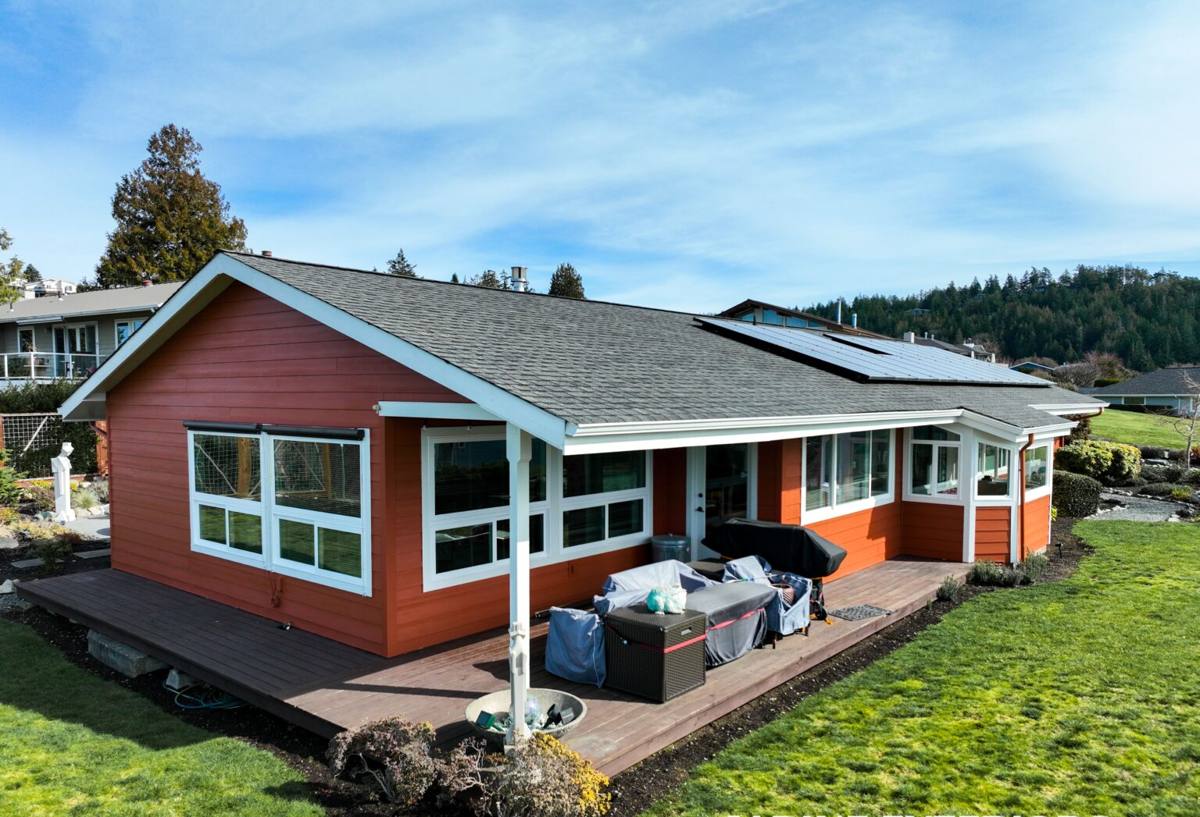
Signs Your Siding Needs a Repair Call
Not every siding issue means a full re-side. Catching problems while they're still repairable is the single best way to protect the investment you already have in your home's exterior. Watch for:
- Soft, spongy, or bubbling spots when you press on the siding, especially near the bottom courses
- Visible gaps at seams, corners, or where siding meets trim, windows, or doors
- Peeling, bubbling, or chalking paint in patches rather than evenly across the wall
- Persistent moss or algae staining that keeps coming back after cleaning
- Warped, cupped, or separated boards or panels
- Discoloration or staining on interior walls that share an exterior wall with visible siding damage
- Cracked or missing caulking around penetrations, trim, and butt joints
- A musty smell in a room near an exterior wall
Any one of these on its own might be minor. Several together, or any sign of soft or spongy material, usually means moisture has already gotten past the surface and it's worth having someone look before it spreads.
Repair or Replace? How We Make the Call
Homeowners often assume any siding damage means a full replacement, and sometimes that's true, but plenty of damage is legitimately repairable if it's caught early and the surrounding material is sound. We inspect before we quote, and we'll tell you honestly which category your situation falls into.
| Situation | Repair is usually the right call | Replacement usually makes more sense |
|---|---|---|
| Extent of damage | Isolated to a few boards, panels, or a single wall section | Spread across multiple walls or the whole exterior |
| Underlying structure | Sheathing and framing test dry and sound once opened up | Rot has reached the sheathing or framing in multiple areas |
| Material match | Existing siding is a current product we can match closely | Discontinued product, or the visual mismatch would be obvious |
| Age of siding | Well within its expected service life | Already near or past the end of a reasonable lifespan |
| Root cause | A fixable, one-time or localized cause, like a failed seal or storm damage | A systemic moisture or ventilation problem affecting the whole house |
When we find damage that's more widespread than what brought you to call us, we'll show you what we found, including photos of anything opened up during the repair, before recommending replacement over patching. We'd rather lose a small repair job than sell you a patch that won't last.
What a Correct Siding Repair Actually Involves
A repair that actually holds up in this climate is more than swapping a damaged board for a new one. Done right, it includes:
Tracing the Water, Not Just the Symptom
Visible damage is usually downstream of the actual entry point. We look at flashing, trim, window and door penetrations, and butt joints uphill from the damage to find where water is actually getting in, not just where it showed up.
Checking What's Behind the Siding
Once a section is opened up, we check the water-resistive barrier, sheathing, and framing underneath. If those are sound, a clean repair and reseal is often all that's needed. If they're compromised, that changes the scope, and we'll talk through it with you before moving forward.
Matching Material and Finish
A repair that stands out like a patch isn't a good repair. We match siding profile, exposure, and finish as closely as the product line allows, and we're upfront if an exact match isn't possible so there are no surprises.
Rebuilding the Water Management, Not Just the Surface
Flashing, house wrap, caulking, and butt joint detailing get rebuilt to shed water correctly, not just caulked over. A repair that doesn't restore proper water management is a repair that fails again.
Our Siding Repair Process
1. On-Site Assessment
We start by walking the exterior with you, identifying every area of concern, and opening up questionable sections to see what's actually happening underneath before we quote anything.
2. A Clear, Honest Scope
You get a straight answer on what's repairable, what isn't, and why, along with photos from anywhere we opened up the wall. No pressure toward a bigger job than the house actually needs.
3. The Repair Itself
Damaged material comes out, the substrate gets addressed if needed, and new material goes in with correct flashing, fastening, and sealing, not just a board swap.
4. Finish and Cleanup
Finish work is matched as closely as possible, the site is cleaned up, and we walk the repair with you before calling it done.
Why We Repair, and Replace, With James Hardie Fiber Cement Only
We install one siding system: James Hardie fiber cement. That's a deliberate standard, not a limitation, and it shapes how we approach repair work too. When a repair section needs new material, or when a "repair" turns out to be a sign that the whole wall needs replacing, we use Hardie's climate-engineered HZ product line rather than switching materials mid-house.
Fiber cement doesn't feed moss the way some wood-based and engineered wood products can, it's non-combustible, and it carries a factory-applied ColorPlus finish designed to hold color and resist the kind of chalking and fading that salt air accelerates. For a home in a marine environment like the Lummi Peninsula, that combination matters more than it would twenty miles inland. It's also why, when we open up a wall during a repair and find the underlying material, whether it's older cedar, primed spruce, or an engineered wood product, has broken down faster than expected, we'll tell you plainly and explain what we'd recommend instead, rather than just patching over a material problem.
Why Hiring a Crew That Already Works This Area Matters
Siding repair in a marine, high-moss environment isn't identical to siding repair in a dry inland climate, and a crew that mostly works elsewhere can miss things a locally experienced crew catches automatically, like where moisture tends to hide on homes exposed to prevailing wind off the water, how far moss staining usually extends beyond what's visible, and which flashing details hold up here and which ones don't. We work Ferndale and the surrounding Whatcom County communities regularly, including homes throughout the Lummi Nation area, and that familiarity shows up in faster, more accurate diagnosis. We're not guessing at how this climate behaves, we're already used to it.
Keeping Moss and Salt Damage From Coming Back
A good repair buys you time, but a few habits help make it last:
- Keep gutters clear so runoff doesn't sheet down the siding face
- Trim back vegetation and tree cover that keeps north-facing walls in constant shade
- Rinse visible moss and algae buildup before it gets a chance to establish and hold moisture
- Recaulk trim and penetration points on a regular schedule rather than waiting for visible gaps
- Have your exterior walked periodically, especially after a hard windstorm off the water
None of this prevents every issue, but it stretches the time between repairs and makes small problems easier to catch before they become big ones. Late spring through early fall, before the fall rains set back in, tends to be the most practical window for exterior repair work in this area — materials cure properly and there's less chance of a project getting stretched out by weather delays.
If you're seeing any of the signs above on a home in the Lummi Nation area, or you just want an honest opinion on whether a section of siding is worth repairing, we're glad to take a look. Fill out the form below for a free, no-pressure estimate.