 Ferndale Window
 Why Birch Bay Roofs Wear on a Different Timeline
Birch Bay sits close enough to the water that its roofs live a different life than a roof ten miles inland. Salt-laden air corrodes exposed metal faster than it does elsewhere in Whatcom County, wind off the water drives rain sideways under poorly lapped materials instead of letting it run straight off, and the long, damp shoulder seasons here give moss and moisture more time to work into a roof system before a good dry stretch ever shows up. None of that means a Birch Bay roof is doomed to fail early. It means the details that get skipped on a lot of jobs — flashing laps, fastener choice, ventilation balance, underlayment selection — are exactly the details that matter most here, and skipping them shows up faster on a bayfront or near-bayfront property than it would somewhere more sheltered.
We treat roof replacement in Birch Bay as its own job, not a scaled-down version of what we'd do inland. The framing below walks through what that actually means, from diagnosis to the last nail.
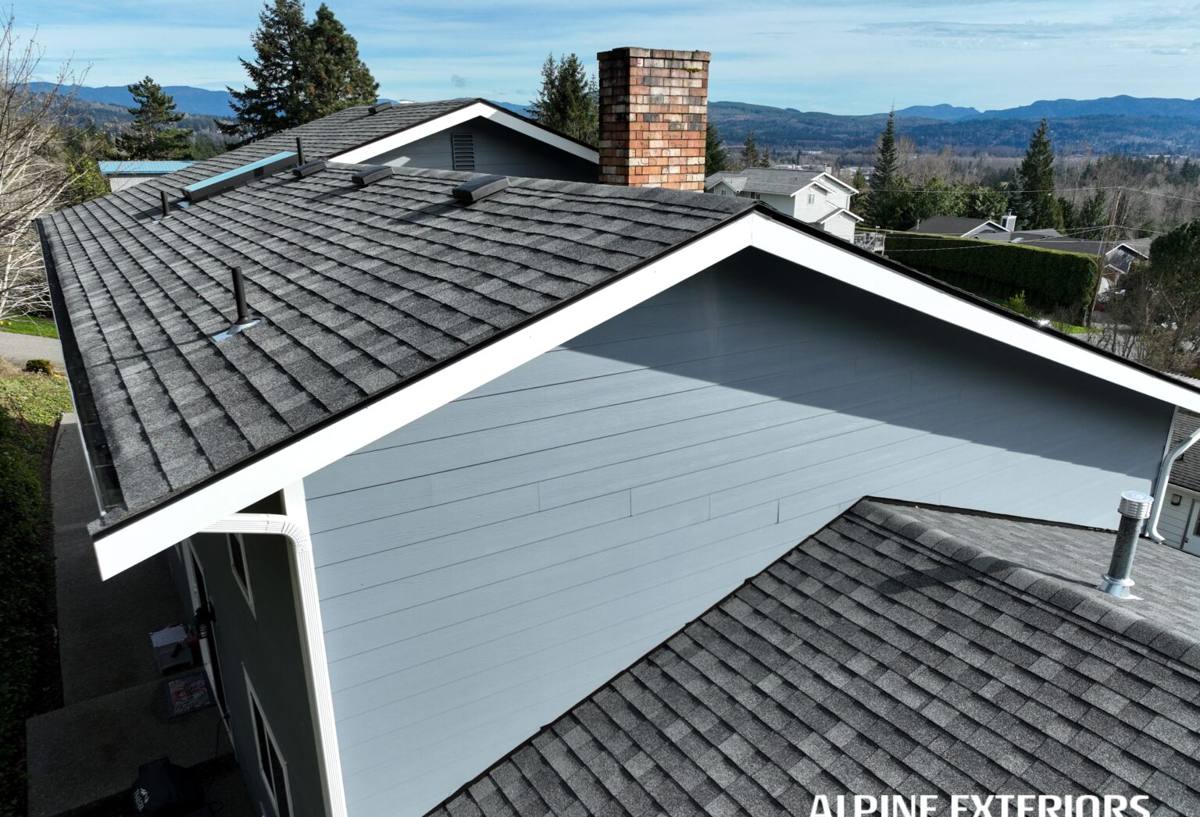
Signs a Birch Bay Roof Needs Replacement, Not Another Repair
Patching has its place, but there's a point where repeated repairs stop being the economical choice. Some signs point to a roof that's past the patch-and-wait stage:
- Granule loss heavy enough that you're finding grit in gutters and downspouts every time it rains
- Shingles that are cupping, curling at the edges, or cracking when touched, especially on south- and west-facing slopes that catch the most weather
- Moss established at the ridge or in shaded valleys that keeps coming back within a season or two of cleaning
- Soft spots or sagging in the roof deck, which usually means moisture has already gotten past the shingle layer
- Flashing around chimneys, vents, or skylights that's rusted, lifted, or was never properly step-flashed to begin with
- Daylight or water staining visible in the attic, particularly along eaves and valleys
- A roof approaching or past the upper end of its material's expected service life, especially if it's never had a tear-off
Any one of these on its own might still be repairable. Two or three together, especially on a roof already 18-20+ years old, usually means the underlying materials are failing as a system, and further patching is just delaying a job that's going to happen anyway — often at a higher cost once decking damage sets in.
What a Correct Roof Replacement Actually Involves
A roof replacement is more than swapping old shingles for new ones. Done right, it's a full system: deck, underlayment, flashing, ventilation, and the finish material all working together. Here's what we consider non-negotiable on every full replacement, in Birch Bay or anywhere else:
Deck Inspection and Repair
Once the old roofing is off, the deck gets inspected board by board or sheet by sheet. Any soft, delaminated, or water-damaged sections get replaced before anything new goes down. Installing new roofing over a compromised deck just guarantees a shorter lifespan for the new material.
Underlayment Selection
In a climate with this much sustained damp weather, we lean toward synthetic underlayment over old-style felt for its better tear resistance and water resistance during the install window, and we add ice-and-water shield membrane at eaves, valleys, and around penetrations — the spots most exposed to wind-driven rain finding its way underneath the shingle layer.
Flashing Done Properly
Step flashing at walls and chimneys, correctly lapped valley flashing, and properly sealed penetrations for vents and pipes are where most roof leaks actually originate — not through the shingle field itself. This is also where corner-cutting is easiest to hide and hardest to catch until it fails.
Ventilation Balance
Intake at the eaves and exhaust at the ridge need to be balanced so air actually moves through the attic space. Get this wrong and you trap moisture, which accelerates decking rot and gives moss and mildew a head start from the inside out.
Comparing Roofing Materials for a Bayfront Climate
There's no single "best" material for every home — it depends on budget, roof pitch, architectural style, and how much maintenance a homeowner wants to take on. Here's how the common options stack up under Birch Bay conditions:
| Material | Typical Lifespan | Handling Salt Air, Rain & Moss | Maintenance Notes |
|---|---|---|---|
| Architectural (laminate) asphalt shingle | 25-30 years | Good with algae-resistant granules; needs proper ventilation to resist moss | Periodic moss treatment and gutter cleaning |
| 3-tab asphalt shingle | 15-20 years | More prone to wind lift and granule loss in coastal gusts | Higher long-term maintenance for the cost saved upfront |
| Standing seam metal | 40-50+ years | Sheds moss well due to smooth surface; needs corrosion-rated fasteners and coatings near salt air | Low; occasional fastener and seam checks |
| Composite/synthetic shake | 30-50 years | Resists moisture absorption better than wood; good in damp climates | Low to moderate |
| Cedar shake | 20-30 years (climate-dependent) | Higher moisture and moss risk without diligent upkeep in this climate | Highest maintenance; requires regular treatment |
We'll walk through which of these fits your roof's pitch, your home's style, and your budget honestly — including telling you when a lower-cost option is a false economy given how close you are to the water.
Our Roof Replacement Process
Homeowners generally want to know two things going in: what happens, and in what order. Here's the sequence we follow:
- On-site inspection and estimate — we get on the roof (not just the ground) to assess deck condition, flashing points, ventilation, and any moss or moisture issues before quoting anything
- Material selection — we go over the options above against your budget and priorities, no pressure toward the most expensive choice
- Tear-off and deck inspection — old roofing removed down to the deck, with damaged sheathing identified and replaced
- Underlayment and flashing installation — synthetic underlayment, ice-and-water shield at vulnerable areas, and properly lapped flashing throughout
- Ventilation check and correction — intake and exhaust balanced to current standards
- Roofing material installation — installed to manufacturer specifications, which is also what keeps the material warranty valid
- Cleanup and final walkthrough — site cleared, magnetic sweep for stray fasteners, and a walkthrough so you know exactly what was done
Ventilation and Moisture Control in a Moss-Prone Climate
Moss doesn't just sit on top of a roof looking bad — it holds moisture against the shingle surface and works into gaps at the edges, and on a shaded or north-facing Birch Bay roof it can re-establish within a single wet season if the underlying causes aren't addressed. Proper ridge and soffit ventilation reduces the trapped humidity that moss and algae feed on, and metal drip edge with a slight overhang helps keep water moving off the roof rather than pooling at the eaves. Where a roof has persistent shade from trees, we'll talk through realistic options, from zinc or copper strips near the ridge to material choices that resist moss more effectively, rather than promising a permanent fix that doesn't exist for a shaded roof in this climate.
Why Local Experience in Birch Bay Matters
A roofing crew that mostly works inland can still do competent work, but there are things you only learn from repeated jobs in a specific coastal microclimate: which fastener coatings actually hold up to salt exposure here, how much wind uplift resistance a given roof orientation needs given prevailing weather off the bay, and which valleys and shaded slopes on local rooflines are the ones that grow moss first and need the most attention during install. We also know the practical side — Whatcom County permitting requirements, typical weather windows for a dry install, and what inspectors here are looking for. That local pattern recognition is the difference between a roof that's technically installed correctly and one that's installed correctly for Birch Bay specifically.
After Installation: Keeping a New Roof Performing
A correctly installed roof still benefits from basic upkeep, especially in this climate. A simple annual routine goes a long way:
- Clear gutters and downspouts of debris at least twice a year, more often under overhanging trees
- Do a visual check after major windstorms for lifted or displaced shingles
- Address moss growth early with an approved treatment rather than waiting for it to spread
- Keep tree branches trimmed back from the roofline to reduce shade, debris, and abrasion
- Have flashing points around chimneys and vents checked periodically, since these are the most common source of small leaks
- Schedule a professional inspection every few years, particularly as the roof approaches the midpoint of its expected lifespan
None of this replaces good workmanship at install, but it protects the investment once the job is done.
Get a Straight Answer on Your Birch Bay Roof
If your roof is showing wear, has been patched more than once, or you're just planning ahead before the next wet season sets in, we're happy to take a look and give you an honest read on where it stands. There's no pressure and no obligation — just a clear assessment and, if replacement makes sense, a straightforward estimate. Use the form below to request your free estimate.