 Ferndale Window
 Storm Damage Roof Repair Built for Fairhaven's Coastal Exposure
Fairhaven sits close enough to the water that roofs here take a different kind of beating than homes further inland in Whatcom County. Wind off the water drives rain sideways under shingle edges and flashing laps that would stay dry on a calmer site. Salt-laden air accelerates corrosion on nails, flashing, and vent caps. And the long, damp moss season common across this part of Washington keeps roof surfaces wet for months at a stretch, which softens shingles and hides damage until it has already worked its way into the decking. Storm damage repair in this neighborhood isn't just patch-and-go work — it has to account for all three of those pressures at once, or the same failure shows up again a year later.
We work on homes in Fairhaven and the surrounding Ferndale area regularly, which matters more than it sounds like it should. A roof here needs different attention than one fifteen miles inland, and a crew that already understands the local wind patterns and moisture load isn't guessing at what caused the damage or what it will take to actually stop it.
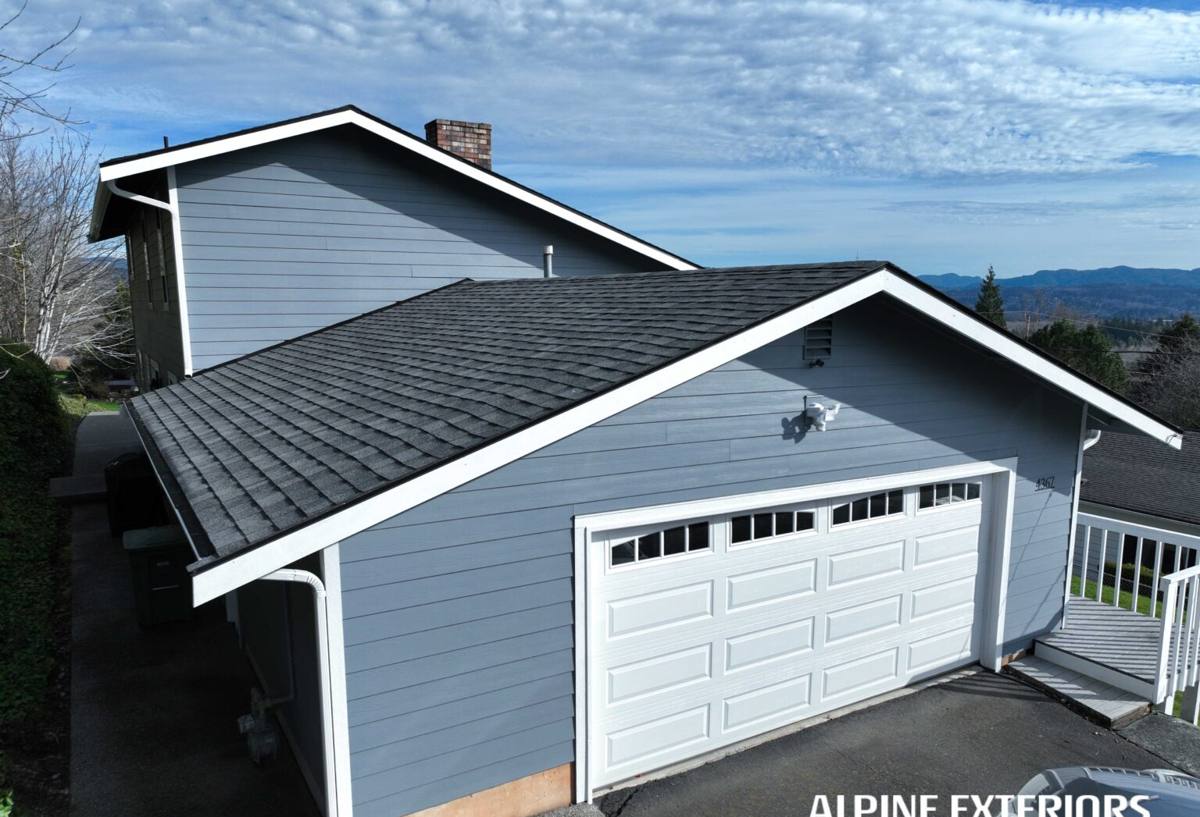
What Storm Damage Actually Looks Like on a Fairhaven Roof
Storm damage rarely announces itself with a hole in the roof. Most of what we find during post-storm inspections falls into a handful of categories, and homeowners often don't notice any of them from the ground.
Wind-Driven Damage
- Lifted or creased shingle tabs where wind got underneath the edge and bent the shingle back, breaking the seal strip even if the shingle didn't tear off
- Missing or loosened ridge cap shingles, which are the most exposed piece on the whole roof
- Flashing pulled away from chimneys, dormers, or sidewalls, opening a gap for water even though the roof field looks intact
- Debris impact — broken branches or blown material that cracks shingles or dents metal flashing
Water Intrusion
- Driving rain forced up under shingle edges by wind pressure, rather than water simply running off downhill
- Leaks at valleys and penetrations (vents, skylights, chimneys) where flashing has aged or shifted
- Saturated decking that stays soft or spongy after the storm has passed, a sign water has already gotten past the shingle layer
Long-Term Moisture and Moss Effects
Moss doesn't cause storm damage directly, but it sets the roof up to fail faster once a storm hits. Moss holds moisture against the shingle surface, which softens the asphalt and granule bond over time. A roof with heavy moss growth going into a windstorm is more likely to lose shingles than a clean one, because the shingles themselves are already weaker. This is a bigger factor in Fairhaven and across this part of Whatcom County than it is in drier parts of the state, simply because the roof surface spends more days wet than dry for a good stretch of the year.
Why a Fast, Correct Assessment Matters
The gap between "the storm happened" and "the leak shows up on the ceiling" can be weeks or months. Water that gets under a lifted shingle or past a pulled-back flashing doesn't always run straight down to a visible spot — it can travel along the decking or follow a rafter before it ever shows up as a stain. That's why we don't just look at the obvious damage; we check the areas most likely to have hidden entry points, particularly valleys, wall-to-roof transitions, and anywhere flashing meets a penetration.
Homes near the water in Fairhaven also deal with faster fastener corrosion. A nail or screw that would hold fine for years elsewhere can start rusting and losing grip strength sooner here, which means a storm-damaged roof sometimes has more going on underneath than what the wind alone caused. Part of a correct assessment is telling the difference between damage the storm caused and wear the storm exposed.
What a Correct Repair Involves
Storm damage repair isn't one-size-fits-all — the right fix depends on what's actually damaged and how deep it goes. Here's how we approach it, in order.
1. Full Roof Inspection, Not Just the Damaged Area
Wind damage is rarely confined to one spot. We check the whole roof plane, not just where a homeowner points, because a storm strong enough to lift shingles in one area often stressed fasteners and flashing elsewhere too.
2. Decking Check Before Any Shingle Goes Back Down
If water reached the decking, replacing shingles over soft or damaged plywood just buries the problem. Any section that's spongy, delaminating, or stained gets replaced before new roofing goes on top.
3. Flashing Repair or Replacement
Flashing is where most leaks actually originate, even when the shingles get the blame. We re-seat, reseal, or replace flashing at chimneys, valleys, and sidewalls rather than just caulking over a gap, since caulk over damaged flashing is a short-term fix that fails again within a season or two.
4. Matching Shingle Repair
Where individual shingles are damaged, we replace them with matching material rather than defaulting to a full section tear-off when it isn't needed. A full roof isn't always the right call — sometimes a properly done targeted repair is the honest answer, and we'll tell you when that's the case versus when the damage is extensive enough that a larger repair makes more sense.
5. Moss and Debris Clearing
Since moss buildup weakens the roof surface over time, we clear moss and debris from the repair area and surrounding roof as part of the job, not as a separate upsell.
Repair Scope Comparison
| Damage Type | Typical Cause | Repair Approach |
|---|---|---|
| Lifted or missing shingles | Wind uplift, broken seal strips | Targeted shingle replacement, resealing adjacent tabs |
| Flashing separation | Wind stress, fastener corrosion from salt air | Re-seat or replace flashing, re-seal penetrations |
| Soft or stained decking | Prolonged water intrusion past the shingle layer | Cut out and replace affected decking before re-roofing |
| Moss-related granule loss | Extended wet season, shaded or north-facing slopes | Moss removal, treatment, and shingle condition assessment |
| Widespread shingle failure | Aged roof combined with storm stress | Full or partial re-roof, depending on extent |
Materials That Hold Up to Salt Air and Driving Rain
Not every roofing product performs the same way this close to the water. We favor materials and fastener types that resist corrosion better under salt exposure, and we pay close attention to underlayment quality, since a good underlayment is what actually protects the decking if wind-driven rain gets past the shingle surface. We don't push premium upgrades that aren't warranted, but we also won't rebuild storm damage with materials that are a poor match for a coastal-influenced climate — that just sets the homeowner up for a repeat repair.
Our Process, Start to Finish
- Inspection and documentation — we assess the full roof, not just the visibly damaged section, and document findings clearly
- Straight explanation — we walk you through what's actually damaged, what caused it, and what the repair options are, including when a smaller repair is the right call instead of a bigger one
- Written estimate — clear scope of work before anything starts
- Repair work — decking, flashing, and shingle work done in the order that actually stops water intrusion, not just the order that looks fastest
- Final check — we confirm flashing seals and shingle lines are correct before calling the job done
What to Check After a Storm — A Homeowner's Quick List
You don't need to get on the roof yourself to spot warning signs. From the ground or an attic, here's what's worth checking after a windstorm or heavy rain event:
- New water stains on ceilings or upper interior walls, especially near chimneys or skylights
- Shingle pieces or granules collecting in gutters or on the ground
- Visibly lifted, curled, or missing shingles from the ground or a neighboring vantage point
- Daylight visible through the attic roof deck
- Musty smell or visible moisture in the attic after a storm
- Sagging or soft-looking spots on the roof plane
If you notice any of these, it's worth having someone look sooner rather than later. Roof damage in a wet climate like this one doesn't stay the same size — it tends to spread with each additional rain event.
Why Local Experience Matters for This Job
A roofer who mostly works drier, inland areas of Washington isn't necessarily thinking about salt-air corrosion or the way wind moves across a site like Fairhaven's. We work in Ferndale and the surrounding Whatcom County communities regularly, so when we're assessing storm damage here, we already know what kind of wear to expect on a coastal-influenced roof versus one further from the water. That local familiarity shows up in faster, more accurate diagnosis — and in repairs that are built for the conditions this roof will keep facing, not just the storm that just passed.
If your roof took a hit in a recent storm, or you're just not sure whether what you're seeing is normal wear or actual damage, we're happy to take a look. Reach out for a free, no-pressure estimate using the form below — we'll give you a straight answer about what's going on and what it would take to fix it right.