 Ferndale Window
 Roof Repair Built for Semiahmoo's Coastal Conditions
Semiahmoo sits close enough to the water that roofs here take a different kind of beating than roofs ten miles inland in Ferndale proper. Salt-laden air off the bay accelerates corrosion on metal fasteners, flashing, and vents. Driving rain off Georgia Strait and Semiahmoo Bay finds every gap in flashing and underlayment before it finds anywhere else. And the long, wet, shaded moss season in Whatcom County works year-round on any roof that doesn't get regular attention. None of this means Semiahmoo roofs fail faster than everyone else's — it means they need repairs done with the right materials and the right sequencing, or the same problem comes back in a year.
We work on homes in this immediate area regularly, which matters more than it sounds like. A roof repair crew that knows which slopes in Semiahmoo catch the worst wind-driven rain, which tree cover holds moisture longest, and how salt air behaves on exposed metal will diagnose a leak faster and fix it more permanently than a crew seeing the neighborhood for the first time.
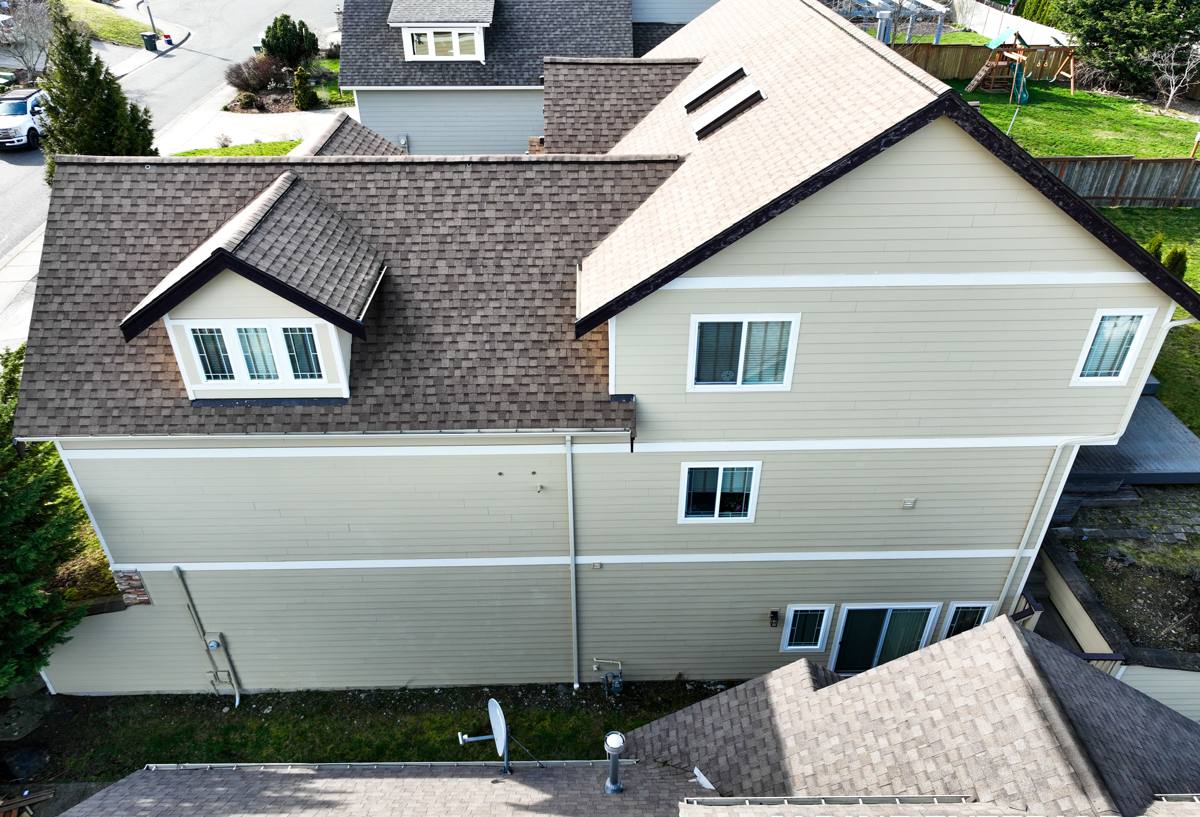
What Local Homes Actually Need From a Roof Repair
Most roof repair calls in this area fall into a handful of categories. Understanding which one you're dealing with changes what the right fix looks like.
Wind and Rain-Driven Leaks
Semiahmoo gets exposure to weather moving in off the water, and wind-driven rain doesn't behave like a normal downpour. It can push water sideways and upward under shingle edges, around chimney flashing, and through vent boots that have gone stiff or cracked. A leak that only shows up during a storm with wind from a specific direction is almost always a flashing or fastener issue, not a shingle issue — and treating it like the latter wastes money.
Moss and Organic Growth
Shaded roof sections and north-facing slopes in this part of Whatcom County hold moisture long after the rest of the roof has dried out. Moss roots work under shingle edges and lift them, breaking the seal that keeps water out. Left alone, moss doesn't just look bad — it shortens the life of the roofing material underneath it and can cause granule loss that leaves shingles brittle.
Salt Air Corrosion
Exposed metal — nail heads, flashing seams, gutter fasteners, vent stacks — corrodes faster this close to the water. Corroded flashing loses its seal well before the shingles around it wear out, which is why a roof can look fine from the ground while still leaking at a valley or chimney.
Age and Wear
Standard wear still applies here like anywhere: curling or cracked shingles, granule loss showing up in gutters, nail pops, and soft spots in the decking from long-term moisture exposure.
What a Correct Roof Repair Involves
A roof repair done right isn't just patching the spot where water is showing up inside the house. Water travels — a stain on a ceiling can be several feet from where it's actually entering the roof. A correct repair starts with tracing the leak to its actual source, not just the visible symptom.
- Inspection of the full roof plane involved, not just the leak point, to catch related damage before it becomes its own leak
- Removal and replacement of damaged or failed materials — shingles, underlayment, decking — rather than sealing over them
- Flashing repair or replacement at chimneys, valleys, vents, and wall intersections, since flashing failure is behind a large share of leaks in this climate
- Proper fastener selection for coastal exposure, since standard hardware corrodes faster this close to salt air
- Moss and debris removal from the repair area and surrounding roof, with attention to what's holding moisture nearby
- Verification that ventilation and drainage in the repaired section are working, since trapped moisture undoes a repair from underneath
- A final check for related soft spots, sagging, or interior signs of past water intrusion nearby
Signs You Likely Need a Repair, Not a Full Roof
Homeowners often assume any leak means a full roof replacement is coming. In our experience, most calls in the Semiahmoo area are legitimate repairs, not replacements — as long as the underlying decking hasn't been compromised for an extended period. Watch for these:
| Sign | Usually Means |
|---|---|
| Isolated ceiling stain after storms with wind from one direction | Flashing or fastener leak, localized repair |
| Moss patches on shaded slopes, no interior leak yet | Preventive repair and cleaning before it becomes a leak |
| Granules collecting in gutters, roof otherwise intact | Normal aging, monitor or spot-repair |
| Soft or spongy feel underfoot in one section | Localized decking damage, targeted repair |
| Multiple leak points across different slopes | Worth a full inspection to assess overall roof condition |
| Sagging ridge line or widespread soft decking | Likely beyond repair scope, replacement conversation warranted |
If you're not sure which category your roof falls into, that's exactly what a free estimate visit is for — we'll tell you honestly if it's a repair or if you should be planning for something bigger.
How Our Repair Process Works
1. Inspection and Honest Assessment
We look at the roof from the source of the problem outward, not just the spot where water showed up inside. We'll tell you plainly whether it's a contained repair or something that points to a bigger issue.
2. Clear Explanation Before Any Work
You'll know what we found, what we recommend, and why — including any tradeoffs, like whether a quick patch is appropriate versus a more thorough fix that costs more upfront but holds longer against this area's weather.
3. The Repair Itself
We remove and replace what's actually damaged, address the root cause (usually flashing, ventilation, or moss-related moisture retention), and use fasteners and materials suited to coastal exposure rather than generic hardware that corrodes faster here.
4. Cleanup and Walkthrough
We clear debris, walk the work with you, and point out anything else worth keeping an eye on so you're not surprised later.
Why Moss Season Matters More Than Most Homeowners Think
Whatcom County's moss season isn't a cosmetic issue — it's a structural one if ignored long enough. Moss holds water against the roofing material for extended periods, which is exactly the condition that breaks down shingle adhesive and underlayment seals over time. Shaded slopes, roofs under tree cover, and north-facing sections in Semiahmoo are especially prone because they simply don't get enough sun exposure to dry out between rain events. A roof repair in a moss-affected area isn't complete unless the moss itself is addressed as part of the fix — otherwise you're repairing the same spot again in a season or two.
Preventive Habits Between Repairs
- Keep gutters and downspouts clear so water doesn't back up under roof edges
- Trim back tree limbs that shade roof sections and keep them from drying out
- Have moss physically removed rather than just treated, especially on older roofing
- Do a visual check after major windstorms for lifted shingles or displaced flashing
- Address small leaks early — they're cheaper and simpler than what they turn into after a winter of neglect
What Roof Repair Materials Make Sense Near the Water
Not every roofing material or fastener performs the same way in a salt-air environment. Our standard on repairs in this area is to match or upgrade to corrosion-resistant flashing and fasteners rather than replacing like-for-like with whatever was originally installed, especially if the original hardware is what failed in the first place. This isn't about any particular brand being inferior — it's about matching material choices to the specific stress this location puts on a roof. A fastener or flashing detail that works fine twenty miles inland can underperform here simply because of consistent salt exposure.
Cost Factors for Roof Repair in This Area
Every repair is different, but the price generally comes down to a few factors we walk through with you before starting any work:
| Factor | Why It Affects Cost |
|---|---|
| Extent of decking damage | Rotted decking under a leak point requires removal and replacement, not just a surface patch |
| Roof pitch and access | Steeper slopes and hard-to-reach sections take more time and safety setup |
| Flashing complexity | Chimneys, valleys, and multiple roof intersections require more detailed flashing work than a flat run of shingles |
| Moss or growth removal | Heavier growth requires more cleanup time before the actual repair can begin |
| Material match | Matching existing shingle color and style, when needed, can affect material sourcing |
We give straightforward, itemized estimates so you know what you're paying for and why — no vague lump sums.
Why It Matters That We Already Work This Area
A roof repair crew that regularly works in Semiahmoo and the surrounding Ferndale area already knows how this specific stretch of Whatcom County weather behaves — where wind-driven rain hits hardest, which slopes hold moss longest, and how quickly salt air degrades unprotected metal. That local knowledge shortens diagnosis time and reduces the chance of a callback for the same leak. It also means we're not guessing at material choices; we're using what we've already seen hold up against this exact coastal exposure, season after season.
If you're dealing with a leak, visible moss buildup, or just want a professional opinion on a roof that's showing its age, we're glad to take a look. Reach out for a free, no-pressure estimate — we'll give you an honest read on what your roof needs and what it doesn't, using the form below.