 Ferndale Window
 Why Bellingham's Climate Is Hard on Siding
Bellingham sits right on the water, and that proximity to Bellingham Bay and the greater Puget Sound shapes what siding has to survive here. Salt-laden air moves inland on a regular basis, and it doesn't just affect boats and metal railings — it accelerates corrosion on fasteners, works into seams and joints, and speeds up the breakdown of coatings that weren't built to handle it. Add in driving rain that comes sideways off the water during fall and winter storms, and you've got a siding system that's under near-constant moisture pressure for a good chunk of the year.
Then there's moss. Whatcom County's damp, mild climate means shaded exterior walls — especially north- and west-facing ones under tree cover, which is most of Bellingham — stay wet longer after every rain. That extended dampness is exactly what moss and algae need to take hold. Once organic growth establishes itself on a wall, it holds moisture against the surface even longer, which compounds the problem instead of just sitting there looking bad.
None of this is unusual for the region, but it does mean siding decisions that work fine in a drier climate can fail early here. The material, the installation details, and the maintenance plan all need to account for salt exposure, sustained rain, and a moss season that can run most of the year in shaded spots.
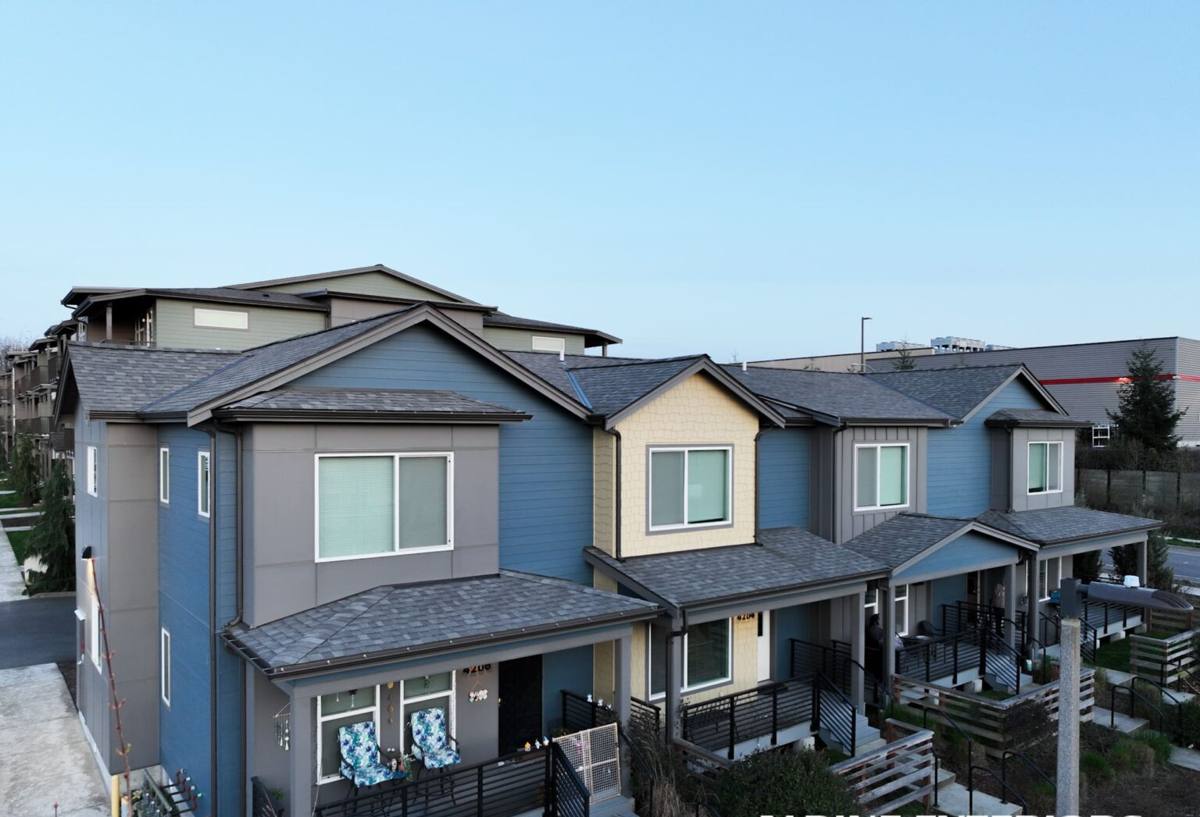
What Bellingham Homes Actually Need From Their Siding
Given that climate profile, a few things matter more here than they might elsewhere in Washington:
- Dimensional stability — siding that doesn't swell, cup, or warp when it takes on moisture repeatedly over the years
- A factory-applied finish that resists fading and doesn't need re-coating every few years to stay watertight
- Resistance to rot and fungal growth, since damp shaded walls are common across Bellingham's tree-lined neighborhoods
- Fastener and flashing details that account for salt-air corrosion, not just standard interior-grade hardware
- A product that holds paint and caulk adhesion over time, since caulked joints in a wet climate are a common failure point
This is the lens we use on every Bellingham siding job — not just "what does the homeowner want to look at," but "what's actually going to hold up thirty feet from a shaded fence line with rain hitting it eight months a year."
Signs Your Siding Needs Replacing, Not Patching
A lot of Bellingham homeowners call us for a repair and end up needing a replacement once we actually get eyes on the wall. Here's what tends to separate the two:
- Soft or spongy spots when you press on the siding, which usually means water has gotten behind it
- Persistent moss or algae staining that comes back within a few months of cleaning
- Visible warping, cupping, or separation at the seams, especially on shaded elevations
- Paint that's peeling or bubbling rather than just fading — a sign moisture is trapped underneath
- Soft trim boards or discoloration around window and door casings
- Siding that's original to a home built more than 20-25 years ago, particularly wood or older composite products
One or two of these on their own might mean a targeted repair is enough. Several at once, especially combined with soft sheathing underneath, usually means the whole wall system needs to come off so we can address what's happening behind the siding, not just what's visible on the surface.
What a Correct Siding Replacement Job Involves
Tear-Off and Inspection
Replacement starts with removing the old siding down to the sheathing, which is the only point where anyone can actually see what's happening underneath. In a wet climate like Bellingham's, this step matters more than people expect — it's common to find soft sheathing, compromised house wrap, or rot around window openings that wasn't visible from outside. Any of that needs to be repaired or replaced before new siding goes on, because covering a moisture problem instead of fixing it just delays the same failure.
Weather Barrier and Flashing
A correctly installed weather-resistive barrier and properly integrated flashing at every window, door, and penetration is what actually keeps water out — the siding itself is the second line of defense, not the first. Given how much rain Bellingham sees, we treat this layer as non-negotiable. Poorly lapped house wrap or missing flashing is one of the most common causes of hidden rot we find when we open up older walls.
Installation to Manufacturer Spec
James Hardie fiber cement has specific installation requirements around fastener spacing, clearances from grade and roof lines, and joint treatment. Following those specs isn't optional if you want the product warranty to be valid, and it's also what determines whether the siding performs the way it's designed to in a coastal, high-moisture climate.
Finish and Trim
The final layer is trim, caulking at appropriate joints, and touch-up painting where field-cut edges are exposed. Done right, this step is what gives the finished wall a clean, factory-finished look rather than an obviously "worked on" appearance.
Why We Only Install James Hardie Fiber Cement
We get asked fairly often why we don't offer vinyl, LP SmartSide, cedar, or other fiber cement brands. It comes down to what holds up under repeated wet-dry cycling and salt exposure without ongoing maintenance. Vinyl is affordable and low-maintenance in the sense that it doesn't need painting, but it can warp or become brittle over time and doesn't offer the same fire resistance or rigidity as fiber cement. Cedar looks great new, but it requires consistent refinishing to resist rot and moss in a climate this damp — skip a maintenance cycle or two and it starts showing it. Engineered wood products like LP SmartSide perform reasonably well when maintained on schedule, but wood-based cores are inherently more vulnerable to moisture intrusion at cut edges and joints than a cement-based product.
James Hardie's fiber cement is engineered specifically to resist moisture, doesn't support fungal growth the way wood-based products can, and comes with a factory-applied ColorPlus finish that's baked on rather than field-applied — which matters a lot in a place where field-applied coatings are fighting rain most of the year. It's also non-combustible, which is a real advantage as wildfire smoke and regional fire risk have become bigger considerations in the Pacific Northwest generally.
| Material | Moisture Resistance | Maintenance Need | Fire Resistance | Typical Lifespan |
|---|---|---|---|---|
| Vinyl | Moderate — can trap moisture behind panels | Low, but prone to warping/cracking over time | Low | 20-30 years |
| Cedar | Low without consistent refinishing | High — regular sealing/painting required | Low | 15-25 years with upkeep |
| LP SmartSide (engineered wood) | Moderate — vulnerable at cut edges/joints | Moderate — scheduled repainting | Moderate | 25-30 years |
| James Hardie Fiber Cement | High — engineered for wet climates | Low — factory finish, occasional cleaning | High (non-combustible) | 30-50+ years when installed to spec |
Our Process for Bellingham Projects
Estimate and Inspection
We walk the exterior with you, note problem areas, and give you an honest read on whether you're looking at a repair or a full replacement — no upselling a job the home doesn't need.
Product and Color Selection
We help you choose the right Hardie plank or panel profile and color for your home's exposure, factoring in which elevations take the most weather and sun.
Install Timeline
Most single-family siding replacements run from about a week to a few weeks depending on square footage, home complexity, and how much sheathing repair is needed once we open the walls up. We'll give you a realistic window before work starts, not just a best-case number.
Cleanup and Walkthrough
We do a final walkthrough with you before calling the job done, covering care instructions specific to your new siding and what to watch for as it settles in through its first Bellingham winter.
Cost Factors for Siding Replacement in Bellingham
Every project is different, but the biggest cost drivers we see on Bellingham homes are:
- Home size and the number of stories, which affects labor and equipment needs
- How much sheathing or structural repair is needed once old siding comes off
- Trim complexity — homes with a lot of window and roofline detail take more labor to finish cleanly
- Siding profile choice (lap, panel, shingle-style) and whether you're matching an existing architectural style
- Access — homes with tight side yards or steep grades can add time and equipment cost
We won't give you a number that isn't based on actually seeing the house — broad estimates without an inspection tend to be wrong in one direction or the other, and we'd rather be accurate than fast.
Why Hiring a Crew That Already Works in Bellingham Matters
A contractor who works this area regularly already knows how the local climate behaves — which elevations tend to hold moisture, how permitting works with the local jurisdiction, and what kind of moisture problems tend to hide behind older siding on Whatcom County homes. That's not something you can fully substitute with a crew driving in from outside the region for a one-off job. It also means we're not disappearing after the invoice — if a question comes up about your siding a year or two down the road, we're still a local business, not a name you have to track down.
Maintaining Your New Siding Through Whatcom County's Wet Season
James Hardie siding is low-maintenance compared to wood or vinyl, but "low-maintenance" doesn't mean "no maintenance" in this climate. A periodic rinse to knock off pollen, salt residue, and early moss growth — especially on shaded, north-facing walls — goes a long way toward keeping the factory finish looking the way it did on day one. Keeping gutters clear and vegetation trimmed back from exterior walls also reduces the sustained dampness that drives moss growth in the first place.
If you're dealing with aging, moss-covered, or visibly failing siding on a Bellingham home, we're happy to take a look and give you a straight answer on what it needs. Reach out for a free, no-pressure estimate using the form below.