 Ferndale Window
 Bellingham's Exterior Problem Isn't One Thing — It's Three
Homes in Bellingham sit at the intersection of three slow, patient forces: salt-laden air off the Sound, driving rain that comes in sideways more often than straight down, and a moss season that can run eight or nine months out of the year in shaded, north-facing spots. None of these alone destroys siding quickly. Together, over a decade or two, they do most of the damage we get called out to fix.
Salt air accelerates corrosion on fasteners, flashing, and any exposed metal trim. Wind-driven rain finds every gap in a butt joint, every under-caulked seam, and every place where siding was nailed too tight or lapped short. And moss — which thrives in the Pacific Northwest's mild, wet winters — holds moisture directly against a wall surface for months at a time, which is exactly the condition that rots wood-based products and delaminates poorly-made composites. Correct siding installation in this part of Whatcom County has to be engineered around all three, not just one.
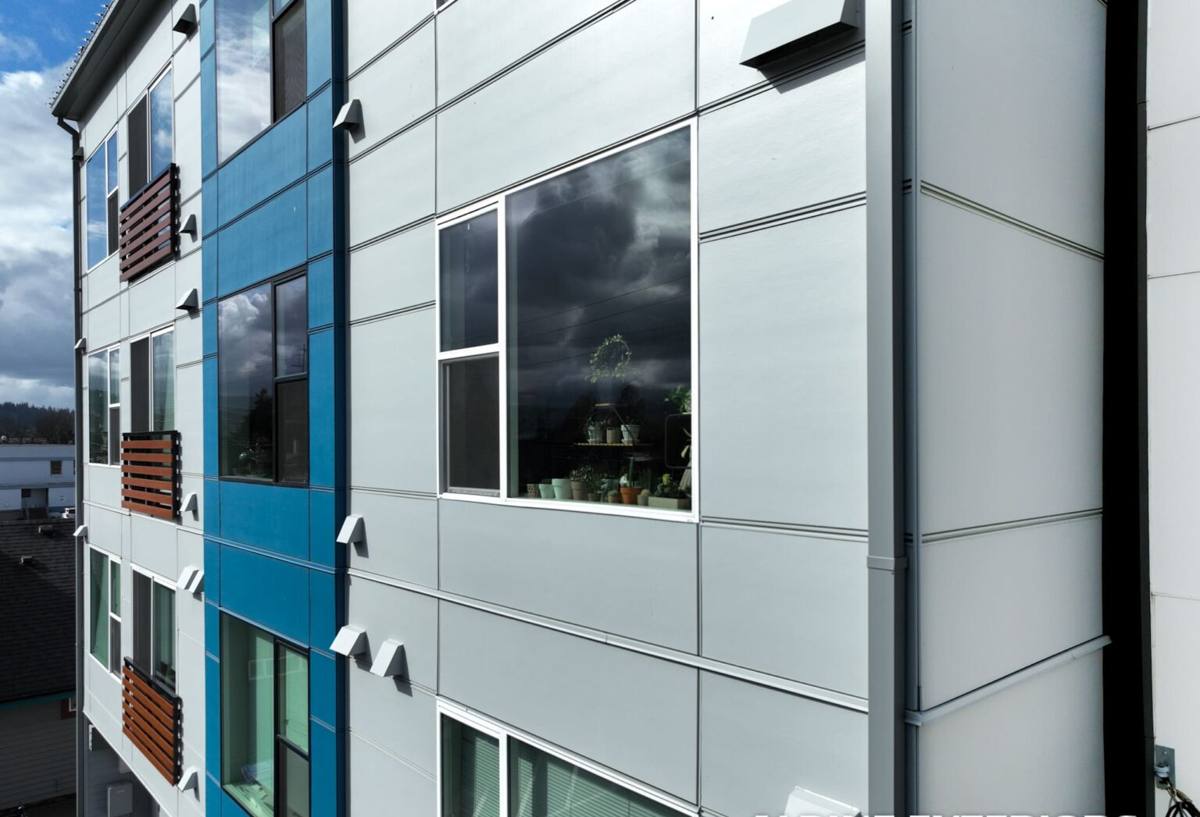
What "Correct" Actually Means on a Bellingham Home
A siding job can look finished and still fail in five years if the details underneath aren't right. The visible plank is maybe 10% of what determines how long a siding system lasts here. The rest is water management — how a wall sheds and drains the moisture it's constantly exposed to.
Moisture Management Comes First
Before a single piece of siding goes up, the wall needs a drainage plane: a weather-resistive barrier installed shingle-style (upper courses lapping over lower ones), properly integrated flashing at every window, door, and penetration, and a way for any water that does get behind the cladding to drain back out rather than pool. In a climate with this much sustained rain, a wall that can't drain is a wall that's rotting slowly out of sight.
Fastening and Clearances
Fiber cement siding has specific nailing patterns, fastener types, and minimum clearances from grade, roof lines, and decks that exist for a reason — get them wrong and you create the exact gaps that wind-driven rain and salt-corroded fasteners exploit. Butt joints need to be flashed or sealed correctly, not just butted and caulked. Corners, especially outside corners exposed to prevailing weather, need proper trim integration so water sheds away from the seam instead of into it.
Ventilation Behind the Cladding
A rainscreen gap — a small air space between the water-resistive barrier and the back of the siding — lets any moisture that gets past the outer layer dry out instead of sitting against sheathing. In a region with Bellingham's humidity and moss pressure, that gap is the difference between siding that dries between rain events and siding that stays damp long enough to grow something.
Why We Install Only James Hardie Fiber Cement
We made a deliberate decision to install one siding system and nothing else: James Hardie fiber cement. We don't install vinyl, LP SmartSide, cedar, primed spruce, or other fiber cement brands like Allura or Cemplank. That's not a marketing position — it's a standard we hold because of what we've seen hold up in this climate and what hasn't.
Fiber cement is non-combustible, which matters increasingly in Washington. It doesn't rot the way wood-based siding can when moss and moisture sit against it season after season. Hardie's HZ5 product line is specifically formulated for the wetter, cooler climate zones the Pacific Northwest falls into, and the factory-applied ColorPlus finish is baked on under controlled conditions rather than field-painted, which matters a great deal in a place where a fresh paint job barely gets a dry week to cure before the next system rolls in off the water.
We're not going to tell you every other product is worthless — vinyl is inexpensive and low-maintenance in the right application, and engineered wood has genuine fans. But we've standardized on one system so we can install it correctly, warranty it honestly, and stand behind it without hedging. Splitting our crew's expertise across five different products means being mediocre at all of them.
How Fiber Cement Compares for This Climate
| Factor | James Hardie Fiber Cement | Vinyl | Engineered Wood (e.g. LP SmartSide) |
|---|---|---|---|
| Moisture/rot resistance | Cement-based, does not rot | Does not rot, but can warp/crack in cold | Wood-based core, vulnerable if moisture penetrates |
| Moss/algae exposure | Factory finish resists staining | Can stain and hold algae in shaded areas | Bare or primed edges vulnerable if not maintained |
| Salt air / coastal exposure | Engineered for coastal/marine climate zones | Generally stable but can chalk/fade | Requires diligent edge sealing and repainting |
| Fire classification | Non-combustible | Combustible | Combustible (treated, but wood-based) |
| Finish durability | Factory-cured ColorPlus finish | Color molded through, can fade/chalk | Field-painted or factory-primed, needs upkeep |
| Typical repaint interval | 15 years or longer for ColorPlus | Does not typically need painting | 5–10 years depending on exposure |
Our Installation Process for Bellingham Homes
Working this area regularly means we already know what a Bellingham exterior is up against before we ever get on a ladder. Our process doesn't change from house to house, but the attention to certain details does — flashing details at grade, corner details on the weather side, and drainage behind the cladding get extra scrutiny on homes exposed to prevailing wind and rain off the water.
- On-site assessment of the existing wall assembly, moisture damage, and exposure direction
- Removal of old siding and inspection of sheathing for hidden rot or damage before covering anything back up
- Repair of any compromised sheathing — never siding over a wall that isn't sound
- Installation of a shingle-lapped weather-resistive barrier with fully integrated window, door, and penetration flashing
- Rainscreen gap installation to allow the wall to dry
- James Hardie plank, panel, or shingle installation per manufacturer fastening specifications
- Trim, corner, and joint detailing built to shed water, not just look finished
- Final walk-through so you understand what was done and why
Signs Your Current Siding Is Already Losing the Battle
Most siding failure in this climate doesn't announce itself with a dramatic leak. It shows up as small, easy-to-dismiss signs first.
- Persistent moss or black-green staining that returns within weeks of cleaning
- Soft spots or visible give when you press on wood-based siding near the bottom courses
- Paint that's peeling or bubbling rather than just fading evenly
- Visible gaps or warping at butt joints and corners
- Rust streaking below fasteners or trim pieces
- Rooms that feel colder or damper along an exterior wall than others in the house
- Siding that was never repainted or resealed and is now more than 12-15 years old
Any one of these on its own might just mean routine maintenance. Several together, especially on a wall that takes direct wind and rain, usually means the water management underneath is compromised, not just the surface.
What Drives the Cost of a Correct Installation
Every Bellingham job is priced around the same handful of variables. We won't quote a number without seeing the house, but these are the factors that move the price up or down.
| Cost Factor | Why It Matters |
|---|---|
| Sheathing condition | Rot found underneath old siding must be repaired before new siding goes on — this is often the biggest wildcard on older homes |
| Wall complexity | Dormers, gables, and multiple stories mean more cutting, flashing, and trim detail |
| Product line and profile | Lap width, shingle-style panels, and trim options affect material cost |
| Existing siding removal | Full tear-off versus a simpler recover situation changes labor scope |
| Access and site conditions | Tight lots, mature landscaping, or difficult grading affect staging and time |
Broadly speaking, a full fiber cement re-side is a mid-to-upper-range exterior investment compared to vinyl, but it's priced to be installed once and maintained on a much longer cycle — which matters when you're weighing it against redoing a cheaper product again in fifteen years.
Why It Matters That the Crew Already Works This Area
Being based in Ferndale and working Bellingham regularly isn't just convenience — it means we're not guessing at how this specific stretch of Whatcom County behaves. We know which orientations take the worst wind-driven rain, which yards hold shade and moss pressure longer into the summer, and which older housing stock tends to have hidden sheathing damage behind original siding. That local pattern recognition shows up in the flashing and drainage decisions made on your specific walls, not just in the brand of siding we hang.
A crew that only shows up occasionally from outside the area doesn't carry that same local case history. It's a small edge on paper, but on a house that will be judged by how it holds up in year twelve, not year one, it adds up.
Maintenance After Installation
Correctly installed James Hardie siding is low-maintenance, not no-maintenance. An annual rinse to knock back moss and organic growth, especially on shaded or north-facing walls, keeps the ColorPlus finish looking like it should. Keeping gutters clear and grading away from the foundation protects the bottom courses. Beyond that, the finish and material are built to go long stretches without needing attention — which is the point of paying for the system once and installing it right.
If you're weighing a siding replacement on a Bellingham-area home, we're glad to take a look and give you a straight, no-pressure assessment of what your walls actually need. Use the form below to request a free estimate.