 Ferndale Window
 Board & Batten Siding for Kendall Homes
Kendall sits inland from Ferndale in the wooded foothills of Whatcom County, and homes out here face a different mix of weather than houses closer to the water. There's more tree cover, more shade, more standing moisture in the air during the wet months, and a longer stretch of the year where siding simply doesn't get a chance to dry out between storms. Add in the driving rain that comes through the county most winters and the moss season that follows it, and you've got an exterior that's working hard year-round whether the homeowner notices it or not.
Board and batten is a natural fit for a lot of Kendall properties — it reads as farmhouse, cabin, or modern rural depending on the trim and color choices, and that vertical line suits the wooded, semi-rural character of the area better than a lot of subdivision-style horizontal lap. But the look only holds up if the installation underneath it is done right. Vertical siding has its own moisture-management rules, and if a crew treats it like horizontal lap turned sideways, the wall behind it pays for that mistake within a few winters.
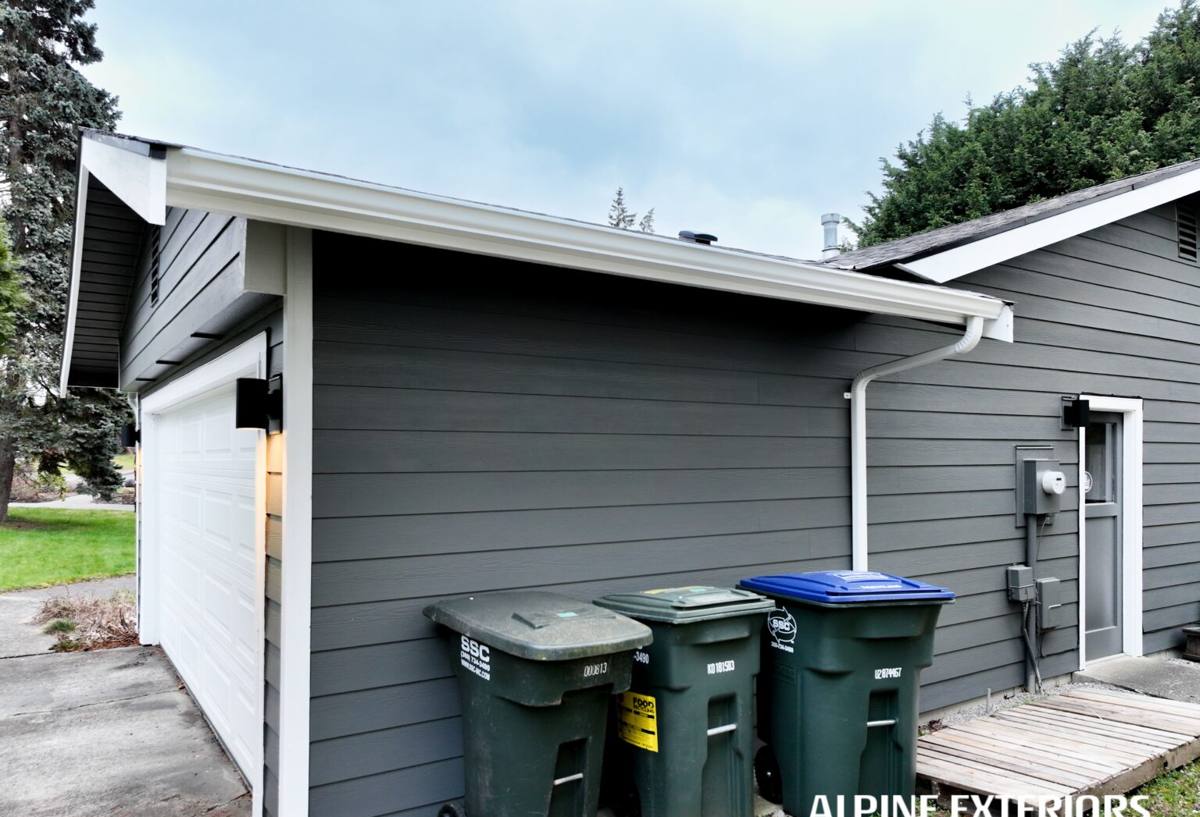
What Kendall's Climate Actually Does to Siding
Whatcom County's coastal and inland weather patterns overlap here — you get the driving, wind-pushed rain typical of the region, plus the extra humidity and slower drying time that comes with being tucked into trees and away from open wind. Salt-laden air moving in off the Sound affects the broader region's exterior materials over time, but in Kendall the bigger day-to-day enemy is moisture that lingers: damp shade, morning dew that doesn't burn off until midday, and a moss season that can run from fall through spring.
The three things that do the most damage
- Trapped moisture behind the cladding — the single biggest cause of premature siding failure, and almost always a result of missing or wrong house wrap, missing flashing, or battens installed with no drainage path
- Moss and organic growth — holds moisture against the material longer than clean, dry siding ever would, and left unaddressed it accelerates whatever weakness is already there
- Swelling and softening of moisture-sensitive materials — untreated or under-engineered wood products absorb water at the cut ends and panel edges first, which is exactly where board and batten has the most exposed seams
None of this is unique to Kendall, but the combination of shade, tree cover, and lower air movement makes the timeline shorter than it would be on an open, sunny lot closer to the coast.
Why We Only Install James Hardie for This Look
Board and batten can be built out of a few different materials, and we get asked why we don't offer it in cedar, primed spruce, or engineered wood panel products. The honest answer is moisture behavior. Those products can look excellent on day one, but they depend heavily on paint maintenance, sealed cut ends, and consistent airflow to hold up — and Kendall's shaded, damp microclimate is exactly the environment where that maintenance schedule gets tested hardest.
We install James Hardie fiber cement board and batten because it's engineered for this region specifically. It doesn't absorb water the way wood-based products do, it carries a factory-applied ColorPlus finish that isn't dependent on the homeowner staying on top of repainting, and it's non-combustible — a real consideration for properties further out from town with more tree cover and longer emergency response distances. We don't install vinyl, LP SmartSide, Cemplank, Allura, or unfinished wood siding. Hardie is the one product we're willing to put our name behind out here.
What a Correct Board & Batten Installation Involves
Board and batten is more installation-sensitive than it looks. The vertical boards and the battens covering the seams both need a drainage path behind them, not just a nail pattern that looks tidy from the ground.
The non-negotiables
- A code-compliant weather-resistant barrier (house wrap) installed with proper lapping and sealed penetrations before any siding goes up
- A rainscreen or furring strategy that gives water an actual path to drain and the wall a chance to dry, rather than trapping moisture flat against the sheathing
- Correct fastener spacing and placement per the manufacturer's engineering — not "close enough," since board and batten telegraphs uneven fastening more visibly than lap siding does
- Proper flashing at every window, door, and roofline transition, with special attention to inside corners where the vertical lines meet
- Factory-cut and factory-primed edges kept intact wherever possible, with any field cuts properly sealed before installation
Skip any one of these and the siding can still look right for a season or two. The failures that follow — trapped moisture, staining, panel movement — usually show up behind the wall long before they're visible from the street.
Board Width and Batten Spacing Options
Part of getting board and batten right for a Kendall property is matching the reveal and spacing to the house — a tall farmhouse profile reads differently than a low, wide rambler.
| Layout Style | Best Suited To | Maintenance Consideration |
|---|---|---|
| Wide board, narrow batten | Farmhouse and craftsman-style homes | Fewer seams overall, but each seam carries more of the drainage burden |
| Even board and batten spacing | Modern and transitional builds | Consistent shadow lines; requires precise fastening to stay uniform |
| Board and batten as an accent (gables, dormers) | Homes mixing siding styles | Fewer square feet exposed, but transitions to other siding need careful flashing |
Our Process on Kendall Properties
We start with an on-site walk of the exterior, not a drive-by estimate. That means checking the existing wall assembly, looking for signs of past moisture intrusion, and being honest about what the tree cover and drainage on the specific lot mean for how the new siding should be detailed. From there:
- Full removal of failing siding and inspection of the sheathing underneath for rot or existing moisture damage
- Repair of any compromised sheathing before anything new goes on — we don't cover up a problem
- Installation of house wrap and rainscreen furring built for proper drainage and airflow
- Flashing at every window, door, and roof intersection
- James Hardie board and batten installed to manufacturer fastening specs, with tight, consistent reveals
- Final walk-through and cleanup, with a clear explanation of what warranty coverage applies to the work
Why a Crew That Already Works Kendall Matters
Kendall is far enough out from Ferndale's core that not every contractor treats it the same as a job closer to town. A crew unfamiliar with the area can underestimate how much shade and moisture a specific lot actually holds, or default to a generic installation approach that works fine in a drier, more open part of the county but isn't built for a tree-covered property with a longer wet season. Working this neighborhood regularly means we already know what the moss growth pattern looks like on a north-facing wall out here, how much drainage margin to build in, and which details matter most given how slowly these properties dry out after a storm.
Cost Factors on a Board & Batten Project
| Factor | Why It Matters |
|---|---|
| Extent of existing sheathing damage | Hidden rot from a prior installation adds repair time before new siding can go up |
| Home height and roofline complexity | More gables, dormers, and cut lines mean more flashing detail and labor |
| Board and batten layout chosen | Wide-board minimal designs install differently than tightly spaced traditional patterns |
| Trim and color selection | ColorPlus factory finishes vs. field-painted trim affect both cost and long-term maintenance |
| Site access | Tree cover and driveway length on some Kendall lots affect staging and material handling |
Signs Your Current Siding Is Past Its Job
- Moss or algae that returns within weeks of being cleaned off
- Soft spots, especially near the bottom edge of boards or around window trim
- Visible cupping, warping, or gaps opening up between boards and battens
- Paint that's failing faster than the repaint cycle you were promised
- Musty smell or visible staining on interior walls that share an exterior wall with damp siding
Any one of these on its own isn't necessarily an emergency, but on a shaded Kendall lot they tend to compound quickly once moisture gets a foothold.
Get a Straight Answer for Your Property
Every lot in Kendall handles moisture a little differently depending on tree cover, orientation, and how the ground drains. If you're weighing a repair against a full board and batten replacement, we're happy to take a look and give you a straightforward, no-pressure read on where your siding actually stands. Fill out the form below and we'll set up a free estimate.