 Ferndale Window
 Roofing in Fairhaven: A Different Set of Conditions
Fairhaven sits close enough to Bellingham Bay that salt-laden air is a daily fact of life, not an occasional nuisance. Add in the driving rain that blows off the water during fall and winter storms, plus the long, damp shoulder seasons that let moss get a foothold on anything shaded or slow to dry, and you have a roofing environment that's noticeably harder on materials than a drier, inland part of Whatcom County. A shingle roof that would coast along for decades somewhere else can show granule loss, algae streaking, or soft spots much sooner here if it wasn't installed with these conditions in mind.
This page is about one thing: asphalt shingle roofing, done right, for homes in and around Fairhaven. Not a generic overview of roofing in general — the specific choices, details, and maintenance habits that matter when your roof faces salt air, wind-driven rain, and a moss season that can run half the year.
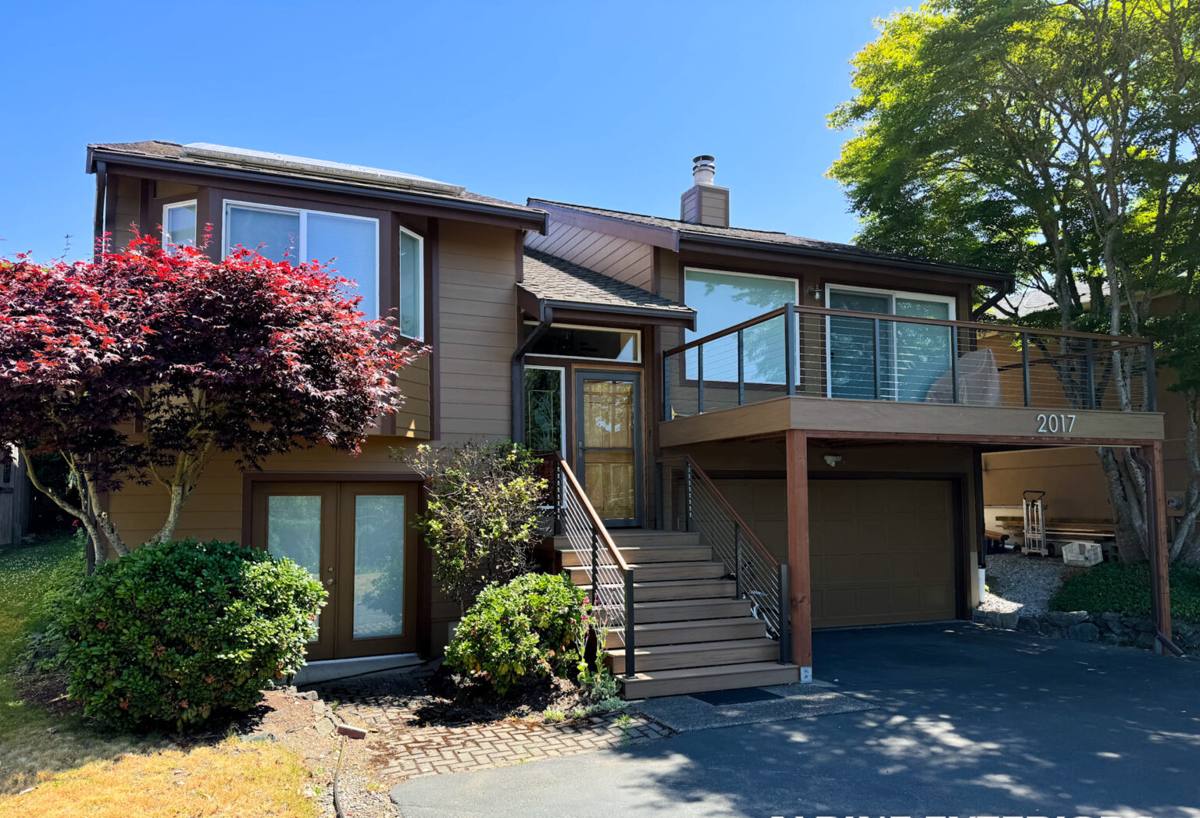
What Local Homes Actually Need From a Shingle Roof
Asphalt shingles remain one of the most practical roofing choices for this area — they're proven, reasonably priced, and easy to repair in sections if something does go wrong. But "asphalt shingles" covers a wide range of products and installation quality, and in a marine climate like Fairhaven's, the details matter more than the shingle brand printed on the wrapper.
The Non-Negotiables Here
- Algae-resistant shingles. Standard shingles streak black or green faster in humid, salt-air conditions. Algae-resistant (AR) shingles use copper-infused granules to slow that growth and should be the default choice for any Fairhaven roof.
- Proper ventilation. Trapped moisture under the roof deck is worse here than in drier climates — it doesn't get a chance to dry out between rain events. Balanced intake and exhaust venting keeps the deck dry from underneath as well as on top.
- Ice-and-water shield at vulnerable points. Eaves, valleys, and roof-to-wall transitions catch the brunt of wind-driven rain. A self-adhering membrane at these spots does more to prevent leaks than any amount of extra shingle overlap.
- Corrosion-resistant flashing and fasteners. Salt air accelerates corrosion on bare steel. Flashing, drip edge, and fasteners should be galvanized, coated, or stainless where budget allows — especially near the coastline side of a property.
Signs a Fairhaven Roof Needs Attention
Because moisture and salt work on a roof gradually, homeowners often miss the early warning signs. Here's what we look for, and what you can check yourself from the ground or a ladder:
- Granules collecting in gutters or at downspout outlets — a sign shingles are wearing thin.
- Dark streaking or green-black patches, usually starting on the north-facing or shaded slopes.
- Moss clumps at shingle edges or in valleys, which hold moisture against the roof surface longer than surrounding areas.
- Curling or cupping shingle edges, especially on slopes that get the most sun-to-rain cycling.
- Soft spots, sagging, or staining on interior ceilings near exterior walls, which often trace back to flashing failures rather than the shingles themselves.
Catching these early is almost always cheaper than waiting. A repair addressed while it's still localized might cost a fraction of what a full deck replacement runs once water has been getting into the sheathing for a season or two.
What a Correct Asphalt Shingle Job Involves
A roof is a system, not just a layer of shingles. Skipping any one of these steps is usually where premature failures start, particularly in a climate that doesn't give a roof much of a break between storms.
Tear-Off and Deck Inspection
We remove the old roofing down to the deck rather than installing over existing layers. This lets us actually see the plywood or OSB underneath, catch soft or delaminated spots, and replace only what needs it — instead of guessing at what's hidden beneath a second layer of shingles.
Underlayment and Water Protection
A synthetic underlayment goes down across the full deck, with self-adhering ice-and-water membrane at eaves, valleys, skylights, chimneys, and any other penetration. In a driving-rain climate, these details do more work than people expect — wind can push water uphill under shingles during a strong storm, and the underlayment layer is what stops it from reaching the deck.
Flashing
Step flashing at walls, counter-flashing at chimneys, and properly lapped valley flashing are where most leaks actually originate — far more often than the shingle field itself. We install new flashing rather than reusing old, bent, or rusted pieces.
Shingle Installation and Nailing
Nailing pattern and placement affect wind resistance directly. We follow manufacturer specifications for nail count and placement, which matters for both performance and keeping any manufacturer warranty valid — a roof that's under-nailed can void coverage even if the shingles themselves are fine.
Ventilation Tie-In
Ridge vents, soffit vents, or other intake/exhaust components get integrated as part of the install, not treated as an afterthought. Balanced ventilation is what keeps the attic and deck dry between storms rather than trapping humidity against the underside of the roof.
Comparing Shingle Options for This Climate
Not every shingle product performs the same way in salt air and heavy rain. Here's how the common tiers stack up for a Fairhaven home specifically:
| Shingle Type | Typical Lifespan Here | Wind Rating | Best Fit |
|---|---|---|---|
| 3-Tab (economy) | 15–20 years | Lower | Budget-driven projects, secondary structures |
| Architectural (dimensional) | 25–30 years | Moderate to high | Most Fairhaven homes — the standard recommendation |
| Premium/designer architectural | 30+ years | High | Homes prioritizing longevity, appearance, or extended warranty coverage |
For most homes in this area, architectural shingles with algae-resistant granules are the practical sweet spot — enough durability to handle the climate without paying for features a modest single-family roof doesn't need.
Cost Factors Homeowners Should Understand
Every roof quote should be broken down clearly enough that you understand what's driving the number. Broad ranges, not fixed prices, because every roof is different:
| Factor | Why It Matters |
|---|---|
| Roof size and pitch | Steeper roofs take longer to work safely and use more material per square |
| Number of layers to remove | Extra tear-off labor if a previous roof was installed over old layers |
| Deck condition | Rot or delamination found during tear-off adds sheathing replacement |
| Flashing complexity | Chimneys, skylights, and multiple valleys each add labor and material |
| Shingle tier chosen | Architectural and premium products cost more per square than 3-tab |
| Access and site conditions | Tight lots, landscaping, or limited staging area can affect labor time |
Living With Moss and Salt Air After Installation
Even a well-installed roof needs some ongoing attention in this climate. A short annual routine goes a long way:
- Clear overhanging branches so shaded areas get more sun and dry out faster.
- Have gutters cleaned before the fall rains start, so water isn't backing up under the shingle edge.
- Address moss growth early with proper treatment rather than scraping, which can lift granules and shorten shingle life.
- Have flashing and sealant points checked every few years, since these fail well before the shingles typically do.
None of this needs to be elaborate. A roof that's set up correctly from the start, with the right underlayment, flashing, and ventilation, needs far less intervention than one that was installed to a generic spec and left to fend for itself against the marine climate.
Our Process
We start with an on-site inspection, not a phone estimate — roof condition and deck issues aren't visible from a photo. From there:
- We walk the roof and attic, note deck condition, ventilation, and flashing points that need attention.
- We provide a written estimate that breaks out material tier, labor, and any deck repair contingency, so there are no surprises mid-project.
- We schedule around weather windows — asphalt shingle installation needs dry conditions, which we plan for carefully given how much rain this area sees.
- Tear-off, deck repair (if needed), underlayment, flashing, and shingle installation happen in sequence, with the roof never left exposed longer than necessary.
- We clean the site thoroughly, including a magnetic sweep for stray nails, and walk the finished roof with you before we consider the job done.
Why Local Experience in Fairhaven Matters
A crew that works this specific area regularly already knows which details matter most here — how much extra attention valleys and eaves need in this rainfall pattern, which slopes tend to hold moss longest, and how salt air changes the calculus on flashing and fastener material. That's not something a crew from a drier or inland region necessarily thinks about by default. It's the difference between a roof that's technically code-compliant and one that's actually built for where it sits.
If your roof is showing wear, or you're planning ahead rather than waiting for a leak, we're happy to take a look and give you a straight assessment — no pressure, no inflated urgency. Reach out for a free estimate using the form below, and we'll walk you through exactly what your roof needs and why.