 Ferndale Window
 Windows That Actually Hold Up in Sumas
Sumas sits in a corner of Whatcom County where the weather doesn't let up for long stretches of the year. Homes here deal with driving rain that comes in sideways during winter storms, a moss season that can run six months or more on north-facing walls, and the kind of persistent damp that finds every gap in a window installation that wasn't done right the first time. A window that's a perfectly good product on paper can still fail early if it goes in with the wrong flashing, the wrong sealant, or a rough opening that was never properly prepped.
This page is specifically about window installation for homes in the Sumas area — not a general overview of what windows we sell. If you're comparing bids, trying to figure out why a window in your home is failing, or planning a full replacement, this is the detail that actually matters for your house and this stretch of Whatcom County.
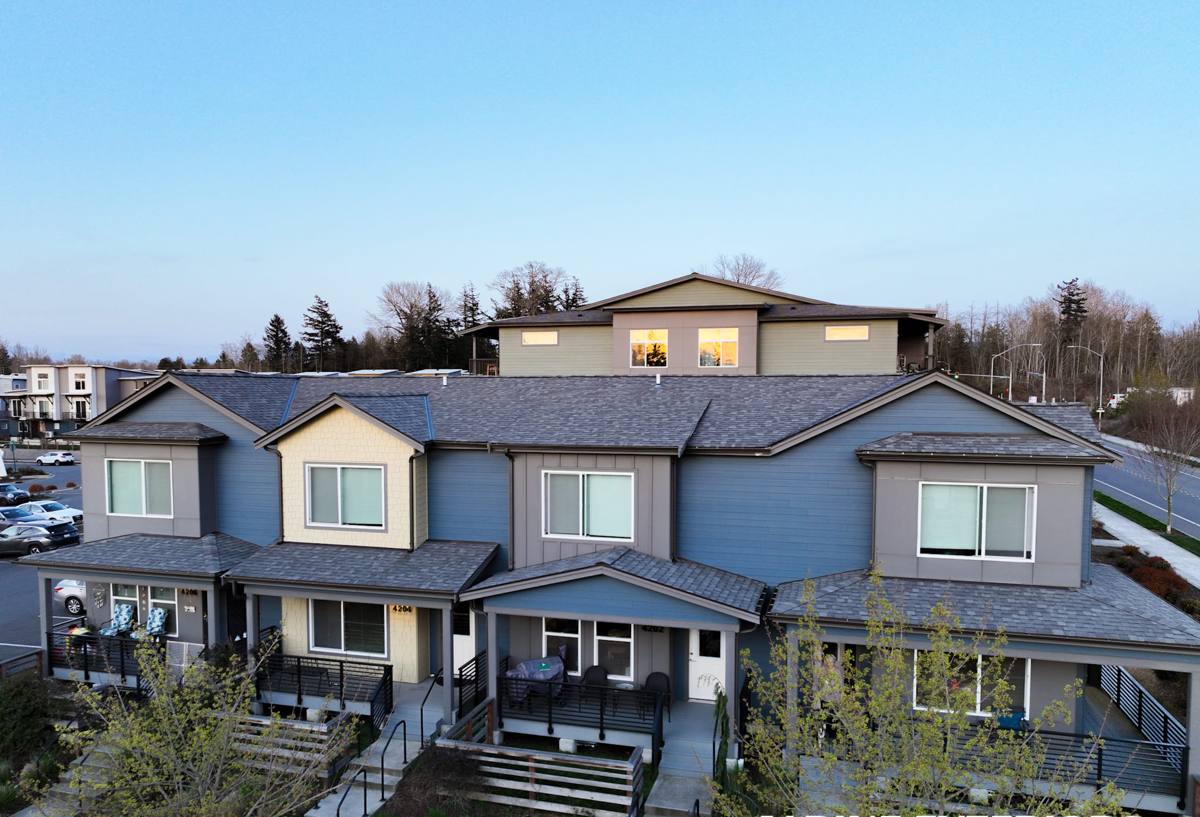
What Driving Rain and Moss Season Do to a Window Opening
Wind-driven rain doesn't just hit a window — it pushes water sideways and upward into any seam that isn't sealed correctly. Over years, that pressure finds the weak points: gaps around the nailing fin, dried-out caulk lines, or a sill that wasn't sloped to shed water outward. Once water gets behind the siding or trim, it doesn't dry out quickly in this climate. That's where rot starts, usually invisible until the trim gets soft or paint starts bubbling.
Moss and algae growth add a second problem. A long moss season means constant low-level moisture sitting against north- and west-facing walls for much of the year. Moss holds water against wood trim and caulk joints far longer than open air would, which accelerates the breakdown of sealants and speeds up rot in any wood components around the window. Homes closer to the water in the broader region also deal with salt-laden air that can accelerate corrosion on hardware and metal flashing — a factor worth planning for on any home in this part of Whatcom County, even where it's a secondary concern rather than the primary one.
Why This Matters More at the Installation Stage Than the Product Stage
Most window failures we get called out for in this region aren't caused by a bad window unit — they're caused by an installation that didn't account for how water actually moves around a house here. A premium window installed with poor flashing will still leak. A mid-range window installed correctly, with proper drainage and sealing, will often outperform it. That's the honest trade-off homeowners should understand before focusing only on brand names.
What a Correct Installation Involves
A window installation built for this climate isn't just "remove old window, set new window, caulk the edges." Done right, it includes several steps that are easy to skip and hard to spot once the trim is back on:
- Inspecting the rough opening for existing rot or water damage before anything new goes in
- Installing a proper sill pan to direct any water that does get past the window back outside, not into the wall cavity
- Flashing the opening in the correct order — sill, sides, then head flashing — so water always sheds downward and outward, never trapped behind a layer
- Using a compatible weather-resistant barrier tie-in so the window's flashing integrates with the existing house wrap instead of just sitting on top of it
- Sealing with exterior-grade sealant rated for this climate, applied at the right joints — not everywhere, since over-sealing can trap moisture instead of releasing it
- Insulating the gap between the frame and rough opening properly, without over-packing it, which can bow the frame and affect operation
Skipping any one of these doesn't usually cause a problem in year one. It shows up in year five or six, often as a soft spot in the trim or a musty smell near the window that wasn't there before.
Choosing Frame Materials for This Climate
Frame material affects how a window handles years of damp exposure and temperature swings. There's no single right answer for every home — it depends on your siding, your budget, and how much upkeep you want to take on.
| Frame Material | Moisture Behavior | Maintenance | Typical Trade-Off |
|---|---|---|---|
| Vinyl | Won't rot; handles damp well | Low — occasional cleaning | Less rigid over very large spans; color choices are limited |
| Fiberglass | Very stable in wet/dry cycles; minimal expansion | Low | Higher upfront cost than vinyl |
| Wood (clad exterior) | Needs a fully intact exterior cladding to stay protected | Higher — cladding seams need periodic inspection | Warmer interior look, but more installation-sensitive in wet climates |
| Aluminum | Prone to condensation and thermal transfer without a thermal break | Moderate | We generally steer homeowners away from it here unless it's a thermally broken commercial-grade product |
For most Sumas homes, vinyl or fiberglass frames make sense because they don't depend on a perfect, unbroken exterior seal to stay protected from moisture the way wood-clad units do. That's not a knock on wood-clad windows as a product — it's a reflection of how much long-term maintenance a homeowner is willing to commit to in a climate that doesn't give trim much of a break.
Our Installation Process
1. On-Site Assessment
We look at each opening individually — existing trim condition, evidence of past water intrusion, and how the current windows were flashed. This tells us whether it's a straightforward swap or whether there's rot or flashing work to address first.
2. Product and Sizing Plan
We measure for exact fit and go over frame material, glass package, and operating style based on the wall orientation — a window on a north-facing wall that sees constant moss and shade gets talked through differently than a south-facing one.
3. Removal and Opening Prep
Old units come out carefully to avoid damaging surrounding siding or trim. Any soft or rotted framing gets addressed before a new window goes anywhere near that opening — installing a new window into a compromised opening just delays the same problem.
4. Flashing, Sealing, and Setting the Window
This is the step where most of the long-term performance is decided. Sill pan, flashing sequence, and sealant all go in per manufacturer spec and matched to the wall assembly already on your home.
5. Interior and Exterior Finish
Trim, caulking, and insulation are finished out, and we walk the job with you before calling it done.
Signs a Sumas Home Needs New Windows
Not every window problem means full replacement, but these are the signs worth having looked at:
- Fogging or a permanent haze between panes — the seal has failed and the insulating gas is gone
- Soft, spongy, or discolored trim around the frame
- Persistent condensation on the inside of the glass during cold months
- Drafts you can feel even with the window fully latched
- Difficulty opening, closing, or locking that's gotten worse over a year or two
- Visible moss or dark staining creeping onto the frame or sill, not just the siding around it
- A noticeable jump in heating costs without another clear cause
What Affects Cost
| Factor | Why It Matters |
|---|---|
| Number and size of openings | More or larger windows means more material and labor |
| Frame material | Vinyl is typically the most budget-friendly; fiberglass and clad-wood cost more upfront |
| Condition of existing framing | Rot repair adds labor before the new window can even go in |
| Glass package | Low-E coatings and gas fills add cost but improve comfort and energy performance |
| Access and site conditions | Second-story or hard-to-reach openings take more time and equipment |
We give straightforward, itemized estimates so you can see exactly what's driving the number — not a flat per-window price that hides what you're actually paying for.
Why a Crew That Already Works in Sumas Matters
A window installer who works across Whatcom County regularly already knows how homes in this specific area are built, how the local weather patterns hit different wall orientations, and what building department requirements apply for window replacements here. That familiarity shows up in small but important ways — knowing which flashing details tend to fail first on older Sumas-area homes, or recognizing rot patterns tied to this area's moss and rain cycle before they become a bigger repair. It also means a shorter learning curve on your job, since we're not guessing at how the regional climate factors in.
Keeping New Windows Performing Long-Term
A correct installation gets you most of the way there, but a little upkeep extends the life of the work significantly:
- Rinse frames and sills periodically to keep moss and organic buildup from taking hold
- Check exterior caulk lines once a year for cracking or separation, especially after a hard winter
- Keep gutters and downspouts clear so runoff isn't sheeting directly down over window openings
- Trim back vegetation that keeps a window shaded and damp for long stretches of the day
If you're weighing a window replacement or repair for a Sumas-area home, we're happy to take a look and walk you through what your specific openings need — no pressure, no upsell. Fill out the form below for a free estimate.