 Ferndale Window
 James Hardie Siding for Cordata Homes
Cordata sits inland from the water compared to some of the neighborhoods we work in, but that doesn't mean the exterior of a home here gets an easy ride. Whatcom County's marine climate reaches every corner of the county, and Cordata gets its own steady dose of salt-tinged air moving in off the Sound, rain that turns sideways more often than it falls straight down, and enough shade, moisture, and mild temperatures to keep moss and mildew active for most of the year. We install James Hardie fiber cement siding exclusively, and Cordata is a good example of why: it's a climate that punishes shortcuts slowly and quietly, which is exactly the kind of exposure fiber cement is built to handle and lower-grade siding products are not.
This page is about one thing specifically — James Hardie siding installation for homes in and around Cordata — what the local climate actually does to exterior materials here, what a correct installation looks like, how our process works from first estimate to final walkthrough, and why it matters that the crew doing the work already knows this neighborhood.
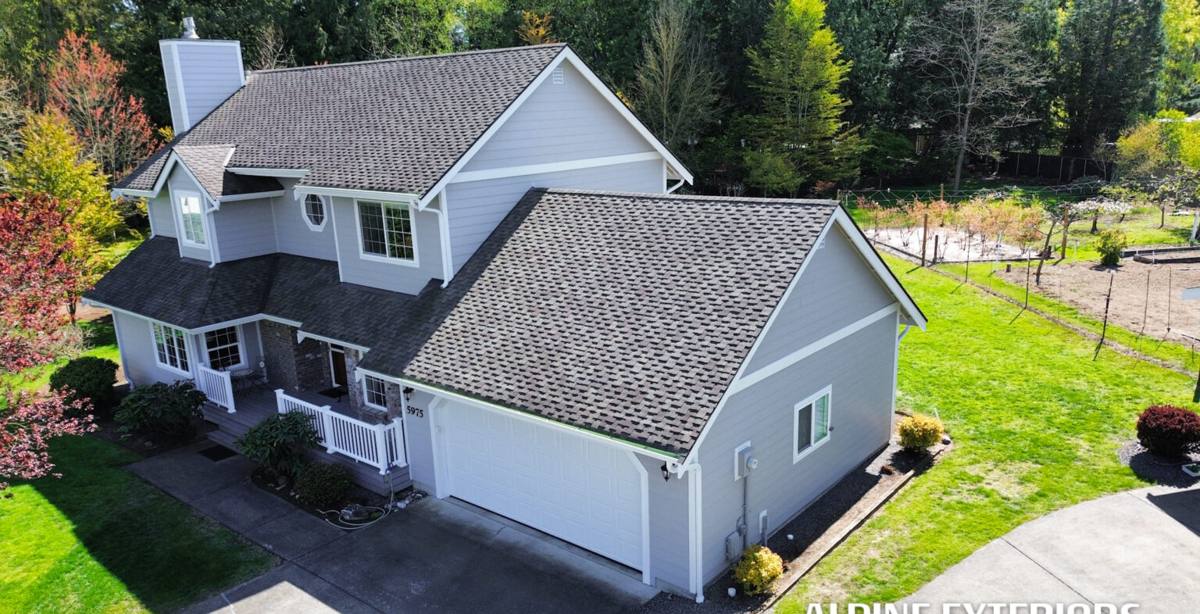
What Cordata's Climate Actually Does to Siding
Salt Air, Even Inland
Cordata isn't waterfront, but it's still well within reach of the salt-laden air that moves off Bellingham Bay and the Strait of Georgia. That moisture-and-salt combination doesn't need to be strong to do damage over years — it just needs to be constant. Fasteners, trim, and lower-grade finishes take a slow beating from it: nail heads rust ahead of schedule, cheaper paint finishes chalk and fade, and hardware that wasn't specified with coastal exposure in mind starts failing years before it should.
Driving Rain and Wind-Driven Moisture
Whatcom County storms rarely arrive as a simple straight-down rain event. Wind pushes water sideways into lap joints, trim seams, and anywhere a flashing detail is doing less than its job. A siding system that would be fine somewhere calmer can still let water in here because the water isn't falling on the wall, it's being driven into it. That's a harder test than annual rainfall totals suggest, and it's one that shows up first in the small gaps and joints most homeowners never think to check.
A Long Moss and Mildew Season
Between tree cover, mild temperatures, and near-constant moisture, moss and mildew have a long working season in Cordata — often most of the year on shaded, north-facing walls. It's not just cosmetic. Sustained organic growth holds moisture against the wall assembly, and that's the exact condition that leads to rot behind the siding if it isn't cleaned off and, more importantly, if the siding and flashing underneath aren't shedding water the way they should.
Freeze-Thaw and Temperature Swings
Whatcom County doesn't see extreme cold, but it does see enough freeze-thaw cycling in the winter months to matter. Materials that absorb and hold moisture expand when that moisture freezes, and repeated cycles of that stress joints, fastener holes, and any spot where water has already found a way in. It's a slower, quieter failure mode than wind or rain damage, but it adds up over the life of a siding system just the same.
Why We Install Only James Hardie
We narrowed our siding work to one product line after years of watching which materials actually held up under sustained Pacific Northwest exposure and which ones needed constant attention to look decent after a few winters. For a climate like Cordata's, the case for fiber cement is straightforward:
- Non-combustible core: fiber cement doesn't feed a fire the way wood-based or wood-derived siding products can, which matters for household safety and can matter for insurance underwriting.
- Factory-applied ColorPlus finish: color is baked on in a controlled factory process instead of brushed on in the field, so it resists fading, chalking, and salt exposure far longer than site-applied paint.
- Climate-engineered HZ product lines: Hardie builds specific formulations for regions with heavy moisture exposure and freeze-thaw cycling, which is a close match for what a Cordata property deals with every winter.
- Dimensional stability: fiber cement doesn't swell, cup, or warp the way engineered wood siding can after repeated wet-season moisture cycles.
- Strong transferable warranty: Hardie backs its products with a real warranty structure, provided installation follows spec, which gives homeowners actual protection rather than a marketing claim.
We don't install LP SmartSide, vinyl siding, Cemplank, Allura, primed spruce, or cedar. Every one of those products has a place in the broader market, and plenty of homes wear them just fine in drier climates. But we made a professional decision that in a climate like this one, standardizing on a single system we trust completely is worth more to our customers than offering a cheaper option that quietly shifts maintenance risk onto them a few years down the line.
Choosing the Right Hardie Product Line
James Hardie makes several distinct product lines, and the right one for a Cordata home depends on the home's style, existing trim details, and how much of a design change the homeowner wants. We walk through these options during the estimate rather than defaulting to whichever is easiest to install.
| Product | Typical Look | Best Fit For |
|---|---|---|
| HardiePlank lap siding | Traditional horizontal lap, smooth or cedar-textured | Most single-family homes; the most common choice in this area |
| HardiePanel vertical siding | Clean vertical panels, often with battens | Modern styles, accent walls, gable ends |
| HardieShingle | Staggered or straight-edge shingle profile | Craftsman and cottage-style homes, accent areas |
| Board and batten (panel + trim) | Vertical boards with raised battens | Farmhouse-style homes, porches, gables |
Color matters as much as profile in a climate like this one. Darker ColorPlus finishes hold up well but show dust and pollen streaking differently than lighter tones, and we'll talk through maintenance expectations for whichever direction a homeowner leans, rather than just selling the color that photographs best.
What Correct Installation Involves
The product only gets a Cordata home halfway there. The rest comes down to installation detail, and this is where a lot of siding jobs quietly fail years before the material itself would have. A correct Hardie installation in this climate includes:
- A weather-resistive barrier installed and lapped correctly, not just stapled up as an afterthought
- Flashing at every window, door, and roofline transition that actually directs water out and away from the wall assembly
- Fastening patterns that follow Hardie's published specifications for this exposure zone, not a generic pattern used everywhere
- Proper clearance between the bottom of the siding and grade, decks, and roof lines to keep splash-back and standing moisture away from the material's edge
- Joints that are lapped and caulked with a product rated for the movement and moisture cycling this climate produces, rather than relying on caulk to cover a poor fit
- Correct nail placement and depth — overdriven or underdriven fasteners are one of the most common causes of early siding failure we see on jobs we're called to fix
Any one of these steps done wrong won't necessarily show up right away. It shows up two, three, or five winters later, as a soft spot near a window, a stain tracking down from a trim joint, or a section of siding that's holding moisture it shouldn't be. That's the gap between a siding job that looks right at handoff and one that's actually built to last through Cordata's wet season after wet season.
Our Process, Start to Finish
- On-site assessment: we walk the home, check the condition of the existing siding and sheathing where accessible, and identify any trouble spots — trim rot, prior water intrusion, or areas needing extra attention.
- Product and color selection: we go through the relevant Hardie product lines and ColorPlus options based on the home's style and the homeowner's goals.
- Written estimate: a clear scope of work and cost breakdown, so there's no ambiguity about what's included before anything starts.
- Removal and prep: old siding comes off, sheathing is inspected and repaired if needed, and the weather barrier goes on correctly before a single piece of new siding is hung.
- Installation to spec: siding, trim, and flashing installed following Hardie's fastening and clearance requirements for this region.
- Final walkthrough: we go over the finished job with the homeowner and address anything before we consider the job done.
Repair, Partial Replacement, or Full Tear-Off?
Not every siding call in Cordata needs a full replacement. A storm-damaged section, an isolated area of trim failure around a window, or impact damage from a fallen branch can often be repaired and matched into existing Hardie siding without redoing the whole exterior. But when water has been tracking behind the wall for a while, or a home still has an older, non-Hardie product reaching the end of its service life, patching it usually just delays a larger job while hidden rot keeps spreading underneath. We'll tell a homeowner honestly which situation they're actually in, even when the honest answer is the smaller, cheaper job.
Signs a Cordata Home May Need Siding Attention
- Soft or spongy spots when you press on the siding near the bottom edge or below windows
- Paint or finish that's peeling, bubbling, or chalking heavily in patches
- Persistent moss or dark staining that keeps returning after cleaning
- Visible gaps or separation at seams, corners, or trim joints
- A musty smell near exterior walls or a noticeable increase in interior humidity
What Drives the Cost of a Cordata Siding Project
| Factor | Why It Matters |
|---|---|
| Home size and number of stories | More square footage and taller walls mean more material and more labor, including staging for upper stories |
| Removal of existing siding | Tear-off, disposal, and sheathing repair add time before new siding installation can even begin |
| Trim and architectural detail | Homes with more corners, gables, and window trim take longer to flash and finish correctly |
| Product line and profile | HardiePlank, panel, shingle, and board-and-batten differ in material and labor cost |
| Color selection | Standard ColorPlus colors versus custom or premium finishes affect material pricing |
| Hidden repairs found during removal | Rotted sheathing or water damage discovered once old siding comes off adds scope that couldn't be quoted sight-unseen |
We give a written estimate after seeing the home, not a phone-quote guess, because the factors above vary enough from house to house that a number given sight-unseen usually isn't the number a homeowner actually pays.
Why a Crew That Already Works in Cordata Matters
A contractor who mostly works outside Whatcom County has to relearn this climate on someone else's house. We already know how a Cordata property behaves through a wet winter, what fastening and flashing details actually hold up here, and which product lines make sense for the homes typical of this neighborhood. That local familiarity shows up in small decisions — how tight to run a clearance, which sealant to spec for our moisture cycling, how to sequence a job around our rain patterns — that don't show up on a spec sheet but do show up in how the siding performs five and ten years out. We also handle roofing, windows, and decks, so if a siding issue on a Cordata home actually traces back to a roof valley or a window flashing problem, we catch that instead of just replacing siding over a problem that will keep resurfacing.
If you're weighing a siding project in Cordata, we're glad to come take a look, walk you through what your home actually needs, and put together a clear, honest estimate — no pressure, no obligation. You can request one using the form below.