 Ferndale Window
 Cordata's Climate Asks More of Siding Than Most Places Do
Homes in the Cordata area sit in a stretch of Whatcom County where marine weather off the Salish Sea shapes almost every exterior decision. Driving rain arrives sideways more often than straight down, humidity stays high for long stretches of the year, and a shaded, damp stretch of fall through spring gives moss and algae plenty of time to take hold on north- and west-facing walls. Add in the salt-tinged air that drifts inland off the water, and you've got a combination that's genuinely tough on exterior materials — not dramatic, just relentless.
Siding here doesn't fail all at once. It fails slowly, at the seams, the fastener heads, and the low corners where water sits longest. A product and installation that handle occasional rain just fine in a drier climate can still struggle after a few Whatcom County winters. That's the standard we build to on every Cordata-area job.
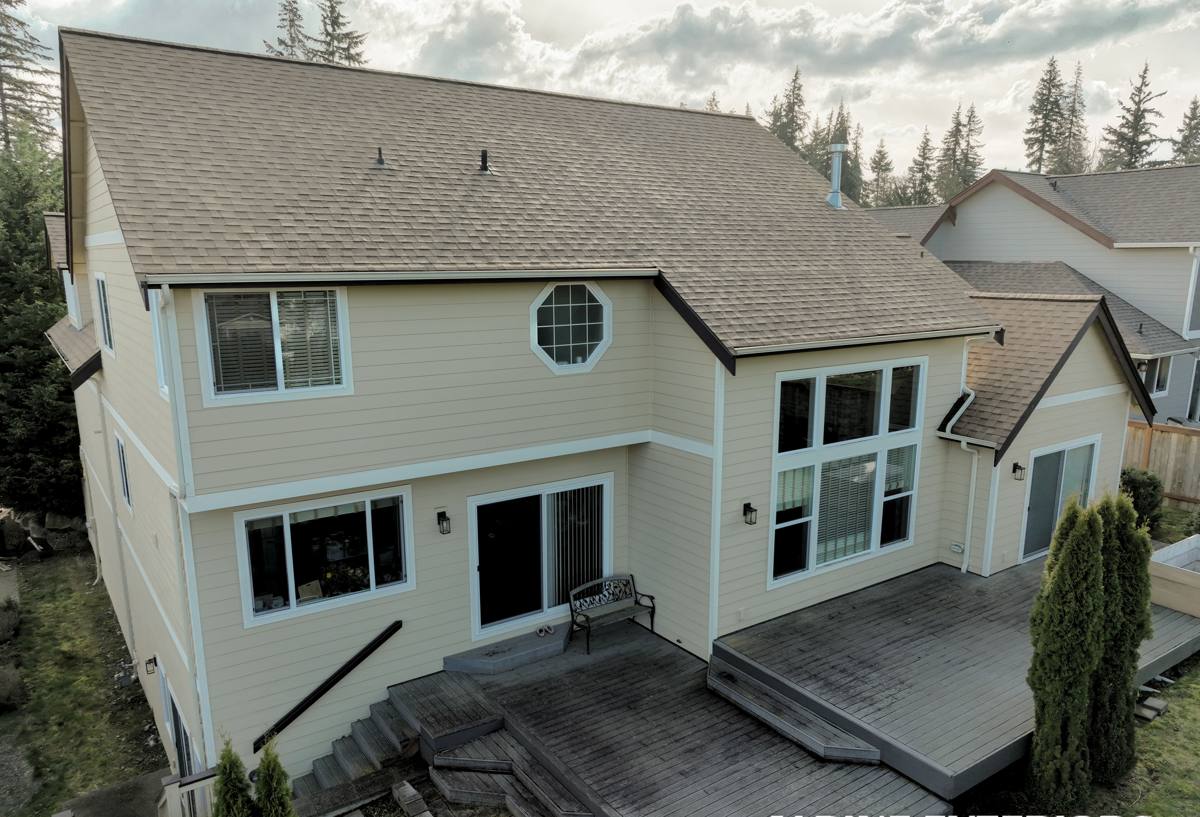
What the Wrong Siding Choice Costs You Over Time
We've walked enough homes in this part of Ferndale and the surrounding Cordata neighborhoods to see the same patterns repeat:
- Wood siding and trim that need repainting or re-caulking every few years just to keep water out
- Vinyl siding that's warped, faded unevenly, or trapped moisture behind panels where it can't dry out
- Organic-based or wood-adjacent products that develop moss and algae staining faster than they can reasonably be cleaned
- Factory finishes that chalk or fade unevenly within a handful of years, leaving mismatched color from repair patches
None of that is really about a homeowner doing something wrong. It's about a material or an installation detail that wasn't built for this specific climate having to work harder than it was designed to.
Why We Install Only James Hardie Fiber Cement
We standardized on James Hardie products for every siding job we take on, including in Cordata, for a short list of practical reasons: it's non-combustible, it's dimensionally stable so it doesn't swell or warp with moisture the way wood-based products can, and the ColorPlus factory finish is baked on under controlled conditions rather than field-applied, which gives it a longer, more even service life than most site-painted or laminate finishes. We don't install LP SmartSide, vinyl, or other fiber cement brands — not because every alternative is a bad product, but because we've chosen to build our installation process, warranty conversations, and long-term reputation around one system we know inside and out.
HZ5 Engineering for a Wet Climate
James Hardie makes region-specific versions of its siding called HZ (HardieZone) products. HZ5 is engineered for climates like ours — cooler, wetter, with more sustained moisture exposure — and it's the line we specify for Cordata and the rest of Whatcom County. The difference from a standard-climate HZ10 product isn't cosmetic; it's in how the material is formulated to hold up against extended damp exposure.
| Product | Typical Use | Why It Fits This Area |
|---|---|---|
| HardiePlank Lap Siding (HZ5) | Primary wall cladding, most homes | Most common profile locally; sheds driving rain well when installed with correct laps and clearances |
| HardiePanel Vertical Siding | Accent walls, gables, modern facades | Clean look for mixed-material exteriors, same HZ5 moisture engineering |
| HardieShingle Siding | Accent sections, dormers, gable ends | Cedar-shingle look without the maintenance burden in a damp climate |
| HardieTrim Boards | Corners, window and door casing, fascia | Matches expansion behavior of the field siding, resists rot at high-exposure edges |
What a Correct Fiber Cement Installation Actually Involves
Fiber cement siding is only as good as the details underneath it. This is where a lot of the real protection against Whatcom County weather comes from — not the panel itself, but how it's installed.
Clearances and Water Management
Manufacturer specifications call for specific clearances from grade, roof lines, decks, and hardscape — typically a minimum of six inches above grade and two inches above roofing, with similar gaps at horizontal surfaces. Skipping these is one of the fastest ways to get moisture wicking into the bottom of a plank, and it's one of the most common shortcuts we see when we're asked to look at a previous installation.
Flashing at Every Transition
Windows, doors, roof-to-wall intersections, and any wall penetration need proper flashing — including kick-out flashing where a roofline meets a sidewall, which is a detail that gets missed constantly and is a leading cause of hidden rot behind siding that looks fine from the outside.
Fasteners and Salt Air
Because this area sees salt-influenced air, fastener corrosion resistance matters more here than it would further inland. We use fasteners rated for the exposure and follow Hardie's fastening pattern and spacing requirements rather than field-adjusting them for speed.
Caulking as a Backup, Not a Primary Barrier
Caulk is meant to seal specific joints called out by the manufacturer — not to compensate for a gap that shouldn't be there in the first place. Over-reliance on caulk is a sign of rushed work, and in a climate with this much sustained rain, caulk-dependent seams tend to fail years before the siding itself would.
Cut Edges Get Sealed
Every field cut on a Hardie board exposes raw material that needs to be primed or sealed before installation. Left bare, a cut edge is a direct path for moisture — small detail, real consequence over a few wet seasons.
Our Process on a Cordata Project
- On-site assessment, including checking the condition of the existing wall assembly and sheathing where old siding is coming off
- A straightforward plan: full removal and sheathing repair where needed, versus siding over an existing surface where that's appropriate
- Installing or verifying the weather-resistive barrier and flashing details before a single piece of siding goes up
- Installing HardiePlank, panel, or shingle siding to manufacturer clearance, fastening, and lap specifications
- Trim, corner, and caulk work at the specified joints only
- A final walk-through so you know exactly what was done and what to expect from the finish over time
What Actually Drives the Cost of a Fiber Cement Project
We won't quote a number without seeing the home, but these are the factors that move a project up or down in scope:
| Factor | Impact on Cost |
|---|---|
| Home size and number of stories | Higher — more material and labor, plus access equipment for taller walls |
| Condition of existing sheathing | Higher if repair or replacement is needed once old siding comes off |
| Amount of trim, corner, and accent detail | Moderate to higher — more cuts and finish work |
| Siding profile mix (lap, panel, shingle accents) | Moderate — mixed profiles add labor complexity |
| Number of windows, doors, and penetrations | Moderate — each one needs individual flashing and fitting |
| Site access | Moderate — tight lots or limited equipment access add time |
Living With Fiber Cement Through Moss Season
James Hardie siding needs far less upkeep than wood, but "less" isn't "none." A little attention keeps it looking right through the wetter months:
- Rinse the siding gently once or twice a year, focusing on shaded north- and west-facing walls where moss and algae build up fastest
- Keep gutters and downspouts clear so runoff isn't sheeting down the wall face during heavy rain
- Trim back branches and shrubs so walls get airflow and sunlight — shaded, still air is what lets moss take hold
- Skip high-pressure washing at close range; it can drive water behind panels and damage the factory finish
- Check caulked joints once a year and have any cracked or missing caulk replaced before the wet season sets in
- Address moss or algae early rather than letting it build up over a full season
Why It Matters That We Already Work in This Area
A crew that installs siding across Whatcom County day in and day out knows what this climate does to a wall assembly, knows the local permitting and inspection expectations, and has already made the mistakes elsewhere so they don't happen on your house. We're a James Hardie–focused contractor, which means our fastening patterns, flashing details, and finish work are dialed in around one system rather than split across several product lines with different rules. For a home in Cordata, that consistency is what turns a good-looking install into one that's still performing well a decade or two out.
If you're weighing a siding replacement or want a second opinion on a quote you've already received, we're happy to take a look and walk you through what your home actually needs. Reach out for a free, no-pressure estimate — the form below gets you started.