 Ferndale Window
 Roof Repair for Everson Homes in Whatcom County's Wet Climate
Homes around Everson deal with a specific kind of weather pressure. This part of Whatcom County sits under the same marine air pattern that moves in off Bellingham Bay and the Salish Sea — long stretches of drizzle, salt-tinged air, and driving rain that comes in sideways during winter storms. Add a moss season that starts early in fall and doesn't fully let go until well into summer, and you've got a climate that's hard on roofing materials year-round, not just during the occasional big storm. A roof that would hold up fine in a drier part of the state can develop real problems here if it isn't maintained and repaired correctly.
We repair roofs for homeowners throughout the Ferndale and greater Whatcom County area, including Everson. This page covers what local roofs actually need, what a correct repair job looks like, and how our process works from first call to finished repair.
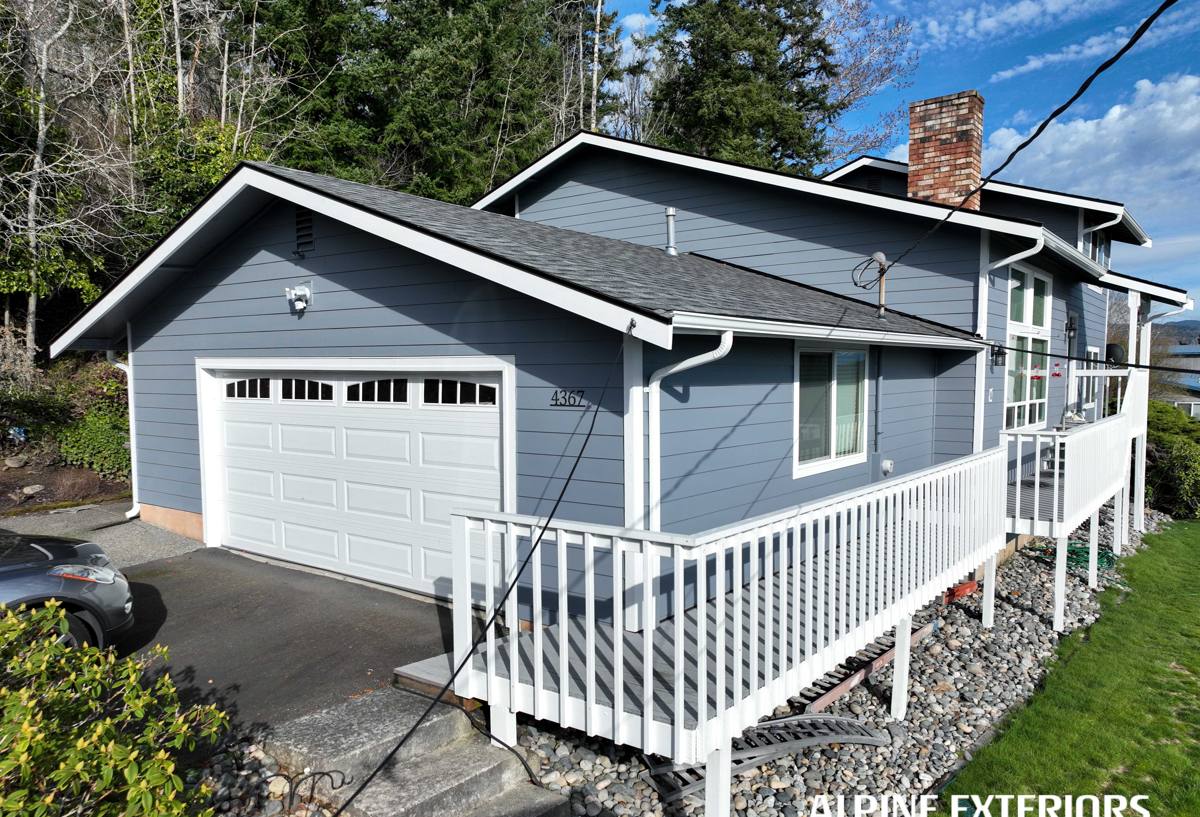
What Everson's Weather Does to a Roof Over Time
Moisture and Moss
Constant dampness is the main enemy. Moss and algae take hold in shaded, north-facing sections and anywhere debris collects — valleys, behind chimneys, along lower courses near gutters. Left alone, moss doesn't just look bad; it holds water against the roofing material, lifts shingle edges, and works its way under flashing over time. That slow moisture intrusion is behind a large share of the leaks we get called out to fix.
Wind-Driven Rain
Storms here often bring rain at an angle rather than straight down, which pushes water into spots that aren't built to handle it head-on — exposed nail heads, aging flashing, and shingle laps that have started to curl. A roof can look intact from the ground and still be letting water in during a wind-driven storm.
Temperature Swings and Ice
Whatcom County doesn't see extreme cold often, but it does get occasional freeze events after a wet stretch. Water that's soaked into a compromised shingle or underlayment layer can freeze, expand, and turn a small weak spot into a real leak almost overnight.
Signs Your Roof Repair Can't Wait
Most roof repairs are cheaper and simpler the earlier they're caught. Watch for these signs between inspections:
- Dark streaking or thick moss growth on shading or north-facing slopes
- Granules collecting in gutters or at downspout outlets
- Shingles that look curled, cupped, or lifted at the edges
- Soft or discolored spots on interior ceilings, especially near exterior walls or chimneys
- Daylight visible through the attic roof deck
- Flashing that looks rusted, loose, or separated around chimneys, vents, or skylights
- Sagging in the roofline or along a valley
Any one of these on its own might be minor. Two or three together usually means water has already found a way in.
Common Roof Repair Jobs We Handle Near Everson
Most repair calls fall into a handful of categories:
- Localized shingle replacement — swapping out damaged or missing shingles without disturbing the surrounding roof
- Flashing repair — resealing or replacing flashing around chimneys, plumbing vents, skylights, and wall intersections, which is where the majority of leaks actually start
- Valley repair — valleys carry the most water volume on a roof and take the most wear
- Moss and debris removal — clearing growth safely and treating the surface to slow regrowth
- Leak tracing and patch repair — finding the true entry point, which is often several feet from where the interior stain shows up, and repairing it properly rather than just patching the visible symptom
- Gutter and roof-edge repair — fixing drip edge and fascia damage that lets water track back under the roofing
Repair or Replace? How We Make the Call
Not every roof problem calls for a full replacement, and we don't push one when a targeted repair will genuinely hold up. The honest answer depends on a few factors:
| Factor | Repair Usually Makes Sense | Replacement Usually Makes Sense |
|---|---|---|
| Roof age | Under roughly two-thirds of expected material lifespan | Near or past the material's expected service life |
| Extent of damage | Isolated to one section, flashing point, or slope | Spread across multiple slopes or recurring in the same spots |
| Decking condition | Solid, dry, no soft spots | Soft, delaminated, or water-stained decking found during inspection |
| Repair history | First or second repair on this roof | Repeated repairs to the same area over recent years |
| Shingle condition overall | Granule loss and curling limited to damaged area | Widespread granule loss, brittleness, or curling across the roof |
We'll always tell you plainly which category your roof falls into, including when a repair is the right call even though a replacement would be more profitable for us.
What a Correct Roof Repair Actually Involves
A repair that's done right addresses the cause, not just the visible damage. Our approach on every job:
- Inspect the full roof, not just the reported problem area — a leak in one spot is sometimes fed by damage elsewhere
- Check the decking underneath damaged shingles for soft spots or rot before closing anything back up
- Remove and replace damaged material back to sound, dry substrate
- Rebuild flashing and underlayment details correctly rather than relying on sealant alone to bridge a gap
- Match replacement shingles as closely as possible in profile and color so the repair blends in
- Clear gutters and downspouts in the work area so water sheds properly once the repair is complete
- Walk the finished repair with you and explain exactly what was done and why
Sealant-only patch jobs are common shortcuts in this climate, and they tend to fail within a season or two because they don't address why water got in the first place. We don't do that kind of repair.
Materials We Work On
Composition (asphalt) shingle is the most common roofing material on homes in this area, and most of our Everson-area repair calls involve it. We also repair metal roofing and, on older homes, cedar shake or shingle roofs. Our standard on any material is the same: match what's there, address the underlying cause of the damage, and use flashing and underlayment details suited to how much water this climate actually pushes at a roof. On cedar in particular, we're upfront that shake and shingle roofing carries a higher ongoing maintenance burden in a wet, moss-prone climate than composition or metal — that's a trade-off worth knowing about, not a reason to avoid repairing one you already have.
Our Repair Process, Start to Finish
We keep the process straightforward for homeowners:
- Contact us and describe what you're seeing — a stain, a storm, a visual issue from the ground
- On-site inspection where we get on the roof (weather permitting) and check the attic side if there's active leaking
- Written estimate that explains what we found, what needs to happen, and why — no pressure to upsell into a replacement you don't need
- Scheduled repair timed around Whatcom County's weather windows so materials go on dry
- Final walkthrough so you know exactly what was fixed and what to watch going forward
Why Hiring a Crew That Already Works Everson Matters
A crew that regularly works Everson and the surrounding Whatcom County area already knows how this specific climate behaves — where moss tends to build up fastest on local roof lines, how wind-driven storms off the water typically find their way in, and which flashing details hold up versus which ones fail within a couple of seasons. That local knowledge shows up in faster, more accurate diagnosis and repairs built for the weather your roof actually faces, not generic textbook conditions. It also means a shorter drive when you need someone out quickly after a storm.
Simple Roof Maintenance Between Repairs
A few habits go a long way toward keeping small issues from turning into repair calls:
- Clear gutters and downspouts at least twice a year, more often under overhanging trees
- Have moss treated before it forms a thick mat, not after
- Trim back branches that keep sections of roof shaded and damp
- Check the attic after major storms for daylight, damp insulation, or musty smell
- Get a professional look after any significant windstorm, even if nothing looks obviously wrong from the ground
- Don't ignore small interior stains — they rarely stay small
If you're seeing signs of trouble on your roof, or it's just been a while since anyone took a close look, we're happy to come out and give you a straight, no-pressure assessment. Use the form below to request a free estimate.