 Ferndale Window
 Roofing in Cordata Isn't the Same Job as Roofing Inland
Cordata sits close enough to the water and open farmland that homes here take on a specific combination of weather stress: salt-tinged air moving in off the Sound and the Strait, long stretches of driving rain that comes in sideways more often than straight down, and a moss season that can run eight months or longer in a shaded lot. None of that is dramatic on any given day. It's the accumulation that wears a roof down — and it's why a roof installed correctly for Cordata looks a little different from one installed the same week thirty miles inland.
A new roof here has to do more than shed water. It has to resist salt-air corrosion on every metal component, handle wind-driven rain trying to work its way sideways under laps and flashing, and keep moss from getting a foothold on the north and shaded slopes where sun never really dries the surface out. Get any one of those wrong and the roof will still look fine for a year or two — the problems show up later, as leaks, rot, or premature granule loss.
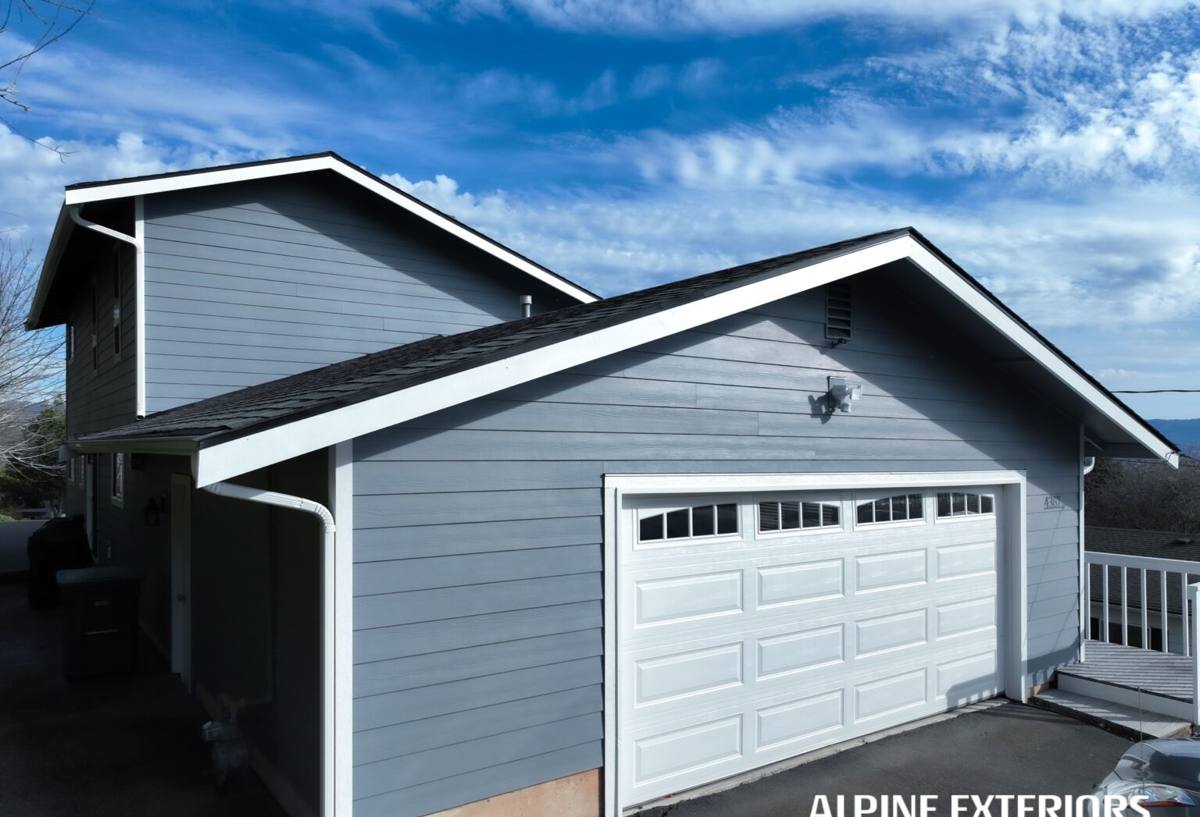
What a Correct Installation Actually Involves
"New roof" covers a lot of ground, but a properly done one in this part of Whatcom County always includes the same core elements, regardless of which material a homeowner chooses:
Tear-off and deck inspection
We don't install over old roofing. A full tear-off lets us see the actual condition of the roof deck — soft spots, old water staining, and rot are common findings on homes that have gone a decade or two without a close inspection, especially around chimneys, skylights, and old vent boots. Any compromised sheathing gets replaced before anything new goes down. Skipping this step is the single most common shortcut that leads to early roof failure.
Underlayment built for wind-driven rain
Standard felt underlayment is a minimum, not a standard, for a home exposed to driving rain off open terrain. We use synthetic or self-adhered underlayment at eaves, valleys, and any low-slope transitions, because those are the areas where wind can push water backward under the shingle line. This is a cheap upgrade relative to the cost of a re-roof, and it's the layer doing the real work if water ever gets past the surface material.
Flashing at every penetration
Chimneys, vents, skylights, and wall-to-roof transitions are where the overwhelming majority of roof leaks start — not in the open field of shingles. Correct step flashing, counter-flashing, and pipe boot detailing matter more to long-term watertightness than the shingle brand on the box.
Ventilation that matches the home
A roof that can't breathe traps moisture underneath it, which speeds up deck rot and gives moss and algae a damp surface to establish on from below as well as above. Balanced intake and exhaust ventilation is part of every installation, not an optional add-on.
Material Options for Cordata Homes
There isn't one "right" roofing material for this area — the right choice depends on the home's roofline, budget, and how much long-term maintenance the homeowner wants to take on. Here's how the common options compare for this specific climate:
| Material | Salt air / moisture behavior | Moss resistance | Typical lifespan |
|---|---|---|---|
| Architectural asphalt shingles | Good with proper flashing and ventilation | Moderate — benefits from zinc/copper strips on shaded slopes | 25-30 years |
| Standing seam metal | Excellent when properly coated and fastened; sheds water fast | High — little surface for moss to grip | 40-50+ years |
| Composite/synthetic shake or slate | Good — doesn't absorb moisture like wood | Moderate to high | 30-50 years |
| Cedar shake | Requires more upkeep in wet, shaded conditions | Low without regular treatment | 20-30 years with maintenance |
We're straightforward with homeowners about trade-offs rather than steering everyone to the same product. Cedar shake can still be the right look for a home, but we'll be honest that it demands more upkeep on a shaded, moss-prone lot than metal or composite will. That's a maintenance conversation, not a knock on the material — it's about setting expectations before the roof goes on, not after.
Moss: The Slow Problem That Costs the Most If Ignored
Moss doesn't damage a roof by sitting there. It damages a roof by holding moisture against the surface long after the rest of the roof has dried, and by rooting into shingle granules and seams as it grows. On shaded slopes — north-facing sections, roofs under mature trees, low-pitch areas that don't drain quickly — moss can establish within a couple of seasons if nothing is done about it.
A new roof installation is the right time to build in moss resistance rather than treat it as an afterthought:
- Zinc or copper control strips installed near the ridge, so rain carries trace metal ions down the roof surface
- Attention to slope and drainage during tear-off, correcting low spots where water sits
- Ventilation sized to reduce trapped moisture under the deck
- Material selection that accounts for how much shade a particular roof plane actually gets
None of this eliminates moss entirely on a heavily shaded roof, but it slows growth dramatically and makes routine cleaning far less frequent and less aggressive.
Our Installation Process
The steps don't change much from job to job, because skipping one is exactly how roofs fail early:
- On-site inspection and estimate. We look at the existing roof, deck condition where visible, ventilation, and any trouble spots the homeowner has already noticed.
- Material selection. We walk through the trade-offs above based on the home's exposure, roofline, and budget — no default recommendation without that conversation.
- Full tear-off. Old material and any damaged decking come off and get replaced.
- Underlayment and flashing. Installed to handle wind-driven rain specifically, not just a generic install.
- Roofing material installation. Manufacturer specifications plus our own detailing at valleys, eaves, and penetrations.
- Ventilation check and correction. Intake and exhaust balanced for the specific attic and roofline.
- Final walkthrough. We go over the finished roof and warranty coverage with the homeowner before calling the job done.
Signs a Cordata Home Might Need a New Roof
Roofs rarely fail all at once — they show warning signs first. Worth a closer look if you're seeing:
- Granules collecting in gutters or at downspout outlets
- Shingles that are curling, cupping, or visibly bald in spots
- Dark streaking or thick moss growth on shaded slopes
- Daylight visible through the attic roof deck
- Soft or spongy spots when walked on (a job for a professional, not a DIY check)
- Rising energy bills that track with poor attic ventilation
- A roof that's simply reaching the back half of its expected lifespan
Any one of these on its own isn't necessarily an emergency, but a few together usually means it's time for a real inspection rather than another round of patching.
What Drives Cost on a Roofing Project
Every estimate is different, but the factors that actually move the number are consistent:
| Factor | Why it matters |
|---|---|
| Roof size and number of planes | More material, more flashing detail, more labor time |
| Pitch and access | Steep or hard-to-access roofs take longer and require more safety setup |
| Deck condition | Rot or soft sheathing found during tear-off means replacement, which affects the final cost |
| Material choice | Asphalt, metal, and composite carry different material and labor costs |
| Ventilation and flashing work | Correcting an undersized or poorly detailed system adds work but pays off long-term |
We'd rather walk a homeowner through these factors on-site than throw out a number that doesn't reflect the actual roof.
Why Local Experience in Cordata Matters
A crew that works regularly in this part of Whatcom County already knows which details matter here without having to relearn them on someone's roof: how far wind-driven rain can travel under a poorly lapped shingle, which slopes in this area hold moss the longest, and how the salt air off nearby water accelerates corrosion on cheap fasteners and flashing. That local pattern recognition is the difference between a roof that's installed to code and one that's installed for how this specific area actually behaves over a wet Whatcom County winter.
If you're weighing a new roof for a home in Cordata, we're glad to take a look and walk through what your specific roof needs — no pressure, no obligation. A free estimate is the easiest way to get a straight answer on condition, options, and real costs, and the form below gets that conversation started.