 Ferndale Window
 New Construction in Cordata Deserves Windows Chosen for This Climate, Not Just This Budget
Cordata has been one of the more active new-construction areas around Ferndale and northwest Whatcom County for a while now, and that means a steady run of new builds where windows get specified early, ordered in bulk, and installed fast to keep a project on schedule. That's normal. The problem is that "fast and on schedule" and "correct for this climate" don't always line up on their own. Whatcom County sits right on the water, and homes here deal with salt-laden air rolling in off the Sound, wind-driven rain that hits siding and window assemblies sideways rather than straight down, and a long gray season where anything shaded or north-facing stays damp for months at a time. Windows that would be perfectly fine in a drier inland climate can start showing problems here within a few years if they weren't chosen and installed with that reality in mind.
New construction is actually the best time to get this right, because the window is going into a fresh rough opening with no old flashing, no rotted sill, and no guesswork about what's behind the wall. Done correctly once, at the framing stage, a window assembly should perform for decades. Done as an afterthought, it becomes the first thing a homeowner has to fix.
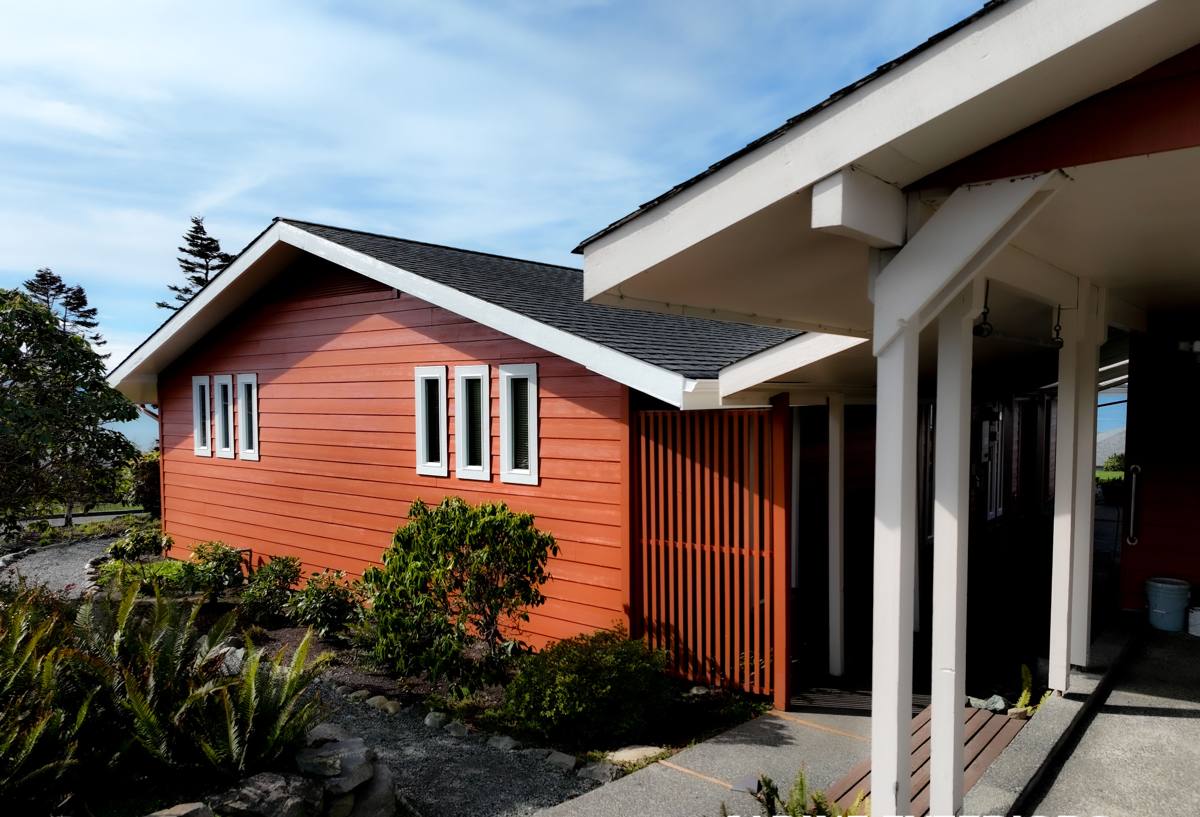
Where "Builder-Grade" Windows Often Fall Short
Production builders and even custom builders working to a tight new-construction budget will frequently spec whatever window line hits the lowest price point that meets code minimums for U-factor and structural rating. That's not dishonest — it's how new-construction pricing works — but code minimum is not the same thing as "right for this site." A window rated for a generic climate zone doesn't account for the fact that a Cordata lot facing prevailing weather off the water takes a different beating than a sheltered lot a few miles inland.
The most common shortcuts we see in new builds in this area are thinner weatherstripping that compresses and stops sealing well within five or six years, single-fin nailing flanges that make correct flashing integration harder for whoever installs them, and hardware finishes that aren't rated for coastal-influenced air and start pitting or corroding early. None of these show up on a spec sheet as a problem. They show up three to seven years later as a drafty room, a foggy sealed unit, or a window that's suddenly hard to latch.
What a Correct New-Construction Window Installation Actually Involves
A window is only as good as the opening it sits in. In new construction, that opening is being built from scratch, which is an advantage — but only if the sequence is followed correctly.
Flashing and Weather-Resistive Barrier Integration
Before a window ever goes in, the rough opening needs a sloped sill pan so any water that gets past the window has somewhere to go besides the framing. The weather-resistive barrier (house wrap) has to be cut, lapped, and taped in the right order — sill first, then sides, then head — so water sheds down and over each layer like shingles, never up and under one. In a climate with as much driving rain as this one gets, a flashing detail that's backwards or skipped won't fail on day one. It fails quietly, inside the wall, over the following few winters.
Setting, Shimming, and Sealing
The window needs to be shimmed plumb, level, and square at the manufacturer's specified points — not just at the corners — so the frame doesn't rack and bind over time as the house settles. Fasteners go through the nailing flange and framing per the manufacturer's schedule, not "close enough." Low-expansion foam or backer rod and sealant fill the gap between frame and rough opening for insulation and air sealing, and the exterior sealant joint has to be a real weatherproof joint, not a bead of caulk smeared over a gap after the fact.
Choosing Window Materials and Glass for a Whatcom County Build
Material choice matters more here than in a lot of climates, mostly because of how much moisture the assembly is exposed to across a typical year and how corrosion-prone hardware becomes closer to salt air. There's no single "best" window for every new build — it depends on budget, style, and exposure — but some trade-offs are worth knowing before you sign off on a spec sheet.
| Frame Material | Moisture & Salt-Air Behavior | Maintenance Over Time | Common Fit in New Builds |
|---|---|---|---|
| Vinyl | Won't rot or corrode; performs well if welded corners and reinforced frames are used on larger sizes | Low — occasional cleaning, no repainting | Most common on value and mid-range new construction |
| Fiberglass | Excellent stability in wet, temperature-swinging conditions; very low expansion/contraction | Low; finish holds up well long-term | Popular upgrade choice for exposed elevations |
| Wood with exterior aluminum or vinyl cladding | Good if cladding and flashing details are done correctly; interior wood still needs a stable indoor climate | Moderate — cladding protects the exterior, but sealant joints need periodic inspection | Common in higher-end custom builds for interior appearance |
| Bare wood | Highest maintenance burden in a wet marine climate; requires consistent refinishing to prevent moisture intrusion | High — regular painting/sealing required | Less common as a full-exposure choice here; sometimes used on protected elevations |
For glass, argon-filled dual pane with a low-E coating is the practical standard for this region — it manages heat loss through our mild-but-damp winters without the added cost of triple pane, which rarely pencils out for a typical Whatcom County new build unless the home has an unusually cold or exposed site. Corrosion-resistant hardware (stainless or coated steel components rather than bare-finish aluminum fasteners) is worth specifying up front rather than discovering it wasn't used after five years near the coast.
How Our New-Construction Window Process Works
We work directly with builders, general contractors, and owner-builders in the Cordata area from the framing stage forward, not just as a subcontractor who shows up to set units and leave.
- Plan review and take-off — we review the window schedule against the actual framed openings before ordering, catching size mismatches or spec issues while they're still cheap to fix.
- Material and glass selection — we walk the builder or homeowner through frame material, glass package, and hardware options suited to the specific elevation and exposure, not a one-size answer for the whole house.
- Rough opening prep and flashing — sill pans, WRB integration, and flashing sequencing done before a single window is set.
- Setting and fastening — plumb, level, square, shimmed at manufacturer points, fastened to schedule.
- Sealing and insulation — interior and exterior sealant joints, low-expansion foam at the gap, no gaps left for air or bulk water to find.
- Final walkthrough — every unit operated, latched, and checked before we sign off, so problems get caught before drywall and siding make them expensive to fix.
Mistakes We Commonly Catch on New Cordata Builds
Some of these come from rushed schedules, some from crews unfamiliar with this specific climate. Either way, they're the issues we check for on every new-construction job:
- Sill pans skipped or installed flat instead of sloped to drain
- House wrap taped in the wrong lap order, letting water track behind the barrier instead of over it
- Windows shimmed only at the corners, leading to frame racking as the house settles
- Exterior sealant applied over a gap instead of a proper backer-rod-and-sealant joint
- Nailing flange fasteners missed or under-driven, leaving the unit under-secured
- Wrong glass package for the elevation — for example, no low-E coating on a west-facing wall that takes direct afternoon sun and driving rain together
- Hardware finish not rated for coastal-influenced air, leading to early pitting or stiff operation
Why It Matters to Hire a Crew That Already Works in Cordata
Any competent window installer can set a unit plumb and level. What's harder to shortcut is judgment about exposure — knowing which elevations on a given lot take the worst of the driving rain, which sides stay shaded and damp long enough to grow moss and algae, and which details actually matter for a house that's going to sit through decades of this specific climate rather than a generalized one. A crew that already works new construction around Cordata and the rest of Whatcom County has seen how these builds hold up five and ten years out, not just how they look at final walkthrough. That's the difference between a window that gets specified to pass inspection and one that gets specified to still be working correctly when the original owner sells the house.
It also matters for coordination. New construction moves through a tight sequence — framing, wrap, windows, siding, trim — and a crew that's worked that sequence with local builders knows how to slot in without becoming the reason a schedule slips.
Caring for New Windows Through Whatcom County's Wet Season
Even a correctly installed window benefits from a little attention once the house is finished. Track hardware, weep holes, and exterior sealant joints are worth a visual check once a year, ideally before the wettest months set in. Shaded or north-facing elevations are the first place moss and algae take hold on siding and trim around the window, and staying ahead of that with routine cleaning keeps organic growth from holding moisture against the frame long-term. None of this is heavy maintenance — it's the kind of thing that takes an hour a year and prevents small issues from turning into warranty headaches.
If you're building new in Cordata or planning a build soon, we're happy to take a look at your window schedule and site plan and give you a straightforward, no-pressure estimate — just fill out the form below.