 Ferndale Window
 Cordata's Roofs Work Harder Than People Realize
Cordata sits close enough to the water and to open farmland that roofs here take a specific kind of beating: salt-tinged wind off the Strait, driving rain that comes in sideways during winter storms, and a moss season that seems to stretch longer every year. None of that is dramatic on its own. It's the combination, repeated year after year, that wears down flashing, lifts shingle edges, and turns small storm damage into a leak that shows up in a bedroom ceiling months later.
Storm damage repair in this neighborhood isn't just about patching what a single windstorm broke. It's about recognizing that Whatcom County's marine climate keeps working on a roof long after the storm has passed, and repairing accordingly.
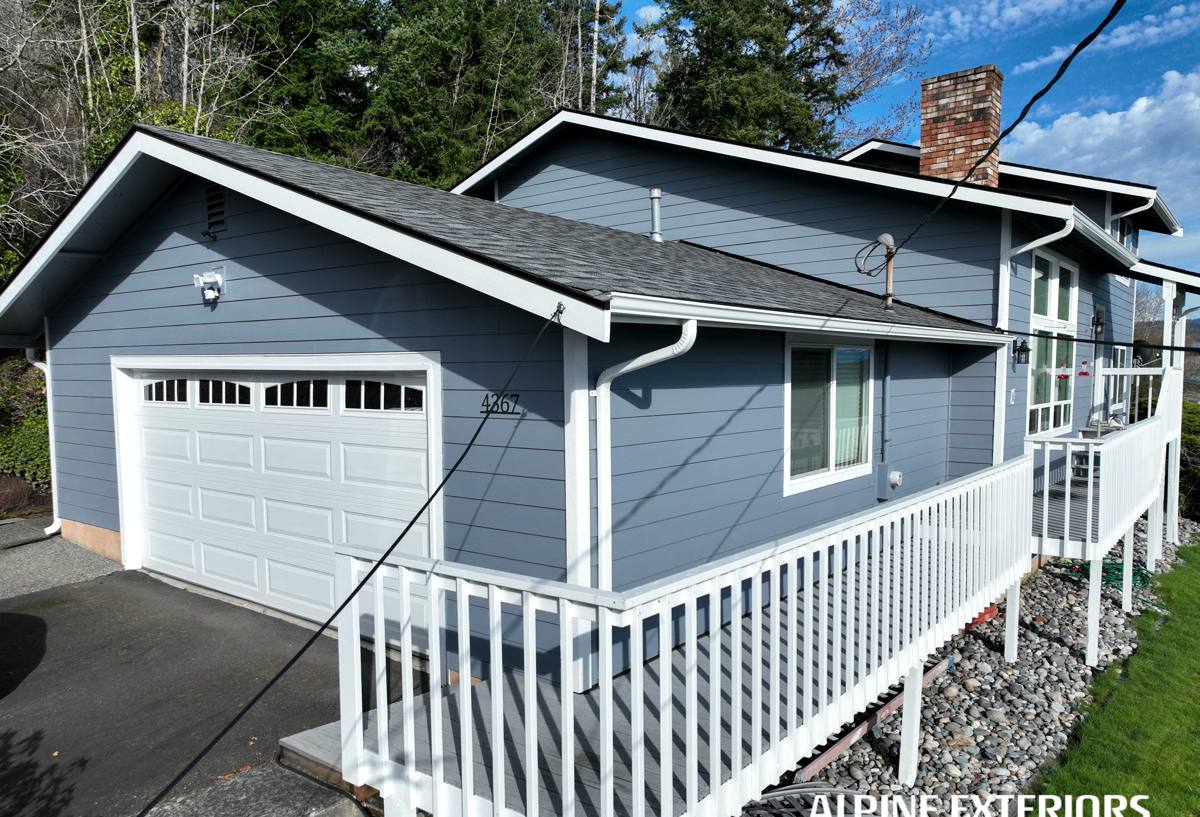
What Storm Damage Actually Looks Like Here
Homeowners often picture storm damage as missing shingles after a dramatic windstorm. That happens, but around Cordata the more common pattern is quieter and easier to miss.
Wind and Rain Damage
Sustained wind off the water doesn't always rip shingles off outright — more often it works underneath the tab, breaking the seal without visibly displacing the shingle. The roof looks fine from the ground, but the wind seal is gone and driving rain starts finding its way under the shingle line during the next storm.
Moss and Trapped Moisture
A long, wet moss season does two things: it holds moisture against the roofing material longer than it should sit there, and it lifts shingle edges as the moss grows underneath them. Once that happens, wind-driven rain has an easy path in. Moss damage rarely shows up as an obvious storm event — it's cumulative, which is exactly why it gets overlooked until there's a leak.
Flashing Failure
Flashing around chimneys, vents, and roof-to-wall transitions is usually where a storm-damaged roof actually leaks, even when the shingles nearby look intact. Salt air and repeated wet-dry cycles corrode fasteners and degrade sealant faster than most homeowners expect.
Why "Just Patch It" Isn't the Correct Approach
A quick patch over visible damage can hide the real problem instead of fixing it. If wind has broken the seal on shingles beyond the obviously damaged section, or if moss has been trapped under the roofing for a season or two, a spot patch will look fine for a while and then fail again — often in the next storm.
A correct storm damage repair starts with figuring out how far the damage actually extends, not just where it's visible. That means checking:
- Shingle seal integrity in the area surrounding the visible damage, not just the damaged section itself
- Underlayment condition where shingles have been lifted or removed
- Flashing at every penetration and transition near the damaged area
- Decking for soft spots or moisture staining, which points to damage that's been developing longer than the recent storm
- Gutter and drainage function, since backed-up water is often what turns wind damage into an interior leak
Our Process for a Storm Damage Repair
1. Inspection First, No Guessing
We walk the roof and document what we find before recommending anything. That includes photos of the damage itself and of the surrounding area, so you can see exactly what's driving the recommendation.
2. A Clear Scope, Explained Plainly
We tell you what needs to be repaired, what's borderline and worth watching, and what's fine. If a full section needs replacement rather than a patch, we explain why in plain terms — usually it comes down to how far moisture has already traveled under the shingles or how compromised the flashing has become.
3. The Repair Itself
We match materials to what's already on the roof where possible, tie new flashing and underlayment into the existing roof system correctly, and reseal or replace shingles so the repaired section performs the same as the rest of the roof — not as a visible patch that fails again in a year.
4. A Final Walkthrough
We show you the completed repair and go over anything we noticed elsewhere on the roof that's worth keeping an eye on, even if it wasn't part of this repair.
Repair or Replace? What Actually Drives That Decision
Every storm-damaged roof is a little different, but these are the factors that most often decide whether a repair is the right call or whether it's time to talk about a full replacement.
| Factor | Points Toward Repair | Points Toward Replacement |
|---|---|---|
| Age of the roof | Well within its expected service life | Already near or past its expected lifespan |
| Extent of damage | Isolated to one area or a few sections | Spread across multiple slopes or recurring in the same spots |
| Decking condition | Solid, no soft spots or rot | Soft, stained, or damaged decking found during inspection |
| Moss history | Minor surface growth, no trapped moisture | Long-term moss growth with moisture damage underneath |
| Flashing condition | Localized failure at one penetration | Widespread corrosion or failure at multiple points |
None of these factors alone makes the call — it's the combination. We'd rather tell you honestly that a repair will hold up fine than push a replacement you don't need, and we'd rather tell you a repair is a temporary fix than let you spend money patching a roof that needs to come off.
Materials and Methods That Hold Up in This Climate
Given the salt air and moisture exposure common in this part of Whatcom County, a few details matter more here than they might further inland:
- Corrosion-resistant fasteners and flashing at every repair, since standard hardware degrades faster near the water
- Proper underlayment tie-in so repaired sections shed water the same way the rest of the roof does, rather than creating a seam where water can collect
- Sealants rated for our wet-dry cycle, since some products break down faster under repeated soaking and drying than their labels suggest
- Attention to ventilation in the repaired area, since trapped moisture underneath a roof is often what turns minor damage into rot
We stick to materials and methods we can stand behind for the long term rather than whatever gets a repair done fastest. A storm damage repair that fails again in a year isn't a repair — it's a delay.
Why It Matters That We Already Work in Cordata
A crew that knows Cordata's roofs knows what to check first. We're familiar with how the neighborhood's exposure to wind and salt air tends to age a roof, which flashing details tend to fail first, and how long moss typically takes to become a real problem here rather than a cosmetic one. That familiarity means a faster, more accurate inspection and fewer surprises once the repair is underway.
It also means we're not guessing at what's "normal" storm wear for this area versus damage that needs attention now. A crew unfamiliar with Ferndale's climate might either overlook developing moss damage or recommend replacing more than necessary. We'd rather give you a straight answer based on what we actually see here every storm season.
Documentation for Insurance Claims
If you're planning to file an insurance claim for storm damage, documentation matters as much as the repair itself. We photograph the damage before and during the repair and can provide a written description of what we found and what we did, which most insurers want to see alongside your claim. We're not a public adjuster and won't represent you in a claim dispute, but we'll give you an honest, accurate record of the roof's condition to support your own claim.
Signs Worth a Roof Check After a Storm
You don't need to climb up on the roof yourself. From the ground or from inside the house, these are worth a call:
- Granules collecting in gutters or at the base of downspouts after a storm
- Shingles that look curled, lifted, or out of alignment along the roofline
- Visible moss buildup, especially on north-facing slopes that stay damp longer
- Water stains on ceilings or in the attic following heavy rain
- Daylight visible through the roof deck from inside the attic
- Debris or branch strikes that may have cracked shingles without an obvious hole
Catching any of these early is almost always cheaper and simpler than waiting for a leak to show up inside the house.
If a recent storm has you wondering about your roof's condition, we're happy to take a look. Reach out for a free, no-pressure estimate using the form below — we'll tell you honestly what we find, whether that's nothing to worry about or a repair worth doing now.