 Ferndale Window
 Deck Repair Built for Blaine's Coastal Climate
Blaine sits right up against the water at the northern edge of Whatcom County, and that location shapes what happens to a deck here faster than almost anywhere else in the county. Salt-laden air off the Strait of Georgia and Semiahmoo Bay accelerates corrosion on fasteners and hardware, wind-driven rain finds its way into joints and end grain that a drier climate would never touch, and a long, damp moss season keeps deck boards wet for weeks at a stretch. A deck that would show only minor wear in a drier inland town can develop real structural problems in Blaine within a handful of seasons if it isn't built and maintained with that environment in mind.
This page is specifically about repairing decks in Blaine — not a general overview of deck work everywhere in Whatcom County. The fixes, the materials, and the inspection points below are chosen because they address what actually fails on decks in this stretch of the coast.
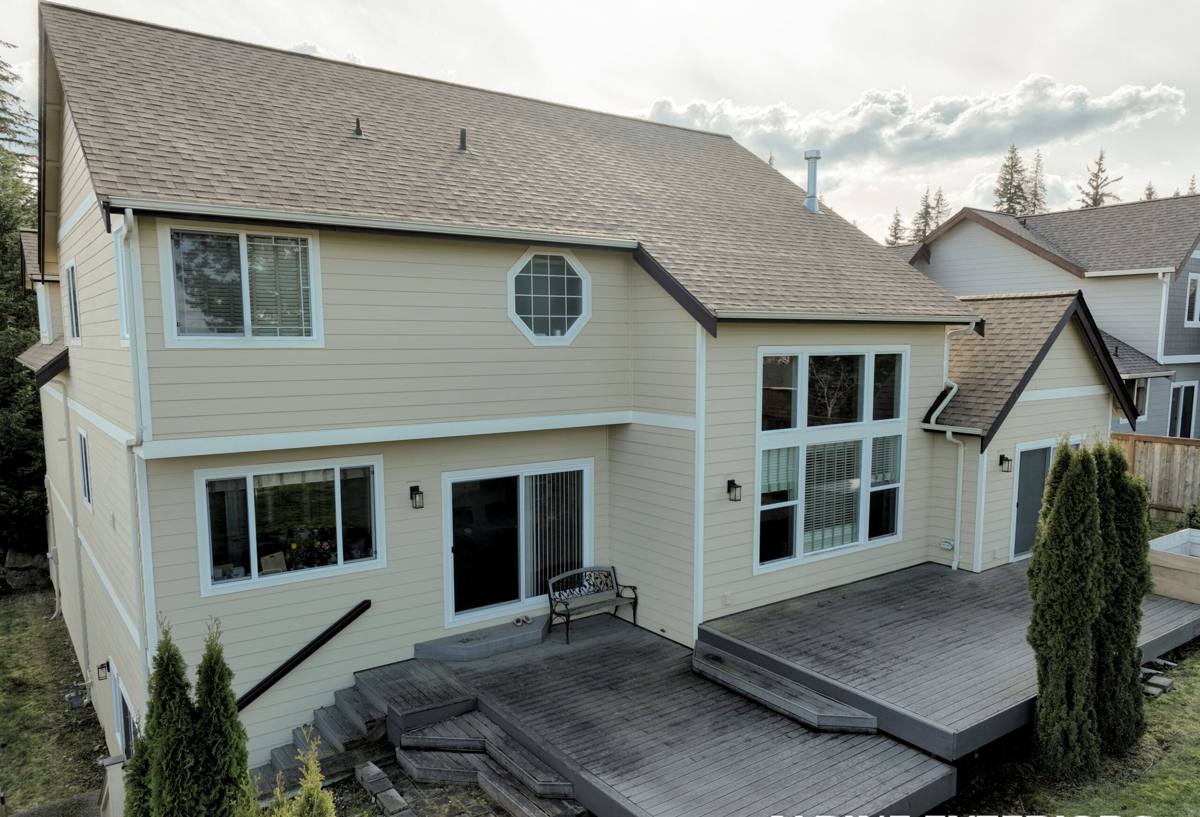
Why Blaine Decks Wear Differently
Three regional factors combine to shorten the useful life of an unmaintained or poorly built deck near Blaine:
- Salt air corrosion: Metal fasteners, joist hangers, and structural screws corrode faster this close to saltwater, especially on decks with any western or water-facing exposure.
- Driving rain: Wind off the water pushes moisture sideways into ledger boards, post bases, and butt joints — areas that stay dry on a deck sheltered from prevailing weather.
- Extended moss and algae season: Northwest Washington's wet fall-through-spring stretch keeps horizontal surfaces damp far longer than a seasonal rain climate would, and moss holds moisture directly against the wood.
None of these factors mean a deck in Blaine can't last decades. It means the repair work has to account for moisture path, not just patch what's visibly rotted.
Signs a Blaine Deck Needs Repair, Not Just Cleaning
A lot of deck problems get mistaken for cosmetic issues when they're actually early structural warnings. Worth a closer look if you notice:
- Boards that feel spongy, bouncy, or soft underfoot, especially near the house or along the perimeter
- Rust streaks bleeding from screw heads or bracket hardware
- A railing that flexes or wiggles more than it used to
- Gaps opening up where the deck meets the house, or a ledger board pulling away from the siding
- Persistent dark staining or moss growth that comes back within weeks of cleaning
- Visible daylight or gaps at post bases where they meet concrete footings
Any one of these can be a minor, inexpensive fix if caught early. Left alone through another wet Whatcom County winter, most of them turn into a much bigger repair — or a full rebuild.
What a Correct Deck Repair Actually Involves
Structural First, Cosmetic Second
A repair that only replaces the boards you can see, without checking what's underneath, is a cosmetic fix wearing a structural price tag. A correct repair starts by getting under the deck and checking the framing: joists, the ledger board connection to the house, post bases, and any hardware. Surface boards are the easiest thing to replace and the least likely to be the actual problem.
Moisture Path, Not Just the Symptom
If a board rotted because water was pooling against the house due to poor flashing, replacing that board without correcting the flashing means it rots again. Correct repair work traces the moisture path back to its source — this is especially important in Blaine, where wind-driven rain gets pushed into places a calmer climate wouldn't reach.
Fastener and Hardware Condition
Given the salt air here, hardware inspection isn't optional. Corroded joist hangers or fasteners can look fine from a distance but have lost real holding strength. Any repair scope should include a hardware check, not just a lumber check.
Common Deck Problems We See Near Blaine
| Problem | Typical Cause | Repair Approach |
|---|---|---|
| Soft or spongy decking boards | Trapped moisture under boards with poor drainage or spacing | Remove and replace affected boards; correct spacing/drainage gap |
| Rusting screws and brackets | Coastal salt air corroding standard-grade hardware | Replace with corrosion-rated fasteners and hardware sized to code |
| Ledger board separation | Wind-driven rain infiltrating the house connection over time | Re-flash and re-secure ledger with proper moisture barrier detailing |
| Post base rot or movement | Standing water at grade level, undersized or missing post bases | Replace post base hardware, raise post off direct concrete contact |
| Recurring moss and algae | Shaded, poorly ventilated deck surfaces holding moisture | Clean, treat, and improve airflow/drainage where possible during repair |
| Loose or flexing railings | Corroded or under-sized fasteners at post connections | Re-secure with appropriately rated structural hardware |
Repair vs. Replacement: How We Decide
Not every deck problem calls for a full rebuild, and not every deck is worth patching indefinitely. A few factors that push the decision one way or the other:
- Framing condition: If the joists and ledger connection are sound, repairing the surface and hardware is usually the right call.
- Extent of rot: Isolated rot at a few boards or one post base is a repair. Rot spread across multiple structural members usually isn't worth chasing board by board.
- Age of the structure: An older deck nearing the end of its practical lifespan may cost more to keep patching than to rebuild once, correctly, for this climate.
- Code and permit considerations: Significant structural work in Whatcom County may need to meet current code, which can shift the scope from a simple repair to something closer to a rebuild.
We'll always tell you honestly which category your deck falls into rather than defaulting to the larger job.
Our Deck Repair Process
- On-site inspection: We check the surface, but more importantly we get underneath and inspect framing, hardware, and the ledger connection.
- Clear scope and honest estimate: You get a written breakdown of what actually needs repair versus what's just cosmetic, with pricing before any work starts.
- Address the moisture source: Where rot or damage traces back to a flashing, drainage, or grading issue, we correct that as part of the repair, not just the symptom.
- Repair with climate-appropriate materials: Fasteners, hardware, and lumber selected for coastal exposure, not generic hardware-store grade.
- Final walkthrough: We show you what was done and what to watch for going forward.
Materials and Fasteners We Use — and Why
Given the salt air in Blaine, standard zinc-coated screws and brackets corrode faster here than they would inland. For repair work, we use corrosion-resistant fasteners and hardware rated for coastal or treated-lumber exposure — the small cost difference up front is far cheaper than reopening the same repair in a few years because the hardware failed first.
For decking material itself, both pressure-treated lumber and composite decking have a place in a repair, depending on what's already installed and your maintenance preference. Pressure-treated lumber costs less up front but needs periodic sealing or staining to hold up against this climate's moisture load. Composite decking costs more initially and resists moisture and moss better with less ongoing maintenance, but matching an existing composite deck's exact board profile and color can be harder than matching wood. We'll walk through the honest trade-offs for your specific deck rather than pushing one material by default.
Maintenance Checklist to Extend Your Repair
A repair holds up longer with a little seasonal attention, especially in a climate that stays wet as long as ours does:
- Clear leaves and debris from between boards before fall rains set in
- Treat moss and algae early in the season rather than waiting for a heavy buildup
- Check for gaps or movement at the ledger board and post bases once a year
- Reseal or restain pressure-treated wood on the manufacturer's recommended schedule
- Keep gutters and downspouts directed away from the deck structure and post bases
- Watch for rust bleed at screw heads as an early hardware-corrosion warning sign
Why Hire a Crew That Already Works in Blaine
Deck repair isn't just about swapping boards — it's about recognizing which problems are specific to this coastline. A crew that regularly works in and around Blaine already knows which hardware holds up against the salt air, which framing details tend to trap wind-driven rain, and which spots on a deck are the first to show moss regrowth after cleaning. That local pattern recognition means fewer surprises once we're under the deck, and repair work that's scoped to what actually fails here — not a generic checklist built for a drier part of the state.
If your deck in Blaine is showing soft spots, rust, movement in the railing, or moss that keeps coming back, we're happy to take a look. Reach out for a free, no-pressure estimate — we'll give you an honest read on whether you're looking at a repair or something bigger, using the form below.