 Ferndale Window
 Cordata's Climate Is Harder on Siding Than It Looks
Cordata sits in the part of Whatcom County where marine weather isn't an occasional inconvenience — it's the default. Homes here deal with salt-laden air drifting in off the water, long stretches of driving, wind-pushed rain, and a wet season that can stretch on for months without a real drying window. Add in the tree cover common to this part of the county, and you get near-constant shade on at least one side of most homes, which is exactly the recipe for a long moss and algae season on roofs, siding, and trim.
None of that is dramatic on its own. The problem is cumulative. Siding in this climate isn't just holding up against one bad storm — it's absorbing moisture cycles, temperature swings, and organic growth pressure, year after year, for decades. A siding system that isn't built and installed for that reality will show it early: swelling at seams, soft spots at the bottom courses, chalky or peeling paint, and dark streaking that keeps coming back no matter how many times it's washed off.
Why "Coastal Adjacent" Still Counts
Homeowners sometimes assume salt air is only a concern if you're a few hundred feet from the beach. In practice, prevailing winds carry salt-laden moisture well inland across this part of Whatcom County, and it settles on every exterior surface, including siding, fasteners, and trim. Combined with the region's rainfall totals, it accelerates corrosion on the wrong fasteners and speeds up moisture damage on the wrong substrates. It's a slow, quiet process — which is exactly why so many siding problems in this area go unnoticed until they're expensive.
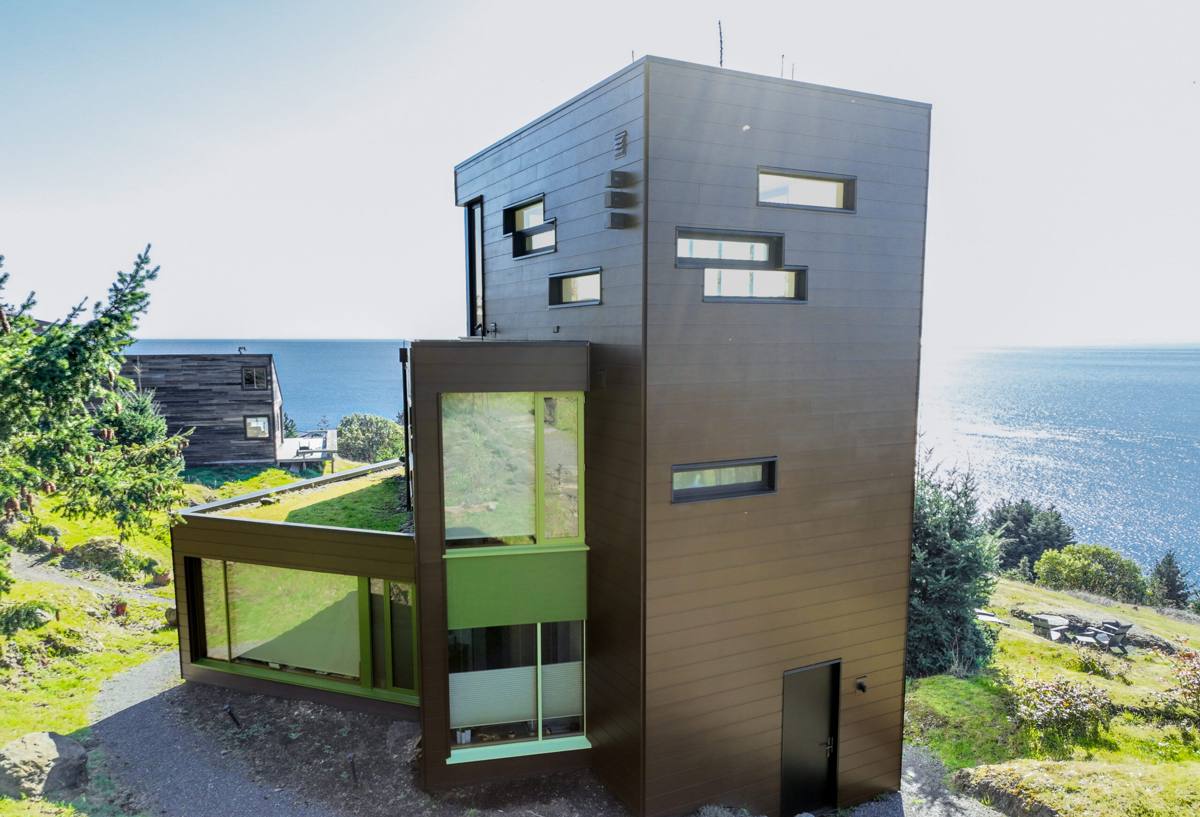
What a Correct Siding Installation Actually Involves
Siding is a system, not a single product. The panel or plank you see is the last piece installed and the first thing anyone judges — but the work that determines whether it lasts happens underneath it, and it's invisible once the job is done. A correct installation for a Cordata-area home means getting every layer right, in order, before the finish siding ever goes up.
Water Management Comes First
Every wall assembly needs a plan for the water that inevitably gets past the outer surface — because in this climate, some always will. That means a properly lapped weather-resistive barrier, correctly installed and taped seams, and a drainage plane that lets any moisture that gets behind the siding find its way back out instead of sitting against the sheathing. Skipping or rushing this step is the single most common cause of hidden rot behind otherwise good-looking siding.
Flashing at Every Penetration
Windows, doors, hose bibs, vents, light fixtures, and deck ledgers are all places where the wall gets interrupted — and every interruption is a potential entry point for wind-driven rain. Correct flashing detail at each of these locations, installed in the right sequence with the water-resistive barrier, is what actually keeps water out. It's tedious, unglamorous work, and it's also the work that separates a siding job that lasts 30-plus years from one that fails from the inside in under ten.
Fastening, Clearances, and Ventilation
Fiber cement siding has specific fastening requirements — nail type, spacing, and depth all matter, and getting them wrong can void a manufacturer's warranty even if the siding itself was a good choice. Proper ground clearance keeps splash-back and soil moisture away from the bottom edge of the siding. And a ventilated rainscreen gap behind the panels, while not strictly required everywhere, is one of the best upgrades available for a climate like this one — it gives any trapped moisture a way to dry out instead of sitting against the wall.
Why We Install Only James Hardie Fiber Cement
We made a deliberate decision to install one siding system: James Hardie fiber cement. We don't install vinyl, LP SmartSide, primed wood, cedar, or other fiber cement brands. That's not a marketing position — it's a standard we hold because of what we've seen matters most in exactly the kind of climate Cordata and the surrounding Ferndale area deal with.
Fiber cement is a cement-and-cellulose composite that doesn't absorb and swell the way wood-based products can, and it doesn't expand and contract with temperature the way vinyl does. James Hardie engineers separate product lines (its HZ5 formulation, for example) specifically for cold, wet, freeze-prone climates like the Pacific Northwest — which matters more here than in a mild, dry region where almost any siding product performs adequately. It's also non-combustible, which is an increasingly relevant consideration for insurance and long-term wildfire exposure conversations, even in a historically wet region.
The factory-applied ColorPlus finish is another piece of the decision. It's baked on under controlled conditions rather than field-applied, which gives it far better resistance to fading, chipping, and the kind of moisture-driven peeling that plagues field-painted siding in a climate that rarely gives paint a long enough dry window to cure properly. Combined with a strong transferable warranty, it's a system built for exactly the conditions a home in this part of Whatcom County actually experiences — not just for a sales brochure.
How Our Process Works
We keep the process straightforward and transparent, because homeowners deserve to know exactly what's happening to their house and why.
- Assessment: we walk the exterior, check for existing moisture damage, moss and algae buildup, and any areas where past siding or trim work was done incorrectly.
- Tear-off and inspection: once old siding is removed, we inspect the sheathing and framing underneath for rot or damage that needs to be addressed before anything new goes on.
- Water-resistive barrier and flashing: the weather barrier is installed and lapped correctly, and flashing is detailed at every window, door, and penetration.
- Rainscreen and fastening: furring strips or a rainscreen system are installed where appropriate, followed by the Hardie panels or planks, fastened to manufacturer spec.
- Trim, caulking, and final detail: trim is installed, joints are sealed with the correct sealants, and everything is checked against manufacturer installation guidelines before we call it done.
- Final walkthrough: we go over the finished work with the homeowner, point out anything worth knowing for future maintenance, and answer questions.
Comparing Siding Approaches for This Climate
Homeowners researching siding options for a home in the Cordata area typically weigh a handful of common factors. Here's how they generally stack up against the specific pressures of salt air, driving rain, and a long moss season:
| Factor | Vinyl | Untreated Wood / Primed Spruce | James Hardie Fiber Cement |
|---|---|---|---|
| Moisture absorption | Low, but seams can trap water | High — prone to swelling and rot | Very low; engineered to resist moisture damage |
| Salt-air / coastal durability | Can become brittle over time | Vulnerable to accelerated decay | Formulated for coastal and marine climates |
| Finish longevity | Factory color, can fade and chalk | Requires repainting every few years | Factory ColorPlus finish, long fade resistance |
| Fire resistance | Melts/deforms under heat | Combustible | Non-combustible |
| Typical lifespan when correctly installed | 20–30 years | 10–20 years, maintenance-dependent | 30–50 years |
This isn't a case against every alternative in every situation — it's why, after weighing these trade-offs against what actually holds up in this specific climate, we standardized on one product line rather than offering several and letting the weather sort out the winner years later.
Signs Your Cordata-Area Home May Need New Siding
Because siding failure in this climate is often gradual, it helps to know what to actually look for before small problems become structural ones.
- Persistent dark streaking, moss, or algae growth that returns quickly after cleaning
- Soft or spongy spots when you press on the siding, especially near the bottom courses
- Visible warping, buckling, or gaps at seams and corners
- Paint that's peeling, bubbling, or chalking heavily, especially on shaded walls
- Rising energy bills with no other explanation, which can point to failing insulation behind damaged siding
- Interior wall staining, musty odors, or bubbling paint near exterior walls
- Siding that flexes or feels loose when pushed, indicating failed fasteners or rotted sheathing underneath
Any one of these on its own might be minor. Several at once, especially on a wall that gets little sun or faces prevailing weather, is usually a sign the wall assembly needs a real look, not just a wash.
Maintenance in a Moss-Prone, Salt-Air Climate
Even the best siding system benefits from basic upkeep in this kind of environment. Keeping gutters clear so water isn't overflowing onto siding below, trimming back vegetation that shades and traps moisture against walls, and rinsing off accumulated salt and organic debris a couple of times a year go a long way. Fiber cement doesn't need the repainting cycle wood siding demands, but caulking at trim joints and penetrations should still be checked periodically, since sealant is usually the first thing to wear out — not the siding itself.
Why Hiring a Crew That Already Works This Area Matters
Correct siding installation isn't generic — it's a response to the specific conditions a home actually faces. A crew that regularly works in Ferndale and the surrounding Whatcom County communities already understands how much salt exposure, rainfall, and shade a given wall orientation typically deals with, what local permitting and inspection expectations look like, and which details tend to get rushed by crews unfamiliar with this climate. That local familiarity shows up in the parts of the job nobody sees after it's finished — the flashing behind the trim, the barrier lapping under the panels, the fastener choices at the corners — which are exactly the details that determine whether siding lasts three decades or needs to be redone in ten years.
If you're weighing siding options for a home in the Cordata area, we're glad to take a look and talk through what your house actually needs. Reach out for a free, no-pressure estimate using the form below.