 Ferndale Window
 Building a Deck That Actually Holds Up in Cordata
A deck in this part of Whatcom County lives a harder life than the same deck would in a dry inland climate. Cordata sits close enough to the water and the marine air pattern that homes here deal with a steady combination of driving rain, salt-tinged moisture, and a moss season that can run half the year. None of that is dramatic on its own — it's just relentless. A deck that's built without that reality in mind will look fine for a season or two and then start showing problems: soft spots near the house, black streaking on the boards, hardware that rusts faster than it should, and a surface that gets genuinely slick every time the temperature drops and the moss gets going again.
We build and repair decks for homeowners around Ferndale and the surrounding Whatcom County communities, and Cordata comes with its own set of habits worth planning around from day one — not fixing later.
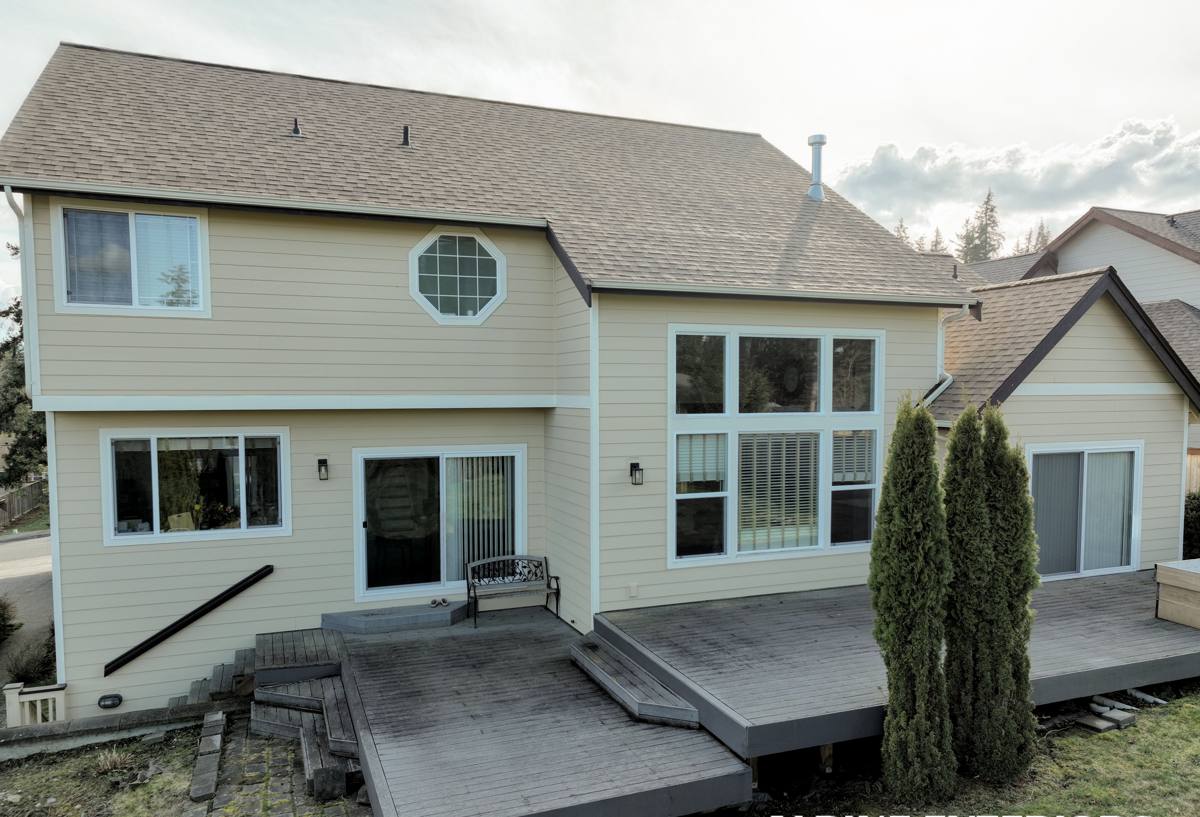
What This Climate Actually Does to a Deck
Moisture at the Ledger Board
The single most common failure point on a deck isn't the boards — it's the ledger board, the piece that bolts the deck to the house. In a climate with this much sustained rain, any gap in the flashing at that connection lets water track behind the siding and into the rim joist. It's slow, it's hidden, and by the time it shows up as a soft spot or a stain on an interior wall, the repair is bigger than it needed to be. This is the detail we check first on every inspection, whether it's new construction or an older deck someone's asking us to look at.
Moss and Algae on the Deck Surface
Wood and even some composite surfaces here pick up moss and algae faster than in drier parts of the state, especially on the north or shaded side of a house, which describes a lot of lots in this area. Beyond looking bad, moss holds moisture against the board and turns a deck into a slip hazard once it's wet — which in this climate is most of the year. Board spacing, airflow underneath the deck, and surface texture all affect how fast this happens and how hard it is to keep ahead of.
Salt Air and Metal Hardware
Whatcom County isn't right on the open coast, but the marine air pattern still carries enough salt content to accelerate corrosion on lower-grade fasteners, joist hangers, and post bases. Hardware that's rated for general outdoor use inland can start rusting and staining the wood around it within a few years here. This is one of the areas where cutting a corner on materials shows up early, not late.
Decking Material Options for Cordata Homes
There's no single "right" material for every deck — it depends on budget, how much maintenance the homeowner actually wants to do, and how the deck is used. Here's how the common options actually perform in this specific climate:
| Material | How It Handles This Climate | Maintenance | Relative Cost |
|---|---|---|---|
| Pressure-treated wood | Handles moisture fine if sealed and maintained; moss and mildew show up faster than on composite | Needs re-sealing every 1-2 years, regular cleaning | Lowest upfront |
| Cedar | Naturally more rot-resistant, ages to gray if not maintained, still needs protection from constant wet | Regular sealing/staining to keep color and prevent moss | Mid-range |
| Composite decking | Resists rot and moss growth better than wood, but can still get algae film on shaded sections | Occasional washing, no sealing or staining | Higher upfront |
| PVC decking | Fully synthetic, handles constant moisture well, least prone to moss taking hold | Lowest of all options — washing only | Highest upfront |
Our default recommendation for a full replacement in this area leans toward composite or PVC on decks that get heavy shade or sit low to grade, simply because the maintenance burden of keeping wood clean and sealed in a wet, shaded yard is real and ongoing. That said, plenty of homeowners are happy with wood if they're willing to stay on top of cleaning and sealing — it's a legitimate choice, just a different maintenance commitment.
What a Correctly Built Deck Involves Here
Footings Sized for the Ground, Not Just the Code Minimum
Frost depth and soil drainage in Whatcom County mean footings need to go deep enough and bear on solid, well-drained material — not just meet the bare permit minimum. Poor drainage under a footing is a slow-motion problem that shows up as a deck that's started to lean or settle unevenly years down the road.
Ledger Flashing Done Properly, Every Time
This means proper flashing integrated with the house's existing water management, not just a bead of sealant and a hope. Given how much rain this area sees, we treat this as a non-negotiable step, not an upsell.
Board Spacing and Airflow Underneath
Correct gapping between boards and enough clearance underneath the deck for air to move keeps wood drying out between rain events instead of staying damp, which is one of the biggest factors in how fast moss and rot take hold.
Fasteners and Hardware Rated for the Environment
Stainless steel or heavy hot-dip galvanized fasteners and connectors, matched to whatever decking material is used, so hardware doesn't become the weak point five years in.
Our Process for Cordata Deck Projects
We keep the process straightforward and specific to the site, since every lot handles water and sun differently:
- Site visit — we look at drainage, sun/shade exposure, existing structure (for replacements), and how the deck connects to the house.
- Design and material selection — sized to the home, matched to how the homeowner actually wants to use the space and how much upkeep they want going forward.
- Permitting — pulled and handled correctly through the local jurisdiction before any work starts.
- Build — footings, framing, ledger flashing, decking, and railing, in that order, with the ledger connection checked before it's ever covered.
- Final walkthrough — we go over the finished deck with the homeowner and cover basic care for the specific material installed.
Maintenance That Actually Matters in This Climate
A well-built deck still needs some attention in a climate like this. The list below covers what actually moves the needle:
- Sweep debris off the deck regularly — trapped leaves and needles hold moisture and feed moss.
- Wash the surface at least once a year, more often on shaded sections, to break up algae and moss before it takes hold.
- Check the ledger flashing and the area where the deck meets the house once a year for any staining or softness.
- Keep gutters and downspouts near the deck clear so runoff isn't dumping extra water onto or under the deck.
- Re-seal or re-stain wood decking on the manufacturer's recommended schedule, not just when it looks faded.
- Inspect fasteners and hardware periodically for rust staining, especially on older or lower-grade hardware.
Why a Crew That Already Works Cordata Matters
A deck built by someone who's used to this specific mix of rain, shade, and marine air makes different calls than a crew working from a generic spec sheet. That shows up in small decisions — how deep the footings go, which hardware grade gets specified, how much board spacing is actually enough — that don't show up as line items on an estimate but absolutely show up in how the deck holds up in year five and year ten. Working regularly in Whatcom County also means knowing the local permitting process and inspection expectations, which keeps a project moving instead of stalling on paperwork.
Repairs We're Often Called Out For
A lot of our deck calls in this area aren't new builds — they're repairs on decks that were built without this climate in mind. The most common issues we find are soft or rotted ledger connections from missing or failed flashing, rusted hardware staining the wood around it, and moss-covered surfaces that have gotten slick enough to be a real fall risk. Most of these are fixable without a full rebuild if they're caught before the structural framing is compromised — which is why we'd rather take a look early than have a homeowner wait until a board gives way.
If you're planning a new deck in Cordata or want an honest look at one you already have, we're happy to come take a look. Estimates are free and there's no pressure — just a straight assessment of what your deck needs and what it would take to get it right for this climate.