 Ferndale Window
 Decks Built for Cordata's Stretch of Whatcom County
Cordata sits in that corner of Whatcom County where Pacific storms come in fast off the water, humidity stays high for months at a time, and a deck doesn't get a real dry-out period the way it might further inland. A deck that looks fine on installation day can start showing problems within a couple of wet seasons if the material choices and framing details weren't matched to this climate. We build and repair decks for homes in this area, and the approach we use here is different in a few specific ways from how we'd frame a deck in a drier region.
This page covers what actually holds up on a Cordata deck, what tends to fail early, and how we handle the build from first site visit to final walkthrough.
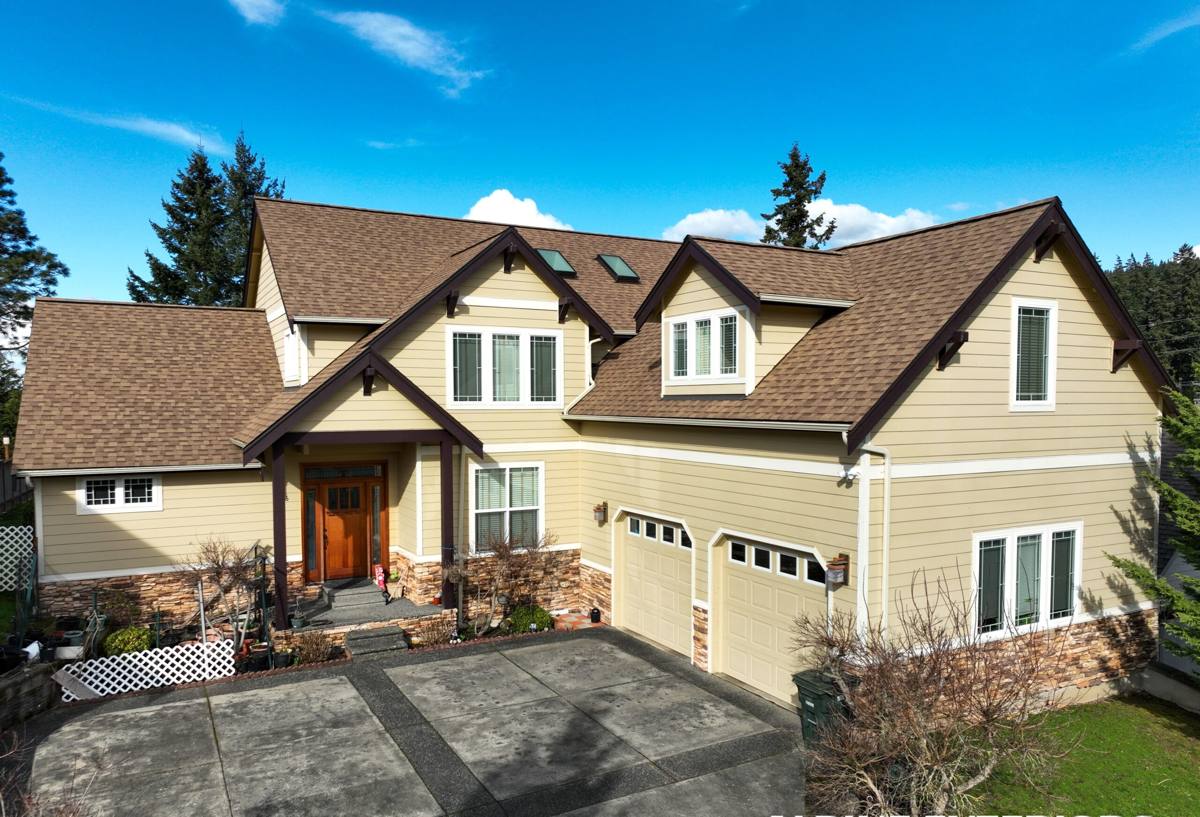
What Salt Air, Driving Rain, and Moss Season Actually Do to a Deck
Salt Air and Fasteners
Homes in this part of Whatcom County are close enough to the water that salt-laden air is a real factor, even on properties that aren't waterfront. Salt air accelerates corrosion on any fastener, bracket, or connector that isn't rated for it. The failure mode is quiet — a screw head that looks fine on the surface can be corroding from the inside, and the first sign is often a loose board or a railing post that starts to wiggle, sometimes years after installation.
Driving Rain and Ledger Connections
Wind-driven rain doesn't just fall on a deck, it gets pushed sideways into every joint, seam, and connection point. The ledger board — where the deck attaches to the house — is the single most common point of failure we see on older decks in this region, because water finds its way behind the ledger and rots the rim joist or sheathing from behind, out of sight.
Moss Season and Foot Traffic
Whatcom County's moss season isn't a minor cosmetic issue here — it's a slip hazard that lasts a good chunk of the year on any deck surface that doesn't get much direct sun or airflow. Decking material, board spacing, and even which direction the boards run all affect how fast moss and algae take hold and how hard they are to keep off.
Choosing a Decking Material for This Climate
There isn't a single "best" decking material — the right choice depends on how much maintenance you want to take on, your budget, and how exposed the deck is to rain and shade. Here's how the common options actually perform in a coastal, high-moisture climate like Cordata's:
| Material | Moisture & Moss Behavior | Maintenance | Typical Lifespan Here |
|---|---|---|---|
| Pressure-treated lumber | Resists rot when properly sealed; moss grows on the surface if not cleaned or sealed regularly | Needs re-sealing or staining every 1-2 years in this climate | 15-20 years with upkeep |
| Cedar | Naturally rot-resistant heartwood, but sapwood boards are more vulnerable; still needs sealing | Regular sealing and cleaning to hold color and resist moss | 15-20 years with upkeep |
| Composite (capped) | Doesn't rot; can still develop surface algae/moss film in shaded, damp spots | Occasional washing; no sealing or staining | 25-30+ years |
| Uncapped composite (older style) | More prone to moisture absorption and surface mold than capped composite | More frequent cleaning than capped composite | Shorter than capped composite |
We don't push one material on every job. A shaded, low-airflow deck under tree cover behaves differently than an open, sun-exposed one, and that changes which material makes sense. We'll walk the site with you and talk through the honest maintenance trade-offs before you commit to anything.
Framing and Substructure: Where Decks Actually Fail
The decking boards are what you see, but the framing underneath is what determines whether the deck is still solid in ten or twenty years. In a wet climate like this one, a few framing details matter more than they would somewhere drier:
- Ledger flashing — proper flashing and a waterproof membrane behind the ledger board keep rain from tracking behind it into the house framing.
- Joist protection — capping or wrapping joists reduces the amount of standing moisture the wood absorbs over a wet winter.
- Post bases — posts set on proper standoff hardware, not buried in or resting directly on concrete, so they aren't sitting in trapped water.
- Airflow underneath — enough clearance and ventilation below the deck so the framing actually gets a chance to dry between rain events.
Most of the deck failures we get called out for aren't decking failures at all — they're framing failures that were hidden under decking that still looked fine on top.
Railings, Fasteners, and Hardware
Railings take direct weather exposure on every side, and they're also a safety component, so this isn't a place to cut corners. Fasteners and structural hardware should be rated for exterior, corrosion-prone environments — stainless or coated hardware built for coastal exposure, not general-purpose interior-grade fasteners. We also pay attention to how railing posts are anchored to the frame, since a post that loosens over time is one of the more common warranty-type complaints on decks in this area.
Drainage, Grading, and Keeping Moss From Taking Over
A deck's relationship with the ground underneath it matters as much as the deck itself. If water pools under or around the structure instead of draining away, that moisture works its way back up into the framing and keeps the whole substructure damp longer than it needs to be — which is exactly the condition moss, algae, and rot all prefer. Grading the ground below to shed water away from the house, keeping gutters and downspouts routed away from the deck footprint, and leaving planting beds from crowding the deck edge all reduce how much moisture the structure has to deal with over a wet Whatcom County winter.
Board spacing and orientation also affect drying time on the surface. Boards that get consistent airflow and don't trap standing water between them stay drier and hold up better against moss than boards packed tight in a shaded, low-airflow layout.
Our Process for a Cordata Deck Build
- Site visit and assessment — we look at sun exposure, drainage, existing structure (for replacements), and how the deck will actually be used before recommending anything.
- Design and material selection — we walk through the honest trade-offs between materials based on your maintenance preferences and budget, not a one-size-fits-all pitch.
- Permitting — most new decks and many rebuilds require a permit; we handle that process so it's not left on your plate.
- Framing and structural work — ledger flashing, joist protection, and proper post bases are built in from the start, not treated as upgrades.
- Decking and railing installation — installed with fastener spacing and hardware suited to this climate's moisture and salt exposure.
- Final walkthrough — we go over care and maintenance specific to whatever material you chose so you know what upkeep actually looks like here.
A Pre-Build Checklist for Cordata Homeowners
Before you get quotes on a new or replacement deck, it helps to walk your own property and think through a few things:
- How much direct sun does the deck area get, and how much shade/tree cover does it have?
- Is there a moss or algae problem on your existing deck, patio, or walkways nearby?
- How is water currently draining around the area where the deck will sit?
- Do gutters or downspouts empty anywhere near the deck footprint?
- How much ongoing maintenance are you realistically willing to do — sealing and cleaning, or none?
- Is the deck attached to the house (ledger-mounted) or free-standing?
- Are there existing signs of soft or spongy decking, loose railings, or rust staining around fasteners?
Why a Local, Ferndale-Based Crew Matters for This Job
Deck-building advice that works in a dry inland climate can be the wrong advice here. A crew that works Cordata and the surrounding Ferndale area regularly already knows how the salt air, driving rain, and moss season in this part of Whatcom County actually behave over a full year, not just on a sunny estimate day. That local familiarity shows up in the small decisions — flashing details, fastener choice, board orientation — that determine whether a deck is still solid in fifteen years or starting to show problems in five.
Being local also means we're not far away if something needs a look after the job is done, and we're building a reputation in this specific community, not just moving through on a one-off project.
If you're planning a new deck or need an honest look at an existing one, we're glad to come take a look. Reach out for a free, no-pressure estimate using the form below.