 Ferndale Window
 Roof Repair in Blaine: Built for Semiahmoo Bay Weather
Blaine sits right on the water, a few minutes north of Ferndale along Semiahmoo Bay and Drayton Harbor, and that location shapes what a roof needs here. A roof on a waterfront or near-waterfront lot in Blaine ages differently than the same roof would twenty miles inland. Salt-laden air, wind-driven rain off the Strait of Georgia, and a moss season that can run most of the year all put steady, cumulative stress on shingles, flashing, and fasteners. Roof repair in this part of Whatcom County isn't just patching a leak — it's understanding why that spot failed first, and whether the surrounding roof is a few years behind it.
We're based in Ferndale and have worked roofs throughout Blaine for years, so this page focuses on one thing: what correct roof repair looks like for Blaine homes specifically, not a generic list that could apply anywhere in the Pacific Northwest.
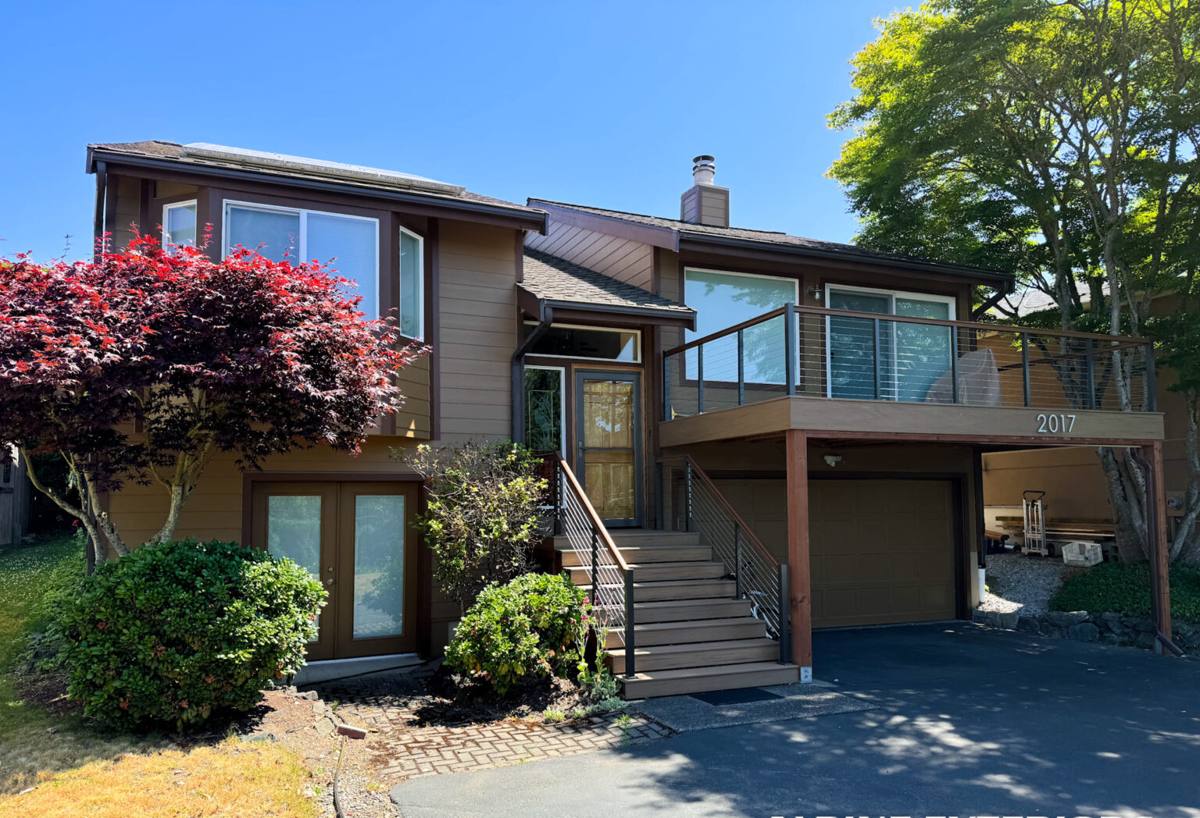
What Blaine's Climate Does to a Roof
Salt Air and Corrosion
Homes closer to Semiahmoo Bay and Drayton Harbor deal with airborne salt that settles on roofing hardware over time. Standard steel nails, staples, and some flashing metals corrode faster in that environment than they would further inland. Corroded fasteners lose their grip on shingles, and corroded flashing pits and eventually opens small gaps that water finds. This is a slow process — it rarely shows up as a dramatic failure, more often as a small leak that seems to come from nowhere near an otherwise intact-looking roof.
Wind-Driven Rain
Blaine gets exposed to weather moving across the Strait of Georgia and Boundary Bay, and that often means rain arriving sideways rather than straight down. Wind-driven rain finds weaknesses that vertical rain never would: under-lapped shingle edges, marginal flashing laps, gaps around vents and chimneys, and nail heads that have backed out slightly. A roof can shed normal rainfall fine for years and still leak the first time a strong southwesterly pushes rain uphill under the shingles.
A Long Moss Season
Whatcom County's mild, wet climate keeps north-facing slopes and shaded roof sections damp for much of the year, which is exactly what moss needs to establish. Moss doesn't just look bad — it holds moisture against the roofing material, lifts shingle edges as it grows, and works its root structure into joints and granule surfaces. Left alone through a few wet seasons, moss growth turns small maintenance items into real repair work.
Common Roof Repair Issues We Find in Blaine Homes
- Lifted or curling shingle edges from moss growth or wind uplift
- Corroded or failing flashing around chimneys, skylights, and roof-wall intersections
- Nail pops and backed-out fasteners, especially on roofs with any coastal exposure
- Leaks that trace back to valley flashing rather than the shingles themselves
- Granule loss and thinning on south- and west-facing slopes from years of weather exposure
- Soft or discolored decking under a roof section that's been leaking slowly and unnoticed
- Clogged gutters and downspouts that back water up under the roof edge
What a Correct Roof Repair Actually Involves
Real Diagnosis Before Any Work
A leak's exit point on the ceiling is often several feet from where water is actually getting in — water travels along decking and framing before it shows itself. Correct repair starts on the roof, not the ceiling: checking flashing, shingle laps, fastener condition, and the general age and wear of the surrounding roofing before deciding what actually needs to be done. Patching the wrong spot is a common way homeowners end up paying for the same leak twice.
Flashing Gets Real Attention
Given how much of Blaine's roof damage traces back to flashing rather than the shingles themselves, we treat flashing repair as its own task, not an afterthought to shingle work. That means re-bedding or replacing corroded step flashing, resealing valley metal properly, and checking that flashing laps are still doing their job rather than just caulking over a gap and calling it fixed. Caulk is a short-term patch, not a flashing repair.
Matching Materials, Not Just Covering the Spot
Repairs should use shingles and materials that match the existing roof in type, weight, and where possible, color and age-appropriate profile, so the repaired section sheds water the same way the rest of the roof does and doesn't stand out as an obvious patch. On older roofs where an exact match isn't available, we'll say so up front and talk through the closest reasonable option rather than surprising you with a mismatched patch.
Fasteners Suited to the Exposure
For roofs with meaningful coastal exposure, we use corrosion-resistant fasteners for repair work rather than standard-grade nails, since standard fasteners are one of the more common points of early failure on Blaine roofs. It costs a little more up front and saves you from redoing the same repair in a few years.
Checking Ventilation and Decking While We're Up There
A leak repair is also a chance to check attic ventilation and the condition of the decking near the repair area. Poor ventilation traps moisture that accelerates moss growth and shingle wear from underneath, and soft decking needs to be addressed before new shingles go over it — otherwise you're fastening a repair to wood that won't hold.
Our Process
- Inspection. We get on the roof (or use a camera pole where access is tight) and document the actual condition — not just the reported leak spot.
- Honest assessment. We tell you what we found, what's causing it, and whether it's a straightforward repair, a larger repair, or a sign the roof is nearing the end of its useful life.
- Written scope and estimate. You get a clear description of the work and a price before anything starts — no surprise add-ons mid-job.
- Repair. We do the work with matched materials and corrosion-appropriate fasteners, and we clean up the site when we're done.
- Follow-up. If the repair was tied to a leak, we're straightforward about what to watch for after the next heavy rain and available if anything needs a second look.
Repair or Replace? Cost Factors to Weigh
Not every roof problem in Blaine calls for full replacement, but not every leak should just get patched, either. These are the factors that actually drive that decision:
| Factor | Leans Toward Repair | Leans Toward Replacement |
|---|---|---|
| Roof age | Under two-thirds of expected lifespan | Near or past expected lifespan for the material |
| Extent of damage | Isolated to one section or flashing area | Widespread granule loss or curling across multiple slopes |
| Decking condition | Solid, dry decking beneath the damaged area | Soft or water-stained decking found during inspection |
| Leak history | First occurrence, clear single cause | Recurring leaks in different spots over time |
| Moss/algae condition | Light growth, easily treated | Heavy, long-term growth affecting shingle integrity |
Materials and Fasteners for Coastal Whatcom County
Not every roofing product performs the same way under salt air exposure. Here's how we think about material choice for repair work on homes with Blaine's coastal conditions:
| Component | Coastal Consideration | Our Standard |
|---|---|---|
| Fasteners | Standard steel corrodes faster near salt air | Corrosion-resistant nails for exposed and coastal-facing roofs |
| Flashing metal | Some metals pit and fail sooner in salt exposure | Durable flashing materials matched to the existing roof system |
| Shingle granules | UV and salt spray accelerate granule loss over time | Match existing product weight; flag when a slope is past matching |
| Sealants | Some sealants dry out and crack faster in coastal wind exposure | Used as a supplement to correct flashing work, not a substitute for it |
Roof Repair Checklist for Blaine Homeowners
A few things worth checking yourself between professional inspections, especially heading into fall storm season:
- Look for moss buildup on north-facing slopes and shaded valleys before it spreads
- Check gutters and downspouts are clear, especially after fall leaf drop
- Watch for granules collecting in gutters — a sign of accelerating shingle wear
- Note any ceiling stains or musty smells in attic spaces after a heavy wind-driven rain
- Have flashing around chimneys and skylights checked every few years, not just when a leak appears
- Don't power-wash a roof to remove moss — it can strip granules and shorten shingle life
Why a Crew That Already Works Blaine Matters
Roofing crews that mostly work drier, less exposed inland areas don't always default to coastal-grade fasteners and flashing details, because they don't need to most of the time. A crew that regularly works Blaine and the rest of the Whatcom County coastline builds that into the repair by default — it's not a special request, it's just how the work gets done here. We're a short drive from Ferndale, which also means if a repair needs a follow-up visit, that's a quick trip for us, not a scheduling headache.
We're also straightforward about scope. If your roof genuinely just needs a flashing repair and a few replaced shingles, that's what we'll recommend — we're not going to talk you into a full replacement you don't need yet. And if the roof is genuinely past the point where repair makes sense, we'll explain why, using what we actually found during inspection, not a generic sales pitch.
If you've got a leak, moss buildup, or damaged flashing on a Blaine roof, we're happy to take a look. Reach out for a free, no-pressure estimate using the form below — we'll tell you honestly what we find and what it would take to fix it right.