 Ferndale Window
 Blaine's Marine Climate Puts Real Stress on Exterior Siding
Homes near Blaine sit close to the water, and that proximity comes with a specific set of siding problems that inland Whatcom County homes don't deal with in the same way. Salt-laden air drifts off the bay and settles on exterior surfaces year-round. Combine that with the driving, wind-blown rain that comes through this corridor in fall and winter, plus a moss season that can stretch from October well into spring, and you've got an environment that's genuinely hard on building materials.
Salt air is corrosive to exposed metal fasteners and trim, and it accelerates the breakdown of paint films and lower-grade siding products. Driving rain doesn't just wet a wall surface — it gets pushed sideways and upward under normal gravity-flow water management, which means flashing details and water-resistive barriers matter more here than in calmer inland settings. And moss doesn't just grow on roofs; it takes hold in siding laps, behind trim boards, and anywhere organic debris and moisture sit together for weeks at a time. For a house near Blaine, siding isn't just a cosmetic choice — it's the first line of defense against a genuinely tough coastal climate.
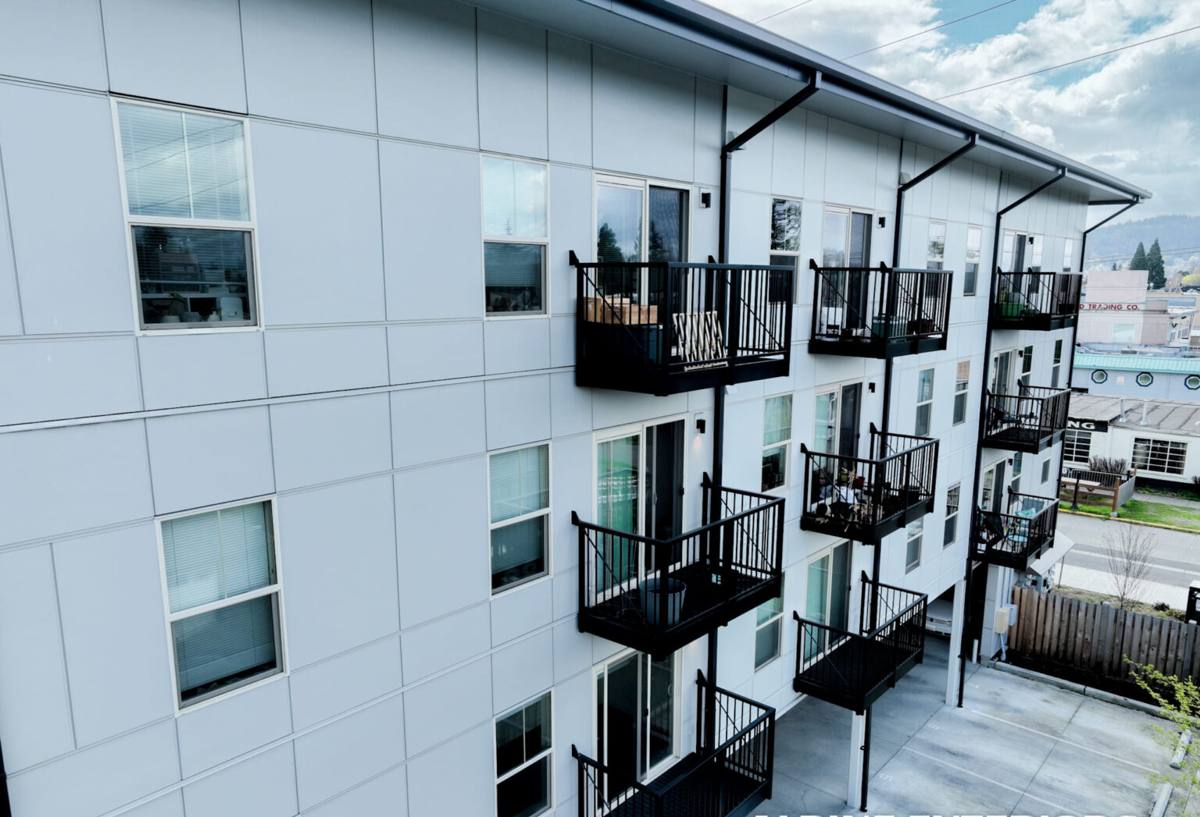
Why We Install James Hardie Fiber Cement — and Nothing Else
We install James Hardie fiber cement siding exclusively. We don't install vinyl, LP SmartSide, Cemplank, Allura, or primed wood siding, and that's a deliberate standard, not an oversight. In a marine environment like Blaine's, the trade-offs of those other products show up faster and more visibly than they do elsewhere.
Vinyl expands, contracts, and can warp under sustained UV and temperature swings, and it doesn't hold paint if a color update is ever wanted. Wood-based composite products rely on factory sealing and careful field caulking at every cut edge to keep moisture out — miss one detail during install or years later during a repair, and moisture intrusion can start before it's visible. Cedar and primed spruce need ongoing refinishing to survive salt air and rain exposure, which is a real, recurring cost most homeowners underestimate when they choose it.
James Hardie fiber cement is non-combustible, dimensionally stable, and manufactured specifically for different climate zones — the HZ5 product formulation is engineered for the freeze-thaw and moisture conditions common to the Pacific Northwest. The ColorPlus factory finish is baked on under controlled conditions, which gives it better fade and moisture resistance than field-applied paint, and it carries a strong transferable warranty when installed to Hardie's specifications. For a coastal Whatcom County home, that combination is what actually holds up.
What This Means Specifically for Blaine Homes
- Non-combustible material doesn't feed or degrade from salt exposure the way some composites can
- Factory-applied finish resists the fading and chalking that salt air accelerates on field-painted surfaces
- Dimensional stability means tighter, more consistent joints — fewer places for wind-driven rain to find a way in
- HZ5 formulation is matched to Pacific Northwest moisture and temperature cycling, not a generic national spec
What a Correct James Hardie Installation Actually Involves
The siding product is only half the equation. Most siding failures we're called to diagnose — regardless of brand — trace back to installation details, not the material itself. In a high-moisture, salt-exposed environment like Blaine, those details carry even more weight.
Water Management Comes First
Before a single piece of siding goes up, the wall needs a correctly lapped water-resistive barrier, properly integrated window and door flashing, and drainage planes that let any incidental moisture find its way back out rather than getting trapped behind the cladding. Driving rain off the bay will find any shortcut in this layer, so it's not an area where corners get cut.
Fastening and Clearances
James Hardie specifies fastener type, spacing, and placement for a reason — get it wrong and you risk both performance and warranty coverage. In a salt-air environment, fastener material matters too; corrosion-resistant fasteners are non-negotiable this close to the water. Proper clearance from grade, roofing, and decking surfaces also keeps the bottom edge of the siding away from standing moisture and splashback, which is one of the most common places we see moss and rot start on older installations.
Caulking and Joint Treatment
Every cut edge, butt joint, and penetration needs to be treated correctly — sealed where Hardie's specs call for sealing, left to shed water where they call for that instead. This is a detail-heavy part of the job, and it's exactly where inexperienced crews create future problems that don't show up until a wall has been wet behind the surface for a season or two.
Our Process on a Blaine-Area Job
- On-site assessment — we look at current siding condition, existing moisture or moss damage, trim and flashing condition, and wall orientation relative to prevailing wind and rain
- Scope and product selection — plank style, exposure, and ColorPlus color selected based on the home's exposure and the owner's preference
- Removal and substrate check — old siding comes off and we inspect sheathing for hidden moisture damage before anything new goes up, since covering a wet wall just delays the same problem
- Water-resistive barrier and flashing install — this layer gets done correctly before siding starts, not patched around afterward
- Hardie installation to manufacturer spec — correct fasteners, spacing, clearances, and joint treatment throughout
- Final inspection and walkthrough — we go over the finished work with the homeowner before calling the job done
Correct Installation vs. Common Shortcuts
| Detail | Done to Spec | Common Shortcut |
|---|---|---|
| Fastener type | Corrosion-resistant, spec'd for coastal exposure | Standard fasteners that corrode faster in salt air |
| Bottom clearance | Set per Hardie spec above grade/roofing | Set too low, inviting splashback and moss |
| Water-resistive barrier | Properly lapped and integrated with flashing | Installed but poorly lapped at penetrations |
| Cut-edge treatment | Sealed or back-primed per spec | Left untreated, exposing raw material to moisture |
| Joint caulking | Correct sealant, correct joints only | Over-caulked or under-caulked, trapping moisture |
Living With Fiber Cement Siding in a Salt-Air, Moss-Prone Climate
James Hardie siding is low-maintenance compared to wood or repainted composites, but "low-maintenance" doesn't mean "no maintenance" — especially this close to the water. A periodic rinse to clear salt residue and organic debris out of laps and behind trim helps prevent moss from getting a foothold. Keeping gutters clear and grade/vegetation pulled back from siding reduces the moisture load the material has to shed. ColorPlus finishes hold up well, but any area where the finish is chipped down to the substrate — from impact or aggressive pressure washing — should be touched up promptly rather than left exposed through a wet Whatcom County winter.
Simple Maintenance Checklist for Blaine-Area Homes
- Rinse siding periodically to remove salt residue, especially on wind-exposed elevations
- Inspect and clear moss or algae buildup in laps and behind trim before it spreads
- Keep gutters and downspouts clear so water isn't overflowing onto siding runs
- Trim back vegetation and maintain grade clearance at the base of walls
- Touch up any chipped or damaged finish promptly rather than letting bare material sit exposed
What Drives Cost on a Job Like This
| Factor | Why It Matters |
|---|---|
| Existing wall condition | Hidden moisture or sheathing damage found during tear-off adds repair scope |
| Home size and wall complexity | More corners, penetrations, and trim details mean more labor time |
| Plank profile and exposure | Different Hardie plank styles and reveal widths affect material quantity and install time |
| Trim and accessory scope | Corner boards, fascia, and soffit work done alongside siding add to the project |
| Access and site conditions | Tight lots, landscaping, or multi-story sections affect staging and labor |
We give a straightforward, itemized estimate after seeing the actual wall conditions — broad ranges without a site visit aren't useful to a homeowner trying to plan a real project.
Why Hiring a Crew That Already Works This Area Matters
A crew that regularly works Blaine and the surrounding Ferndale area already understands how the local exposure — wind direction off the water, rainfall patterns, and how fast moss establishes here — should shape the install details on a given wall. That's not something a crew from outside the region necessarily accounts for by default. Local experience also means knowing which elevations on a typical coastal-facing home need the most attention, and building that into the plan from the start rather than learning it after a callback.
If you're considering new siding or replacing aging siding on a home near Blaine, we're happy to take a look and walk you through what correct James Hardie installation looks like for your specific home and its exposure. There's no pressure and no cost to get an estimate — just a straight assessment of what your walls actually need.