 Ferndale Window
 Why Bellingham Siding Wears Differently Than Siding Inland
Homes near Bellingham sit close enough to the water and the weather patterns rolling off Bellingham Bay and the Salish Sea that their siding takes a different kind of punishment than a house twenty miles inland. Salt-laden air corrodes fasteners and trim faster. Driving rain off Puget Sound hits walls at an angle, not straight down, which means it finds its way into laps, corners, and butt joints that would stay dry in a calmer climate. And Whatcom County's long, wet, mild winters give moss and algae months at a time to colonize any siding surface that stays damp and shaded.
None of that means Bellingham homes are poorly built. It means the siding on them is doing more work than siding in drier parts of the state, and it needs to be inspected and repaired with that in mind. A repair that looks cosmetic on the surface — a stained panel, a soft spot near a downspout — is often the visible end of a moisture problem that started behind the cladding months or years earlier.
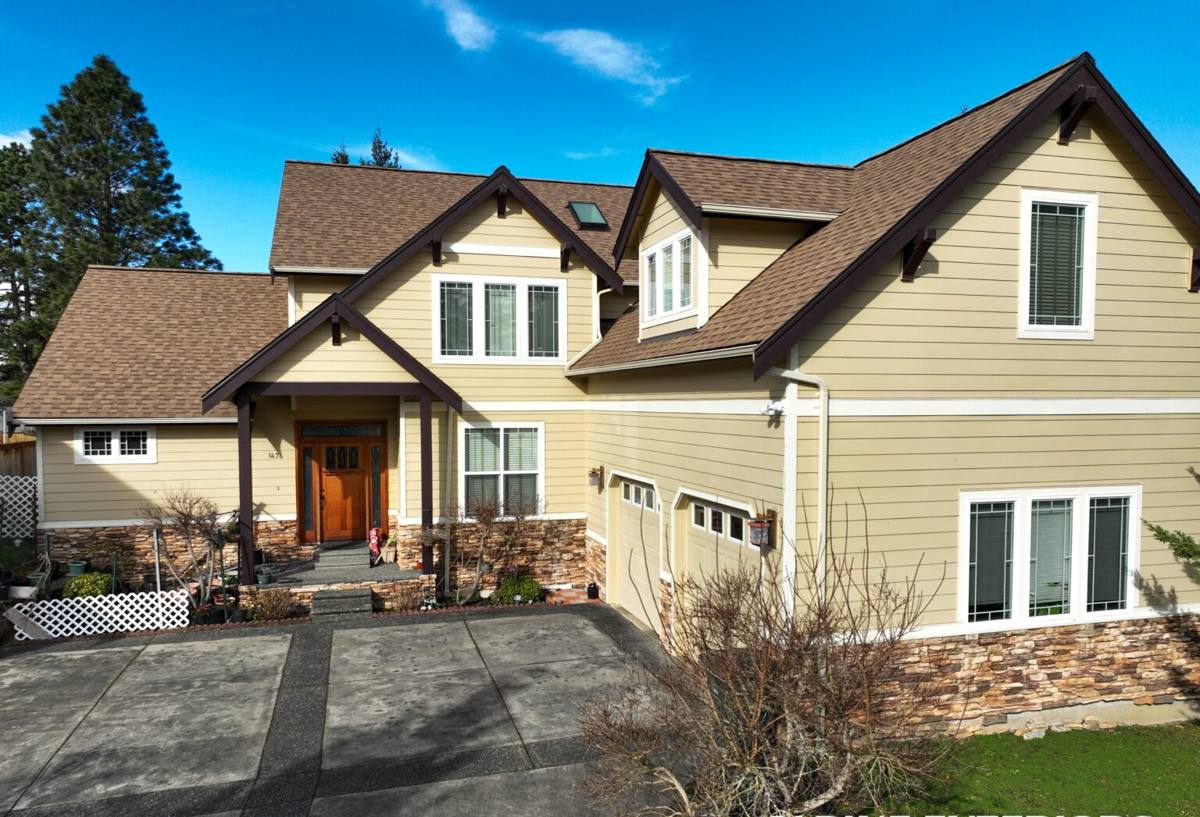
What Actually Fails on Siding in This Climate
We see the same handful of failure patterns over and over on repair calls in this area. Understanding them helps a homeowner know what they're looking at before a crew ever shows up.
Moisture Intrusion at Joints and Penetrations
Butt joints, window and door trim, hose bibs, and light fixtures are the most common entry points. Once water gets behind the siding, it can travel and rot sheathing well away from where the stain first appears on the surface.
Moss and Algae Buildup
Shaded north- and west-facing walls, areas under tree canopy, and anywhere siding stays damp longer than a day or two are prone to moss and algae growth. Left alone, it holds moisture against the surface and accelerates whatever is underneath it.
Fastener and Trim Corrosion
Salt air speeds up corrosion on nails, screws, and metal trim pieces. Rust streaks below a fastener head are usually a sign the fastener itself is failing, not just a cosmetic issue.
Caulk and Sealant Breakdown
UV exposure and constant damp-dry cycling shorten the life of exterior caulk. Cracked or missing caulk at joints is one of the most common — and most overlooked — causes of hidden water intrusion we find.
Signs Your Siding Needs a Repair Inspection
Most siding problems in this area give some warning before they become expensive. Watch for these signs:
- Soft, spongy, or bowed sections when pressed gently
- Visible cracking, especially near corners, joints, or fastener locations
- Persistent dark streaking, moss patches, or green-black staining that returns quickly after cleaning
- Paint or factory finish that's peeling, bubbling, or chalking unevenly in one area
- Gaps opening up at caulked joints, trim boards, or window and door surrounds
- Interior signs — a musty smell, a damp patch on drywall, or peeling interior paint on an exterior wall
- Rust streaking below nail or screw heads
Any one of these on its own might be minor. Several showing up in the same area, or on the same wall, usually points to a moisture problem worth investigating before it spreads.
Repair or Replace? How We Make That Call
Not every siding problem calls for full replacement, and not every "repair" request should actually be treated as one. The honest answer depends on how far the damage has spread and what's underneath.
| Situation | Usually a Repair | Usually Points to Replacement |
|---|---|---|
| Damage location | Isolated to one or two panels or a single wall section | Spread across multiple walls or elevations |
| Sheathing condition | Solid, dry framing behind the affected panels | Soft or rotted sheathing found once panels are removed |
| Cause | A single identifiable issue — a failed caulk joint, a damaged panel from impact | A systemic issue — bad flashing details, missing weather barrier, chronic moisture path |
| Age and material | Newer siding in otherwise good condition | Old or failing siding nearing the end of its service life |
| Cosmetic match | Replacement panels can be matched closely enough to blend in | Discontinued color or profile makes patching visually obvious |
We'll always tell you honestly which category your situation falls into. Recommending a full replacement when a repair would do the job serves nobody, and patching over a moisture problem that needs real correction just delays a bigger repair later.
What a Correct Siding Repair Actually Involves
A repair that only addresses the visible symptom tends to fail again within a season or two, especially in this climate. A repair done right involves several steps that aren't always visible in the finished result.
Full Assessment Before Any Work Starts
We remove enough siding to see what's actually happening behind it — not just patch what's visible. That means checking the condition of the weather-resistive barrier, the sheathing, and the flashing details around any nearby openings.
Correcting the Cause, Not Just the Symptom
If a failed piece of flashing or a gap in the weather barrier caused the damage, that gets corrected as part of the repair. Replacing a rotted panel without fixing what let water in behind it just resets the clock on the same problem.
Matching Materials and Finish
Where we're patching into existing James Hardie fiber cement siding, we match the panel profile and ColorPlus finish as closely as the product line allows, so the repair blends into the rest of the wall rather than standing out as an obvious patch.
Proper Fastening and Sealing
Given how hard salt air is on exposed fasteners, we pay close attention to fastener type, placement, and coverage, along with using sealants appropriate for this climate at every joint and penetration.
Why We Only Do This With James Hardie Fiber Cement
When a repair calls for new material — whether it's a few damaged boards or a larger section of a wall — we install James Hardie fiber cement, and only James Hardie. It's a non-combustible product engineered for exactly the kind of wet, marine-influenced climate this part of Whatcom County deals with. The HZ5 product line in particular is formulated for regions with more moisture and temperature swings, and the factory-applied ColorPlus finish resists the fading and chalking that plain field-painted siding struggles with in constant damp-dry cycling.
We don't install vinyl, LP SmartSide, cedar, or primed spruce, and we won't patch a repair with a mismatched product just because it's on hand. Mixing siding materials on a wall creates different expansion rates, different moisture behavior, and a finish that ages unevenly — problems that show up years after the crew that did the patch job is gone. Sticking to one product system we know inside and out means every repair we do integrates cleanly with what's already on the house, and holds up the same way the original installation does.
Our Repair Process, Step by Step
- Initial inspection — We look at the affected area and the surrounding siding, checking for how far a problem has actually spread before quoting anything.
- Diagnosis — We identify the root cause: a caulk failure, a flashing gap, impact damage, or a chronic moisture path.
- Written scope and estimate — You get a clear explanation of what needs to happen and why, with repair and (if relevant) replacement options laid out honestly.
- Removal and inspection behind the siding — Affected panels come off so we can check sheathing and the weather barrier before anything new goes back up.
- Correction of underlying issues — Flashing, barrier gaps, or fastening problems get fixed as part of the job, not left for later.
- Installation of matched material — New James Hardie panels are cut, fastened, and sealed to spec, matched to the existing siding as closely as possible.
- Cleanup and final walkthrough — We walk the repair with you before calling the job done.
Why a Local Ferndale Crew Matters for Bellingham-Area Homes
Siding repair isn't just a technical skill — it's a familiarity with how houses in a specific area actually fail. A crew that regularly works Whatcom County homes near Bellingham has already seen which walls take the worst of the weather off the water, which fastener types hold up and which corrode early, and how moss tends to establish itself on the shaded sides of houses in this exact climate. That local pattern recognition shortens the diagnosis step and reduces the chance of missing a related problem nearby.
Being local also means a faster response when a repair is time-sensitive — a storm-damaged section, an active leak, or a soft spot discovered right before a home sale. You're not waiting on a crew traveling in from outside the county, and you're working with people who'll still be reachable if a question comes up after the job is finished.
Keeping Repaired Siding in Good Shape Afterward
A good repair job holds up longer with a small amount of ongoing attention, especially given how much moss and algae pressure this area puts on exterior walls.
- Rinse shaded or north-facing walls periodically to keep moss and algae from re-establishing
- Keep gutters clear so overflow doesn't run down and pool against siding
- Trim back vegetation that keeps a wall section shaded and damp
- Recaulk joints as soon as cracking or gaps appear, rather than waiting for a full season
- Walk the exterior after major storms and note any new staining, soft spots, or displaced trim
If you're seeing staining, soft spots, or gaps in your siding anywhere in the Bellingham area, we're happy to take a look and give you a straight answer on what it actually needs. Reach out for a free, no-pressure estimate using the form below.