 Ferndale Window
 Building a Deck That Actually Holds Up in Blaine
Blaine sits right on the water near the Canadian border, and that location comes with a specific set of problems for anything built outdoors. Salt-laden air off the bay, long stretches of driving rain through fall and winter, and a moss season that seems to start earlier every year all work against a deck that wasn't built with those conditions in mind. A deck design that performs fine forty miles inland can fail early here — not because the homeowner did anything wrong, but because the materials, fasteners, and drainage details weren't chosen for a marine environment.
We build custom decks for homes in and around Blaine with that reality built into every decision, from the footings up to the final board. This page covers what that actually looks like: what the climate does to a deck over time, how we choose materials and hardware to fight it, what our build process looks like start to finish, and what it costs to do it right.
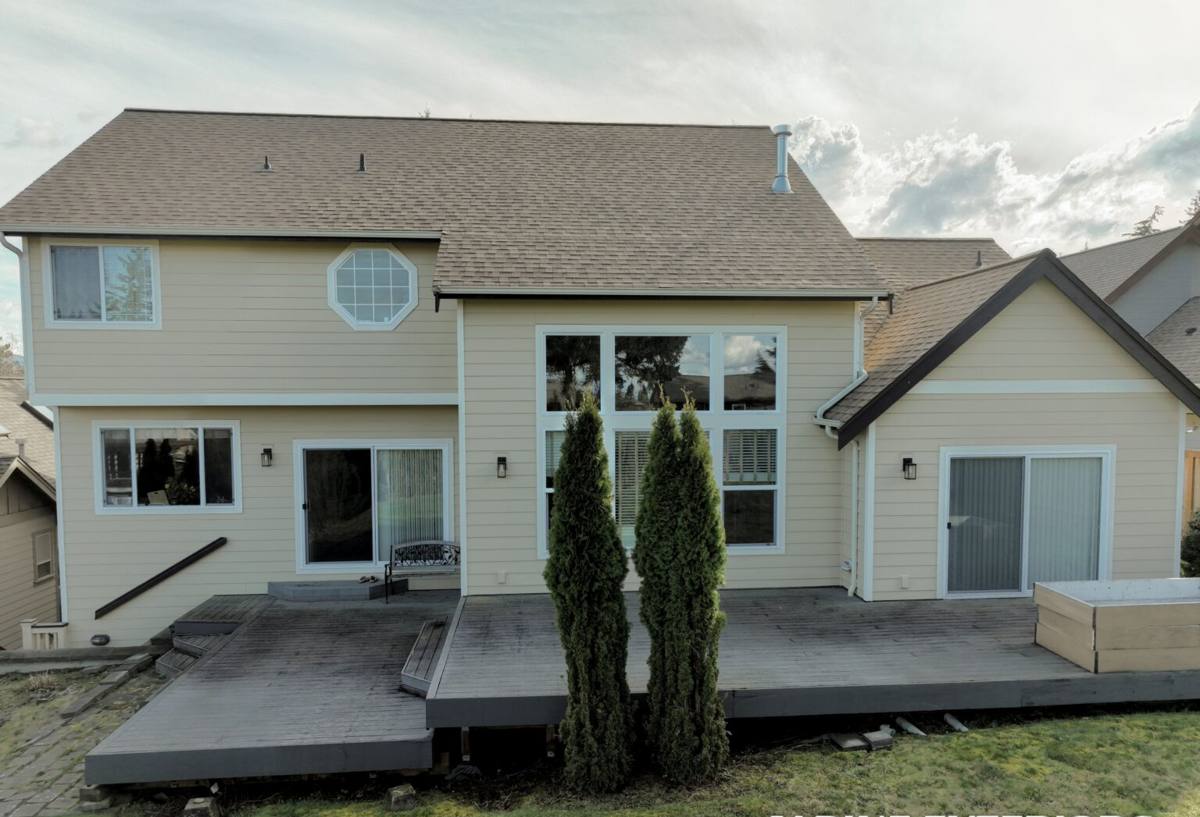
What Blaine's Coastal Conditions Do to a Deck Over Time
It helps to understand the specific failure modes before talking about solutions, because they drive almost every material and construction choice on this page.
Salt Air and Corrosion
Airborne salt from Semiahmoo Bay and the Strait of Georgia accelerates corrosion on any exposed metal — fasteners, brackets, hardware, even some hinges and railings. Standard hot-dip galvanized coatings can hold up for years inland but wear through faster in a coastal air environment, especially at cut edges and joints where the coating is thinnest. Once corrosion starts on a structural fastener, it's not just cosmetic — it's a slow weakening of the connection holding the deck to the house.
Driving Rain and Moisture Intrusion
Whatcom County's rain doesn't just fall straight down — wind off the water pushes it sideways into ledger boards, post bases, and any joint that isn't properly flashed or sloped. Water that gets trapped instead of shedding is the single biggest cause of rot in deck framing, and it's almost always a detail problem (a missing flashing tape, a ledger without a gap, a post base sitting in standing water) rather than a material problem.
Moss, Algae, and the Shade Factor
Long wet seasons combined with tree cover common in this area create ideal conditions for moss and algae growth on horizontal surfaces. Beyond looking bad, moss holds moisture against the decking material and turns wet boards into a genuine slip hazard on stairs and walking surfaces.
Choosing the Right Decking Material for This Climate
There's no single "best" decking material — every option is a trade-off between upfront cost, appearance, and how much upkeep you're willing to do. In a marine climate like Blaine's, moisture behavior and maintenance tolerance matter more than they would somewhere drier.
| Material | How It Handles This Climate | Maintenance | Typical Lifespan |
|---|---|---|---|
| Pressure-treated wood | Good rot resistance when properly sealed; needs re-sealing to keep water out | Annual cleaning and re-staining/sealing recommended | 15-20 years with upkeep |
| Cedar | Naturally moisture-resistant, weathers to gray if left unsealed | Periodic sealing to prevent graying and splintering | 15-20 years with upkeep |
| Composite decking | Doesn't absorb moisture or rot; resists moss staining better than wood | Occasional washing; no sealing or staining | 25-30+ years |
| PVC decking | Fully moisture-immune, best option where standing water or heavy shade is unavoidable | Lowest upkeep of the group | 25-30+ years |
We're honest with homeowners about this choice rather than pushing one product. Pressure-treated wood and cedar cost less upfront and give a traditional look, but they ask for real annual maintenance in a climate that gives boards a lot of wet days to work with. Composite and PVC cost more upfront but largely remove the moisture-absorption problem that drives rot and moss growth in the first place. For a low-maintenance rental or a second home, that trade-off often favors composite or PVC. For an owner who wants the classic wood look and doesn't mind the yearly sealing routine, wood is still a solid choice as long as it's detailed correctly underneath.
Structural Details That Matter More Here Than Elsewhere
Ledger Attachment and Flashing
The ledger board — where the deck attaches to the house — is the single most common source of hidden rot on any deck, and driving rain makes it worse. We flash this connection properly and leave a drainage gap so water pushed sideways by wind has somewhere to go instead of sitting against the house sheathing.
Footings and Post Bases
Post bases that sit flush against wet soil or hold standing water are a slow rot problem waiting to happen. We set footings below frost depth per code and use post bases that keep the wood post elevated off the concrete, so water sheds away from the base instead of wicking up into the post.
Fasteners and Hardware
Given the corrosion risk from salt air, we use stainless steel or coated fasteners rated for coastal/marine exposure rather than standard galvanized hardware. It costs a bit more, but a fastener failure years down the road is a structural safety issue, not just a maintenance nuisance — this is not a place to cut corners.
Framing Spacing and Ventilation
Tight joist spacing and good airflow underneath the deck help boards dry out between rain events instead of staying damp for days, which cuts down on both rot risk and moss growth on the underside of the structure.
Our Custom Deck Process, Start to Finish
1. Site Visit and Design
We look at sun exposure, tree cover, drainage patterns, and how the deck connects to the house before drawing anything up. Shade and drainage on a given lot in Blaine can vary a lot block to block, and that affects both material recommendations and structural details like footing placement.
2. Permitting
Most custom decks require a permit through the applicable local building department, and elevated decks typically need engineered footings and railing that meets code. We handle this paperwork as part of the job so the homeowner isn't stuck navigating it alone.
3. Framing
This is where the climate-specific details above get built in — proper ledger flashing, corrosion-resistant fasteners, elevated post bases, and joist spacing that supports the decking material chosen.
4. Decking, Railing, and Fascia
Boards get installed with the manufacturer-specified gapping to allow for expansion and drainage. Railing systems and fascia are chosen to match the home and hold up to the same salt-air exposure as the rest of the structure.
5. Final Walkthrough
We walk the finished deck with the homeowner, cover any maintenance recommendations specific to the material chosen, and answer questions before calling the job done.
Preventing Moss, Slip Hazards, and Early Wear
A few habits make a real difference in how a deck ages in this climate, regardless of material:
- Sweep leaves and debris off the deck regularly, especially in fall — trapped organic matter holds moisture and feeds moss growth
- Wash the deck surface at least once a year to remove algae and moss before it gets established
- Keep gutters and downspouts near the deck clear so runoff isn't dumping extra water onto the structure
- Trim back overhanging branches where practical to cut down on shade and falling debris
- Check railings and stair connections annually for any looseness, which can signal fastener corrosion starting
- Reseal wood decking on the schedule recommended for the product — skipping a year in this climate compounds fast
What Regular Maintenance Actually Looks Like
Homeowners often ask how much upkeep a deck really needs once it's built. For wood decks, plan on an annual cleaning and a re-seal or re-stain every one to two years depending on sun and shade exposure — decks under tree cover in Blaine tend to need it on the shorter end of that range because they dry out slower. For composite and PVC decks, maintenance is mostly limited to periodic washing to keep moss and algae from getting a foothold, since the material itself isn't absorbing moisture the way wood does. Either way, the biggest maintenance mistake we see is homeowners waiting until a problem is visible — by the time wood looks gray and dry or a board feels soft, moisture has usually been working on it for a while.
Why Hire a Crew That Already Works in Blaine
A deck design that works well in a drier, inland climate can be the wrong call here, and a crew without local experience won't necessarily know that. We work regularly in Whatcom County and have a working understanding of how salt air, wind-driven rain, and shaded, moss-prone lots affect material choice and construction detailing in this specific area. That shows up in small decisions — which fastener grade to use, how much drainage gap to leave at the ledger, which decking material makes sense for a shaded lot near the water — that don't get flagged as "optional upgrades" but are just part of building a deck correctly for this climate.
It also means we're accountable locally. If something needs a follow-up visit after the first winter, we're not driving in from out of the area to handle it.
Cost Factors for a Custom Deck in Blaine
Every deck is priced based on size, material, structural complexity, and site conditions, so we don't quote a number without seeing the project. That said, a few factors consistently move the price up or down:
| Factor | Effect on Cost |
|---|---|
| Decking material (wood vs. composite vs. PVC) | Composite and PVC cost more upfront but reduce long-term maintenance spending |
| Height and need for engineered footings/stairs | Elevated decks with stairs and engineered support cost more than ground-level decks |
| Railing style and material | Custom or metal/glass railing systems cost more than standard wood or composite railing |
| Site access and existing structure removal | Difficult access or removing an old deck adds labor time |
| Roof or cover addition | Adding a roof structure or pergola over the deck adds material and framing cost |
We walk through these factors during the site visit and give an honest estimate before any work starts, including where a lower-cost material might make sense versus where it's worth spending more upfront to cut down on future maintenance.
If you're planning a new deck or replacing one that hasn't held up to Blaine's weather, we're happy to take a look and put together a free, no-pressure estimate. Fill out the form below and we'll get in touch to schedule a site visit.