 Ferndale Window
 Blaine's Waterfront Climate Asks More of a Window Than Most Places Do
Blaine sits right where Whatcom County meets the water, and that changes what a window has to deal with compared to a house a few miles inland. The salt-laden air off the bay works on metal hardware and finishes faster than dry inland air does. Wind-driven rain off the water hits window walls at an angle, not just straight down, which pushes water into gaps that would stay dry on a sheltered lot. And the long gray stretch from fall through spring keeps trim, sills, and the north sides of homes damp enough, long enough, that moss and algae get a real foothold. None of this means Blaine homes need exotic products. It means the installation details that get skipped on an easy inland job cannot get skipped here.
We work Blaine regularly out of Ferndale, and the patterns repeat house to house: hardware that has pitted or seized from salt exposure years before the glass itself failed, sills with soft wood under paint that still looked fine, and window walls facing the water that have taken more weather cycles than the same style window would see elsewhere in the county. A correct replacement job accounts for all of that, not just the window unit itself.
This page covers what window replacement means specifically for Blaine homes: what the climate does to windows here, what a properly installed replacement includes, how we run the job, and what to look for in a crew that already knows the area.
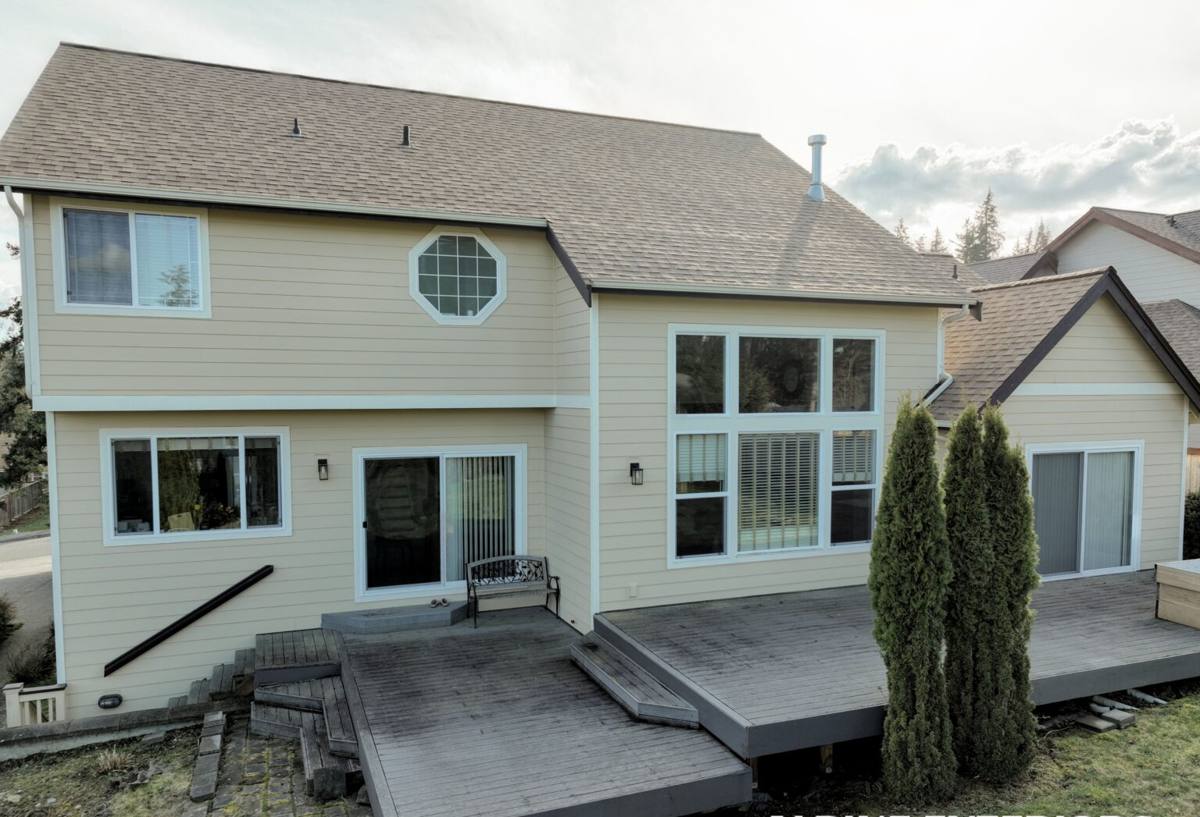
Signs Your Windows Are Losing the Battle
Not every window problem means full replacement, but in a marine climate the following signs usually mean the window's ability to keep water and air out has already been compromised, not just cosmetic wear.
- Fogging or a permanent haze between the panes, meaning the seal on a double-pane unit has failed and the gas fill is gone
- Visible gaps, drafts, or a change in indoor comfort near the window on windy days
- Wood that feels soft, spongy, or discolored at the sill or bottom corners of the frame
- Paint that keeps failing in the same spot no matter how often it is touched up
- Windows that are hard to open, close, or latch, especially after damp weather
- Moss, algae, or persistent green staining on the trim or siding right around the window
- Condensation forming on the inside of the glass regularly, even in a well-ventilated room
What a Correct Window Replacement Involves Here
Flashing and Moisture Management
The window itself is only part of the job. Where a window meets the wall is where water gets in, and in a place that takes wind-driven rain from multiple directions, that junction has to be built correctly every time, not just when it is convenient. That means proper sill pan flashing so any water that does get past the glass has somewhere to drain, flashing tape or building paper integrated in the right shingle-lap order so water sheds down and out rather than behind the siding, and head flashing or a drip cap detail above the window on walls that take direct weather. Skipping or rushing this step is the single most common reason a "new" window still leaks two winters later.
Frame Material Choices for Salt Air
Vinyl, fiberglass, and wood-clad frames all perform differently once salt air and constant moisture are part of the picture, and the right choice depends on the wall's sun and weather exposure, not just budget. We walk through the tradeoffs with the homeowner rather than defaulting to one material for every wall of the house.
Hardware and Fasteners
Standard hardware and fasteners corrode faster in salt air than most homeowners expect, sometimes visibly pitting within a few years on windows facing the water. We use corrosion-resistant fasteners and hardware rated for coastal exposure, and we check that the manufacturer's own hardware package is built for it too, not just the frame material.
Glass Packages Worth the Money
Dual-pane, Low-E coated glass with an argon or krypton gas fill is the baseline we recommend for Blaine, not an upsell. The coating cuts summer heat gain and winter heat loss, and the gas fill improves the insulating value between the panes. Triple-pane adds more insulation and sound dampening, which some homeowners on busier roads or wind-exposed lots find worth the extra cost, and some don't. We give you the honest comparison for your specific windows rather than a blanket recommendation.
Frame Material Comparison for Coastal Whatcom County Homes
| Material | How It Handles Salt Air and Moisture | Maintenance | Typical Lifespan Expectation |
|---|---|---|---|
| Vinyl | Won't corrode or rot; seams and welds matter more than the material itself in wind-driven rain | Low; occasional cleaning | Long-lasting when installed correctly |
| Fiberglass | Very stable through temperature swings and humidity; holds paint well over time | Low to moderate | Long-lasting, often the longest-rated of the common options |
| Wood-clad | Warm appearance inside; exterior cladding protects the wood from direct weather | Higher; cladding seams and any exposed wood need periodic checks | Depends heavily on maintenance and detailing at the joints |
Timing the Job Around Blaine's Weather
Blaine's weather also affects when the work itself should happen, not just what gets installed. Sealants, caulking, and some flashing tapes need a dry, mild window to cure properly, and installing in the middle of a heavy wind-driven rain event risks water getting into the wall before the new window is fully sealed. We watch the forecast and plan installation days around realistic dry windows rather than forcing a job through weather that works against it. On multi-window projects we also keep openings protected and weather-tight between removal and installation of each unit, so the house is never sitting open to the weather longer than necessary.
Indoor humidity is worth a mention too. Homes near the water often run more humid indoor air for more of the year, and older, leakier windows actually mask some of that by letting a little air exchange happen at the frame. A tight, well-sealed replacement window stops that incidental air leakage, which is good for comfort and efficiency but means bathroom fans, kitchen exhaust, and general ventilation matter more afterward. We're glad to talk through that tradeoff with you rather than let you discover it as new condensation on the inside of the glass the following winter.
Our Process From Estimate to Cleanup
Every job starts with a real look at the house, not a phone quote. We check the existing windows, the condition of the framing and sill underneath, and how exposed that particular wall is to wind and rain before recommending anything.
- We walk the exterior with you and note which walls take the worst weather, since a window on the water-facing side of the house may warrant a different spec than one on a sheltered wall
- We measure each opening individually; older homes settle and openings are rarely perfectly square
- We go over frame material, glass package, and hardware options with real tradeoffs, not a single default package
- Old windows come out carefully so we can check the framing and sill underneath for hidden rot or old water damage before anything new goes in
- Any damaged framing or sill material gets repaired before the new window goes in; we don't install a new window over a wet or soft sill
- New flashing and moisture barrier integration happens in the correct order, sealed and shimmed so the unit is square and operates smoothly
- Interior and exterior trim and caulking get finished to match the house
- We walk the finished job with you, operate every window, and clean up the site before we leave
Why Local Experience in Blaine Matters
A contractor based nearby and already working in Blaine sees the failure patterns specific to this stretch of coastline repeatedly, not occasionally. That matters in a few concrete ways. We know which wall orientations in this area take the worst wind-driven rain and plan flashing accordingly. We're familiar with Whatcom County permitting requirements for window replacement, which can depend on whether the change involves structural framing or egress requirements. And because we're not driving in from out of the area, scheduling, follow-up, and warranty service are straightforward rather than a logistics problem.
Cost Factors to Understand Before You Get a Number
Window replacement pricing depends on more than the size of the opening, and the honest answer to "what does it cost" is always "it depends on these specific factors." Rather than quote a number that won't hold up once we see your house, here's what actually moves the price.
- Number of windows, and whether they're being done in one project or phased over time
- Frame material chosen and glass package, such as dual-pane Low-E versus triple-pane
- Condition of the existing framing and sill; hidden rot repair adds time and material
- Accessibility, including second-story windows or windows behind landscaping
- Whether it's a straightforward insert replacement into an existing opening or a full-frame replacement with new flashing
- Custom sizes or shapes versus standard manufacturer sizes
Maintenance That Actually Matters After Installation
A correctly installed window in Blaine still needs a little seasonal attention, mostly because of the same moss and algae pressure that affects roofs and siding here. Keep weep holes at the bottom of the frame clear of debris so any water that reaches them can drain. Rinse accumulated salt residue off frames and hardware near the water a couple of times a year rather than letting it sit. Check caulking annually, especially on the walls that take the worst weather, since UV and constant damp cycles break down sealant faster here than inland. Trim back vegetation that keeps a window's trim shaded and damp, since that's exactly the condition moss needs to take hold.
If your windows in Blaine are drafty, fogged, hard to operate, or showing soft wood at the sill, it's worth a straightforward look before another wet season goes by. We offer free, no-pressure estimates and will tell you honestly whether you need full replacement, a repair, or nothing at all yet — use the form below to get started.