 Ferndale Window
 Why Blaine's Coastal Climate Is Tough on Roofs
Blaine sits right on the water, tucked against Semiahmoo Bay and Drayton Harbor at the top corner of Whatcom County. That location is part of what makes it a great place to live, and it's also exactly why roofs here wear out differently than roofs twenty miles inland. Salt-laden air moves off the water and settles onto every exposed surface of a home, including the roof. Add in driving rain that comes in sideways during winter storms, plus long stretches of overcast, damp weather that never quite dries out, and you have a climate that stresses a roof from several directions at once.
Salt Air and Metal Components
Salt air accelerates corrosion on unprotected metal. Nails, flashing, vent caps, and fasteners that would last decades in a dry inland climate can start showing rust streaks or pitting much sooner near the water. This doesn't mean metal has no place on a Blaine roof — it means the metal that's used, and how it's protected, matters more here than it would in most parts of the state.
Wind-Driven Rain
Storms off the Strait of Georgia and Boundary Bay often bring rain that isn't falling straight down — it's being pushed sideways under wind pressure. That kind of weather finds every weak seam, every under-driven nail, and every spot where flashing was installed to minimum standard instead of to the standard a coastal home actually needs. A roof that's watertight in calm conditions can still leak during a wind-driven storm if it wasn't detailed correctly.
A Long Moss Season
Cool temperatures, shade from mature trees, and near-constant moisture give moss a long growing season in this part of Whatcom County. Moss isn't just a cosmetic problem — it holds water against the roof surface, lifts shingle edges, and slowly breaks down the granules that protect asphalt shingles from UV and weather. A roof that's shaded or north-facing in Blaine will almost always show moss activity sooner than the same roof would somewhere drier and sunnier.
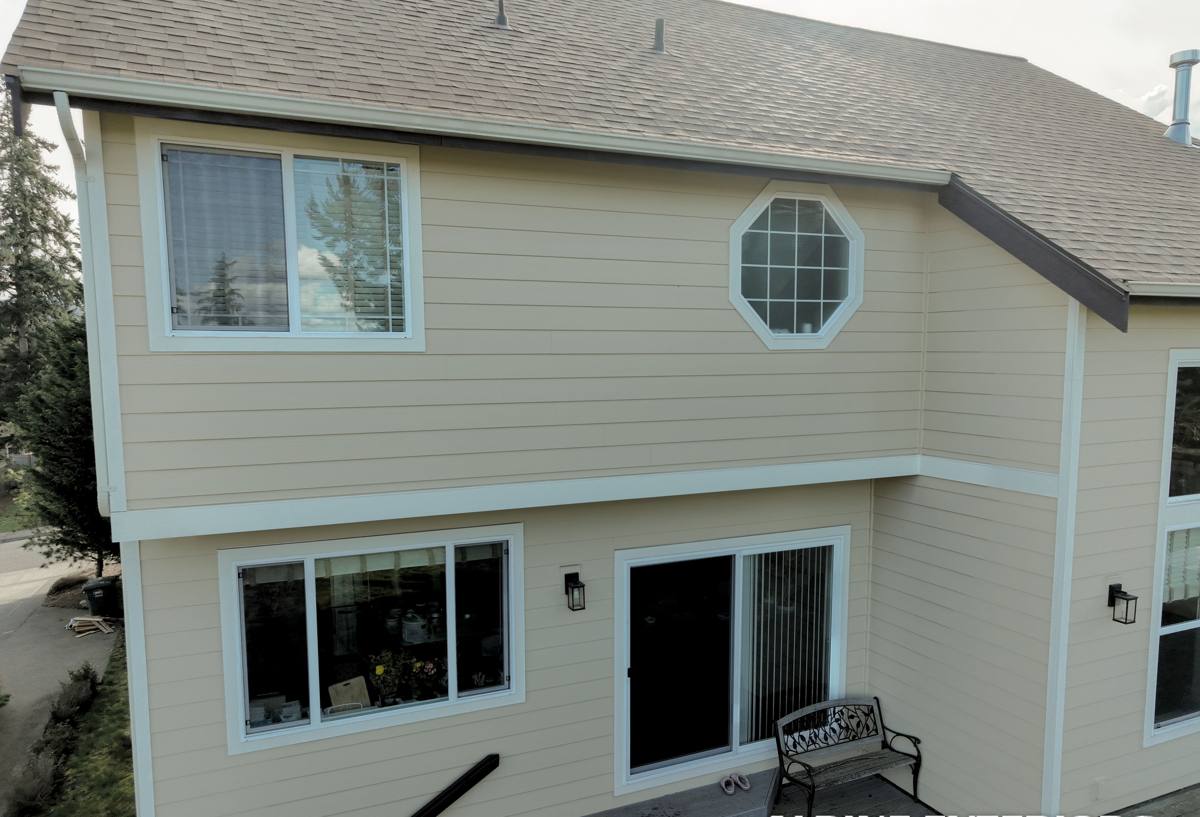
Signs Your Blaine Home May Need a Roof Replacement
Roofs rarely fail all at once. Most show warning signs for months or years before a leak actually shows up inside the house. Because of the salt air and moss pressure here, it's worth checking these signs a little more often than the national average advice suggests.
- Shingles that are curling, cupping, or losing granules faster on shaded or north-facing slopes
- Moss or dark streaking that keeps coming back within a season or two of cleaning
- Rust staining around vent boots, flashing, or exposed fasteners
- Soft or spongy decking felt underfoot when walked, or sagging visible from the ground
- Daylight visible through the attic roof deck, or damp insulation after a storm
- Granules collecting in gutters in noticeably increasing amounts
- A roof approaching or past 20-25 years old for asphalt shingle, especially with heavy tree cover
Any one of these on its own doesn't necessarily mean a full replacement is due. But two or three together, especially on a roof that's already past its expected lifespan, are a reasonable reason to have it looked at before the next big storm season.
What a Correct Roof Replacement Involves
A roof replacement is more than stripping off old shingles and nailing down new ones. Done right, especially in a climate like Blaine's, it's a system of layers that each do a specific job.
Tear-Off and Deck Inspection
Full tear-off lets us see the actual condition of the roof deck, not just guess at it. Any soft, delaminated, or water-damaged sheathing gets identified and replaced before anything new goes down. Covering over a compromised deck is one of the most common shortcuts that leads to problems years later.
Underlayment and Ice & Water Shield
A synthetic underlayment goes down as the primary water-resistive barrier under the roofing material. In vulnerable areas — eaves, valleys, and around penetrations — a self-adhering ice-and-water membrane adds a second layer of protection where wind-driven rain and ice damming are most likely to find a way in. On a coastal, moisture-heavy site like Blaine, we don't treat this as optional extra coverage; it's a standard part of a correct install.
Flashing Details
Step flashing at walls, counter-flashing at chimneys, and proper flashing around every vent and pipe penetration are where most roof leaks actually originate — not in the open field of shingles. Near salt water, we pay close attention to the metal used for flashing and fasteners so it holds up to airborne salt rather than becoming the first thing on the roof to corrode.
Ventilation
Balanced intake and exhaust ventilation keeps the attic space closer to outdoor temperature and moisture levels. That matters for shingle lifespan, for controlling condensation in a damp climate, and for reducing the cool, moist conditions moss thrives in. A roof that traps heat and humidity underneath it ages faster than one that breathes properly.
Fastening for Wind Exposure
Correct nail placement and nail count, matched to the manufacturer's high-wind installation instructions, make a real difference during the exposed, gusty storms that come through this part of the coast. This is a detail that's easy to shortcut and hard to notice until a storm tests it.
Choosing the Right Roofing Material for a Blaine Home
There isn't one "best" roofing material for every home — it depends on your budget, your roof's exposure to wind and shade, and how much long-term maintenance you want to take on. Here's how the common options generally compare for a coastal Whatcom County property.
| Material | Salt Air Durability | Moss Resistance | Typical Lifespan | Maintenance |
|---|---|---|---|---|
| Asphalt composition shingle (standard) | Good with proper flashing/fasteners | Moderate — benefits from algae-resistant granules | 20-25 years | Periodic moss and debris removal |
| Asphalt composition shingle (algae-resistant / premium) | Good | Better — copper/zinc-infused granules slow algae and moss growth | 25-30 years | Lower, but not maintenance-free |
| Standing seam metal | Very good when coated/finished metal is used | Very good — smooth surface sheds moisture, little for moss to grip | 40-50+ years | Low; occasional inspection of seams and fasteners |
| Composite / synthetic shake or slate | Good | Good | 30-50 years, product-dependent | Low to moderate |
We'll walk through these trade-offs with you based on your roof's actual shade exposure, wind exposure, and budget rather than pushing one product as a universal answer. A heavily shaded, north-facing roof deserves a different conversation than a sun-exposed one even on the same street.
Our Roof Replacement Process
We keep the process straightforward and communicate at each stage so there are no surprises partway through the job.
- On-site inspection and estimate — we look at the current roof, the deck condition where visible, attic ventilation, and any problem areas, then put together a written estimate.
- Material selection — we go over the options in the context of your home's exposure, budget, and how long you plan to own the property.
- Scheduling and permitting — we handle the required permitting and schedule the work around a realistic weather window.
- Tear-off and deck inspection — old roofing comes off, the deck is inspected, and any needed repairs are made before new material goes down.
- Installation — underlayment, ice-and-water membrane, flashing, roofing material, and ventilation components are installed in sequence, with attention to the details that matter most in a coastal climate.
- Final walk-through and cleanup — we inspect the finished roof with you, clean the site thoroughly including magnetic sweeps for stray fasteners, and go over your warranty coverage.
Why Local Experience in Blaine Matters
A roofing crew that regularly works in Blaine and the surrounding Whatcom County coastline has already seen how salt air, wind exposure, and moss pressure play out on real roofs over time — not just in a training manual. That experience shows up in small decisions: which fastener and flashing metals hold up near the water, how much ice-and-water coverage a particular roof pitch and exposure actually needs, and where moss tends to establish itself first based on tree cover and roof orientation.
Local familiarity also means fewer scheduling headaches. Coastal weather windows can close quickly, and a crew that knows the area's typical storm patterns plans the job to avoid getting caught mid-tear-off when a system rolls in off the water.
Protecting Your Investment After Installation
A correctly installed roof still benefits from basic upkeep, especially in this climate. A few habits go a long way toward getting the full lifespan out of a new roof:
- Keep gutters and downspouts clear so water isn't backing up under the roof edge
- Trim back overhanging branches to reduce shade and debris buildup, which both encourage moss
- Have moss treated or gently removed before it spreads, rather than after it's established
- Schedule a visual roof check after major windstorms, particularly ones with sustained gusts
- Keep an eye on attic ventilation — blocked vents undo a lot of the benefit of a well-installed roof
None of this requires much time, but skipping it is one of the more common reasons a roof underperforms its expected lifespan in a coastal climate like this one.
If you're noticing any of the warning signs above, or your roof is simply getting up in age, we're happy to take a look and give you an honest read on where things stand. Reach out for a free, no-pressure estimate using the form below.