 Ferndale Window
 Storm Damage Roof Repair for Blaine Homes
Blaine sits right up against the water, close to the Canadian border, and that location makes local roofs work harder than roofs almost anywhere else in Whatcom County. Wind off the Strait of Georgia and Semiahmoo Bay carries salt and moisture straight into roofing materials, and winter storms often bring driving rain at an angle that finds every weak seam, nail pop, or lifted shingle tab. Our crew is based in Ferndale and works Blaine regularly, so this page is about one job specifically: repairing storm damage on Blaine roofs correctly, not just patching what's visible from the ground.
Storm damage repair is different from routine roof maintenance. It starts with an event — a windstorm, a heavy rain system, a falling branch — and the job is to find everything that event actually did, not just the obvious spot, then repair it in a way that holds up through the next storm season.
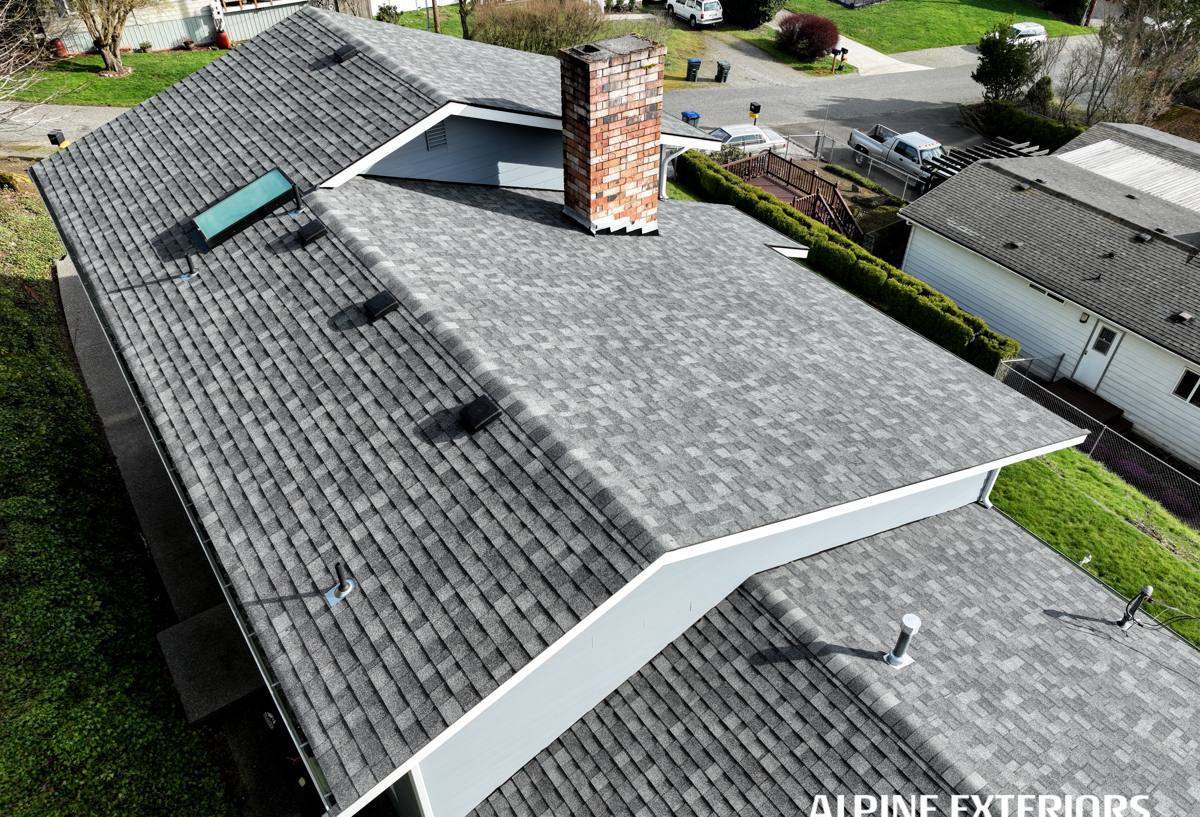
What Local Weather Actually Does to a Roof
Three conditions define roofing wear in this part of Whatcom County, and they matter for how we approach every repair:
Salt Air
Homes close to the water deal with airborne salt that accelerates corrosion on exposed metal — flashing, fasteners, vent stacks, and gutter hardware. Corroded flashing is one of the most common hidden causes of a leak that shows up well after the storm that caused it.
Driving Rain
Wind-driven rain doesn't behave like a straight downpour. It gets pushed sideways and upward under shingle edges, around chimney flashing, and into any gap that would stay dry in calmer weather. A roof that's watertight in a normal rain can still leak in a wind-driven storm if the underlying flashing and sealant work isn't right.
Moss Season
Whatcom County's long, damp stretch of the year keeps roofs wet for extended periods, which is exactly what moss needs to take hold. Moss holds moisture against the roofing material, lifts shingle edges as it grows, and can mask storm damage that's happening underneath it. A roof with active moss growth is also more likely to suffer wind damage, because moss-lifted shingles are already partly loosened before the storm even arrives.
What Counts as Storm Damage
Not every roof issue is storm-related, and part of an honest inspection is telling you which is which. Storm damage on Blaine homes typically falls into a few categories:
- Wind-lifted or torn-off shingles — tabs creased, cracked, or missing entirely after a high-wind event
- Wind-driven rain intrusion — water finding its way past flashing, valleys, or shingle laps that would otherwise hold
- Impact damage — from falling branches or debris during a storm
- Flashing failure — around chimneys, skylights, and roof-wall intersections, often accelerated by salt air corrosion
- Displaced or clogged gutters and downspouts — which redirect water into places it shouldn't go, sometimes causing damage that looks like a roof leak but starts at the edge
Long-term moss growth and general age-related wear are not storm damage on their own, but they're often what turns a minor storm event into a real leak, because they weaken the roof's ability to shed water before the storm ever hits.
Signs a Blaine Homeowner Should Watch For After a Storm
Most storm damage isn't obvious from the ground. Here's what we tell homeowners to check for after a windstorm or heavy rain event, without getting on a ladder themselves:
- Granules collecting in gutters or at downspout outlets — a sign of shingle wear or impact damage
- Shingles that look curled, cracked, or visibly out of alignment from the street or a neighboring vantage point
- New or worsening water stains on ceilings or upper interior walls
- Daylight visible through the attic roof deck, if your attic is accessible
- Debris — branches, moss clumps, or granule buildup — piled against a roof valley or chimney
- Gutters pulling away from the fascia or sagging after heavy rain
- A musty smell in the attic, which can mean moisture intrusion before any visible stain appears
If you notice any of these after a storm, the right move is a professional inspection before the next rain, not after a leak has already spread into insulation or framing.
Our Storm Damage Repair Process
We run the same process on every storm call, whether it's a single lifted shingle or damage across a whole slope.
1. Inspection and Documentation
We walk the roof (weather permitting) and check the attic from the inside where accessible. We photograph damage as we find it — this documentation is useful whether or not you end up filing an insurance claim.
2. Temporary Protection
If there's active water intrusion or exposed roof deck, we prioritize tarping or temporary sealing before anything else. Stopping ongoing water entry matters more than a fast permanent fix, especially if more rain is in the forecast.
3. Repair Plan and Scope
We explain what we found, what caused it, and what it will take to fix — including whether the fix is a targeted repair or whether the damage points to a larger issue, like failing flashing or a roof past its useful life. We don't upsell a full re-roof when a repair will genuinely hold.
4. The Repair Itself
Depending on scope, this can mean replacing individual shingles and underlayment sections, re-securing or replacing corroded flashing, resealing vulnerable transitions (chimneys, skylights, wall intersections), and clearing or repairing damaged gutters. We match materials as closely as possible to your existing roofing so the repair blends in rather than standing out as a patch.
5. Final Check
Before we consider the job done, we recheck the repaired area and the surrounding roof for anything we may have missed on the first pass — storms rarely damage just one spot.
Repair vs. Replace: How We Decide
Not every storm-damaged roof needs replacing, and not every roof is worth repairing indefinitely. Here's how we think through it:
| Factor | Leans Toward Repair | Leans Toward Replacement |
|---|---|---|
| Extent of damage | Isolated to one area or slope | Widespread across multiple slopes |
| Roof age | Well within expected lifespan | Already near or past typical service life |
| Underlying condition | Deck and structure sound | Soft decking, rot, or repeated past leaks |
| Moss/moisture history | Minimal, well-maintained roof | Long-term moss buildup with underlying wear |
| Flashing condition | Flashing intact, isolated failure | Widespread flashing corrosion from salt air exposure |
We'll always give you our honest read on which side of that table your roof falls on, along with the reasoning behind it — not just a recommendation.
Cost Factors for Storm Damage Repair
Every storm repair is different, so we don't quote a number before we've inspected the roof. What we can tell you up front is what tends to move the cost up or down:
| Factor | Tends to Lower Cost | Tends to Raise Cost |
|---|---|---|
| Access | Simple, low-slope, easy access | Steep pitch, multiple stories, difficult access |
| Damage location | Single, contained area | Multiple areas or hard-to-reach valleys |
| Material availability | Common shingle type still in production | Discontinued or specialty material requiring closer matching work |
| Underlying condition | Sound decking, no rot | Rotted decking or structural repair needed underneath |
| Flashing scope | Isolated flashing repair | Full flashing replacement around multiple penetrations |
Our Approach to Materials on Coastal, Storm-Exposed Homes
For roofs exposed to salt air and frequent wind-driven rain, we lean toward corrosion-resistant flashing metals and sealant systems built for repeated wet-dry cycling rather than the cheapest available option, because the flashing and sealant are usually what fail first in this climate — not the shingles themselves. We also pay close attention to fastener quality in these repairs; standard fasteners can corrode faster than the roofing material around them near the water, which quietly reopens a repair a year or two later. This is a matter of professional standard on our end, not a claim about any particular manufacturer's products — different materials simply hold up differently under sustained salt exposure and wind-driven moisture, and we choose accordingly for Blaine-area homes.
Why It Matters That We Already Work in Blaine
A crew that regularly works Blaine and the surrounding Whatcom County coastline has already seen how local homes age — which roof orientations take the worst of the wind, where salt corrosion tends to show up first, and how fast moss reestablishes itself after a cleaning. That experience shortens the inspection process and reduces guesswork, because we're not learning the local climate on your roof for the first time. It also means faster response after a storm, since we're not traveling in from outside the area when timing matters most.
After the Repair: Reducing Future Storm Risk
A good storm repair should also lower your risk the next time weather rolls through. A few maintenance habits make a real difference in this climate:
- Keep gutters and downspouts clear, especially heading into fall storm season
- Address moss growth before it spreads, rather than after it's covering a full slope
- Trim back tree limbs that overhang the roof, since they're a common source of impact damage
- Schedule a roof check after any unusually severe wind event, even if nothing looks wrong from the ground
- Keep an eye on attic ventilation — poor airflow traps moisture and speeds up deterioration in a wet climate
None of this eliminates storm risk entirely — no roof is stormproof — but it meaningfully reduces how often you need a repair like this one, and it helps any future repair stay small instead of turning into a bigger project.
Get a Free, No-Pressure Estimate
If a recent storm has you wondering about your roof, or you just want a second opinion after noticing something off, we're happy to take a look. The estimate is free, there's no pressure to move forward, and you'll get a straight answer about what we find — repair, monitor, or something more. Use the form below to get started.