 Ferndale Window
 Window Replacement Built for How Lynden Actually Weathers
Lynden homes deal with a specific kind of wear that a lot of national window companies don't think much about. This is Whatcom County — a place where rain doesn't just fall, it drives sideways for days at a time, where humidity sits in the air through most of the fall and winter, and where a long, damp moss season quietly works on anything wood, vinyl, or metal that isn't sealed and flashed correctly. Windows are one of the first places that shows up. A frame that was fine five years ago can be letting in air, fogging between panes, or feeding rot into the surrounding trim before a homeowner ever notices a draft.
This page is specifically about window replacement for homes in and around Lynden. We're not going to give you a generic national rundown of window types — we're going to walk through what actually matters here: what this climate does to windows over time, what a correct replacement job looks like, how we handle it, and why it's worth hiring a crew that already knows this area rather than someone passing through.
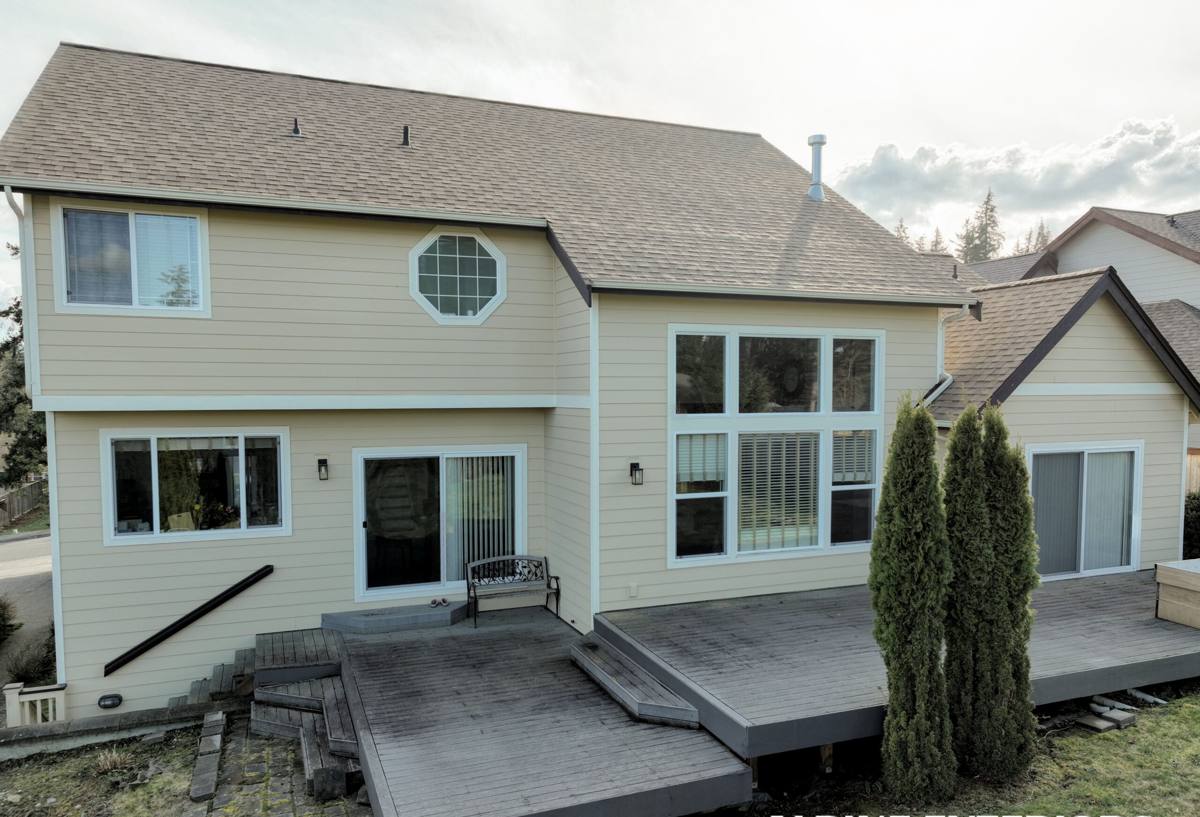
What Whatcom County's Climate Does to Windows Over Time
Lynden sits a bit further inland than the coastal parts of Whatcom County, so it doesn't take the direct salt exposure that homes right along Bellingham Bay or the Strait deal with. But it still sits inside the same marine weather system — the same long wet winters, the same driving rain events, and the same extended humid, mossy stretch from late fall through spring. Add in the moisture that comes off surrounding farmland and irrigation in the growing season, and Lynden homes get their own steady moisture load even without direct salt air.
Where the Damage Actually Starts
Almost none of it starts with the glass itself. It starts at the edges — the seals, the flashing, the sill, and the framing behind the window. Here's what we see repeatedly on service calls in this area:
- Wood or composite sills that stay damp long enough for rot to set in behind the trim
- Failed seals between the sash and frame that let driving rain push past the weep system
- Condensation building up on interior glass and frames during cold, humid stretches, which over time feeds mold at the sill
- Moss and algae holding moisture against exterior trim and caulk lines for weeks at a time
- Foggy or hazy glass from a failed insulated glass unit seal — a sign the argon fill and seal have already given out
- Warped vinyl frames on south- or west-facing exposures from repeated wet-dry cycling
Signs a Lynden Home Actually Needs Window Replacement
Not every window problem means full replacement — sometimes it's a caulking or flashing repair. But a few signs tell us the window itself, not just the seal around it, has reached the end of its useful life. If you're seeing more than one or two of these, it's worth a look:
- Fogging or a milky haze between the panes that never clears — the seal is gone
- Windows that are noticeably harder to open, close, or lock than they used to be
- Soft or spongy wood at the sill or jamb when pressed with a finger
- A draft you can feel even when the window is fully closed and locked
- Visible daylight or gaps around the frame from outside
- A jump in heating costs with no other explanation
- Paint or finish that's peeling or bubbling specifically around the window frame
What a Correct Window Replacement Job Actually Involves
Window replacement done right is mostly about what happens before the new window ever goes in. A lot of problems homeowners deal with a few years down the road trace back to this stage being rushed.
Full-Frame vs. Pocket Replacement
There are two basic approaches. Pocket (or "retrofit") replacement inserts a new window into the existing frame, keeping the old exterior trim and flashing in place. It's faster and less invasive, and it's a fine option when the existing frame and sill are still solid and dry. Full-frame replacement removes the window down to the rough opening, so we can inspect and, if needed, repair the framing, sill, and flashing underneath before anything new goes in. In a climate that pushes this much water at a house over the winter, we don't recommend a pocket install over a frame we haven't actually inspected — it can trap an existing moisture problem behind a brand-new window.
What We Check Before Anything Is Installed
- Condition of the rough opening, sill, and header framing
- Existing flashing and whether water has been getting behind the siding or trim
- Signs of past leaks, rot, or pest damage in the wall cavity
- Square and level of the opening, since older Lynden homes often have settled slightly over the decades
- Proper sizing so the new unit isn't shimmed excessively to fit a rough opening
Once the opening is confirmed sound, correct installation means a continuous flashing path that sheds water down and out (never trapping it), sill pan flashing under the window, low-expansion foam or backer rod and sealant at the right points (not foam everywhere, which can bow a frame), and exterior caulking that's actually rated for sustained wet exposure rather than a standard indoor-grade sealant.
Choosing the Right Window Type for This Climate
There's no single "best" window — the right choice depends on the home, the exposure, and the budget. Here's how the common options stack up for a climate like ours:
| Frame Material | How It Handles Our Climate | Maintenance | Typical Trade-Off |
|---|---|---|---|
| Vinyl | Good moisture resistance, won't rot; can flex slightly on hot south/west exposures | Low — occasional cleaning | Most affordable; frame color options are more limited |
| Fiberglass | Very stable in wet, humid, freeze-thaw swings; holds its shape well | Low | Higher upfront cost than vinyl |
| Wood-clad (wood interior, composite/aluminum exterior) | Exterior handles rain well; interior warmth and look | Moderate — exterior clad needs less attention than solid wood | Higher cost; installation sensitivity at the clad-to-frame joint |
| Aluminum | Durable but conducts cold, which can worsen condensation in our humid winters | Low | Best reserved for specific architectural needs, not general replacement |
For most Lynden homes, vinyl or fiberglass frames with a double- or triple-pane, low-E insulated glass unit strike the right balance of moisture resistance, energy performance, and cost. We'll walk through the actual options and warranty structures for whatever's available at the time, since manufacturer lineups shift — what matters more than the label is correct sizing, correct glass package for your home's exposure, and correct installation.
Our Process, Start to Finish
- Walkthrough and assessment — We look at every window being considered, check framing and sill condition where accessible, and note sun exposure and drainage around the home.
- Honest recommendation — We tell you which windows genuinely need replacement now, which could wait, and which just need a repair. We're not going to sell a full-house job when three windows are the actual problem.
- Written estimate — Clear pricing by window, including any framing or sill repair we expect to find once we open things up.
- Removal and inspection — Old units come out, and we inspect the rough opening before anything new goes in. If we find rot or water damage, we stop and talk it through with you before proceeding.
- Flashing and install — Sill pan flashing, correct sealant, proper shimming, and a flashing path that sheds water away from the framing.
- Interior and exterior finish — Trim, caulking, and touch-up work done to match the rest of the home.
- Final walkthrough — We check operation, seals, and finish work with you before calling the job done.
Cost Factors for Window Replacement in Lynden
Every home is different, so we're not going to quote a number here that doesn't mean anything until we've actually seen your windows. What we can tell you is what drives the price up or down:
| Factor | Effect on Cost |
|---|---|
| Pocket vs. full-frame replacement | Full-frame costs more but is often necessary once framing is exposed and checked |
| Frame material (vinyl, fiberglass, wood-clad) | Vinyl is typically the most affordable; fiberglass and wood-clad cost more upfront |
| Glass package (double vs. triple-pane, low-E coatings) | Better glass packages add cost but pay back through comfort and lower heating bills |
| Hidden framing or sill damage | Rot repair found during removal adds labor and material not visible in the initial estimate |
| Number of windows and access | Whole-house jobs typically bring a better per-window rate than one-off replacements |
| Custom sizes or shapes | Non-standard openings cost more than stock sizes |
Why Hiring a Crew That Already Works in Lynden Matters
A contractor who mainly works dry-climate jobs, or who's never dealt with a Whatcom County winter, doesn't have the same instinct for where water actually gets in around here. Knowing to check a sill for hidden rot before sealing it up, knowing which exposures take the worst of the driving rain, knowing how long the moss season really runs and what that means for exterior sealant choices — that comes from doing this work locally, season after season, not from a training manual.
It also matters for accountability. A local crew is still around next year if a seal needs a look or a warranty question comes up — not a name from a traveling sales crew that moved on to the next county. When you're trusting someone to open up your home's exterior wall, that kind of continuity is worth something.
Questions to Ask Before You Hire Anyone
- Do you inspect the framing and sill before installing, or just swap the window into the existing opening?
- What's your approach to flashing and sealing at the sill — walk me through it
- Are you licensed and insured to do this work in Washington?
- What warranty applies to the windows themselves, and separately, what warranty covers your installation labor?
- Can you give me a written, itemized estimate before work begins?
If you're seeing drafts, fogged glass, sticking sashes, or soft wood around your window frames, it's worth getting an honest look before another wet season adds to the damage. We offer free, no-pressure estimates for window replacement in Lynden and the surrounding area — fill out the form below and we'll take a look.