 Ferndale Window
 Fiber Cement Siding Built for Lynden's Weather
Lynden sits inland from the coast, but it doesn't escape what makes Whatcom County siding work different from siding work almost anywhere else. Marine air moves in off Bircham Bay and the Strait, driving rain arrives sideways more often than straight down, and a long gray stretch from October through April keeps exterior surfaces damp for days at a time. Add the shade from mature trees on many older Lynden lots, and you've got a near-perfect environment for moss, algae, and slow moisture intrusion to take hold on the wrong siding material.
We install James Hardie fiber cement siding exclusively, and we've done enough of it in this part of Whatcom County to know what actually holds up here versus what looks fine on a spec sheet. This page is about that one product, installed correctly, on homes in Lynden specifically — not a general siding overview.
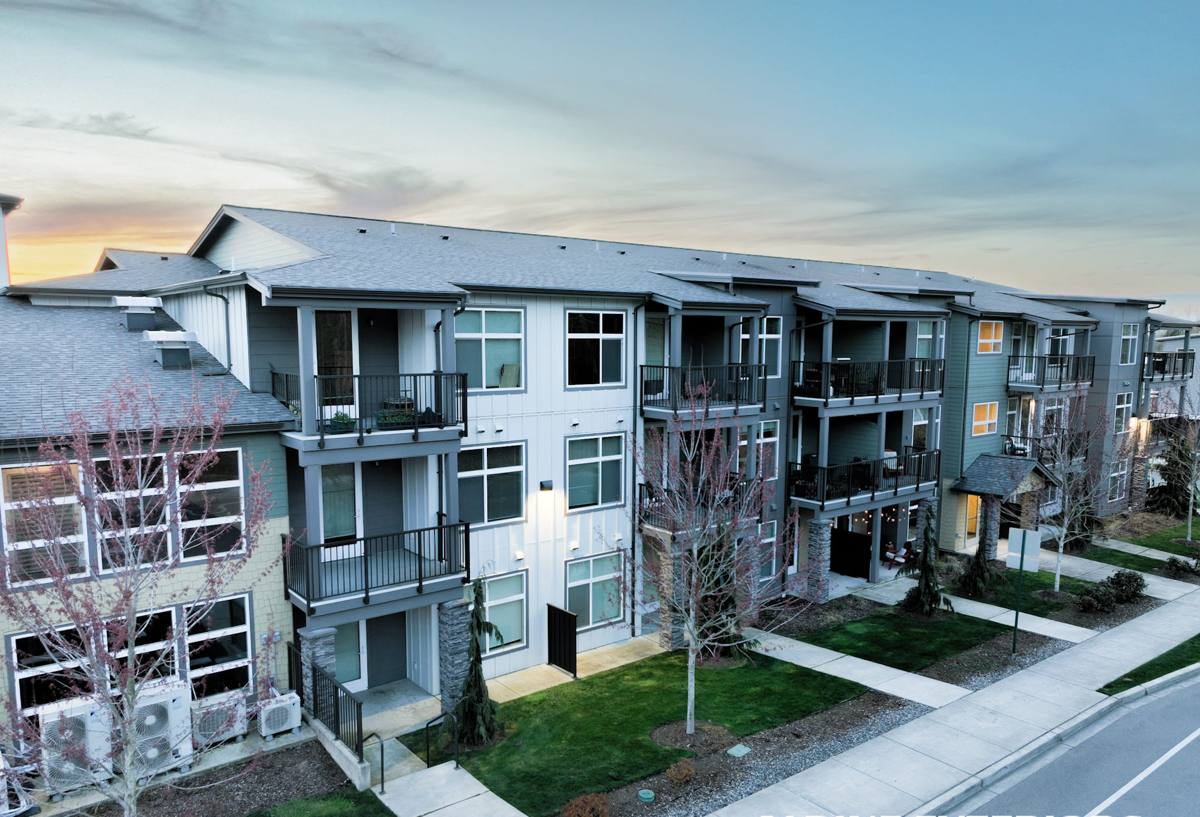
Why Lynden Homes Are Hard on Siding
A few things stack up against exterior materials here that don't get much attention until they've already caused a problem:
- Salt-tinged marine air — corrosive to unprotected metal fasteners and trim, and it accelerates the breakdown of lower-grade paints and coatings.
- Driving, wind-pushed rain — pushes water sideways into laps, seams, and butt joints that would stay dry in a calmer climate.
- Extended moss and algae season — shaded north walls and fence-lined lots stay damp long enough for organic growth to establish on porous or poorly finished surfaces.
- Temperature swings between summer heat and damp winter cold — this cycle stresses caulk, paint film, and any material that expands and contracts differently than the fasteners holding it.
None of this is exotic. It's just persistent, and persistent moisture exposure is what separates siding that looks good at year 3 from siding that still looks good at year 20.
What Correct Fiber Cement Installation Requires Here
Water Management Comes First
Fiber cement siding fails early almost exclusively because of installation mistakes, not because of the material itself. In a climate like Lynden's, the details that matter most are the ones you can't see once the job is finished:
- A drainable weather-resistive barrier behind the siding, not just a wrapped house.
- Rain screen furring strips or a similar drainage gap in higher-exposure applications, so bulk water has somewhere to go besides sitting against the wall sheathing.
- Correct minimum clearances — siding held up off decks, patios, and grade so splash-back and standing water don't wick into the bottom edge.
- Butt joints, corners, and penetrations flashed and sealed to shed water downward and outward, never trapping it.
- Fastener placement and spacing that follows Hardie's published installation instructions exactly, not "close enough."
Why This Matters More With Fiber Cement Than Vinyl
Fiber cement is dimensionally stable and doesn't warp or fade the way vinyl can, but it is a cementitious product — it needs to be kept from prolonged direct water contact at its cut edges and butt joints, and factory-primed or field-cut edges need to be sealed per Hardie's specifications. Skip that step and you've traded one set of problems for another. This is a big part of why we don't treat fiber cement as a material any competent crew can pick up on the fly. It rewards a crew that installs it constantly and punishes one that doesn't.
Why We Only Install James Hardie
We made a decision years ago to standardize on one fiber cement manufacturer rather than quote whatever a homeowner had seen at a box store. James Hardie is engineered specifically for regional climate zones — their HZ5 product line, appropriate for the Pacific Northwest, is formulated for the wet-freeze conditions common here. That's a meaningful difference from a generic fiber cement board with no climate engineering behind it.
Beyond the climate formulation, three things kept us from installing anything else:
- ColorPlus factory finish — baked-on, backed by its own finish warranty, and far more consistent than field-applied paint exposed to Lynden's damp cure times.
- Non-combustible core — a real consideration for homes near wildland-urban interface areas in Whatcom County, and something vinyl and wood products simply can't offer.
- A transferable warranty structure that holds up if the home sells, which matters in a market where houses change hands.
We don't install LP SmartSide, vinyl, Cemplank, Allura, or bare cedar or primed spruce siding. Each of those has legitimate uses in the right application, but none of them is the product we've chosen to put our name behind, and we'd rather be straightforward about that than quote something we don't fully stand behind.
Fiber Cement vs. Other Siding Options in Lynden's Climate
| Factor | James Hardie Fiber Cement | Vinyl | Untreated Wood/Cedar |
|---|---|---|---|
| Moss/algae resistance | High with ColorPlus finish | Moderate; surface stays clean but seams can trap moisture | Low; porous surface holds moisture and organic growth |
| Performance in driving rain | Strong when installed with proper drainage details | Moderate; seams and J-channels can allow wind-driven intrusion | Weak without diligent, frequent maintenance |
| Fire resistance | Non-combustible core | Combustible, can deform under heat | Combustible |
| Finish longevity | Factory-baked ColorPlus, warrantied | Color molded in, can fade unevenly over time | Requires repainting/staining every few years |
| Long-term maintenance | Periodic caulk/paint touch-up at seams | Low, but cracks/warps are not repairable, only replaceable | High; regular sealing, staining, and moss treatment |
Our Process for a Lynden Siding Job
1. Assessment and Measurement
We walk the exterior, check the condition of the existing wall assembly, and look specifically at drainage paths, grade clearance, and any areas already showing moss or moisture staining. This tells us if there's sheathing repair needed before new siding goes on — something we'd rather catch now than cover up.
2. Product Selection
We help you choose the right Hardie product line, plank exposure, and ColorPlus color for the home's style and exposure — a shaded north-facing wall in Lynden doesn't need the same consideration as a sun-exposed south wall.
3. Tear-Off and Prep
Old siding comes off, the weather-resistive barrier and drainage plane get installed or repaired, and any damaged sheathing is replaced before a single new plank goes up.
4. Installation to Spec
Fasteners, joint treatment, flashing, and clearances are installed to James Hardie's published specifications — not a shortcut version. This is the step that determines whether the siding performs for 30 years or needs attention in 5.
5. Final Detailing and Walkthrough
Trim, caulking, and touch-up finish work are completed, and we walk the exterior with you before calling the job done.
Pre-Project Checklist for Lynden Homeowners
- Note any exterior walls that stay damp or shaded longer than the rest of the house — these need extra attention during installation.
- Check for existing moss or algae buildup on the current siding, especially on north-facing or tree-shaded walls.
- Look at grade clearance — soil, mulch, or hardscape piled against the base of the wall accelerates moisture problems regardless of siding material.
- Ask any contractor you're considering how many Hardie installations they complete per year, not just whether they "can" install it.
- Confirm in writing which Hardie product line and finish warranty applies to your project before work begins.
Why Local Experience in Lynden Specifically Matters
A crew that only occasionally works this part of Whatcom County will default to generic installation practices. A crew that works Lynden regularly already knows which walls tend to hold moisture longest through the winter, how far the marine air's corrosive effect reaches inland, and where moss pressure is worst based on tree cover and sun exposure. That local pattern recognition changes real decisions on the job — where to add extra drainage detail, which trim needs upgraded fastener protection, and which walls need a more conservative clearance from grade. It's the difference between a correct installation on paper and one that's actually correct for this specific property.
What Homeowners Often Get Wrong About Fiber Cement Maintenance
Because fiber cement is so durable compared to wood, some homeowners assume it's maintenance-free. It isn't — it's low-maintenance, which is different. Caulked joints and trim intersections should be checked periodically, especially after a hard winter, and any hairline gaps re-sealed before they become a path for water. ColorPlus finish holds its color far longer than field-applied paint, but it still benefits from an occasional gentle wash to keep moss spores from establishing on north-facing or shaded sections. None of this is heavy upkeep — it's the kind of small attention that keeps a 30-plus-year product performing for its full lifespan instead of getting neglected until a problem shows up.
If you're weighing a siding replacement in Lynden, we're glad to walk your property, look at the specific conditions your home deals with, and put together a straightforward, no-pressure estimate — just fill out the form below.