 Ferndale Window
 Why Lynden's Climate Is Harder on Windows Than It Looks
Lynden sits back from the saltwater of Bellingham Bay along the Nooksack River, but that distance doesn't buy the town much protection. The same marine air that moves in off the Salish Sea still carries moisture and a fine salt content deep into Whatcom County's river valleys, and it settles into low-lying farmland like Lynden's just as readily as it does closer to the coast. Add in valley fog that can sit for days at a time, driving rain that comes in sideways during fall and winter storms, and a moss season that runs longer here than in drier parts of the state, and you have a climate that is quietly aggressive on window frames, seals, and glazing.
Lynden also gets something coastal Ferndale doesn't see as often: colder overnight lows in winter, especially during outflow events when cold air pushes down from the Fraser Valley across the border. That combination of damp summers and sharper winter cold cycles puts real stress on window seals and frame materials over the years. A window built for a mild, dry climate somewhere else in the country is not built for what Lynden actually throws at it.
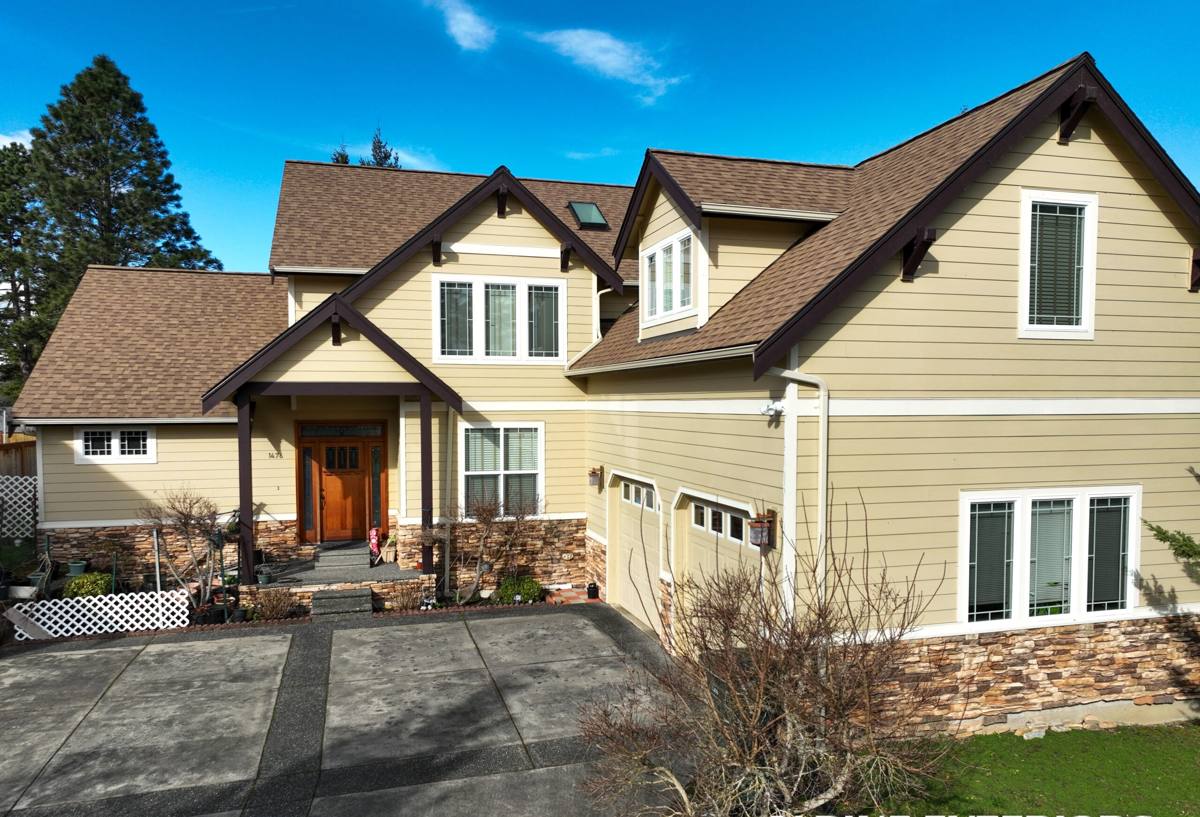
What "Custom" Actually Means for a Lynden Home
Custom doesn't just mean a nicer window. It means the window is built and installed to match the actual condition of your house, not a catalog assumption about what a house looks like.
Older Farmhouses and Non-Standard Openings
Lynden has a lot of older farmhouses and homes that have been added onto or updated over decades. Openings settle, framing shifts slightly, and original window sizes often don't match anything you'll find pre-made at a supply store. A custom window is measured and built to the actual opening in front of us, not the other way around.
Additions, Bump-Outs, and Mismatched Sightlines
When a home has had an addition or a room bumped out at some point, it's common to end up with two or three different window styles on one wall. Custom sizing and matching sightlines let us bring those openings back into visual alignment without tearing into more of the wall than necessary.
Signs Your Current Windows Are Already Losing the Battle
Most homeowners don't replace windows because they woke up one day and decided to. They replace them because the signs have been building for a while. In our experience working Whatcom County homes, these are the ones worth paying attention to:
- Condensation or fogging between the panes of glass, which means the seal has failed and the insulating gas has escaped
- A cold draft you can feel standing near the window even with it fully closed and locked
- Moss, algae, or dark staining building up on the sill or lower frame, especially on north-facing walls
- Wood trim that feels soft, spongy, or shows paint bubbling near the corners
- Windows that are difficult to open, close, or lock because the frame has swelled or warped
- Noticeably higher heating bills in winter with no other explanation
Any one of these on its own might not mean much. Two or three together, especially on the same window, usually mean the window has moved past the point where caulk and weatherstripping will fix it.
What a Correct Installation Actually Involves
The window itself only does part of the job. How it goes into the wall matters just as much, particularly in a climate that sees this much rain and moisture cycling.
Flashing and Moisture Management
Every window opening needs to be flashed so that any water that gets past the exterior siding or trim is directed back out, not down into the wall cavity. This is the step that gets skipped most often on rushed jobs, and it's the one that causes the most damage years later when nobody's looking at it.
Insulation and Air Sealing
The gap between the window frame and the rough opening needs to be filled correctly, not stuffed with whatever is on hand. Overpacking it can bow the frame; underfilling it leaves a cold, drafty gap. This is a detail that's easy to get wrong and expensive to fix once trim and siding are back on.
Interior and Exterior Trim
Trim isn't just cosmetic. On the exterior, it's part of the water management system. On the interior, it hides the insulation work and finishes the opening. Both need to be sealed and painted or finished correctly so moisture isn't finding a new way in around the edges.
Choosing Frame Material and Glass for a Damp, Cool Climate
There's no single "best" window for every home. The right choice depends on your home's style, your budget, and how much upkeep you want to take on. Here's how the common options generally compare for a Whatcom County home:
| Frame Material | How It Holds Up Here | Maintenance |
|---|---|---|
| Vinyl | Handles moisture well, doesn't rot; can flex slightly in temperature swings | Low — occasional cleaning |
| Fiberglass | Very stable in wet and cold cycles, holds paint well if a custom color is wanted | Low |
| Wood | Classic look for older or farmhouse-style homes, but needs protection from constant moisture | Higher — periodic painting or sealing |
| Wood-clad (wood interior, composite or metal exterior) | Good compromise — wood look inside, weather-resistant shell outside | Moderate |
On the glass side, a dual-pane unit with a Low-E coating and argon gas fill is the practical baseline for this climate — it cuts winter heat loss and reduces condensation risk on cold mornings. For homes with a lot of west or south sun exposure, a Low-E coating tuned to reduce solar heat gain can help keep upstairs rooms from overheating in summer without sacrificing winter warmth. We'll walk through which combination fits your home rather than defaulting to one option for every job.
Our Process, Start to Finish
- On-site assessment. We look at your existing windows, framing condition, and any moisture or rot issues before recommending anything.
- Custom measurement. Every opening is measured individually — we don't assume symmetry or standard sizing on an older or modified home.
- Material and glass selection. We go over frame material, glass package, and finish options based on your home and budget, not a one-size pitch.
- Written estimate. You get a clear, itemized estimate before any work is scheduled — no vague allowances.
- Removal and inspection. When we pull the old windows, we check the framing and sheathing underneath for hidden moisture damage before installing anything new.
- Installation, flashing, and sealing. The new window goes in with proper flashing, insulation, and air sealing — the steps that determine how it performs in ten years, not just on day one.
- Trim and finish work. Interior and exterior trim is completed and finished to match your home.
- Final walkthrough. We check operation, locks, and seals with you before calling the job done.
Why It Matters That We Already Work in Lynden
A crew that only shows up in a neighborhood once doesn't learn its quirks. Working regularly in and around Lynden means we're familiar with the kinds of homes common here — older farmhouses, mid-century ranch homes, and newer builds sitting on the same damp valley ground — and how each tends to age. That familiarity shows up in small but real ways: knowing what to expect when we open up an older wall, understanding how local permitting works for window replacement in Whatcom County, and being close enough to respond quickly if something needs a follow-up visit after a hard winter storm. It also means we're not guessing at how a window will hold up here — we're basing recommendations on what we've actually seen fail, and what's actually held up, on homes like yours.
Keeping Custom Windows Performing Through the Wet Season
A well-installed window still needs a little attention to get its full lifespan out of Whatcom County's weather. A few habits go a long way:
- Clear moss and organic debris off sills and tracks before it holds moisture against the frame
- Check exterior caulking each fall before the heavy rains set in, and touch up any cracked or shrunk sections
- Wipe down interior sills after heavy condensation events, especially during cold snaps
- Test that weep holes on vinyl and fiberglass frames are clear so water can drain out properly
- Have hardware — locks, hinges, and rollers — checked periodically so they're not forcing a frame out of alignment
None of this replaces a correct installation, but it protects the investment once the windows are in.
If your Lynden home has windows showing any of the signs above, or you're planning ahead for an addition or remodel, we're happy to take a look and put together a straightforward, no-pressure estimate — use the form below to get started.