 Ferndale Window
 Lynden's Climate Puts Real Demands on Siding
Lynden sits inland from Bellingham Bay in the Nooksack River valley, a stretch of Whatcom County where agriculture meets a marine-influenced Pacific Northwest climate. That combination is tougher on exterior siding than most homeowners realize. Moist air moving in off the Salish Sea carries salt content that accelerates corrosion of fasteners and finishes, even this far inland. Add driving rain that comes in sideways during winter storms, and siding needs to shed water at every seam, not just at the face.
Then there's moss. Whatcom County's long, overcast, wet season — often stretching from October through April — keeps siding damp for extended periods, especially on north-facing walls and anywhere tree cover or fencing blocks sun and airflow. Moss and algae don't just look bad; they hold moisture against the siding surface for weeks at a time, which is exactly the condition that causes rot, delamination, and coating failure in lesser materials.
Rural and semi-rural properties around Lynden also see more open exposure to wind-driven rain than tightly packed neighborhoods closer to town, since fewer structures and mature windbreaks mean weather hits walls at fuller force. All of this adds up to one conclusion: siding in this area has to be chosen and installed with the climate in mind, not just the budget.
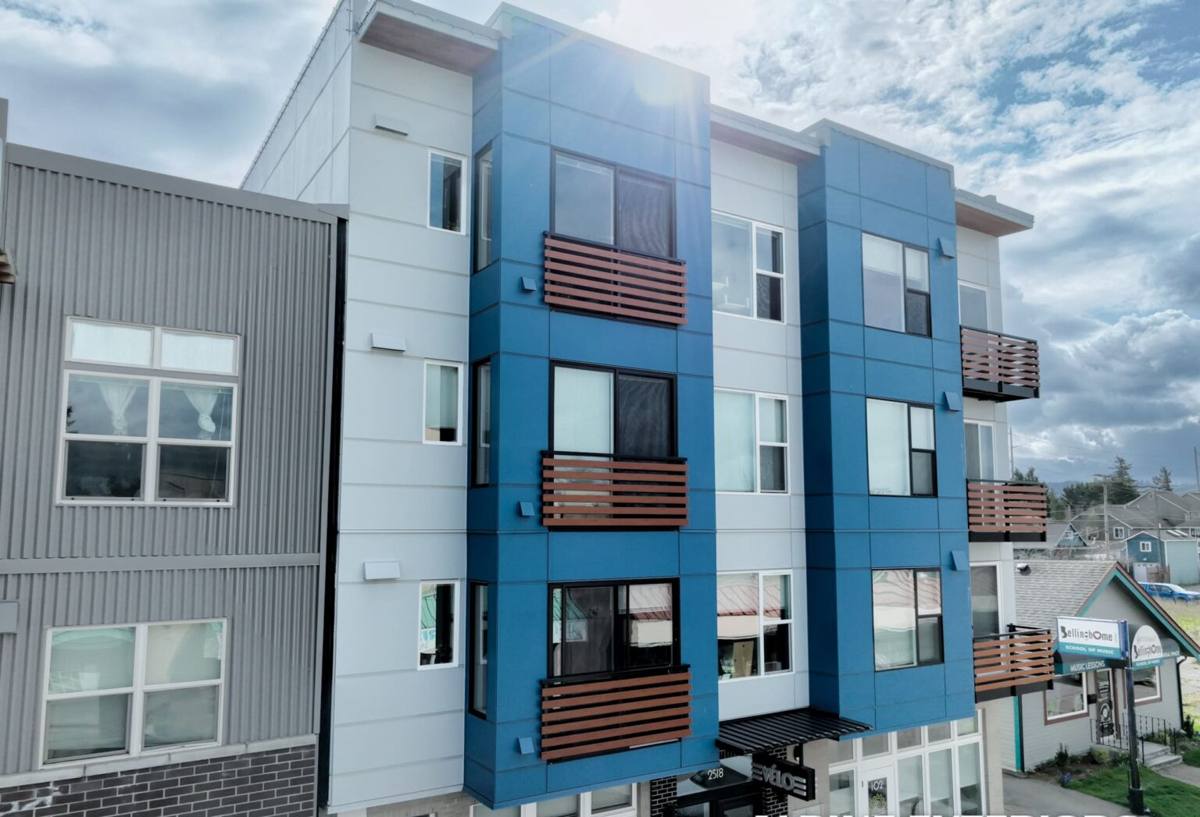
Signs a Lynden Home Needs Siding Replacement
Siding failure in this climate rarely shows up as one dramatic problem — it's usually a pattern of small signs that add up over a few seasons. Homeowners should watch for:
- Persistent moss or dark algae staining that returns within weeks of cleaning
- Soft spots, bubbling, or visible swelling, especially near the bottom courses and around window trim
- Paint that's chalking, peeling, or needing repainting far more often than it used to
- Warping, buckling, or gaps opening up between siding boards or panels
- Visible rot or crumbling at butt joints, corners, and anywhere siding meets trim or foundation
- Rising energy bills that suggest wall moisture or lost insulation value behind the cladding
Any one of these can be a minor repair. Several showing up together, or showing up on a home more than 15-20 years old with wood-based or engineered wood siding, usually means the underlying material or the original installation has reached its limit.
Why We Install Only James Hardie Fiber Cement
We don't install LP SmartSide, vinyl, Cemplank, Allura, primed spruce, or cedar. That's a deliberate standard, not a lack of options, and it comes directly from what this climate does to each of those materials over time.
Vinyl siding is affordable and low-maintenance in mild climates, but it's a thin plastic product that expands, contracts, and can become brittle in cold snaps. It also doesn't hold paint, so color choices are locked in for the life of the product, and heavy wind-driven rain can find its way behind loose-fitting panels. Engineered wood products like LP SmartSide use wood strand cores that perform well when installation and caulking are perfect and maintained forever — but any breach in that seal, which is common in a wet climate with constant freeze-thaw cycling, lets moisture into the wood fiber core, and swelling follows. Cedar and primed spruce are real wood, and real wood in a climate this damp needs vigilant refinishing, caulking, and moss management to avoid rot — it's a beautiful look that demands a maintenance schedule most homeowners don't keep up with.
James Hardie fiber cement is cement, sand, and cellulose fiber — it doesn't have an organic core to rot, it's non-combustible, and it holds a factory-applied ColorPlus finish that's baked on and warranted separately from the substrate. Hardie also engineers specific product lines (HZ5 and HZ10) for different climate zones, which matters in a county that sees both marine moisture and colder winter snaps. It's the material we've found actually holds up to Whatcom County weather without demanding constant homeowner upkeep.
What This Looks Like in Practice
| Material | Moisture Behavior | Maintenance Burden | Finish Life |
|---|---|---|---|
| James Hardie fiber cement | Non-organic core, doesn't rot or swell | Low — occasional wash, no refinishing | ColorPlus factory finish, separately warranted |
| Vinyl | Sheds water at face; seams can allow intrusion | Low, but can't be repainted, becomes brittle over time | Fades, no refinishing option |
| LP SmartSide / engineered wood | Wood-strand core swells if seal is breached | High — caulking and paint upkeep is critical | Field-applied paint, needs recoating cycles |
| Cedar / primed spruce | Organic wood, absorbs moisture directly | Highest — refinishing, moss control, rot inspection | Field-applied, shortest recoat interval |
What Correct Siding Replacement Actually Involves
Replacing siding is more than swapping old boards for new ones. Done right, it's a full envelope inspection and rebuild:
Tear-Off and Sheathing Inspection
Old siding comes off down to the sheathing, and that sheathing gets inspected for rot, soft spots, or prior water damage — problems that are invisible until the siding is off the wall. Any compromised sheathing gets replaced before anything new goes up; covering damaged sheathing with new siding just hides the problem for the next owner to find.
Weather-Resistive Barrier and Flashing
A correctly installed weather-resistive barrier (WRB) and properly integrated flashing at windows, doors, and penetrations are what actually keep driving rain out of the wall assembly — the siding itself is the first line of defense, not the only one. This is where a lot of siding jobs go wrong even when the material itself is good.
Installation to Manufacturer Spec
James Hardie publishes specific fastening patterns, clearances, and gapping requirements, and following them is what keeps the warranty valid and the product performing as engineered. Nail placement, board overlap, and clearance from decks, patios, and grade all matter more in a wet climate than a dry one.
Trim, Caulking, and Paint Touch-Up
Factory-finished ColorPlus siding needs minimal field painting, but trim, cut edges, and touch-up areas still need to be sealed and finished correctly to match the warranty's requirements.
Our Process for Lynden Projects
- On-site assessment — we look at current siding condition, sheathing access points, moss and moisture patterns specific to the property's sun exposure and wind orientation
- Product and color selection — matching the right Hardie plank profile, texture, and ColorPlus color to the home's style and the property's climate exposure
- Tear-off and sheathing repair — removing old material and addressing any rot or damage found underneath before it's covered again
- WRB, flashing, and Hardie installation to spec — the sequencing that actually determines how the wall performs in driving rain
- Final trim, caulking, cleanup, and walkthrough — including a review of the manufacturer's transferable warranty
Because we work Lynden and the surrounding Whatcom County area regularly, we're familiar with the mix of older farmhouses, mid-century homes, and newer construction found here, and with the specific moisture and moss patterns tied to this valley's exposure. That local familiarity shortens the assessment phase and helps us catch problems — like sheathing damage behind old siding on a shaded wall — before they become surprises mid-project.
Cost Factors to Expect
| Factor | Why It Affects Price |
|---|---|
| Sheathing condition | Rot or water damage found during tear-off adds repair scope |
| Home size and wall complexity | More corners, dormers, and trim details mean more labor per square foot |
| Siding profile and accessories | Lap width, trim boards, and soffit/fascia work change material cost |
| Access and site conditions | Rural lots, landscaping, or difficult staging can affect labor time |
| Existing material removal | Multiple layers of old siding or hidden damage add disposal and labor |
We give straightforward, honest estimates after seeing the property in person — broad ranges without an on-site look aren't useful to homeowners trying to plan a real project.
What to Ask Before Hiring a Siding Contractor
- Are they a certified or experienced installer of the specific product being proposed?
- Will they inspect and address sheathing condition, not just install over what's there?
- Do they follow manufacturer fastening and clearance specs, and can they explain what those are?
- Is the product warranty transferable, and is it separate from workmanship coverage?
- Do they have experience with homes in this specific climate and region, not just siding in general?
- Are they licensed and insured for exterior work in Washington State?
A contractor who can answer these clearly, without hedging, is usually one who does the work correctly the first time — which matters more in a climate this unforgiving of shortcuts.
Ready to Talk Through Your Siding Options?
If moss, moisture, or aging siding are showing up on your Lynden home, we're happy to take a look and give you a straightforward assessment — no pressure, no sales script. Fill out the form below for a free estimate, and we'll walk you through what your home actually needs.