 Ferndale Window
 Why Semiahmoo Decks Wear Out Faster Than Homeowners Expect
If you live near Semiahmoo, you already know your deck doesn't age the same way a deck fifty miles inland does. The combination of salt-laden air off the water, long stretches of driving rain, and a moss season that seems to start earlier every year puts real, ongoing stress on any outdoor structure. It's not one dramatic event that takes a deck down — it's the slow accumulation of moisture cycling in and out of the wood, fasteners corroding a little more with every wet season, and organic growth holding water against surfaces that were never meant to stay damp.
Whatcom County's marine climate means decks here spend more of the year wet than dry. A deck built with inland assumptions — standard hardware, minimal ventilation under the framing, no real plan for shedding water away from the house — tends to show real problems years before it should. That's the pattern we see most often when we're called out to look at a "repair" that turns out to need a full replacement.
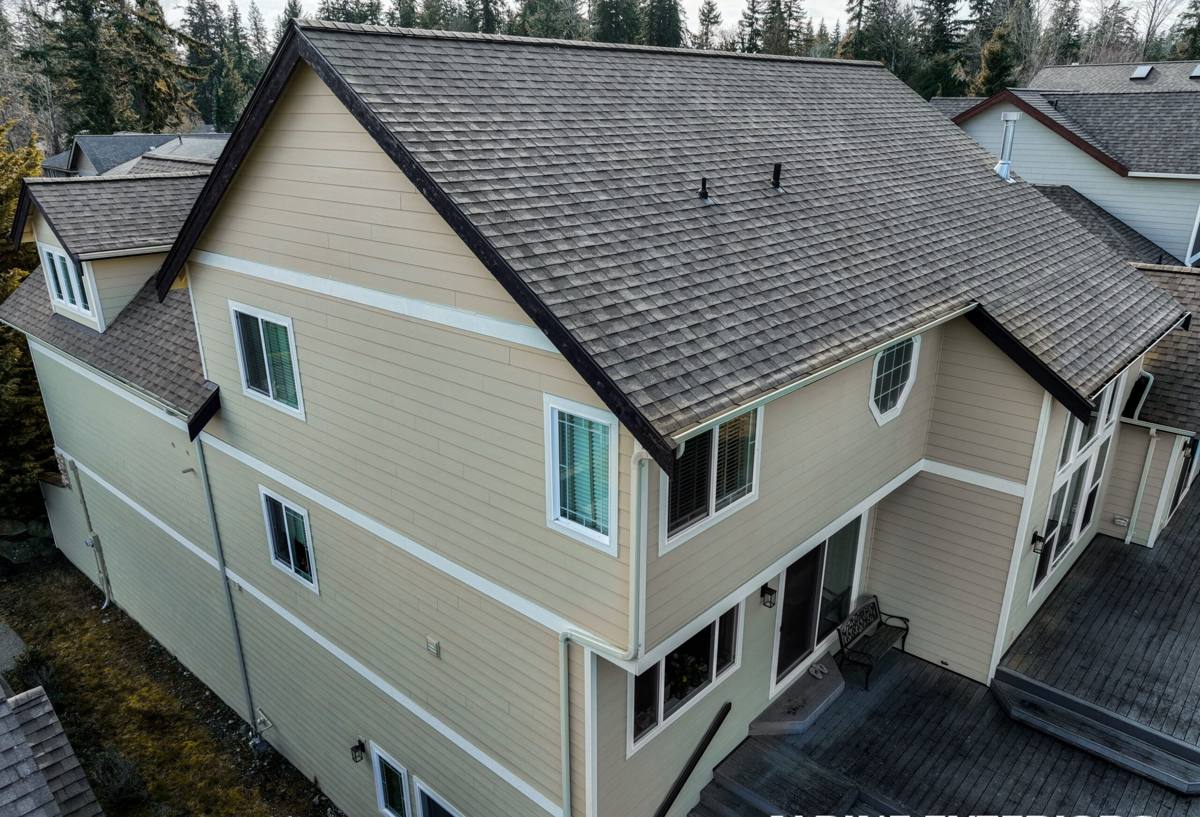
Signs Your Semiahmoo Deck Needs Replacing, Not Just Repair
Not every tired-looking deck needs to be torn out. But there's a point where patching boards and re-staining stops being worth it, and pushing past that point usually means throwing money at cosmetic fixes while the structure underneath keeps failing. Watch for:
- Soft, spongy spots in the decking or framing when you walk across them, especially near the house or in shaded corners
- Rust streaking down from fasteners, joist hangers, or railing posts
- Persistent moss or algae film that comes back within weeks of cleaning
- Gaps opening up where the ledger board meets the house, or any staining on the siding above the deck
- Railing posts that flex or feel loose at the base
- Visible cracking or checking that runs deep into the board rather than just the surface
Any one of these on its own might be repairable. Several together, especially involving the ledger connection or the framing, usually mean the structure has been absorbing water for longer than it looks like from the surface.
The Ledger Board Is the Real Tell
Where the deck attaches to the house is the single most important connection on the whole structure, and it's also the one most likely to be hiding trouble. In a climate that gets as much sustained rain as ours does, a ledger board that wasn't properly flashed when it was installed will trap water against the house framing for years before anyone notices. If we find soft wood, staining, or a musty smell anywhere near that connection, that's usually the moment a repair conversation turns into a replacement conversation.
What a Correct Deck Replacement Actually Involves
A deck replacement isn't just pulling up old boards and screwing down new ones. Done right, it's a full rebuild of everything that keeps the structure sound for the next several decades, not just the next few summers.
Foundation and Footings
Footings get inspected and, where needed, replaced or reinforced to current standards. In our soil and moisture conditions, footing depth and drainage around the post base matter — a footing that holds standing water against a post will shorten its life no matter what the post is made of.
Framing and Ledger Flashing
This is where most of the long-term performance of a deck gets decided, and it's largely invisible once the decking goes down. Correct flashing at the ledger board, proper joist hangers rated for the load and the environment, and enough airflow underneath the deck to let framing dry out between rain events all matter more than the decking material on top.
Decking, Railings, and Stairs
The visible surface — decking boards, railings, stair treads — is what you'll actually live with day to day. It's also where material choice has the biggest impact on how much upkeep you're signing up for.
Choosing Decking Material for a Salt Air, Wet-Winter Climate
There's no single "best" decking material — there's a best material for your budget, your maintenance appetite, and how directly your deck is exposed to salt air and standing moisture. Here's how the common options actually perform in conditions like Semiahmoo's:
| Material | Upfront Cost | Maintenance in This Climate | Typical Lifespan |
|---|---|---|---|
| Pressure-treated wood | Lowest | Annual cleaning and re-sealing to resist moss and moisture absorption | 10-15 years with consistent upkeep |
| Cedar | Moderate | Regular sealing to slow silvering and prevent moisture wicking | 15-20 years, more with diligent care |
| Composite | Higher | Periodic washing; far less sealing, but the frame underneath still needs full protection | 20-25+ years depending on product line |
| PVC / capped polymer | Highest | Low; fully resists moisture rot but can get slick with algae film if not cleaned | 25+ years |
We're selective about which composite and PVC product lines we install. Not every manufacturer's boards handle constant moisture cycling equally well, and warranty structures vary a lot between brands. We'll walk you through the specific products we trust for coastal exposure and why, rather than pushing whatever has the best margin.
A Note on Wood
Cedar and pressure-treated lumber are honest, proven choices, and plenty of homeowners prefer the look and feel of real wood. The trade-off in this climate is maintenance discipline — skip a season of sealing and moisture gets a head start that's hard to reverse. If you want wood, we'll be straight with you about the upkeep schedule that keeps it looking and performing the way it should.
Hardware and Fasteners: Where Salt Air Does the Most Damage
This is the part of a deck replacement homeowners rarely think about, and it's often the first thing to fail near the water. Standard galvanized fasteners and hardware can corrode noticeably faster within a mile or two of saltwater exposure than they would inland. Once a fastener starts rusting, it weakens the connection it's holding — and on a deck, that connection might be a stair stringer or a railing post.
For homes with real salt air exposure, we typically recommend stepping up to stainless steel fasteners and connectors, particularly at railing posts, stair stringers, and any hardware that's directly exposed to weather rather than tucked under decking. It costs more up front. It also means you're not chasing rust stains and loose railings five years in.
Our Deck Replacement Process
- On-site assessment — we inspect the existing deck, ledger connection, footings, and framing to confirm what's actually failing before recommending a full replacement
- Design and material selection — we walk through decking, railing, and hardware options suited to your home's exposure and your budget
- Permitting — we handle the permit application for the jurisdiction your property falls under
- Demolition — full removal of the old deck, checking the framing and house connection as we go
- Rebuild — new footings as needed, properly flashed ledger board, code-rated framing and hangers, then decking, railings, and stairs
- Final walkthrough — we go over the finished deck with you, including what maintenance it does and doesn't need
Permits and Local Considerations
Most attached deck replacements — especially anything involving new footings, a raised structure, or railing changes — require a building permit in Whatcom County jurisdictions. Whether your project falls under county or Ferndale city review depends on exactly where the property sits, and that determines which building department's requirements apply and what inspections get scheduled along the way. We handle this as part of the project so you're not the one tracking down which office to call.
Beyond permitting, being close to the water means wind and moisture exposure are usually a bigger practical factor in the build than most inland code minimums account for. We build to hold up to the exposure your specific lot actually gets, not just to the minimum that passes inspection.
Maintaining a New Deck in Semiahmoo's Climate
A well-built deck still needs some seasonal attention in this climate — the difference is that a correctly built one needs a lot less, and what it does need is straightforward:
- Sweep debris and standing leaves off the deck regularly, especially in fall and through the wet months
- Clean moss and algae film off decking and stairs before it gets slick — a stiff brush and deck cleaner is usually enough
- Check railing posts and stair connections once a year for any looseness
- Keep the area under the deck clear so air can still move and framing can dry between rain events
- For wood decking, re-seal on the schedule your material calls for — don't wait until it's visibly gray or dry
- Rinse salt residue off metal hardware and railings periodically if your deck faces the water directly
Why It Matters That We Already Work in Semiahmoo
Deck-building fundamentals don't change from one town to the next, but the details that determine whether a deck lasts 12 years or 25 do change with exposure. A crew that regularly works this stretch of Whatcom County has already seen how ledger flashing performs after a few wet winters here, which hardware actually holds up against salt air instead of just resisting it on paper, and where moss tends to take hold first on decks with this kind of sun and shade pattern. That's not something you get from a general contractor working a deck in Semiahmoo for the first time — it comes from doing this specific work, in this specific climate, repeatedly.
If your deck is showing its age, we're happy to take a look and give you a straight answer about whether it needs a repair or a full replacement — no pressure, no obligation. Reach out below for a free estimate.