 Ferndale Window
 Semiahmoo's Coastal Climate Is Hard on Siding
Semiahmoo sits right where Whatcom County meets saltwater, and that location shapes everything about how siding performs here. Homes on this stretch of coast deal with a combination most inland Ferndale properties never face: airborne salt, near-constant humidity, wind-driven rain off the water, and long stretches of gray, damp weather that give moss and algae months at a time to take hold. Siding that would hold up fine twenty minutes inland can start showing real wear within a few years out here.
That doesn't mean coastal homes are doomed to constant repairs. It means the material and the installation both have to be matched to the environment, not just picked off a shelf because it's the cheapest option at the yard. We've replaced siding on enough waterfront and near-waterfront homes in this part of Whatcom County to know which failures are preventable and which materials simply aren't built for salt exposure.
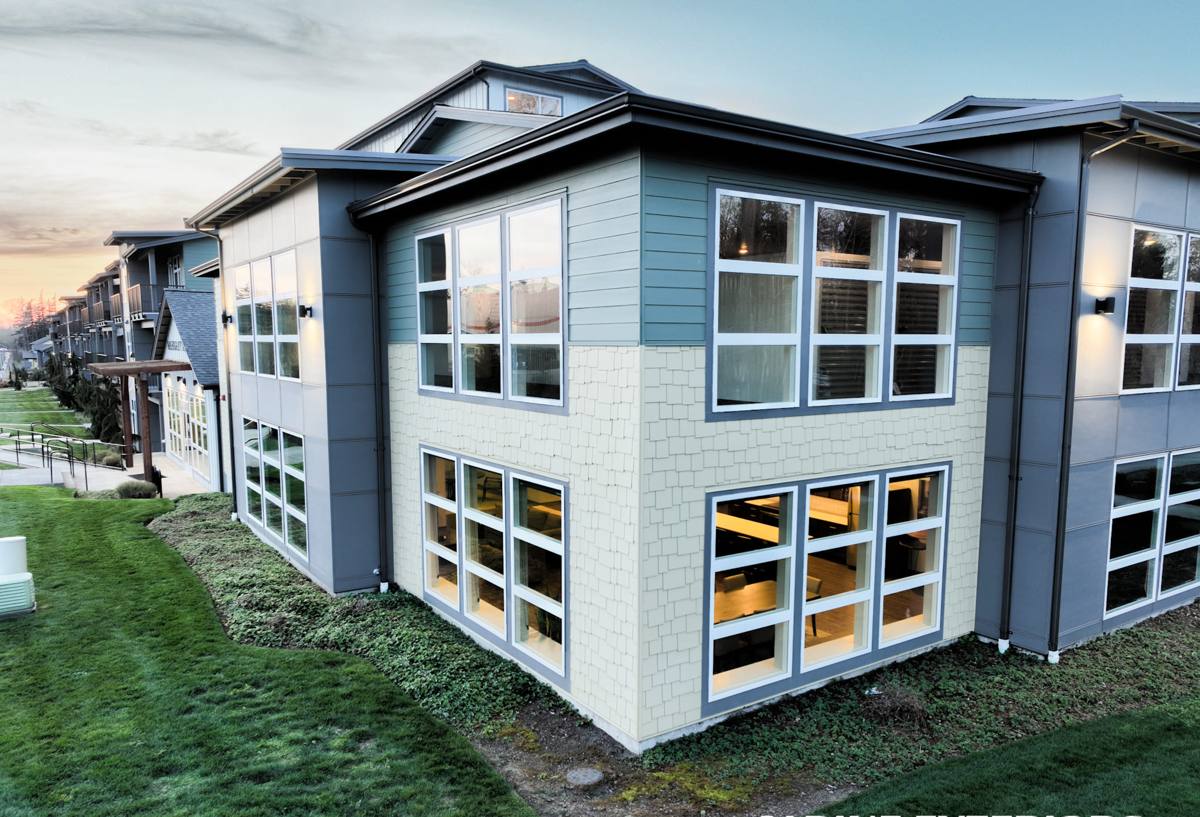
How Salt Air, Rain, and Moss Actually Damage Siding
It helps to understand the mechanics, because it explains why some materials fail faster than others near the water.
Salt Air
Airborne salt is corrosive to metal fasteners, flashing, and trim, and it's abrasive to painted and coated surfaces over time. On siding with a factory finish that isn't rated for marine exposure, salt-laden air accelerates fading, chalking, and coating breakdown well ahead of the manufacturer's stated timeline.
Driving Rain
Wind off the water doesn't just drop rain straight down — it drives it sideways, into laps, seams, and butt joints that were never designed to shed water at that angle. Any siding installed with tight clearances, poor flashing, or caulk relied on as a primary water barrier is going to let moisture in eventually. Once water gets behind the siding, the framing and sheathing underneath are what actually pay the price.
Moss and Algae
Whatcom County's damp season runs long, and shaded, north-facing, or tree-covered walls near Semiahmoo can stay wet for days after a storm passes. That moisture supports moss and algae growth on porous or textured surfaces, which in turn holds even more moisture against the siding and, on wood-based products, accelerates rot from the surface inward.
Signs Your Semiahmoo Home's Siding Is Failing
Because coastal wear can be gradual, a lot of homeowners don't realize how much damage has accumulated until it's visible from the street. Watch for:
- Soft or spongy spots when you press on the siding, especially near the bottom courses and around windows
- Persistent moss or dark streaking that comes back within weeks of cleaning
- Paint that's chalking, peeling, or fading noticeably faster on the ocean-facing side of the house
- Visible warping, cupping, or gaps opening up at seams and butt joints
- Bubbling or staining on interior walls near exterior corners, which usually means water is already behind the siding
- Fastener heads showing rust streaks or starting to back out
Any one of these is worth a professional look. Several at once usually means the siding system as a whole — not just the finish — has reached the end of its useful life.
Why We Install Only James Hardie Fiber Cement
We standardized on James Hardie fiber cement siding across every job we take on, including here in Semiahmoo, and we don't install vinyl, LP SmartSide, primed spruce, or cedar. That's a deliberate professional standard, not a sales pitch, and it's worth explaining why.
Fiber cement is made from cement, sand, and cellulose fibers — it doesn't absorb moisture and swell the way engineered wood products can, and it doesn't soften, warp, or become brittle in temperature swings the way vinyl can. It's also non-combustible, which matters increasingly to insurers and homeowners alike. Hardie in particular manufactures its products in climate-specific "HZ" formulations engineered for regional conditions, including moisture and moss resistance suited to Pacific Northwest exposure. The factory-applied ColorPlus finish is baked on under controlled conditions rather than field-painted, which gives it far more consistent, long-lasting protection against the fading and chalking that salt air accelerates.
None of that means other products are worthless — vinyl and engineered wood work fine in a lot of settings, and plenty of homes wear them without issue. But on a coastal property in a marine climate like Semiahmoo's, the trade-offs of those materials — moisture sensitivity, coating longevity, long-term maintenance — are exactly the failure points that show up first and worst near saltwater. We'd rather put one material on every home we touch and stand behind it fully than install something we know is a compromise in this specific environment.
What Correct Siding Replacement Involves
Siding replacement is not just swapping old panels for new ones. The parts you don't see after the job is done are what actually determine whether it holds up through the next twenty Whatcom County winters.
Tear-Off and Sheathing Inspection
Once the old siding comes off, the sheathing underneath gets a real inspection — not a glance. Any rot, soft spots, or water-damaged framing found at this stage gets addressed before anything new goes on. Covering up existing damage with new siding just locks the problem inside the wall.
Weather-Resistive Barrier and Flashing
A correctly installed weather-resistive barrier, with properly lapped and sealed seams, is what actually keeps water out — the siding itself is the first line of defense, not the only one. Flashing at windows, doors, and any horizontal trim needs to direct water outward and downward, not create a shelf for it to sit on. This is where a lot of the driving-rain problems common near the water get solved before they start.
Fastening and Clearances
Hardie siding has specific fastening patterns and clearance requirements — gaps at grade, decks, roof lines, and other siding-to-trim junctions — that are spelled out by the manufacturer for a reason. Skipping them doesn't usually cause a visible problem on day one; it shows up two or three years later as trapped moisture or premature wear at exactly those points.
Finish, Caulking, and Trim
Caulk is a detail, not a strategy. It should seal seams that are already well-flashed and well-lapped, not act as the only thing standing between your framing and the weather. Trim gets back-primed and installed with the same attention to water management as the field siding.
Our Process From Estimate to Final Walkthrough
We keep the process straightforward and communicate at each stage, especially since coastal jobs sometimes turn up sheathing issues that aren't visible until the old siding is off.
- Free on-site estimate — we walk the exterior, check for signs of moisture intrusion, and talk through what your home specifically needs given its exposure and orientation.
- Written scope and quote — a clear breakdown of materials, prep work, and what's included, with no vague allowances hiding future upcharges.
- Prep and tear-off — old siding comes off, sheathing gets inspected, and any repairs are reviewed with you before we cover them up.
- Weather barrier, flashing, and Hardie installation — installed to manufacturer spec, with the fastening and clearance details that matter most in a marine climate.
- Final walkthrough and cleanup — we go over the finished work with you and make sure the site is left clean.
Siding Materials Compared for Coastal Exposure
| Material | Moisture Behavior Near Saltwater | Finish Longevity | Combustibility |
|---|---|---|---|
| James Hardie Fiber Cement | Does not absorb and swell; engineered HZ formulations for regional moisture and moss exposure | Factory ColorPlus finish, built for long-term color retention | Non-combustible |
| Vinyl | Doesn't rot, but can warp, crack, or become brittle with temperature swings and impact | Color is through the material but can chalk and fade; not repaintable without prep | Combustible, can melt or deform near heat sources |
| LP SmartSide (engineered wood) | Wood-based core is moisture-sensitive if the finish is compromised at cuts or seams | Factory-treated but relies on maintained caulking and touch-up at edges | Combustible |
| Cedar / Primed Spruce | Natural wood, most vulnerable to rot, moss, and swelling in sustained damp conditions | Requires ongoing painting, staining, or sealing to hold up | Combustible |
What Affects the Cost of a Siding Replacement
Every home is different, but a few factors consistently move the price of a coastal siding job up or down:
| Factor | Why It Matters |
|---|---|
| Sheathing condition | Rot or water damage found during tear-off means repair costs before new siding can go on |
| Home size and complexity | More corners, dormers, and trim details mean more labor and material waste |
| Siding profile and accessories | Lap width, trim style, and corner details all affect material cost |
| Access and site conditions | Waterfront lots, steep grades, or limited staging area can add setup time |
| Existing paint or coating removal | Some tear-offs require extra care or disposal handling depending on the old material |
We don't finalize pricing until we've actually seen the house and can quote the real scope, not a guess based on square footage alone.
Choosing a Contractor Who Actually Works Semiahmoo
A crew that's only worked inland jobs isn't automatically wrong for a coastal house, but experience with marine exposure does change how a job gets scoped and built. Before hiring anyone for siding work this close to the water, it's worth checking:
- Do they ask about wind and rain exposure on your specific elevations, or quote the same way for every house?
- Do they inspect and discuss sheathing condition as a normal part of the process, not an unpleasant surprise mid-job?
- Can they explain their flashing and weather-barrier approach in plain terms, not just "we seal everything with caulk"?
- Are they installing to the manufacturer's documented fastening and clearance specs, and can they say so directly?
- Do they carry proper licensing and insurance, and are they willing to put the scope of work in writing?
- Will they stand behind the installation with a warranty, not just point to the manufacturer's material warranty?
Salt air and driving rain don't forgive shortcuts the way a drier inland climate sometimes does. A contractor with real coastal experience will scope the job differently from the start.
If your Semiahmoo home's siding is showing wear, or you're planning ahead before the next wet season sets in, we're happy to take a look and give you a straightforward, no-pressure estimate. Use the form below to get started.