 Ferndale Window
 Building New in Semiahmoo: What Your Windows Need to Handle
If you're building a new home in Semiahmoo, you already know this stretch of Whatcom County isn't like building inland. You're close enough to the water that salt-laden air is a daily fact of life, driving rain off the Strait shows up sideways more often than straight down, and the shaded, damp stretches of the calendar here can run long. New-construction windows are your one chance to get the water management, hardware selection, and flashing details right before siding, trim, and interior finishes close everything up. Get it right at this stage and you won't touch it again for decades. Get it wrong and it's hidden behind drywall until a stain or a soft spot in the sill tells you otherwise.
This page is specifically about new-construction window installation for homes going up in the Semiahmoo area — not a repair job, not a retrofit into an existing wall, but windows installed into open framing as part of a new build. That distinction matters more than most homeowners realize, and it changes almost everything about how the job should be done.
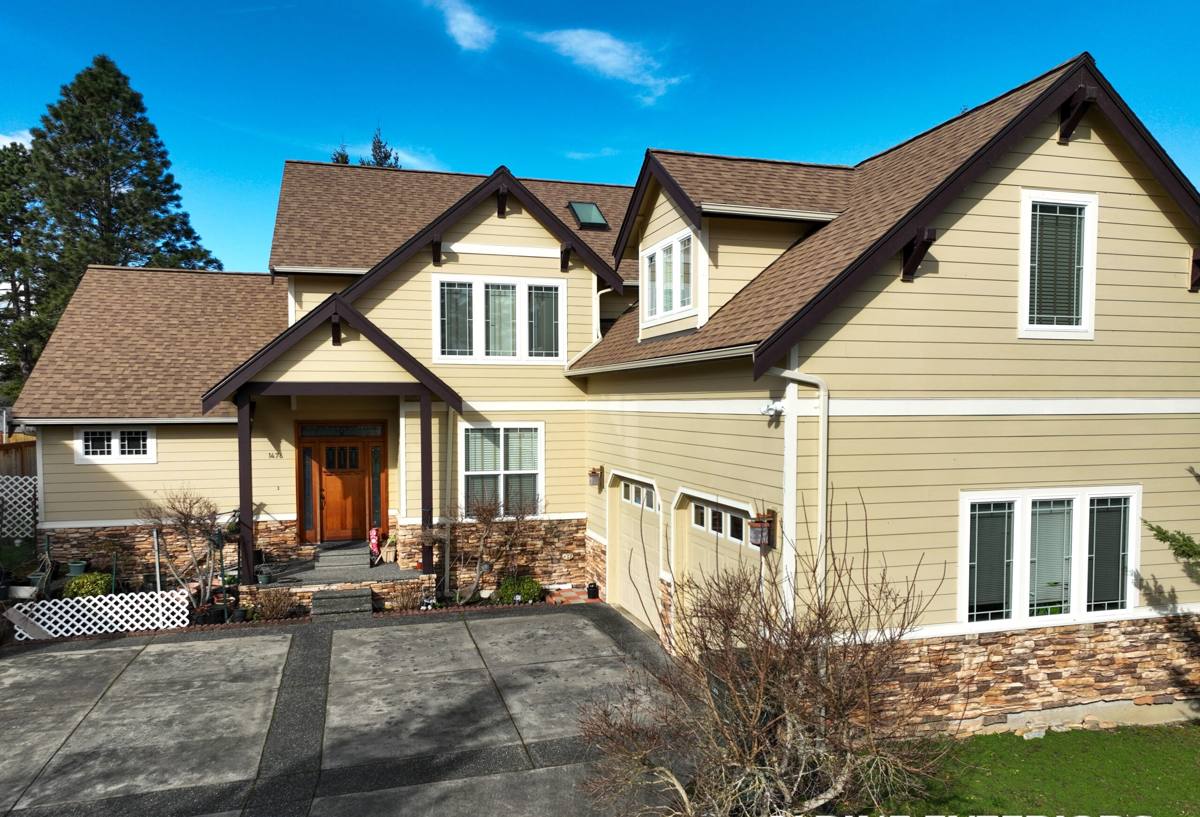
The Climate Factor: Salt Air, Driving Rain, and Moss
Three things drive most of the window decisions we make for homes in this part of Ferndale and the surrounding shoreline communities:
Salt Air
Proximity to Semiahmoo Bay and the Strait means airborne salt settles on everything — hardware, screens, and exposed fasteners included. Over years, salt exposure accelerates corrosion on lower-grade metal components and can dull or pit finishes that weren't specified for a marine-adjacent environment. This is a hardware and finish conversation as much as it is a glass conversation.
Driving Rain
Wind off the water pushes rain into wall assemblies at angles that a lot of standard flashing details simply weren't designed for. New construction gives you the advantage of building the drainage plane correctly from the studs out — something you can't fully fix later without opening the wall back up.
A Long Moss Season
Whatcom County's wet, mild stretch of the year runs long, and shaded elevations or north-facing walls stay damp for months at a time. Sills, trim, and any wood components around a window opening need a real plan for shedding water and drying out — not just resisting it once.
None of this means Semiahmoo is a hard place to build. It means the standard details need to be followed correctly and not skipped to save an afternoon, because this climate finds every shortcut eventually.
New Construction vs. Replacement: Why the Job Is Different
Homeowners sometimes assume "installing a window" is the same job whether it's new construction or a retrofit. It isn't.
- Access to the rough opening: In new construction, we're working with open studs, house wrap, and a rough opening built to spec — before siding or interior drywall goes on. That means we can integrate the window into the weather-resistive barrier the way it was designed to work, rather than working around finished surfaces.
- Nail-fin vs. block-frame windows: New construction typically uses nail-fin (flange) windows that fasten directly to the sheathing and integrate with the house wrap and flashing tape in a shingled, water-shedding sequence. Retrofit work often uses block-frame windows that fit into an existing opening without disturbing the exterior finish.
- One shot at sequencing: Once siding, trim, and paint go on, the flashing underneath is buried. New construction is the only point in a home's life where every layer of that water management system is fully visible and correctable before it's covered.
- Coordination with the builder's schedule: Window installation on a new build has to line up with framing inspections, house wrap installation, and siding crews — it's a scheduled trade, not a stand-alone service call.
Getting the Installation Right the First Time
Flashing and Drainage Plane Integration
Every window opening needs a sill pan to catch and direct any water that gets past the glazing or frame, flashing tape integrated with the house wrap in the correct shingled order (bottom, sides, top — never top first), and a head flashing or drip cap detail that sheds water clear of the opening rather than behind it. In a driving-rain environment like Semiahmoo, this sequence is not optional trim work — it's the actual waterproofing system.
Fastening and Shimming
Windows need to be shimmed plumb, level, and square before fastening, with shims placed to support the frame without distorting it. A window that's slightly racked during install will bind, won't seal properly against weatherstripping, and will telegraph drafts and water intrusion issues for the life of the house.
Insulation and Air Sealing
The gap between the window frame and rough opening needs to be sealed with a low-expansion foam or backer rod and sealant — not stuffed with fiberglass insulation alone, which does nothing to stop air movement. Poor air sealing at this stage shows up later as condensation and drafts, especially during the colder, damper months.
Hardware and Finish Selection
Given the salt exposure this close to the bay, we pay attention to cladding finishes and hardware ratings rather than defaulting to whatever's cheapest. This is a place where spending a bit more up front on corrosion-resistant hardware saves you from replacing pitted locks and cranks in ten years.
Choosing Materials and Glass for a Semiahmoo Build
There's no single "best" window material — the right call depends on your budget, your home's design, and how much of the shoreline exposure your specific lot faces. Here's how the common options stack up for this location:
| Material | Salt/Moisture Behavior | Maintenance | Typical Fit |
|---|---|---|---|
| Vinyl | Good — won't corrode or rot; seams and hardware still matter | Low | Most new-construction budgets |
| Fiberglass | Very good — dimensionally stable in temperature swings and damp conditions | Low | Larger openings, higher-end builds |
| Wood-clad | Depends heavily on clad quality and detailing at joints | Higher | Design-driven projects wanting a wood interior look |
| Aluminum | Conducts cold and can corrode without a marine-grade finish | Moderate | Less common in residential new builds here |
On glass, we typically talk clients through low-E coatings for energy performance in our mild-but-damp climate, and, depending on orientation and exposure, glazing options that help manage condensation on colder, wetter days. If your lot faces open water or takes direct wind, that's worth discussing specifically — it can affect both glass selection and frame reinforcement.
Our Process for New-Construction Projects
- Plan review: We review the window schedule from your builder or architect — sizes, egress requirements, and rough opening dimensions — before anything is ordered.
- Site coordination: We schedule around your framer's timeline so windows go in once the house wrap is up and before siding starts, which is the correct sequence for proper flashing integration.
- Installation: Sill pans, shimming, fastening, and shingled flashing tape, done in the order that actually sheds water — not shortcuts to save a step.
- Inspection-ready documentation: Whatcom County and Ferndale building inspections often check flashing and rough opening details before cover-up; we install so that step goes smoothly.
- Final walkthrough: Once siding and trim are complete, we check operation, weatherstripping contact, and hardware function on every unit.
What Drives Cost on a New-Construction Window Package
| Factor | Why It Matters |
|---|---|
| Number and size of openings | Larger and more numerous windows mean more material and labor hours |
| Material (vinyl vs. fiberglass vs. wood-clad) | Material cost and expected lifespan trade off directly against upfront price |
| Glass package | Low-E coatings, gas fills, and impact or sound-dampening glass all add cost |
| Exposure and orientation | Water-facing or wind-exposed elevations may warrant upgraded hardware or reinforcement |
| Site access and timing | Coordinating around a builder's schedule is more efficient than piecemeal scheduling |
Whole-house new-construction window packages vary widely depending on these factors — we'll give you a real, itemized number once we've seen your plans rather than a rough guess that doesn't hold up.
A Homeowner's Checklist Before Windows Go In
- Confirm your window schedule matches your architect's or builder's final plans, not an early draft
- Ask your contractor how sill pans and flashing tape will be sequenced at your specific opening types
- Check that hardware and cladding finishes are rated for coastal/marine-adjacent exposure if your lot faces the bay or open wind
- Verify egress-code windows are correctly sized and located for bedrooms before installation, not after framing inspection flags it
- Ask how installation will be timed relative to house wrap and siding — it should never happen after siding goes on
Why Local Experience in Semiahmoo Matters
A crew that's worked new builds in Semiahmoo and the wider Ferndale area already knows which elevations tend to take the worst of the driving rain, how quickly moss and moisture problems show up on north-facing walls left unattended, and which hardware finishes actually hold up to years of salt air rather than looking good on day one. That's not something you get from a general framing crew adding windows as one more line item — it's a trade-specific skill set built from doing this work, in this climate, repeatedly. When you're only going to install these windows once, that experience is worth having on your side from the first day of framing.
If you're planning a new build in Semiahmoo or elsewhere around Ferndale, we're happy to look over your window schedule and talk through material and installation details before you break ground. Reach out for a free, no-pressure estimate using the form below.