 Ferndale Window
 Decks in the Semiahmoo Area Take a Different Kind of Beating
A deck built the same way in Spokane or Yakima would hold up differently out here. In the Semiahmoo area, decks sit inside a specific combination of conditions: salt-laden air off the water, long stretches of driving rain, and short daylight winters that let moss and algae colonize any shaded, damp surface for months at a time. None of that is dramatic on its own. The damage shows up slowly, board by board and fastener by fastener, which is exactly why so many decks in this area get repaired later and more expensively than they needed to be.
We work on decks throughout Whatcom County out of Ferndale, and the repair calls from the Semiahmoo area follow a recognizable pattern. It's rarely one catastrophic failure. It's usually a combination of small things that were each ignored for a year or two too long.
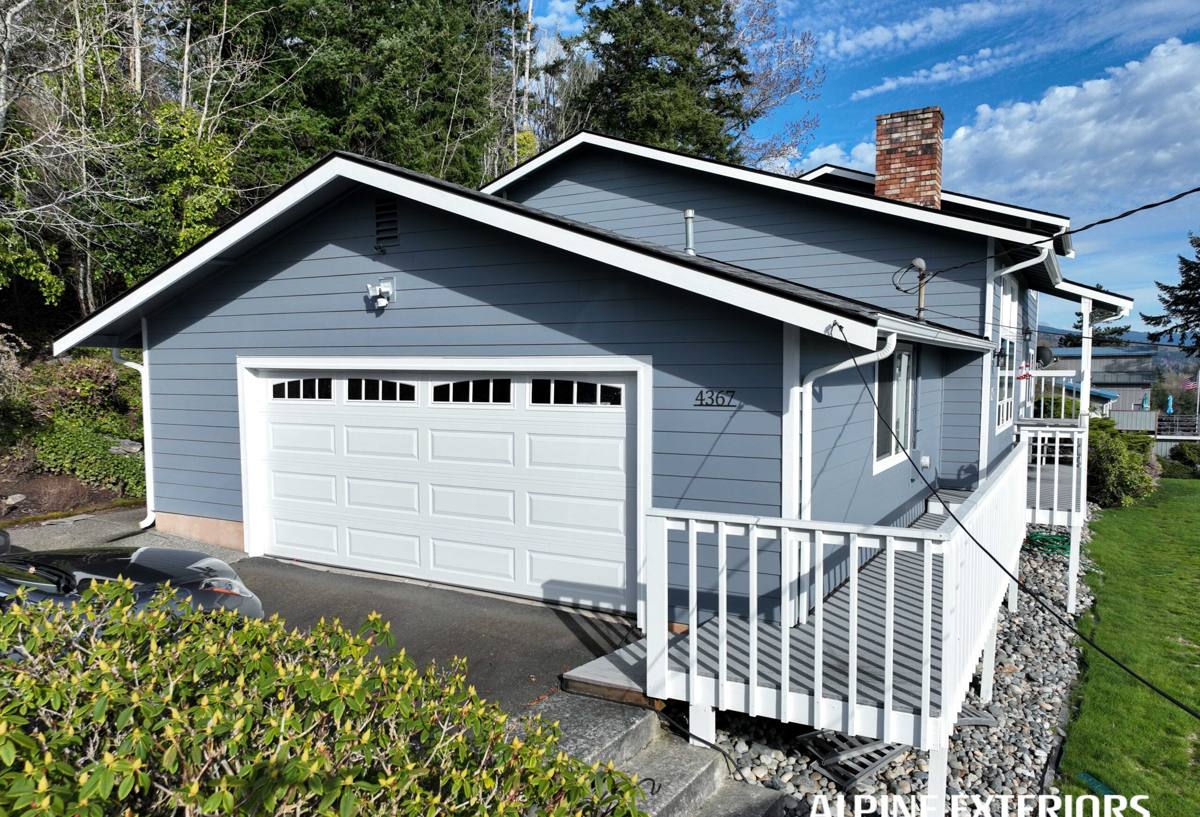
What Salt Air, Rain, and Moss Actually Do to a Deck
Salt Air
Airborne salt accelerates corrosion on anything metal — nails, screws, joist hangers, bolts, and railing hardware. Once a fastener starts rusting, it loses grip strength long before it looks obviously bad. A deck can look solid on the surface while the connections holding it together are quietly weakening underneath.
Driving Rain
Wind-driven rain doesn't just fall straight down — it gets pushed sideways under railings, into end grain, and behind ledger boards where the deck attaches to the house. That's the single most common place we find hidden rot, because it's also the hardest spot for a homeowner to inspect without pulling boards.
Moss and Algae
Moss holds moisture against wood and composite decking far longer than open air would. On wood, that constant dampness feeds rot. On composite boards, trapped moisture and organic buildup can work into seams and fastener holes, and a moss-slicked deck surface is also a genuine slip hazard, especially on stairs.
Warning Signs Worth Taking Seriously
Most of the decks we're called out to repair in the Semiahmoo area show at least a couple of these signs before anyone calls:
- Soft or spongy spots when you walk across the deck, especially near the house or stair landings
- Rust streaking below screw heads or around joist hangers
- Gaps opening up where the deck meets the house (ledger board pulling away)
- Railings that flex or wiggle more than they used to
- Green or black staining that keeps coming back within weeks of cleaning
- Boards that feel cool and damp to the touch even on a dry day
- Visible cracking or splitting concentrated on the shaded side of the deck
Any one of these by itself might be minor. Two or three together usually means the deck has been dealing with moisture longer than it should have, and it's worth having someone look underneath, not just at the surface.
What a Correct Deck Repair Actually Involves
A repair that just replaces the boards you can see and skips the structure underneath is a repair that comes back. We approach it in this order:
1. Structural Inspection First
Before we touch a board, we check the framing — joists, beams, posts, and especially the ledger board connection to the house. This is where structural failures actually start, and it's also the area most exposed to trapped moisture from wind-driven rain.
2. Ledger Flashing and Water Management
If the ledger board isn't properly flashed to shed water away from the house, no amount of surface repair will stop the rot from coming back. Correcting flashing at the ledger is often the difference between a repair that lasts and one that's a temporary patch.
3. Fastener and Hardware Replacement
Corroded fasteners and hangers get replaced with hardware rated for the exposure, not just whatever matches what's already there. Reusing rusted structural hardware to save time is one of the most common shortcuts we see on past repairs, and it's usually the reason a "repaired" deck fails again within a couple of seasons.
4. Selective Board and Framing Replacement
Rot doesn't stop at the visible stain. We replace wood back to solid material, not just the discolored section, so we're not sealing decay behind a new-looking surface.
5. Railings and Stairs
Railings take direct wind-driven rain and constant hand contact, which makes them a common early failure point. Loose posts and softened rail bases get addressed as part of the repair, not treated as a separate problem later.
Repair or Replace? How We Help You Decide
Not every deck with problems needs to be torn out. The decision usually comes down to how much of the structure is still sound versus how much of the damage is cosmetic.
| Factor | Usually Points to Repair | Usually Points to Replace |
|---|---|---|
| Framing (joists, beams, posts) | Solid to the touch, isolated soft spots | Widespread softness or sagging across multiple framing members |
| Decking boards | Damage limited to a few boards or one section | Most boards showing rot, splitting, or advanced weathering |
| Ledger connection | Sound once reflashed and refastened | Significant rot at the house rim joist behind the ledger |
| Railings and stairs | Hardware and a few posts need attention | Structural rail posts compromised throughout |
| Age of the deck | Under 15-20 years, built to a reasonable standard | Older deck already near the end of its practical service life |
We'll give you an honest read on which category your deck falls into. If a full rebuild is a better use of your money long-term, we'll tell you that directly instead of stretching a repair further than it should go.
Materials That Actually Hold Up Out Here
What goes into a repair matters as much as the workmanship. In a salt-air, high-rain environment, we lean toward:
- Stainless steel or high-grade coated fasteners for anything exposed to weather, rather than standard galvanized hardware that corrodes faster near salt air
- Pressure-treated framing lumber rated for ground contact where moisture exposure is higher, with cut ends re-treated on site
- Proper flashing tape and materials at every ledger and post connection, not just caulk
- Decking material matched to your maintenance appetite — quality wood if you're willing to stay on top of cleaning and sealing, composite if you'd rather trade a higher material cost for less recurring upkeep
We don't push one decking product as universally "better." Wood and composite both perform well here when they're installed correctly and matched to how much maintenance you actually want to do. The honest trade-off is maintenance now versus material cost up front — we'll walk through both so you're choosing based on your situation, not a sales pitch.
Our Deck Repair Process
- On-site inspection — we get underneath the deck, not just walk the surface, and check framing, ledger, and hardware condition
- Written scope and estimate — what's being replaced, what's being reinforced, and why, in plain terms
- Repair work — structure first, then flashing and water management, then decking and railings
- Cleanup and walkthrough — we show you what was found and what was done before we consider the job finished
Keeping a Repaired Deck From Needing the Same Repair Again
A good repair buys you years, but this climate keeps working on a deck year-round. A short seasonal routine goes a long way:
- Clear leaves and debris out of gaps between boards before fall rains set in
- Treat moss and algae growth early, especially on shaded or north-facing sections
- Check railings and stair connections for movement once or twice a year
- Reseal wood decking on the manufacturer's recommended schedule, not just "when it looks dry"
- Keep an eye on the ledger board area where the deck meets the house — it's the first place problems tend to reappear
Why a Crew That Already Works Semiahmoo Makes a Difference
Deck repair in a coastal, high-rain corner of Whatcom County isn't quite the same trade as deck repair somewhere dry and inland. A crew that regularly works the Semiahmoo area already knows what moisture and salt exposure do to fasteners, framing, and finishes here, so the inspection isn't guesswork — it's pattern recognition from decks with the same exposure as yours. Being based out of Ferndale also means we're a short drive away for the inspection, the repair itself, and any follow-up if something needs a second look.
If your deck has some soft spots, rusting hardware, or moss that won't stay gone, we're glad to come take an honest look. Reach out for a free, no-pressure estimate using the form below — we'll tell you straight whether you're looking at a repair or something bigger.