 Ferndale Window
 Semiahmoo's Coastline Is Hard on a Roof
Semiahmoo sits close enough to the water that homes there deal with a different combination of stresses than roofs a few miles inland in central Ferndale. Salt-laden air moves off the strait, wind-driven rain comes in sideways during winter storms, and the moss season in Whatcom County runs long — often eight months or more of damp, shaded conditions that give algae and moss a real foothold. A roof out here isn't just shedding water. It's fighting corrosion, wind uplift, and organic growth at the same time, and it's doing it for most of the year.
That combination is exactly why metal roofing gets so much attention in this part of the county. Done correctly, it holds up to salt exposure better than most other roofing materials, sheds moss instead of trapping it, and takes wind-driven rain without the vulnerabilities you find in a shingle roof's exposed edges and granule surface. Done poorly — wrong fastener, wrong underlayment, wrong flashing details — a metal roof out here can fail faster than people expect, and the failures are usually hidden until they've already caused damage underneath.
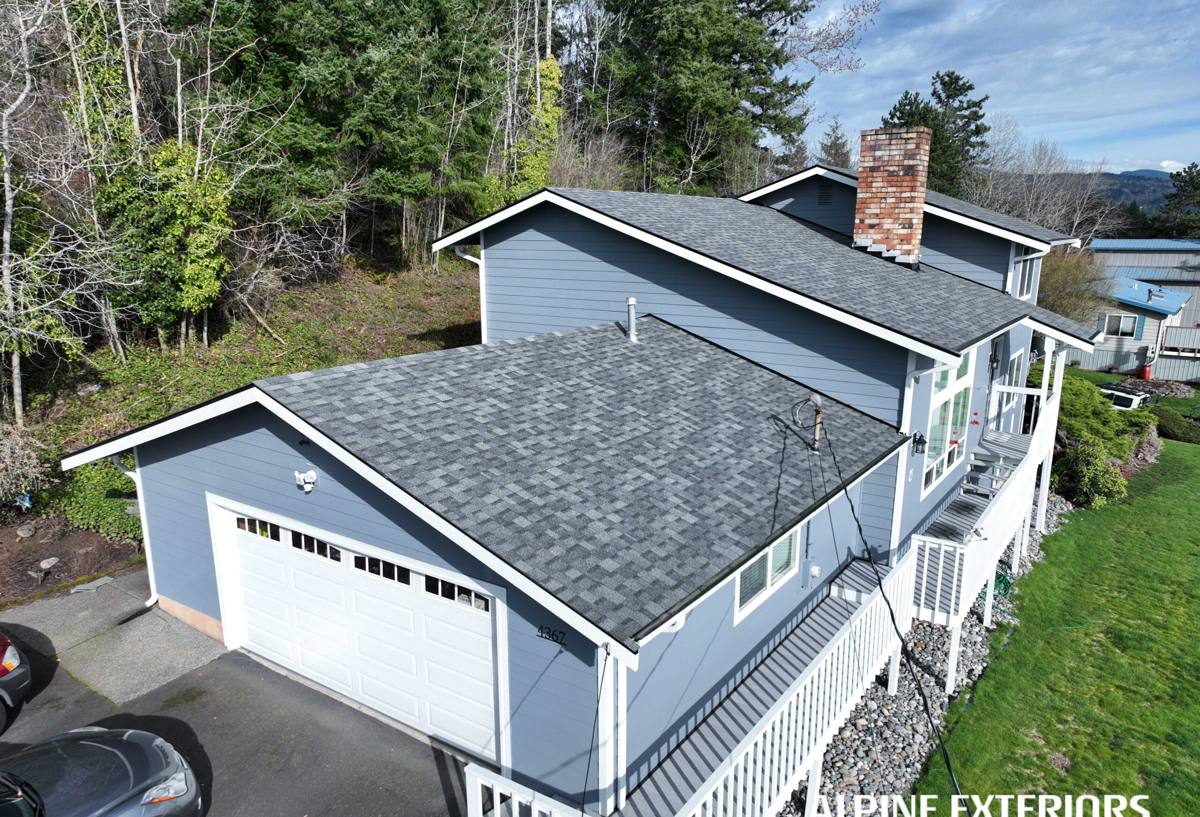
Why Metal Roofing Makes Sense in a Coastal Whatcom County Setting
Metal roofing isn't automatically the right choice for every home, but for Semiahmoo's environment it solves several problems at once:
- A smooth, hard surface gives moss and algae far less to grip than the textured surface of composition shingles.
- Standing seam and most panel profiles shed heavy rain fast, which matters when storms come in at an angle off the water.
- Properly finished steel or aluminum resists the slow rust and pitting that salt air causes on unprotected or poorly coated metal.
- A correctly fastened metal roof handles wind uplift well, which matters on exposed lots near the shoreline.
- Metal roofing typically outlasts asphalt shingles by decades when installed and maintained properly, which matters on a coastline where re-roofing scaffolding and material handling cost more due to access and weather windows.
None of that happens automatically just because a roof is metal. The coating, the fastener hardware, the underlayment system, and the flashing details all have to be matched to a salt-air environment specifically — and that's where a lot of installations, done by crews unfamiliar with this coastline, fall short.
What a Correct Installation Actually Involves
Underlayment That Handles Wind-Driven Rain
In a driving-rain environment, water doesn't just run down the roof — it can be pushed sideways and even slightly uphill under panels during a strong gust. A synthetic, high-temp underlayment with taped or sealed seams gives the roof a real second line of defense if wind-driven rain gets past the panel laps. Self-adhered membrane at eaves, valleys, and penetrations is not optional in this climate; it's the difference between a nuisance leak and a rotted deck five years later.
Fasteners and Metal Compatibility
Salt air accelerates galvanic corrosion when dissimilar metals touch — for example, the wrong screw type against a panel's coating, or aluminum flashing against uncoated steel. Fastener heads, washers, and any exposed hardware need to be rated for coastal exposure, not just general-purpose exterior use. This is one of the most common corners cut on rushed metal roofing jobs, and it's usually invisible until streaking or pinhole corrosion shows up years later.
Flashing at Valleys, Walls, and Penetrations
Metal roofing sheds water efficiently on the field of the roof — the vulnerable points are always where the roof meets something else: a wall, a chimney, a skylight, a valley. Flashing here has to be formed and lapped correctly, not just caulked. Sealant is a backup, never the primary defense, especially in a climate where UV and salt exposure break down caulk faster than in a drier inland location.
Ventilation
A long, damp season means moisture wants to linger in the attic space as much as on the roof surface. Balanced intake and exhaust ventilation keeps condensation from forming under the deck, which matters for the life of the sheathing regardless of what roofing material sits on top of it.
Panel Types and Finishes: What Fits Semiahmoo
Not every metal roofing product is built the same way, and the differences matter more in a salt-air environment than they would inland.
| Option | Best fit for Semiahmoo | Trade-offs |
|---|---|---|
| Standing seam (steel or aluminum) | Strong choice — concealed fasteners mean fewer penetration points for salt and moisture to work into | Higher material and labor cost than exposed-fastener panels |
| Exposed-fastener metal panels | Workable if fastener hardware and gasket washers are coastal-rated and maintained | More penetration points; washers/gaskets need periodic inspection |
| Aluminum panels | Naturally corrosion-resistant, a strong option directly near salt spray | Softer than steel; more careful handling needed during install |
| Galvanized/galvalume steel | Good with a quality factory finish; coating integrity is everything this close to the water | Any scratch through the coating becomes a corrosion starting point if not touched up |
We favor coastal-rated finishes and hardware on every Semiahmoo project regardless of which panel profile a homeowner chooses, because the finish and fastener system matter as much as the base metal.
What We Won't Install as Our Standard Here
We don't recommend uncoated or minimally coated steel panels, or generic hardware-store fastener kits, for homes this close to the water. It's not that these products can't function anywhere — it's that the maintenance burden and early-failure risk go up sharply in a salt-air setting, and we'd rather set expectations honestly up front than sell a roof that needs premature attention.
Moss, Debris, and Drainage in a Long Wet Season
Metal sheds moss far better than shingles, but it isn't moss-proof on its own. Debris that collects in valleys, at eave edges, or around penetrations still holds moisture against the panel and can eventually promote growth or trap grit that scratches a finish over time. We pay close attention to valley design, gutter integration, and eave detailing on Semiahmoo homes specifically because the wet season here is long enough that any spot where water or debris can sit will eventually show it.
Overhanging trees near the property line are worth thinking about too — not because trees are a problem, but because shaded, damp areas of a roof are where moss gets a head start even on metal. A clean roof design with good airflow and minimal debris traps goes a long way toward keeping maintenance low.
How Our Process Works
- On-site assessment. We look at the existing roof structure, decking condition, ventilation, and exposure — a lot fronting the water gets different detailing than a lot set back with tree cover.
- Tear-off or overlay decision. Metal can sometimes go over an existing roof deck if conditions allow, but in a coastal environment we're conservative about this — trapped moisture under a new roof is a bigger risk here than in a drier climate, so we're honest about when a full tear-off is the right call.
- Underlayment and flashing installation. This is where most of the long-term performance of the roof gets decided, and it's done before a single panel goes on.
- Panel installation. Panels are fitted, fastened with coastal-rated hardware, and checked for proper alignment and seam integrity as we go, not just at the end.
- Detail work. Valleys, penetrations, ridge caps, and wall transitions get finished and inspected individually.
- Final walkthrough. We go over the finished roof with the homeowner, explain what maintenance (if any) it needs, and answer questions before we consider the job done.
Cost Factors to Understand Before You Get a Quote
Metal roofing costs more upfront than asphalt shingles, and the range varies a lot based on the specifics of the home. Rather than quote a number that won't hold up house to house, here's what actually moves the price:
| Factor | Why it matters in Semiahmoo |
|---|---|
| Roof pitch and access | Steeper or harder-to-access roofs near the shoreline take longer and require more safety equipment |
| Panel type and finish | Standing seam and premium coastal-rated coatings cost more than basic exposed-fastener systems |
| Tear-off vs. overlay | Full tear-off costs more upfront but removes hidden moisture risk, which matters more here than inland |
| Underlayment system | A full self-adhered or high-wind-rated system costs more than minimum-code underlayment, but it's the right call for driving rain |
| Flashing complexity | Homes with more valleys, dormers, or wall intersections need more custom flashing work |
| Ventilation upgrades | Older homes sometimes need intake or exhaust ventilation added, which adds labor but protects the whole roof system |
We walk through these factors with every homeowner during the estimate so the number reflects the actual roof, not a generic average.
Why Hiring a Crew That Already Works Semiahmoo Matters
A metal roofing crew that mostly works dry, inland jobs can still do competent general work, but the details that matter most here — fastener corrosion resistance, flashing sequencing for wind-driven rain, and honest tear-off-versus-overlay decisions on a damp deck — are things you learn by working this specific coastline repeatedly, not by reading a spec sheet once. We're a Ferndale-based crew, and Semiahmoo's combination of salt exposure and long wet seasons is a known quantity for us, not a one-off condition we have to research on the fly.
That familiarity also shows up in smaller ways: knowing which corners of a roof tend to collect debris in this wind pattern, recognizing early corrosion on existing metal roofing before it becomes a leak, and setting realistic maintenance expectations based on how roofs in this specific area actually age — not how they age in a different climate.
Maintenance: What a Semiahmoo Metal Roof Actually Needs
Metal roofing is genuinely low-maintenance compared to shingles, but "low-maintenance" doesn't mean "no maintenance" in a salt-air environment. A simple, realistic routine keeps a correctly installed roof performing for decades:
- Clear debris from valleys and eaves at least once or twice a year, more often under tree cover.
- Check gutters and downspouts for clogs before the heavy fall and winter rains arrive.
- Look over exposed fasteners and flashing periodically for early signs of corrosion or loosening.
- Rinse off accumulated salt residue and grime if the home sits directly exposed to ocean spray.
- Have any scratched or damaged finish touched up promptly — an exposed spot is where corrosion starts.
- After major windstorms, do a quick visual check for lifted panels, dented flashing, or displaced ridge caps.
None of this requires specialized equipment or frequent professional visits — it's mostly about not letting small issues sit through another wet season.
Getting Started
If you're weighing a metal roof for a home in Semiahmoo, we're glad to come take a look, walk the roof, and talk through what makes sense for your specific property and exposure. There's no pressure and no obligation — just a straightforward assessment and an honest estimate based on what your roof actually needs. Reach out using the form below to get started.