 Ferndale Window
 Installation Is the Real Variable on Semiahmoo
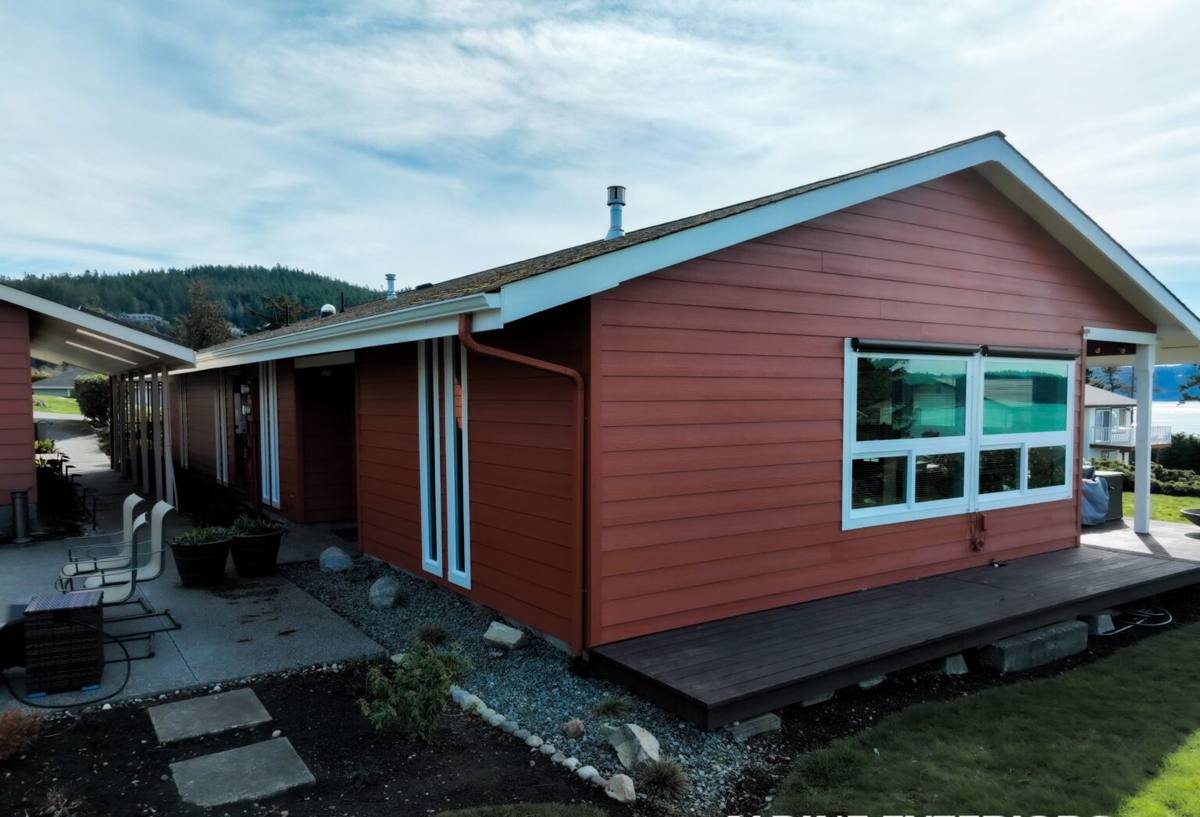
Semiahmoo sits out on a narrow spit near Blaine, with water on more than one side and almost nothing standing between the houses there and open wind off Semiahmoo Bay and Drayton Harbor. It's a mix of single-family homes, townhomes, and condominiums, many of them part of a planned resort-style community, and nearly all of them facing the same underlying problem: this is one of the more exposed residential settings in Whatcom County, and the exterior systems on these homes take a harder, more constant hit from the weather than a typical inland property ever will.
On a site like this, the siding material matters, but the installation matters more. Fiber cement, vinyl, or engineered wood can all be installed correctly or incorrectly, and on an exposed spit property the gap between those two outcomes shows up faster and more visibly than it would a few miles inland. This page is specifically about what installation — new work or a full re-side, not a patch repair — needs to get right on a Semiahmoo home. We install James Hardie fiber cement exclusively, and everything below describes how we install that system to spec on properties in this exact setting.
What Semiahmoo's Exposure Demands From an Install
Salt Air From More Than One Direction
Because the spit is bordered by water on multiple sides, salt-laden air reaches Semiahmoo homes from more than one prevailing direction, unlike most properties set back even a short distance inland. That matters for installation choices specifically: fastener grade, flashing metal, and trim hardware all corrode faster under that kind of exposure, and an installation that uses standard-grade materials because they're cheaper or easier to source is a decision that shows up as rust streaking and loosened trim within a few years rather than a few decades.
Wind-Driven Rain With Nothing to Break It
There's almost no windbreak out on the spit, so rain doesn't fall straight down here the way it does on a sheltered inland lot — it gets pushed sideways into panel joints, window flashing, and roof-to-wall transitions with real force behind it. The water-resistive barrier underneath the siding, and how carefully every seam and penetration in it is lapped and sealed, carries more of the actual weatherproofing load on a property like this than the siding material sitting on top of it. Installation details that hold up fine on a calmer inland lot can fail here specifically because they were never tested against water arriving sideways.
A Moss Season That Runs Most of the Year
Mild temperatures, near-constant humidity, and shaded or north-facing walls add up to a moss and mildew season that stretches through most of the year across this part of Whatcom County, and Semiahmoo's waterfront location doesn't shorten it. Installation detail affects how badly a wall is exposed to that growth cycle — correct clearance at the base of the wall, proper drainage-plane or rain-screen detailing, and siding that isn't crowded tight against trim all give a wall the chance to dry out between wet spells instead of staying damp continuously.
Why We Only Install James Hardie Fiber Cement Here
We standardized on one siding system after years of seeing which materials actually held up on exposed, salt-air properties like this one, and which ones started showing problems within a handful of years. James Hardie's fiber cement is dimensionally stable in a wet, humid climate, doesn't feed a fire the way wood-based products can, and carries a factory-applied ColorPlus finish that resists fading and moisture intrusion far longer than paint applied on site. The HZ5 formulation is engineered specifically for regions with heavy moisture exposure and freeze-thaw cycling, which describes waterfront Whatcom County well, and Hardie backs the product with a substantial transferable warranty as long as installation follows their published spec.
We don't install LP SmartSide, vinyl siding, Cemplank, Allura, primed spruce, or cedar. Those products have a legitimate place in the market, and plenty of homeowners are satisfied with them on more sheltered properties. But on an exposed spit site, we've made a professional call to stand fully behind one system rather than offer a cheaper alternative that quietly shifts long-term maintenance risk onto the homeowner. That standard applies whether the job is new construction or a full re-side.
What Correct Installation Actually Involves
Fastener and Hardware Grade
James Hardie specifies exact fastener type, spacing, and placement, and those specs vary by product line and exposure category. On a Semiahmoo property, following that spec means corrosion-resistant fasteners as the baseline, not an upgrade — standard-grade hardware is one of the first things to fail under this level of salt exposure, and a loosened or rust-streaked fastener pattern is one of the more visible signs of a rushed installation.
Clearances at Grade, Deck, and Roofline
Hardie sets minimum clearance between the bottom edge of siding and grade, decks, roofing, and other horizontal surfaces. Those clearances keep the lowest courses out of standing water and splash-back, which is a common failure point on properties where landscaping has built up over time or a deck was added years after the original siding went in. Skipping this clearance rarely shows on install day — it shows up as softness and paint failure at the bottom courses a few winters later.
Weather Barrier and Drainage Plane
The water-resistive barrier goes on with full overlap and taped seams at every joint and penetration before any flashing or siding covers it. On an exposed spit lot, this hidden layer does most of the real work of keeping wind-driven rain out of the wall assembly, and where the wall assembly calls for it, we build in a drainage gap behind the siding so any moisture that does get past the cladding has somewhere to go instead of sitting against the sheathing.
Flashing at Every Penetration
Windows, doors, hose bibs, vents, and exterior fixtures all interrupt the siding plane, and each interruption is a place water can work its way behind the cladding if it's flashed incorrectly. This is the slowest and least visible part of an installation, and on a property taking wind-driven rain from more than one direction, it's the part that determines whether the wall stays dry for decades or starts trapping moisture within a few seasons.
Sealing Field-Cut Edges
Every panel cut on site — around a window, at a corner, at the end of a run — needs its cut edge sealed or primed to Hardie's spec before it goes up. An unsealed field cut is one of the more common places fiber cement actually takes on water, and it's almost always an installation oversight rather than a flaw in the material itself.
Installation Shortcuts That Fail Fastest on the Spit
| Shortcut | What it looks like on install day | How it shows up later on Semiahmoo |
|---|---|---|
| Standard fasteners instead of corrosion-resistant hardware | No visible difference | Rust streaking and loosened panels, often within a few years given multi-directional salt exposure |
| Skipped clearance at grade or deck ledger | Siding looks flush and tidy | Wicking, softness, and paint failure at the bottom courses |
| Rushed or taped-over flashing at windows | Looks sealed from the outside | Hidden moisture intrusion, frequently not visible until interior staining shows up |
| Unsealed field-cut edges | Cuts look clean and painted | Localized swelling at the cut, worse on walls facing open water |
| Panels installed tight with no drainage gap | Appears well-fitted | Trapped moisture and persistent moss that keeps returning after cleaning |
New Construction, Full Re-Side, or Partial Replacement
Most siding installation work on Semiahmoo falls into one of three categories, and each carries a different scope. New construction means installing onto fresh sheathing and a new water-resistive barrier with no unknowns behind the wall — the sequence still matters, but there's no guesswork about what's hidden underneath. A full re-side of an existing home means tear-off, an honest look at what the original construction left behind, and often correcting older detailing — missing flashing, inadequate clearances, or a barrier that was never installed properly — before new siding goes up. Partial replacement, addressing one damaged elevation or a section affected by water intrusion, requires matching the existing product line and finish closely enough that the repair doesn't stand out, which isn't always possible depending on how long the original siding has been on the wall and whether that specific color or profile is still in production.
Homes that are part of a planned or resort-style community on the spit sometimes carry their own architectural guidelines for exterior materials and colors. We factor that into the estimate conversation early, since it can affect which Hardie profile and ColorPlus finish are the right fit before any work is scheduled.
Our Installation Process, Step by Step
Site and Exposure Assessment
Before pricing anything, we look at how each wall of the house is actually exposed — which faces take direct wind and salt air off the water, which sit in shade or under tree cover, and where existing moss buildup or past water staining points to a chronic issue rather than a one-time event.
Tear-Off and Sheathing Check
On a re-side, old siding comes off and the sheathing underneath gets inspected before anything new goes up. New siding over damaged sheathing just buries the problem for a few years; we'd rather find rot or soft spots at this stage, even if it adds a step to the schedule.
Weather Barrier and Flashing
The water-resistive barrier goes on with proper overlap and sealed seams, and flashing gets installed at every window, door, and penetration before siding covers any of it. This is the layer that's completely hidden once the job is finished, and it does most of the real work on an exposed property like this one.
Siding Installed to Manufacturer Spec
Panels go up following Hardie's fastening, spacing, and clearance requirements as the baseline. Field cuts are sealed as they're made, not batched and finished at the end of the day.
Final Walkthrough
We walk the finished job with the homeowner, confirm the work matches what was estimated, and go over what basic maintenance looks like on a property this exposed to wind and salt air.
Timeline and Cost Factors for a Semiahmoo Installation
Every estimate is specific to the house, but a handful of factors consistently affect both price and schedule on a spit installation:
| Factor | Why it matters |
|---|---|
| Square footage and number of stories | More area and height mean more labor and, on taller walls, more staging and access equipment |
| Trim and window complexity | More windows, dormers, and roofline transitions mean more flashing and detail cutting |
| Sheathing condition found during tear-off | Rot or water damage discovered underneath old siding adds repair scope before new siding can go up |
| Which faces the open water | Water-facing walls typically warrant closer attention to flashing and drainage detail |
| Product line and ColorPlus finish selection | Hardie offers multiple panel styles and finish options at different price points |
Wind off the water can shut down safe panel handling and staging on days that would still be workable a few miles inland, so we build some flexibility into every schedule rather than promising a fixed date that a rough weather stretch is likely to break.
Why a Ferndale-Based Crew That Already Works Semiahmoo Matters
Installation quality on paper and installation quality in the field aren't always the same thing, and that gap shows up fastest on an exposed coastal site. A crew that regularly installs siding on Semiahmoo homes makes different calls than one that shows up here occasionally between jobs elsewhere — where extra flashing attention actually earns its time, which fastener grade genuinely holds up on a water-facing wall, and which corners can't be cut regardless of schedule pressure. That judgment comes from doing this work repeatedly on this specific stretch of coastline, not from applying a generic installation checklist the same way everywhere.
Before Hiring for a Siding Installation on Semiahmoo
- Ask what siding material they install and why, and whether they'll put a written warranty behind it
- Confirm current Washington contractor licensing and active liability insurance
- Ask how they detail flashing at windows, doors, and roof-to-wall transitions for wind-driven rain
- Ask specifically about fastener and hardware corrosion resistance given the multi-directional salt exposure out here
- Get a written scope of work, including clearances and drainage detailing, before signing anything
If you're planning a new siding installation, a full re-side, or need a second opinion on whether an existing Semiahmoo installation was done correctly, we're glad to come take a look. Reach out using the form below for a free, no-pressure estimate.